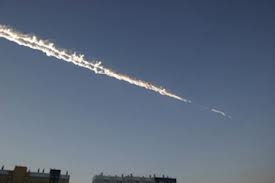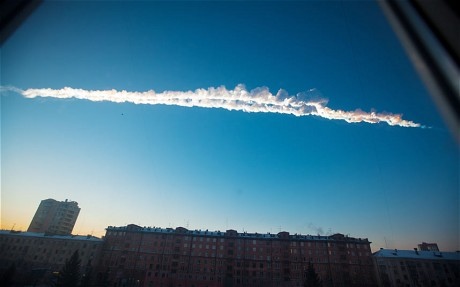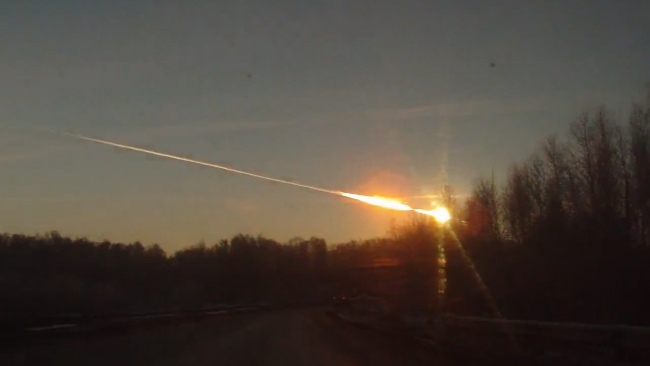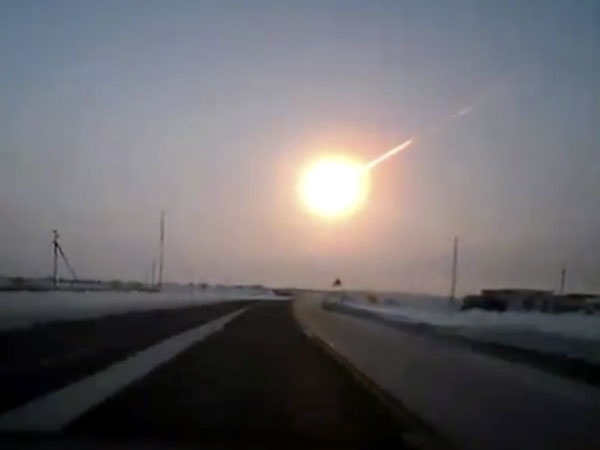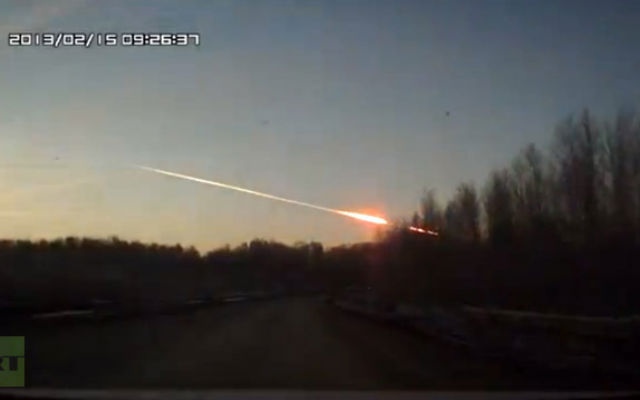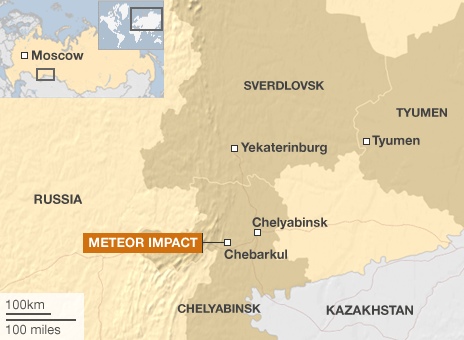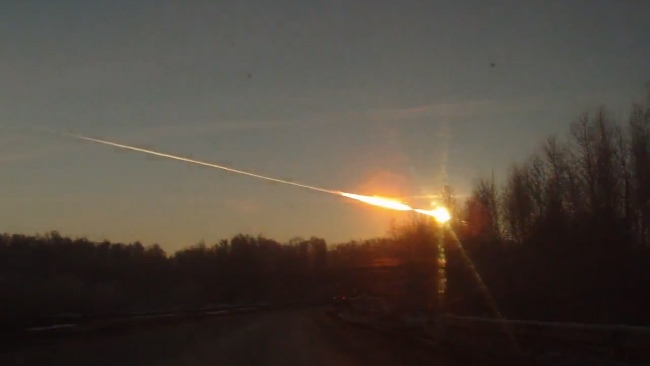
It was a Friday morning. February 15, 2013. The kind of crisp, freezing morning that millions of Russians wake up to every single winter. People were driving to work. Kids were sitting in classrooms. Coffee was brewing. The dashcams were rolling, recording the mundane, gray highway slush of Chelyabinsk, a sprawling industrial city near the Ural Mountains. Normalcy. Routine.
Then, the sky tore apart.
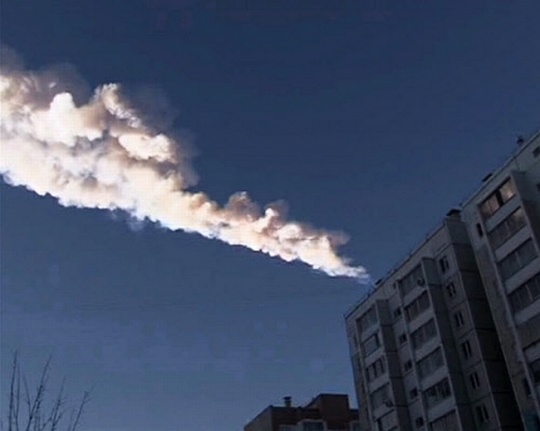
It didn’t just light up. It screamed. A blinding flash, brighter than the sun itself, seared across the horizon, casting shadows that moved faster than the human eye could track. For a split second, it wasn’t winter anymore. The heat was instantaneous. The light was so intense it burned the retinas of anyone unlucky enough to be looking up. And then came the trail. A thick, smoking scar left behind in the atmosphere, looking like a claw mark from a beast that lives between the stars.
The Day the Sky Fell
Most people froze. That’s the human reaction to the impossible. You stop. You stare. You try to process data that makes zero sense. Was it a missile? A plane crash? A nuclear first strike? In a city with a history of secret military production, the fear wasn’t about space rocks. It was about war. But this wasn’t war. It was physics. Violent, uncaring, high-velocity physics.
Moments later, the sound caught up with the light. And it wasn’t just a sound. It was a wall of air. A shockwave.
Boom.
Windows shattered. Not just a few. Thousands. Glass exploded inward, turning office blocks and schools into shrapnel zones. Car alarms wailed in a synchronized chorus of panic. Factory roofs collapsed. Over 1,000 people were bleeding, confused, and terrified. They had just survived an explosion with the force of roughly 20 Hiroshima atomic bombs. And the craziest part? The object that caused it never even hit the ground.
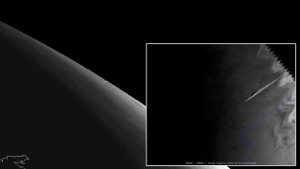
Check out the early images of the trail left behind. It looks like something from a darker version of Star Wars.

The Physics of a City Killer
Let’s look at the raw numbers, because they are terrifying. NASA scrambled to make sense of the data flooding in from infrasound stations all over the globe. The verdict? This wasn’t a pebble. It was a rock the size of a six-story building. We are talking about an asteroid estimated to be about 60 feet wide, weighing in at a massive 11,000 to 13,000 tons. That is heavier than the Eiffel Tower, moving at 40,000 miles per hour.
Think about that speed. 40,000 mph. At that velocity, the atmosphere isn’t air anymore. It’s concrete. When that rock hit the upper atmosphere, the friction was absolute hell. The rock didn’t just burn; it disintegrated under immense pressure, exploding about 18 miles above the surface. If it had held together for just a few more seconds? If it had exploded lower? Chelyabinsk wouldn’t just have broken windows. It would have been erased from the map.
The energy released was estimated at 500 kilotons of TNT. That is a staggering amount of power to release over a populated area. And we didn’t see it coming. Not a single telescope, not a single satellite, not a single warning siren. Why? Because it came from the direction of the Sun. It hid in the glare, a stealth bomber made of stone, perfectly camouflaged until the moment it tried to kill us.

The Tunguska Connection: A 100-Year Echo
Here is where things get weird. Really weird. History has a funny way of rhyming, and for Russia, this wasn’t the first time the sky had turned into an enemy.
Go back to 1908. The Tunguska Event. Same region of the world: Siberia. A massive explosion flattened 80 million trees over 830 square miles. No crater was ever found. Just devastation. For decades, scientists, mystics, and fringe theorists have argued about Tunguska. Was it a comet? A mini black hole? A crashed alien craft trying to vent its drive core? Nikola Tesla testing a “death ray”?
The mainstream explanation for Tunguska is an airburst meteor, exactly like Chelyabinsk. But much, much bigger. The Chelyabinsk event gave scientists a rare opportunity to calibrate their models. It proved that airbursts are real, and they are far more destructive than we thought. But it also ignited a firestorm of conspiracy theories online. Was Chelyabinsk a warning? A repetition of a cycle? Some claim the timing is too suspicious.
Was it Targeted?
Look at the location. Chelyabinsk is not just some random town. During the Cold War, it was a closed city. A hub for nuclear research and tank production. Conspiracy forums lit up within hours. ” Meteors don’t just happen to explode over major military industrial hubs,” they said. Was it a weaponized rod from God? A kinetic bombardment test by a foreign power? Or perhaps a message?
While the trajectory suggests a random Apollo-class asteroid, the paranoia was palpable. And who can blame them? When the sky explodes, “coincidence” is a hard pill to swallow.

The UFO Theory: Did Someone Save Us?
Get ready for the rabbit hole. Because it goes deep.
In the days following the blast, frame-by-frame analyses of the dashcam footage started appearing on Russian social media and YouTube. Amateur investigators pointed to something strange. They claimed that just milliseconds before the main explosion, a small, dark object could be seen streaking up from behind the meteor, smashing through it, and causing it to shatter.
The theory? The meteor wasn’t going to explode. It was going to impact. It was going to wipe the city out. But something—or someone—intervened. Russian military defense? Impossible. No missile system in the world can track and intercept a rock moving at 40,000 mph with zero warning. So, who does that leave?
UFO enthusiasts scream “Aliens.” They call it the “Guardian Theory.” The idea that we are being watched, and occasionally, protected from extinction-level events. Is it just pixelation and digital artifacts? Almost certainly. But try telling that to the people who watched death streak across the sky and lived to tell the tale. They feel lucky. Unnaturally lucky.

The Sound of the Apocalypse
We need to talk about the shockwave again. Most people don’t understand what a sonic boom does to a human body. It’s visceral. It hits you in the chest.
In Chelyabinsk, the delay was the killer. The flash happened. People ran to the windows to see what was going on. They pressed their faces against the glass, staring at the contrail. That was the trap. Light travels faster than sound. The shockwave was lagging behind, a silent wall of pressure racing toward them. When it hit, it turned those windows into shotguns. That is why over a thousand people were injured. Not by the rock, but by their own curiosity.
Imagine the scene inside a school. Kids looking out. Then—darkness, screaming, cold air rushing in. The temperature was far below freezing. Within minutes, the city was a jagged landscape of broken shards and blood on the snow.

The Recovery: Hunting for Space Rocks
The explosion wasn’t the end. It was the start of a gold rush. A treasure hunt. Meteorite hunters from all over the planet booked tickets to Russia. Why? because space rocks are valuable. Extremely valuable. Fresh chondrites—stony meteorites—can sell for massive amounts per gram.
Locals found holes in the frozen Lake Chebarkul. A massive chunk of the asteroid had survived the fiery descent and punched right through the thick ice. Seven months later, divers pulled a 1,200-pound fragment from the muck at the bottom of the lake. It was black, scorched, and alien. When they tried to weigh it, the scale actually broke. You can’t make this stuff up.
But there is a darker side to the recovery. Reports surfaced of black market deals. Men in SUVs showing up to buy fragments from villagers for pennies, then flipping them to collectors in the West for thousands. The “Chelyabinsk Meteorite” became a brand name overnight. Owning a piece of the rock that almost killed a city became a status symbol.

The Blind Spot: Are We Sitting Ducks?
Here is the part that should keep you awake at night. The Chelyabinsk meteor was a surprise. Total. Complete. Surprise.
We spend billions on defense. We have radar that can detect a bird taking off from a runway. We have satellites that can read a license plate from orbit. But we missed a 7,000-ton rock screaming at us at hypersonic speeds. Why? Because our systems are designed to look down, not up. And the telescopes that do look up? They can’t look toward the Sun. The glare blinds them.
There are millions of rocks out there. Near-Earth Objects (NEOs). We have mapped the big ones—the “dinosaur killers.” But the city killers? The ones the size of the Chelyabinsk rock? We have found maybe 1% of them. That means there are hundreds of thousands of these things floating around in the dark, just waiting for gravity to give them a little nudge.
What if it hit New York?
Let’s play the “What If” game. Shift the timeline by a few hours. The Earth rotates. Instead of the Ural Mountains, the meteor comes in over the North Atlantic. It detonates over Manhattan. Or London. Or Beijing.
The glass that shattered in Chelyabinsk? In a city of skyscrapers, that glass would rain down like guillotines. The panic would cause stampedes killing thousands. The economic impact would shatter the global markets instantly. Chelyabinsk was a warning shot across the bow of humanity. The universe missed. Next time, it might not.

Planetary Defense: Too Little, Too Late?
Since 2013, things have changed. A little. NASA established the Planetary Defense Coordination Office (yes, that is a real thing, and yes, it sounds like something from a movie). We have missions like DART (Double Asteroid Redirection Test), where we literally slammed a spacecraft into an asteroid to see if we could push it off course. It worked. Sort of.
But technology takes time. If we saw a Chelyabinsk-sized rock coming tomorrow, could we stop it? No. We wouldn’t have the time to launch. We would just have to evacuate. And how do you evacuate a city of 8 million people in 24 hours? You don’t. You tell them to stay away from the windows and pray.
The terrifying reality is that we are living in a cosmic shooting gallery. We are walking through a minefield blindfolded. Every crater on the Moon, every scar on Mars, is a reminder of violence. Earth hides its scars well—wind and water erode the craters—but we have been hit before. We will be hit again.

The Final Mystery
Even now, years later, the footage is mesmerizing. It strikes a primal chord in us. It reminds us that for all our iPhones, our stock markets, and our political squabbles, we are just tiny biological specks living on a rock spinning through a hostile void.
The Chelyabinsk meteor wasn’t just a rock. It was a reality check. A wake-up call delivered with the energy of a nuclear bomb. The people of Chelyabinsk rebuilt. The glass was replaced. The scars healed. But everyone who looked up that morning and saw the second sun… they know. They know that the sky is not empty. It’s loaded.
So, the next time you see a shooting star, make a wish. But maybe, just maybe, check the trajectory first.
Originally posted 2016-04-26 04:27:53. Republished by Blog Post Promoter
![20130215-233200[1]](https://coolinterestingnews.com/wp-content/uploads/2013/02/20130215-2332001.webp)