Friday, September 11, 2026
HomeSpace & ScienceSpaceRussians are sending men to the moon!

Russians are sending men to the moon!

Russia’s Secret Moon Plan: The New Cold War Is Colder Than Space

The Cold War never ended. It just went quiet. The battle tanks and the spies and the red telephones were replaced by something far more subtle. A war of whispers. Of economic chess moves. A war fought in the silent, unforgiving vacuum of space. And for years, a document has been floating around, a ghost of a plan from the Kremlin that outlines the first shot in this new conflict.

It’s a plan to go back to the Moon.

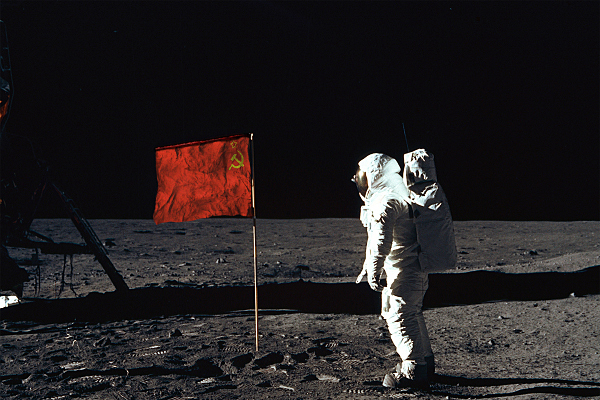
Not just to plant a flag. Oh no. That’s 20th-century thinking. This is about something bigger. A permanent foothold. A staging ground. A power play for the future of humanity itself. And it all hinges on a geopolitical powder keg ready to blow.

The original breadcrumbs appeared over a decade ago, a seemingly dry announcement from Roscosmos, the Russian Space Agency. They had a plan. A program with a staggering price tag of 800-900 billion rubles. The goal? A manned mission to the Moon. At the time, the world shrugged. Another grand promise from a fading power. But was it? Or was it the quiet declaration of a new space race?

A race nobody else knew they were in.

The Ghost of the Soviet Moonshot: A Secret History

To understand where Russia is going, you have to understand where they’ve been. And the Moon has always been a wound. A deep, secret source of national shame. While America was broadcasting Neil Armstrong’s one small step to a billion people, the Soviet Union was quietly burying the wreckage of its own lunar dreams in the Kazakh steppe.

They had a plan. They had the ambition. They had the cosmonauts. What they didn’t have was a working rocket.

Deep Dive: The Doomed N1 Rocket

The Soviet answer to the Saturn V was the N1. It was a monster. A beast of a machine, bristling with 30 engines in its first stage alone. It was the brainchild of Sergei Korolev, the legendary “Chief Designer” whose name was a state secret until his death. The N1 was supposed to carry Alexei Leonov, the first man to walk in space, to the lunar surface and beat the Americans.

It never came close.

All four test launches of the N1 were catastrophic failures. The most spectacular, in July 1969, just weeks before Apollo 11, resulted in the largest non-nuclear explosion in human history. The rocket collapsed back onto the launchpad, obliterating the facility and creating a fireball visible for miles. The Soviet Union pretended it never happened. They scrubbed the records, destroyed the evidence, and denied the existence of their manned lunar program for decades.

Think about that. An explosion that massive, and they just… buried it. What else have they buried? Online forums still buzz with the dark legend of the “Lost Cosmonauts,” phantom pioneers supposedly launched into orbit before Yuri Gagarin, their failed missions and last desperate breaths erased from history. Is it a baseless conspiracy? Or a chilling reminder of how far a superpower will go to control the narrative?

This history isn’t just trivia. It’s the scar tissue that drives the modern Roscosmos. This isn’t just about exploration. It’s about redemption. It’s about finishing a fifty-year-old fight.

Baikonur: The Crown Jewel on a Geopolitical Fault Line

Every dream needs a launching point. For the Soviet Union, and later Russia, that point has always been Baikonur. A sprawling, surreal spaceport dropped in the middle of the empty Kazakh grasslands. This is where it all began. Sputnik. Gagarin. The entire history of human spaceflight is written in the scorched concrete of its launchpads.

But there’s a problem. A big one.

When the Soviet Union collapsed, Baikonur ended up on the wrong side of the border. It’s in the newly independent nation of Kazakhstan. For years, Russia has been leasing it back, pouring billions of rubles into maintaining the aging facility. But that arrangement is fraying at the seams.

The original plan that leaked out of Roscosmos was built on this shaky ground. It had two scenarios. A “basic” one, where relations with Kazakhstan were stable. And a “crisis” one, where things fell apart. The price difference? A cool 100 billion rubles. That’s how much the geopolitical stability of this one patch of land is worth.

Kazakhstan knows the leverage it has. They’ve made noise for years about taking over the cosmodrome, about the lease being outdated. It’s a constant thorn in Russia’s side. They can’t mount their grand return to the Moon from a launchpad they don’t truly control. It’s like trying to win a war when your main barracks is on rented land owned by a landlord who hates you.

Russia’s Siberian Escape Hatch: The Vostochny Gamble

So, what do you do? You build your own fortress. Deep inside your own territory. Far from prying eyes and political strong-arming.

Enter the Vostochny Cosmodrome. Russia’s “Plan B.” A multi-billion-dollar project carved out of the Siberian wilderness. It’s their declaration of independence from Baikonur. The original plan called for a new launch site to be built there specifically for the super-heavy rockets needed for a Moon mission. A rocket capable of lifting 70 tons into orbit.

But Vostochny has been plagued with problems. Corruption scandals. Delays. Technical glitches. It’s a money pit, but a necessary one. It represents Russia’s desperate need to control its own destiny in space. Every ruble poured into the frozen ground of Siberia is a ruble they hope frees them from the geopolitical trap of Baikonur.

The question is, will it be ready? The timelines keep slipping. The initial 2028 goal for a manned lunar flight mentioned in those old documents is now a pipe dream. But the construction continues. The goal remains. They are playing the long game.

The Real Prize: Why Go Back to the Moon?

This is where the story goes from a geopolitical drama to a high-stakes conspiracy. Why spend all this money? Why risk international incidents? Why go back to a dusty rock we visited 50 years ago? The official answers are boring. Science. National prestige. Yawn.

The real reasons are the ones nobody talks about on the nightly news.

Helium-3: The Fuel of the Future?

For decades, scientists have theorized about clean, limitless energy from nuclear fusion. The problem? The best fuel for it, an isotope called Helium-3, is incredibly rare on Earth. But guess where it’s abundant? The Moon. For billions of years, the solar wind has deposited vast quantities of it into the lunar soil.

A single shuttle-load of Helium-3 could power the entire United States for a year. Think of the power. The control. The nation that masters lunar mining of Helium-3 doesn’t just win a space race. It wins the 21st century. It becomes the new energy kingpin, making OPEC look like a corner gas station. Is this the real prize? Is Russia trying to secure the future’s most valuable resource before anyone else realizes the game has started?

The Ultimate Military High Ground?

Forget satellites. The Moon is the ultimate military high ground. A permanent base there could host surveillance systems that could monitor the entire planet without fear of being shot down. It could be a staging ground for kinetic weapons—rods of tungsten dropped from orbit, hitting with the force of a tactical nuke but with no fallout. Science fiction? Maybe. But military planners are paid to think in “what ifs.”

Some theorists whisper that this is the true, unspoken goal. Not a science lab, but a fortress. A “Death Star” in waiting. A way to hold the entire world hostage from 239,000 miles away.

What’s Hiding on the Far Side?

And then there’s the fringe. The deep conspiracy. The idea that the first space race wasn’t about politics at all. It was about *something* that was discovered on the Moon.

Countless anomalies in NASA photos, strange structures, unexplained lights. The persistent rumors of a “quarantine” for the Apollo astronauts that was far more than medical. The fact that we just… stopped going. Why? Did we find something? Or were we warned away?

The far side of the Moon is permanently hidden from Earth. It’s the perfect place to hide a secret. An ancient artifact? A dormant alien base? Is Russia’s push for a lunar base really a recovery mission for technology that could change everything?

A New Cold War in the Heavens?

Here’s the terrifying part. Russia isn’t playing this game alone anymore. The world has changed.

China is the new juggernaut in space. Their Chang’e missions have successfully landed on the far side of the Moon, a feat no one else has accomplished. They brought back lunar samples. They have a space station. Their ambitions are clear and they are moving fast. Very fast.

The United States, through its Artemis program, is scrambling to get back, but it’s a slow, bureaucratic process. And then you have the wild cards. SpaceX, a private company, now has more launch capability than most nations. India is landing probes near the lunar south pole.

This isn’t a two-horse race anymore. It’s a mad dash. A free-for-all. And Russia, the old champion, is desperate to prove it still has a place on the podium.

So what do we make of that old Roscosmos plan? Was it just a wish list? A fantasy? Or was it the first chapter in a story that is still unfolding? A story of intrigue, secret ambitions, and a battle for the future being waged in the cold, silent darkness above our heads.

What if the Vostochny launchpad isn’t just a backup plan, but the designated heart of a secret, parallel space program? What if the real prize on the Moon is something far stranger than Helium-3 or military advantage?

Is this a desperate gasp from a fading power? Or the first, quiet move in a war for tomorrow? Look up at the Moon. It’s not just a light in the sky anymore. It’s the front line.

Amit Ghosh
Amit Ghoshhttps://coolinterestingnews.com
Aloha, I'm Amit Ghosh, a web entrepreneur and avid blogger. Bitten by entrepreneurial bug, I got kicked out from college and ended up being millionaire and running a digital media company named Aeron7 headquartered at Lithuania.
RELATED ARTICLES
- Advertisment -

Most Popular

Recent Comments

Warren Pan Abbott on The legend of the Devil Monkey !
chris davies on The McPherson Tape Mystery
Reed Reedly on ET has Internet!
Bea Houseoffashion on Proof Of Time Travellers – Gallery
Marcus2012 on ET has Internet!
Reed Reedly on ET has Internet!
LaughsAtConspiracyNuts on The 9/11 Conspiracy – Myths and Facts
Alex Sliverman on Did the ancients fly?
Doctor Wholigan on Time Traveler in 1938 film
chris davies on The McPherson Tape Mystery
Archie1954 on 10 secret UFO hideouts
chris davies on Ghosts of flight 401
Marcus2012 on ET has Internet!
jason Macdonald on Proof of Time Travel? – China
chris davies on Long-Lost Pyramids Found?
Reed Reedly on ET has Internet!
Milkman on Connected Universe
Tenmiles on Baigong Pipes Mystery
Simon Foster on Sirius – The Documentary
From the 1st April on 2013 – Alien Contact date ?
SkyWatcher on Is ET ignoring us?
I Come From The Future on Obama to make UFO Alien disclouser soon ?
ÛñK?øWn on 2013 – Alien Contact date ?
Just another person on 2013 – Alien Contact date ?
Malcolm Windowcleaner on The strange case of Rudolph Fentz
Mason Servio on Strange Things on Mars
Marke Wisdom Seeker on What will we find as arctic melts?
Andrea A Elisabeth Levyne on Aliens Captured in Varginha, Brazil
Mitch Grouyeki on Amazing Space Shuttle pictures