The Vanishing Sea: How the Soviets Murdered an Ocean and Left a Ghost Fleet in the Desert
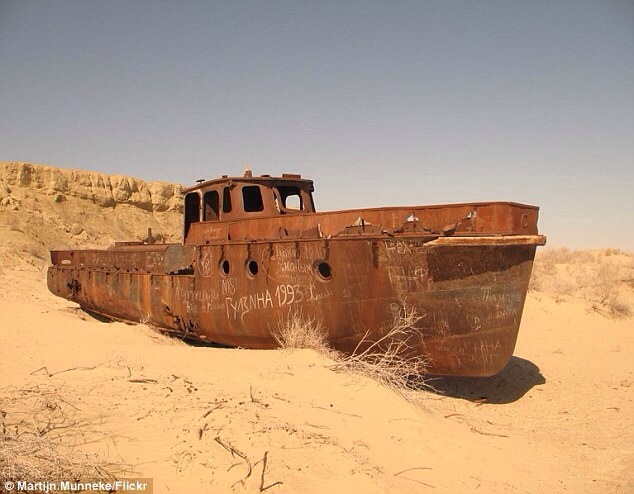
Look at the picture. Really look at it.
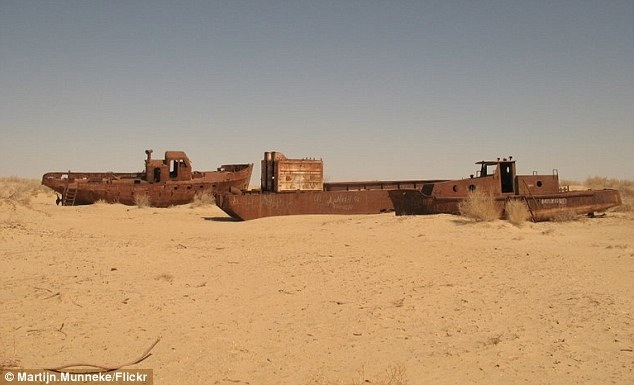
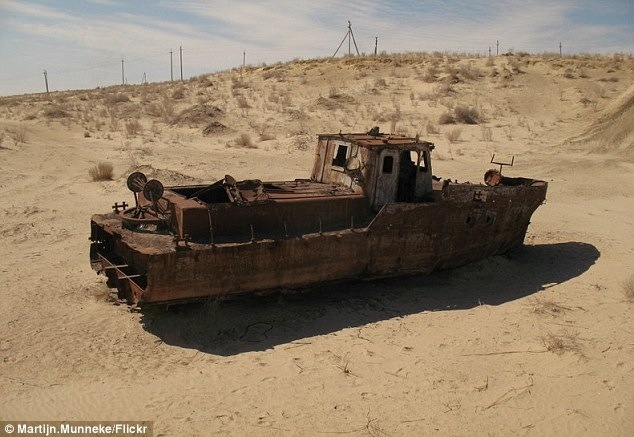
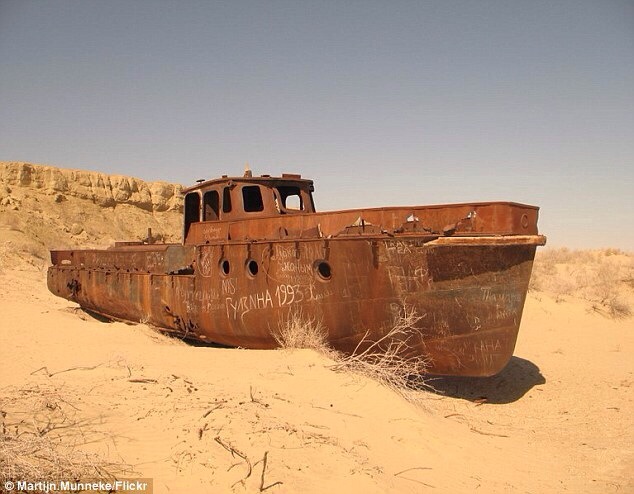
It’s a scene from a post-apocalyptic nightmare. A ship. A massive, rusting, iron behemoth, stranded. Not on a beach. Not in a shallow port. It’s marooned in a desert, its hull half-buried in cracked, poisoned earth, its skeleton baking under a relentless Central Asian sun. It sits silently, a monument to a world that no longer exists.
This isn’t science fiction. This is the Aral Sea.
Or what’s left of it.
They tell you it was a mistake. An unfortunate consequence of progress. A Soviet-era miscalculation. But the deeper you dig, the more the official story crumbles, revealing something far more disturbing. This wasn’t just a mistake. It was a deliberate execution. The question you should be asking isn’t *how* this happened. It’s *why*.

A Graveyard of Ships in a Sea of Sand
Imagine being a fisherman in the 1950s in the town of Moynaq, Uzbekistan. Your home is a bustling port. The air smells of salt and fish. The great Aral Sea, the fourth-largest lake on the entire planet, stretches out before you like a blue, shimmering promise. It’s your life. It’s your future. Your children’s future.
Now, fast forward. It’s today. You stand in that same spot. The water is gone. Utterly vanished. The shoreline isn’t a few feet away, or even a mile away. It’s over 100 kilometers from where you’re standing. Where there were once waves, there is now only the Aralkum. The Aral Desert. A new, man-made wasteland of salt and sand, littered with the ghosts of your past.
The fishing boats, the trawlers, the massive vessels that once commanded the waves—they’re all still here. An entire fleet, frozen in time. They sit at impossible angles, their propellers clogged with sand, their cabins stripped bare by scavengers and the wind. They are a fleet sailing on an ocean of dust. A silent, accusatory armada pointing fingers at the sky.
This is one of the most shocking environmental disasters on Earth. A catastrophe so complete, so absolute, that it’s hard to even comprehend.
Deep Dive: The Official Story (And Why It Doesn’t Add Up)
The history books and the declassified Soviet reports tell a simple, almost banal story. It begins in the 1940s, gathering steam into the 60s. The Kremlin, locked in a Cold War struggle with the West, had a grand vision. They wanted self-sufficiency. They wanted to transform the arid plains of Central Asia—Uzbekistan, Kazakhstan, Turkmenistan—into a massive cotton plantation. “White Gold,” they called it.
There was just one problem. Cotton is a thirsty crop. The desert is, well, a desert.
But the Soviets had a solution. A brutal, simple solution. Two mighty rivers, the Amu Darya and the Syr Darya, flowed down from distant mountains and fed the Aral Sea, replenishing its waters for thousands of years. The Soviet planners looked at these rivers not as life-giving arteries of an ancient ecosystem, but as inefficient pipes wasting precious water on a useless lake.
So they decided to steal the rivers.

Engineers gouged thousands of miles of irrigation canals across the landscape. But this wasn’t a precision operation. It was a crude, rushed, brute-force project. The canals were unlined, little more than gigantic ditches dug in the sand. Some estimates suggest that 50%, perhaps even 75%, of the diverted water never even reached the cotton fields. It just leaked out into the desert, evaporating uselessly. The hubris was staggering. One Soviet engineer was quoted as saying the death of the Aral Sea was “a part of the plan,” a worthy sacrifice for the glory of Soviet agriculture.
By the 1960s, the sea began to shrink. By the 80s, it was a full-blown crisis. The water level dropped by feet, then tens of feet. The salinity skyrocketed. First, the freshwater fish died. Then the saltwater-adapted fish died. The entire fishing industry, which once employed 60,000 people and supplied the Soviet Union with a huge portion of its fish, collapsed in a single generation.
The Aral Sea, once a contiguous body of water covering 26,300 square miles, fractured. It split into the North Aral Sea and the much larger South Aral Sea. Then the South Aral itself split, its eastern lobe drying up completely by 2014. What remains today is less than 10% of its original size. A puddle. A saline, toxic puddle in the middle of a poisoned desert.
That’s the official story. A tragic tale of communist central planning gone wrong. But what if the cotton was just a cover?
Conspiracy Corner: The Island of Death
In the middle of the once-great Aral Sea was an island. A remote, windswept place called Vozrozhdeniya Island, which translates to “Rebirth Island.” The name is a sick joke. This island wasn’t a place of rebirth. It was a place of death.
For decades, Vozrozhdeniya was one of the Soviet Union’s darkest secrets. It was the heart of their biological weapons program. A top-secret, off-the-books laboratory complex where scientists worked to weaponize the most terrifying pathogens known to man. Anthrax. Smallpox. Plague. Tularemia. Q-fever. They tested these agents on animals, sometimes in open-air experiments, letting clouds of weaponized disease drift across the island.
The island was the perfect prison. Surrounded by the vastness of the Aral Sea, it was completely isolated. Anything created there, or anything that escaped, was trapped. The sea was its cage.
But then the cage started to disappear.
Think about the timeline. The bioweapons program was in full swing in the 70s and 80s, at the exact same time the sea was rapidly vanishing. As the water receded, the island grew. By 2001, the southern edge of the island touched the mainland. The prison wall was gone. Rebirth Island was now Rebirth Peninsula, and its horrors were connected to the rest of the world.

A Sinister Theory Emerges
This is where the whispers from the fringes of the internet and declassified intelligence start to paint a different picture. Could the destruction of the Aral Sea have been, at least in part, a deliberate act of containment? A scorched-earth policy to hide their monstrous creations?
It sounds insane, but consider this: The Soviets knew the canals were inefficient. They knew the sea would die. They had the reports. What if the cotton plan wasn’t the primary goal, but a convenient excuse? A massive public works project that provided perfect cover for an even more sinister objective?
What if they drained the sea to expose the island, to make it accessible for cleanup and decommissioning when the program was eventually shuttered? Or, a darker thought: What if a catastrophic accident occurred on the island, and they believed that drying up the surrounding sea was the only way to sterilize the area and prevent a global pandemic?
When the Soviet Union collapsed, the base was hastily abandoned. Canisters of live, weaponized anthrax were simply buried in pits and forgotten. In 2002, a joint American-Uzbek team was sent in to decontaminate some of the burial sites, finding and neutralizing tons of anthrax spores. But did they get it all? No one knows for sure.
The Poisoned Wind
The horror doesn’t end there. The receding sea left behind a new nightmare: the Aralkum desert. This isn’t just sand. The seabed is a toxic cocktail of salt, industrial chemicals, and decades of pesticide and fertilizer runoff from the cotton fields. Ingredients like DDT and other chemicals, long banned in the West, were used in massive quantities.
Now, every year, powerful dust storms sweep across this exposed seabed. They pick up millions of tons of this toxic dust and carry it for hundreds of miles, blanketing nearby towns and farms. The locals breathe this poison every day. They drink it in their water. It’s in their food.
Is it any wonder that the region has some of the highest rates of respiratory illness, throat cancer, and infant mortality in the world? The people of the Aral region are paying the price for the Soviet Union’s ambitions with their lives. And here’s the most terrifying thought of all: What if those dust storms are picking up more than just pesticides? What if dormant anthrax spores, buried decades ago on Vozrozhdeniya, are being carried on the wind? The ultimate biological time bomb, waiting to be unleashed.
Can a Dead Sea Be Reborn?
Is there any hope? A little. On the northern Kazakh side of the basin, a massive effort has been made to save what’s left. In 2005, they completed the Kokaral Dam, a 13-kilometer-long dike that separates the small North Aral Sea from the dying South Aral. The goal was to stop diverting water to the south and concentrate the flow of the Syr Darya river into this smaller basin.
The results have been astonishing. The water level in the North Aral has risen. Salinity has dropped. Fish have returned. The fishing industry, on a small scale, is coming back to life. It’s a small victory in a massive war, a tiny glimmer of life in a sea of death.
But the South Aral, on the Uzbek side, is considered beyond saving. It continues to shrink, a hyper-saline, lifeless pool. The ghost fleet remains, a warning to the world. A warning about hubris, about secrecy, and about the terrifying consequences of playing God with nature.
So the next time you see a picture of these ships in the sand, don’t just see a sad environmental story. See a crime scene. An enigma. The evidence of a sea that was deliberately killed. And ask yourself what other secrets might still be buried beneath the poisoned sand.
Originally posted 2013-12-30 23:41:53. Republished by Blog Post Promoter
![20131231-003824[1]](https://coolinterestingnews.com/wp-content/uploads/2013/12/20131231-0038241.webp)