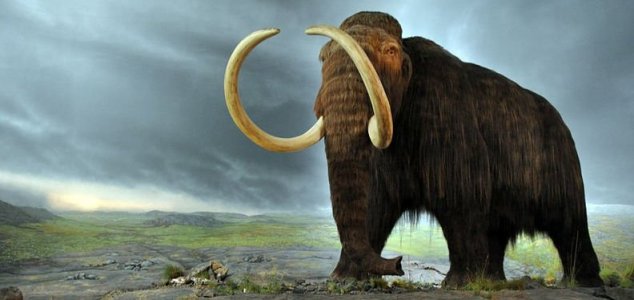
The Mammoth’s Ghost: Is Science About to Resurrect an Ice Age King?
Listen closely. Can you hear it? The ground trembles. Not from an earthquake, but from a footstep. A footstep that hasn’t been felt on this planet for over 4,000 years. This isn’t a scene from a movie. It’s the whispered promise from deep within the Siberian permafrost. The promise of the woolly mammoth’s return.
For decades, it was pure fantasy. A campfire story for biologists. But the line between science fiction and science fact is getting dangerously, thrillingly thin. They’re not just talking about it anymore. They’re building it. A global cabal of scientists, maverick billionaires, and controversial cloners are locked in a silent race to do the impossible: to bring an ice age titan back from the dead.
Forget what you think you know. This is bigger than one animal. It’s about rewriting the rules of life, death, and extinction itself. But as they dig deeper into the frozen earth, a chilling question arises. Are they resurrecting a legend… or are they digging our own graves?
Siberia’s Frozen Graveyard: The Quest for Perfect DNA
Everything starts in a place that feels like the end of the world. Yakutsk, Siberia. The coldest city on Earth. A place where winter temperatures casually drop to –40°F. Here, the very ground is a time capsule. Permafrost. A permanent layer of frozen soil, ice, and organic matter that has locked away the secrets of the last ice age for millennia.
This isn’t just cold dirt. It’s a prehistoric cemetery. And business is booming.
A new kind of gold rush is happening in the desolate tundra. Not for gold, but for ivory. Mammoth tusks. Local tusk hunters, braving biblical cold and treacherous terrain, blast tunnels into the frozen riverbanks with high-powered water hoses. They are melting history, searching for the spiraling tusks that can fetch a fortune on the Chinese market. But sometimes, they find something far more valuable.
A carcass. A flank of skin with shaggy hair still attached. A frozen limb. Or, in the rarest of cases, an almost perfectly preserved body, its flesh and organs flash-frozen in time.
Inside the Pleistocene Park Nexus
In the heart of this frozen world, in Yakutsk, a special laboratory was established. It’s the nerve center for this audacious project. Forget sterile, white-walled labs you see in movies. Picture a place where the ancient and the ultra-modern collide. Where scientists in parkas handle 40,000-year-old tissue samples with tools that can rewrite the code of life itself.
This is ground zero. Here, researchers from North-Eastern Federal University work tirelessly, their primary goal to hunt for one thing. The holy grail. A single, intact, living cell nucleus from a woolly mammoth. One cell. That’s all it could take to kickstart a revolution.
Semyon Grigorev, a name you should know, a director at the city’s Mammoth Museum, put it bluntly. This isn’t just a dream. It’s a plan. An agreement signed by three powerful groups, a pact to make this resurrection a reality.

The Unholy Alliance: Gene Wizards, Dog Cloners, and the Dream of De-Extinction
This isn’t a solo mission. Bringing back a mammoth requires a strange and powerful team, a global network of specialists with very different, and sometimes very controversial, backgrounds.
First, you have the Siberian scientists. The gatekeepers. They have the access, the mammoth carcasses, and the firsthand knowledge of the frozen earth. They are the foundation of the entire operation.
Then you have the muscle from South Korea: Sooam Biotech. This is where the story gets weird. Sooam is a world leader in animal cloning. Specifically, dog cloning. For a hefty price, they can create a genetic copy of your beloved pet. The company was founded by a man named Hwang Woo-suk, a scientist who was once hailed as a national hero in South Korea for his work on human stem cells, only to be disgraced when his research was found to be fraudulent. He’s back, and now he’s moved on from puppies to prehistory. His expertise in the delicate art of cloning is undeniable. But his past adds a layer of intrigue and suspicion to the entire project. What are his real motives?
And let’s not forget the brains from the Beijing Institute of Genomics (BGI). They are a gene-sequencing factory. They can map a creature’s entire genetic blueprint faster and cheaper than almost anyone on the planet. They provide the roadmap, the digital code that defines what a mammoth *is*.
But a new player has entered the game, one with deep pockets and a Silicon Valley mindset.
The Harvard Maverick vs. The Siberian Traditionalists
Enter Colossal Biosciences. A flashy American startup backed by tech billionaires and the brilliant, bearded geneticist from Harvard, George Church. They aren’t just joining the race; they’re trying to change the rules. While the Siberian-Korean alliance focuses on the traditional, difficult path of finding a perfect cell for cloning, Church and his team at Colossal are taking a different, more radical approach. They don’t believe they need a perfect cell. They believe they can build a mammoth from the ground up, using the DNA of its closest living relative: the Asian elephant.
This has created a schism in the world of de-extinction. Two competing philosophies. Two teams racing toward the same finish line. Who will get there first?
The Blueprint for a Beast: How to Build a Mammoth from Scratch
So how do you actually do it? How do you take a 10,000-year-old ghost and give it flesh and blood? There are two main paths, and they are both fraught with mind-boggling complexity.
Option A: The “Jurassic Park” Clone
This is the classic method, the one pursued by the Sooam Biotech team. It’s called somatic cell nuclear transfer (SCNT). It’s how Dolly the sheep was cloned.
Here’s the simple version. You find a preserved mammoth cell with its nucleus—the part containing the DNA—still intact. You take an egg cell from a modern Asian elephant and carefully remove its nucleus. Then, you insert the mammoth nucleus into the empty elephant egg. You give it a tiny jolt of electricity to fuse them together and trick the egg into thinking it’s been fertilized. If it works, the cell starts dividing, growing into a mammoth embryo. You then implant this embryo into a surrogate mother elephant and wait.
The problem? It’s a huge one. Finding an intact nucleus after thousands of years in the ice is next to impossible. Ice crystals are like microscopic daggers. As the animal froze, these daggers would have shredded the delicate cell membranes and the precious DNA within. It’s like finding a pristine vinyl record in a landfill after a hurricane. Possible? Maybe. Likely? Absolutely not.
Option B: The CRISPR-Powered Hybrid
This is George Church’s plan. It’s more Frankenstein than Jurassic Park. It’s clever. And it’s terrifying.
His team at Colossal has mapped the woolly mammoth genome. They’ve also mapped the Asian elephant genome. By comparing the two, they’ve identified the specific genes that made a mammoth a mammoth. Genes for long, shaggy hair. Genes for a thick layer of insulating fat. Genes for small ears to prevent frostbite. Genes for a special kind of hemoglobin that allows blood to carry oxygen in extreme cold.
Now, using the revolutionary gene-editing tool known as CRISPR, they are literally cutting and pasting these mammoth genes into the DNA of an Asian elephant skin cell. They aren’t cloning a mammoth. They are editing an elephant. They are creating a hybrid. A cold-resistant, hairy elephant that looks and acts like a mammoth. An “ele-moth.” A “mammophant.”
This method avoids the impossible hunt for a perfect cell. But it comes with its own set of horrors. What happens when you start messing with the fundamental code of a living creature? What unforeseen consequences could arise? It’s a biological gamble on a planetary scale.
And both methods face the same final, giant hurdle: the surrogate mother. You need a female Asian elephant willing and able to carry a mammoth-like calf for a 22-month pregnancy. The ethical questions are staggering. Is it fair to subject an endangered species to such a risky experimental procedure?
The Red Gold: Did Scientists Really Find Liquid Mammoth Blood?
The hunt for perfect DNA took a sensational turn in 2013. On a remote island in the Arctic Ocean, Semyon Grigorev’s team unearthed the carcass of a female mammoth trapped in a block of pure ice. As they chipped away at it, they were stunned. A dark, thick liquid began to ooze from the 15,000-year-old flesh.
It was blood. Liquid blood.
The news exploded. This was it. The game-changer. The media screamed about the possibility of finding intact red blood cells, maybe even white blood cells with their precious nuclei. Had they finally found the holy grail?
The reality is more complex. While an incredible find, the “blood” was likely a mix of degraded bodily fluids and cryoprotectants—natural antifreeze the mammoth’s body might have produced. The cells within were almost certainly ruptured beyond repair. It was a tantalizing discovery, a clue that the permafrost might hold better-preserved secrets than we ever imagined. But it wasn’t the silver bullet. The search continues. The red gold rush is still on.
Conspiracy Deep Dive: The Dark Side of Bringing Back the Dead
This is where we peel back the layers of polite scientific discourse and ask the hard questions. The questions they don’t want to answer in press releases.
Are We Building a Monster or Saving the Planet?
The public justification for this project is surprisingly bold. They aren’t just doing it “because they can.” Proponents, especially the Colossal team, claim that resurrecting the mammoth is an act of environmental conservation. They argue that large herds of mammoths could restore a lost ecosystem called the “mammoth steppe.”
The theory goes like this: These giant herbivores would trample the snow, allowing the deep cold to penetrate the ground and keep the permafrost frozen. They would knock down mossy forests and promote the growth of grasslands, which reflect more sunlight. In short, they claim bringing back the mammoth could help stop, or even reverse, the melting of the Arctic permafrost and the release of massive amounts of greenhouse gases.
Is this a brilliant eco-engineering plan? Or is it a convenient, feel-good excuse to justify a multi-million-dollar science experiment? Could these creatures become an invasive species in a world that has changed dramatically since they last walked it? Creating a living, breathing animal to be a tool for climate control feels… dangerous. A single, unforeseen ecological consequence could be catastrophic.
What Aren’t They Telling Us?
Let’s think like a conspiracist for a moment. Why the sudden, intense interest? Why are billionaires and governments pouring money into this? Is it really just about seeing a fuzzy elephant in a park?
Consider the possibilities. Mastering de-extinction technology gives you unprecedented control over genetics. The ability to create a hybrid animal, to tailor a species for a specific environment, has massive implications. Could this technology be weaponized? Imagine genetically engineered animals designed for warfare or espionage. It sounds insane, until you remember that we live in a world where governments have seriously researched psychic spies and acoustic weapons.
Then there’s the issue of biological property. Who owns a resurrected species? The company that creates it? The country where the DNA was found? Can you patent a woolly mammoth? The potential for a new kind of biological colonialism is very real.
And what about the animal itself? To be born without a mother, without a herd, without any context for its own existence. It would be the loneliest creature on Earth. A scientific marvel, yes. But also, perhaps, a tragic monster, born into a prison it never asked for.
The Day the Earth Shakes: What Happens When the First Mammoth is Born?
Cut through the noise. Ignore the debates. And just imagine the moment. A lab, an artificial womb, or a specially prepared enclosure. A team of scientists holding their breath. And then, a new life. The first woolly mammoth, or mammoth-like creature, to breathe Earth’s air in four millennia.
The world would stop. It would be a moment that redefines our relationship with nature, with technology, and with our own past. It would be an achievement on par with landing on the moon.
But what comes next? What happens on day two?
The goal isn’t one mammoth. The goal is a herd. A self-sustaining population. This will require creating dozens, maybe hundreds of animals. It’s a project that will span generations. Will we see a real-life Pleistocene Park, a tourist attraction in Siberia where people can see these resurrected beasts roam?
It opens a Pandora’s box. If we can bring back the mammoth, who’s next? The saber-toothed cat? The Tasmanian tiger? The dodo? Where do we draw the line? Or do we draw one at all?
We are standing on the edge of a new creation story, one written not by a god, but by us, in the language of genetic code. The ice is melting, and the giants are stirring. The question is no longer “can we?” The question is “should we?” The ground is starting to tremble. And we have no idea what’s coming.
Originally posted 2015-09-01 13:33:14. Republished by Blog Post Promoter