The Neighbor We Never Knew We Had
Space is quiet. Until it isn’t.
Just when you think you have a handle on the cosmos, the universe throws a curveball that shatters everything we thought we knew about our galactic neighborhood. We spend billions of dollars looking at distant galaxies, peering back to the beginning of time. But sometimes? The biggest secrets are hiding right in our own backyard.
Astronomers have just dropped a bombshell discovery that has the scientific community buzzing, and frankly, a little rattled. They found a world that has been described as a “potential gold mine of science data.” But what does that actually mean? Is it just rocks and gas? or is it something else?
Hot on the heels of the recent, media-hyped discovery of an “Earth-like” world orbiting a distant star, we have a new contender. But this time, the playing field has changed. This isn’t some faint dot on a telescope image from a thousand light-years away. This involves a planet that is practically knocking on our front door.
Meet HD 219134b.
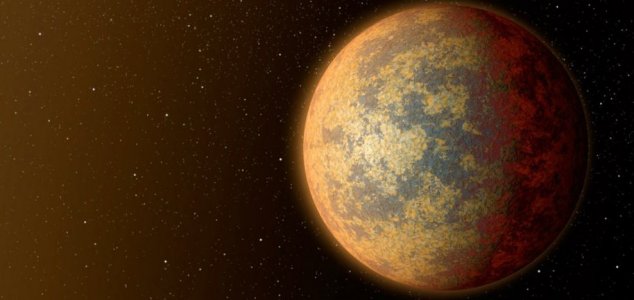
It sounds like a barcode, but don’t let the name fool you. This is the closest rocky planet ever confirmed outside our solar system. Found using NASA’s Spitzer Space Telescope, this rocky world is situated only 21 light-years away. In cosmic terms? That is down the street. That is breathing distance.
But here is the catch. There is always a catch. It’s too close to its parent star to support life. At least, life as we know it.
The “Gold Mine” Anomaly: What Are They Really Looking For?
“Transiting exoplanets are worth their weight in gold because they can be extensively characterized,” said project scientist Michael Werner. “This exoplanet will be one of the most studied for decades to come.”
Stop. Read that again.
Worth their weight in gold.
Why use that specific phrasing? Scientists are usually dry, boring, and precise. When they start using metaphors about treasure, you need to pay attention. The official story is simple: because the planet “transits” (crosses in front of) its star, we can study it easily. The starlight filters through the planet’s atmosphere (if it has one) on its way to Earth, acting like a cosmic X-ray. It allows us to read the chemical composition of the air.
But why the obsession with this specific rock? 21 light-years is close enough that if we had the technology—propulsion systems that black budget projects might already have—we could theoretically send a probe there. A one-way trip? Maybe. But a trip nonetheless.
If HD 219134b is a “gold mine,” we have to ask: what are the nuggets? Are we looking for rare isotopes? Signs of a destroyed atmosphere from a civilization that burned itself out? Or is it simply the “Rosetta Stone” of planets—the one key that helps us crack the code of how Super-Earths form?
The Transit Method: A Cosmic Magic Trick
To understand why this discovery is shaking the foundations of astronomy, you have to understand the magic trick used to find it. We didn’t see the planet directly. That’s almost impossible with current tech. It’s like trying to spot a firefly buzzing next to a spotlight from ten miles away.
Instead, NASA used the Transit Method. Imagine you are staring at a bright light bulb. Suddenly, a tiny gnat flies in front of it. The light dims by a fraction of a percent. That tiny dip? That’s the planet.
HD 219134b was caught in the act. It crossed the face of its star in the constellation Cassiopeia. Because we know exactly how much light it blocked, we know how big it is (about 1.6 times the size of Earth). Because we know how much the star “wobbles” from the planet’s gravity, we know how much it weighs (about 4.5 times the mass of Earth).
Do the math. Heavy. Rocky. Big. This is a Super-Earth.
A Hellscape Next Door
Let’s talk about the conditions on the ground. NASA says it’s “too close to support life.” That is the understatement of the century. This planet orbits its star in just three days. Three. Days.
Imagine a year passing every time you have a long weekend. The speed is dizzying. Because it is so close, the gravitational forces are immense. It is likely “tidally locked,” meaning one side of the planet faces the star forever, locked in an eternal, scorching day, while the other side is frozen in permanent night.
On the dayside? Temperatures skyrocket. We are talking about rock-melting heat. Volcanic activity wouldn’t just be possible; it would be the norm. Entire oceans of magma churning under a sky that is dominated by a sun looming massive and angry above the horizon.
But here is where the “Alternative History” mindset kicks in. We assume life needs water. We assume life needs 72 degrees and a light breeze. But what if we are wrong? What if the “Gold Mine” refers to biology based on silicon, thriving in the heat? Or what if the dark side—the twilight zone between the burning day and freezing night—holds secrets we can’t even imagine?
We label it “dead” because it doesn’t look like Earth. That might be our biggest mistake.
The Great Planetary Conspiracy: Changing the Definitions
The term planet is ancient. It goes back to the guys in togas looking up and realizing some stars moved weirdly. It has ties to history, science, mythology, and religion. Several planets in the Solar System can be seen with the naked eye. These were regarded by many early cultures as divine, or as emissaries of deities. They were gods in the sky.
As scientific knowledge advanced, human perception of the planets changed. We started adding things to the list. Then, we started removing them.
In 2006, the International Astronomical Union (IAU) officially adopted a resolution defining planets within the Solar System. You remember this. This is when they killed Pluto.
This definition is controversial. It excludes many objects of planetary mass based on where or what they orbit. Why did they do it? The official reason is “tidiness.” They wanted a clean list. But look closer. Although eight of the planetary bodies discovered before 1950 remain “planets” under the modern definition, some celestial bodies—such as Ceres, Pallas, Juno, Vesta (each an object in the solar asteroid belt), and Pluto (the first trans-Neptunian object discovered)—were kicked out of the club.
Why does this matter for HD 219134b?
Because definitions control how we think. By narrowing the definition of a planet, the scientific establishment keeps our focus on a very specific type of world. They tell us what matters and what is just “debris.” When they call HD 219134b a “planet,” they are telling us it matters. When they downgrade Pluto, they tell us to ignore it.
Is it possible that the most important objects in our solar system aren’t the ones on the colorful posters in 3rd-grade classrooms? Ceres has bright spots that look suspiciously like artificial lights (or salt flats, if you believe the sterile reports). Pluto has a complex atmosphere and geologic activity that shouldn’t exist on a dead ice ball.
The discovery of HD 219134b forces us to look at the definition again. This thing is a rocky monster. It defies the neat little categories. It proves that the galaxy is messy, chaotic, and full of things that don’t fit the spreadsheet.
The James Webb Connection: The Eye in the Sky
The original reports on this planet mentioned something huge: “In particular the planet should prove to be a prime target for NASA’s upcoming James Webb Space Telescope which is scheduled to be up and running by 2018.”
Well, fast forward. The James Webb Space Telescope (JWST) is up there. It is running. And it is looking.
This is where the story gets tense. HD 219134b is the perfect target for Webb. Spitzer was an amazing telescope, but it was like looking at the world through foggy glasses compared to the high-definition vision of the JWST. Webb can analyze the atmosphere of this Super-Earth with terrified precision.
What if the “gold mine of data” isn’t just about rocks? Webb looks for biosignatures. Methane. Oxygen. Carbon dioxide. Industrial pollutants.
Yes, you heard me. Technosignatures.
If a civilization existed on a planet 21 light-years away, and they were advanced enough to manipulate their environment, or perhaps live underground to escape the heat of their star, the heat signature and atmospheric composition would give them away. Webb is the tool that would find them.
Has it already looked? Almost certainly. NASA prioritizes targets based on value. A planet this close, this rocky, and this “transiting” is at the top of the list. If they found something anomalous—something that didn’t look like natural rock and gas—would they tell us immediately? Or would they analyze it for ten years, terrified of the social collapse that comes with saying “We are not alone”?
Why 21 Light Years Changes Everything
We need to circle back to the distance. In the vast ocean of the Milky Way, 21 light-years is a handshake.
Our radio signals have been traveling away from Earth for over 100 years. That means the Hitler speech from the 1936 Olympics, the moon landing broadcasts, the season finale of Seinfeld—it has all washed over HD 219134b. If anyone, or anything, is there with a radio receiver, they know we are here. They have heard us. They have seen our noise.
This isn’t a one-way street of discovery. We are looking at them with the Spitzer and Webb telescopes. But if they are there, looking back, they have a front-row seat to the chaotic reality show that is Planet Earth.
The Cassiopeia Mystery
The planet sits in the constellation Cassiopeia. In mythology, Cassiopeia was the vain queen, punished by the gods. It fits. We are vain creatures, thinking we are the center of the universe. This discovery is the punishment—or the lesson.
It teaches us that Earth isn’t unique. Rocky worlds are everywhere. Super-Earths are common. We are just one grain of sand on a very large beach. The proximity of HD 219134b suggests that the galaxy is teeming with rocky worlds.
If we roll the dice enough times, eventually we hit a winner. If there is a rocky world 21 light-years away, there is likely another one 25 light-years away. And another at 30. The density of planets is higher than we ever dared to dream in the 1990s.
What Comes Next?
The scientific papers will continue to come out. They will talk about “bulk density” and “stellar irradiation.” They will use big words to make the universe sound sterile and safe.
Don’t fall for it.
Every time they find a world like HD 219134b, the walls of our isolation crack a little more. We are standing on the precipice of the greatest realization in human history. The “Gold Mine” is open. The data is pouring in.
Keep your eyes on the news regarding the James Webb observations of this sector. Watch for the delays in releasing data. Watch for the sudden changes in how they describe the atmosphere.
They told us it’s too hot for life. They told us it’s just a rock. But they also told us it’s worth its weight in gold.
Maybe it’s time we found out why.
Originally posted 2015-09-01 15:04:47. Republished by Blog Post Promoter