33 Days. That’s All He Got.
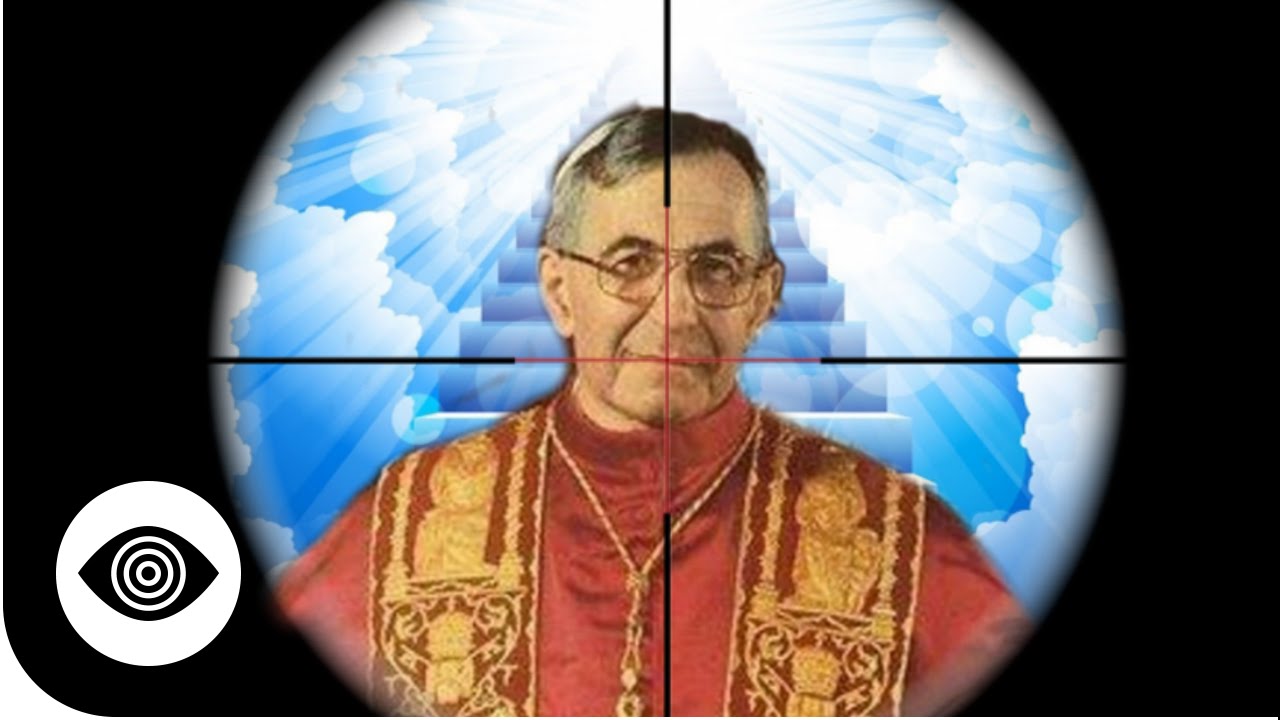
Thirty-three days. A blip. A single breath in the thousands of years of Vatican history. September 1978 was supposed to be the dawn of a new era. A lighter era. But it ended in darkness. When Pope John Paul I was found dead in his bed, the official story was neat. Tidy. “Myocardial infarction.” A heart attack.
Case closed? Not even close.
To believe the official narrative, you have to ignore a mountain of inconsistencies so high it casts a shadow over St. Peter’s Square. You have to believe that a healthy man simply stopped ticking the very moment he was about to clean house. You have to overlook the lies told by the Holy See in the hours immediately following the discovery of the body.
Was it natural causes? Or was this the first papal murder of the modern age? Grab your coffee. Lock the door. We are going deep into the corridors of power, money, and the Mafia.
The Smiling Pope: Too Good for Rome?
Albino Luciani wasn’t supposed to be Pope. He didn’t want the job. When the white smoke rose, he looked terrified. He was a humble man from northern Italy. The son of a socialist bricklayer. He didn’t fit the mold of the aristocratic power-brokers usually tapped for the Throne of St. Peter.
They called him “The Smiling Pope.” Why? Because he refused to be treated like a king. He banished the sedia gestatoria—that massive portable throne popes used to be carried around on. He spoke simply. He laughed. He seemed like a breath of fresh air.
But here is the thing about fresh air: it scares people who thrive in the stench of corruption.
Luciani wasn’t just smiling. He was watching. He was reading. And what he saw in the Vatican’s financial ledgers terrified him. He realized that the Church wasn’t just a spiritual organization. It was a bank. A massive, unregulated, offshore bank acting as a laundromat for some of the dirtiest money in Italy.
The Viper’s Nest: The Vatican Bank Scandal
To understand why someone might want a holy man dead, you don’t look at the Bible. You look at the bank account. The Istituto per le Opere di Religione (IOR). The Institute for the Works of Religion. Or, simply, the Vatican Bank.
At the center of this web sat Archbishop Paul Marcinkus. An American. A towering man, physically imposing, who hailed from Cicero, Illinois—Al Capone’s old stomping grounds. Marcinkus was the bodyguard-turned-banker who famously said, “You can’t run the Church on Hail Marys.”
He wasn’t running it on prayers. He was running it on schemes.
The Unholy Trinity
Marcinkus wasn’t working alone. He was thick as thieves—literally—with two other men. You need to know these names.
- Michele Sindona: A Sicilian banker with direct, proven ties to the Mafia. He was laundering heroin money through the Vatican Bank.
- Roberto Calvi: Known as “God’s Banker.” He ran Banco Ambrosiano. He was moving millions out of Italy illegally, using the Vatican as his shield.
When John Paul I took office, this house of cards was shaking. Investigations were opening up. The Bank of Italy was sniffing around. If the books were opened, the link between the Holy See and the Cosa Nostra would be front-page news worldwide.
Luciani ordered an investigation. He asked for the papers. He was looking into the displacement of Marcinkus. He was preparing to cut the rot out of the church.
And then, suddenly, he was dead.
The Night of the Long Knives: September 28, 1978
Let’s look at the timeline. It’s a mess. And the Vatican made it messier.
The Pope retired to his room. He was fine. He had dinner. He spoke to his aides. The official report says he died around 11:00 PM. But who found him? And when?
The Lie About the Nun
The Vatican first released a statement saying the Pope’s private secretaries found him dead in the morning. Why? Because the truth was “embarrassing.” The truth was that Sister Vincenza, a nun who brought him his morning coffee, found him.
Why lie about something so small? In the world of criminal investigation, a lie about the discovery of the body is a massive red flag. If they lied about who found him, did they lie about what they found?
Sister Vincenza said the Pope was sitting up in bed. His reading light was on. He was holding papers. His face was contorted in a grimace, not a peaceful sleep. But here is the kicker: The papers vanished.
Witness reports suggest he was holding a list. A list of firings. A reorganization of the Vatican hierarchy. A list that allegedly included the removal of Paul Marcinkus and a cleanup of the P2 Masonic Lodge infiltrators within the Curia.
Those papers were never seen again. Someone entered that room and sanitized the scene.
The Rush to Embalm: Destroying the Evidence?
This is where it goes from “suspicious” to “cover-up.”
Under Italian law, you cannot embalm a body less than 24 hours after death. It’s illegal. Why? To allow for an autopsy if foul play is suspected. To make sure the person is actually dead.
The Vatican didn’t wait 24 hours. They didn’t wait 12. Doctors were summoned to embalm the Pope almost immediately. Why the rush? Why the hurry to pump his veins full of formaldehyde?
Formaldehyde destroys toxicology evidence. If John Paul I had been poisoned—say, with digitalis, a heart medication that causes a heart attack in high doses—the embalming fluid would mask it. By the time anyone asked for an autopsy, the biological evidence was garbage.
Cardinal Villot, the Secretary of State (and a man rumored to be on the Pope’s firing list), refused an autopsy. He claimed it was against Vatican protocol. That was a lie. Popes have been autopsied before. They just didn’t want this Pope autopsied.
The P2 Lodge: The Shadow Government
We cannot talk about this death without mentioning Propaganda Due, or P2. This wasn’t just a Masonic lodge; it was a state within a state. Led by Licio Gelli, a puppet master with fascist roots, P2 included generals, politicians, spies, and—yes—Cardinals.
The theory goes like this: The P2 Lodge was using the Vatican Bank to fund anti-communist activities and line their own pockets. John Paul I was an outsider. He wasn’t part of the club. He was a threat to the entire operation.
If he had exposed the cardinals who were secret members of P2, the Church’s credibility would have been destroyed. The motive for murder wasn’t just money. It was survival.
The Body Under the Bridge
Still think this is just a conspiracy theory? Let’s fast forward a few years.
Remember Roberto Calvi? “God’s Banker”? The man working with Marcinkus? In 1982, as the Banco Ambrosiano collapsed and the stolen millions came to light, Calvi fled Italy.
He was found hanging under Blackfriars Bridge in London. His pockets were stuffed with bricks and cash. At first, the police called it suicide. Suicide? A man climbs down scaffolding, ties a rope, stuffs bricks in his pockets, and hangs himself?
It took years, but eventually, the courts ruled it was murder. The Mafia silenced him. If they killed the banker to keep him quiet, would they hesitate to kill a Pope?
And what about Michele Sindona? He died in prison in 1986. He drank a cup of coffee laced with cyanide. “God’s Banker” and the “Shark” both murdered to protect the secrets of the Vatican Bank.
All the key players around John Paul I met violent ends or lived in disgrace. Yet we are supposed to believe the Pope himself just happened to have a “bad heart” on the most convenient night in history?
The Weapon: Digitalis?
David Yallop, in his explosive book In God’s Name, proposes that the Pope was poisoned with digitalis. Luciani was taking medication for low blood pressure. Digitalis is easy to administer. It’s tasteless in food or drink. It causes death quickly. And, crucially, it looks exactly like a heart attack.
The Pope had been complaining of feeling unwell earlier. But he refused a doctor. Or was the doctor kept away? The Vatican doctors vanished into the background, replaced by the silence of the establishment.
What If He Lived?
Imagine if John Paul I had survived that night. Imagine he woke up on September 29, 1978, signed the papers, and fired Marcinkus. Imagine he opened the books to the world.
- The Vatican Bank scandal would have exploded years earlier.
- The Mafia’s grip on the church’s finances would have been severed.
- The P2 Lodge would have been exposed before they could destabilize the Italian government.
- The Cold War history of the Church might have looked very different.
He was a danger to the establishment because he actually believed in the poverty of Christ. He didn’t want a bank. He wanted a Church.
The Verdict
We may never know the absolute truth. The evidence was embalmed. The papers were stolen. The witnesses are dead. The Vatican Archives are sealed tighter than a tomb.
But ask yourself this: When a man threatens to take billions of dollars away from the Mafia and expose a secret society of powerful elites, and then dies suddenly with no witnesses, is “natural causes” really the most logical conclusion?
Or is it the most convenient lie?
Some say the Holy Spirit chooses the Pope. But in 1978, it looks like the devil might have cast the deciding vote.
Keep Questioning. Keep Digging.
History is written by the victors, but the truth is often hidden in the footnotes they tried to delete. What do you think really happened to the Smiling Pope? Was it a weak heart, or a strong poison?