The Ghosts of 9/11: The Hijackers Who Weren’t and the Evidence That Shouldn’t Exist
You know the story they told us. Nineteen men. Box cutters. A burning hatred for freedom. They slipped through airport security, stormed the cockpits of four commercial airliners, and turned them into missiles aimed at the heart of America.
It’s a simple, terrifying narrative. One that has been burned into our collective memory. It’s the story that launched wars, reshaped the globe, and changed life as we knew it forever.
But what if it’s just that?
A story.
A script, carefully crafted and sold to a terrified public. Because when you start to pull at the threads of the official 9/11 narrative, the whole thing doesn’t just unravel. It disintegrates into a cloud of inconsistencies, impossibilities, and questions so disturbing they’ve been silenced for over two decades. The biggest question of all? Who was *really* flying those planes?
A Script Too Perfect: The Evidence That Fell From the Sky
In the chaotic hours and days after the attacks, as a stunned nation watched the smoke rise from New York and Washington, the FBI was already building its case. And boy, did they get lucky. The evidence didn’t just appear; it practically gift-wrapped itself, complete with a bow.
The Terrorist’s Forgotten Luggage
Think about it. You are part of the most meticulously planned, high-stakes covert operation in modern history. Every detail is critical. Your mission is to die, to become a martyr for your cause. What do you pack for a one-way trip?
According to the official story, you pack your Koran, instructions on how to fly a commercial jet, and a fuel consumption calculator. And then… you just forget to take it on the plane.
That’s exactly what the Boston Globe reported. A pair of bags, intended for one of the hijacked flights from Logan Airport, conveniently missed the connection. Inside, investigators found a treasure trove of incriminating material. As if that wasn’t enough, authorities got a “tip” about a suspicious white car also left at Logan. And what did they find inside? An Arabic-language flight training manual. It’s almost laughably convenient. A movie trope come to life. The clumsy criminals leaving a perfect trail of breadcrumbs for the heroic investigators to follow.
Who does that? Was this a genuine mistake by a supposedly ruthless terror cell? Or was it a plant, designed to instantly create a profile and a motive, pointing the world’s finger in a very specific direction?
The Indestructible Passport of Mohamed Atta
If the forgotten luggage wasn’t absurd enough, the story of Mohamed Atta’s passport shatters the boundaries of belief. This single piece of evidence is perhaps the most infamous anomaly in the entire 9/11 saga.
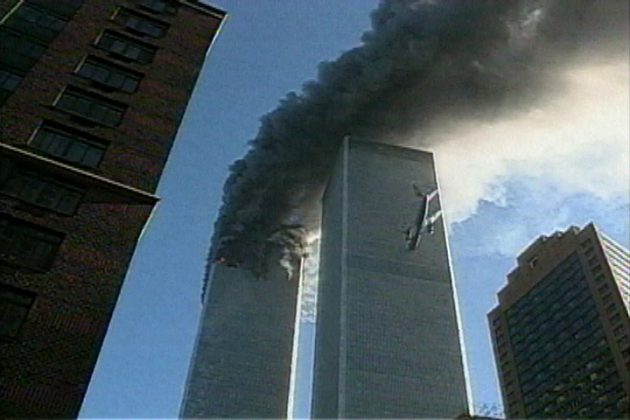
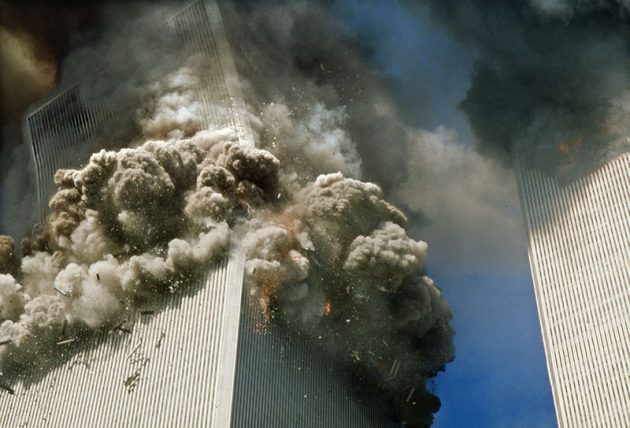
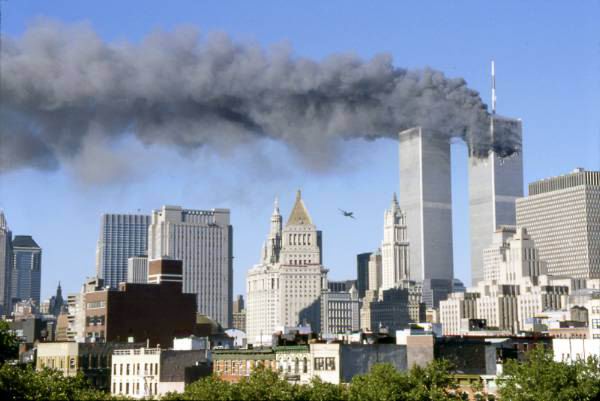
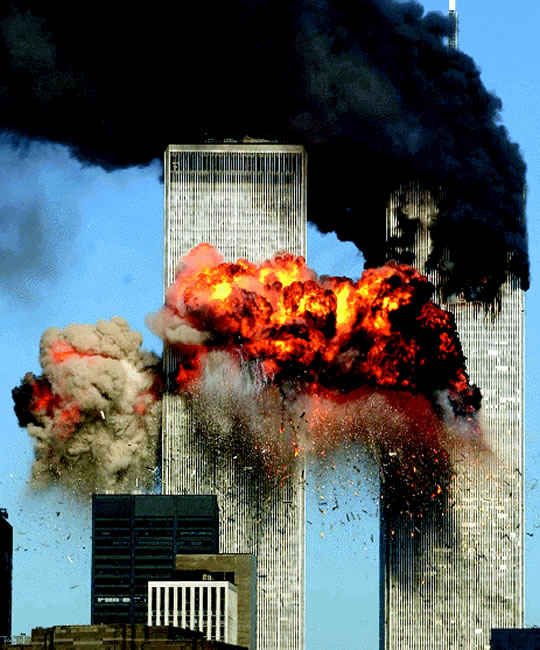
Let’s set the scene. American Airlines Flight 11, a Boeing 767 loaded with thousands of gallons of jet fuel, slams into the North Tower at over 400 miles per hour. The impact vaporizes metal and creates a fireball that reaches temperatures exceeding 1,000 degrees Celsius. The tower itself, a monument of steel and concrete, is later pulverized into toxic dust that blankets Lower Manhattan.
Nothing should have survived that. Nothing.
Yet, somehow, a flimsy paper passport belonging to the supposed ringleader, Mohamed Atta, did. According to the official report, it wasn’t just found in the rubble. No, it was “found” several blocks away from the World Trade Center site, supposedly discovered by a passerby who handed it to a police detective. It was reportedly in near-perfect condition.
How? How does a paper passport survive an explosion that disintegrated a 110-story skyscraper, only to land gently on a nearby street? It defies every known law of physics and common sense. This wasn’t evidence; it was a message. A calling card left at the scene of the crime to make sure we all knew exactly who to blame. Within days, the faces of Atta and his 18 alleged accomplices were plastered on every screen in the world. Case closed. Or was it?

From Flight School Flunkies to Top Gun Aces?
The story gets even more bizarre when you look at the alleged pilots. We’re told these men, armed with rudimentary flight simulator training, performed aerial maneuvers that would make a seasoned fighter pilot sweat. It’s a claim that simply doesn’t hold up to scrutiny.
Numerous reports from their own flight instructors paint a picture not of dedicated jihadists, but of incompetent students. They were described as aggressive, rude, and, most importantly, terrible pilots. One instructor at a Florida flight school said Mohamed Atta and Marwan al-Shehhi “were like Dumb and Dumber.” Another instructor refused to continue training Zacarias Moussaoui (the so-called “20th hijacker”) because his questions about flying a 747 with no interest in takeoffs or landings were so suspicious.
They struggled with basic commands in a tiny single-engine Cessna. They were apparently incapable of soloing in a simple propeller plane. And yet, we are supposed to believe that on September 11th, these same men calmly stepped into the cockpits of massive Boeing 757s and 767s, disabled the transponders, navigated with pinpoint precision toward their targets, and executed high-speed, controlled descents.
The Impossible Pentagon Maneuver
Nowhere is this discrepancy more glaring than with the attack on the Pentagon. The official flight path of American Airlines Flight 77 is a thing of aerodynamic impossibility for a novice. The plane, a Boeing 757, allegedly performed a 270-degree, downward-spiraling corkscrew turn at over 500 miles per hour, dropping thousands of feet in just a couple of minutes.
It then leveled out just feet above the ground, flying so low it clipped light poles, before precisely striking the newly-renovated, least-occupied section of the Pentagon. Many veteran commercial and military pilots have gone on record stating that this maneuver is extraordinarily difficult, if not impossible, for even them to replicate in a heavy commercial jet. The g-forces alone would be staggering.
To believe the official story, you have to believe that Hani Hanjour, a pilot who was so incompetent that his instructors at an Arizona flight school deemed him unfit to fly a Cessna solo, was the one at the controls. It’s an insult to intelligence. So, if Hanjour wasn’t flying that plane, who was?
The Hijackers Who Weren’t Dead
Here is where the official narrative completely collapses. The final, damning nail in the coffin. In the rush to name the culprits, the FBI released a list of 19 hijackers. It was supposed to be the definitive list of the men who died carrying out the attacks.
There was just one problem.
Several of them turned up alive.
This isn’t some fringe internet rumor. This was reported by mainstream news organizations like the BBC and The Telegraph in the days and weeks after 9/11. At least seven of the men named by the FBI as suicide bombers came forward, stunned and horrified, to declare their innocence.

“I’m Still Alive”: Voices From Beyond the Grave
Their stories are shocking. Their passports had been stolen years prior. Their identities were co-opted for a monstrous deception.
- Waleed al-Shehri: A Saudi pilot, he saw his face on TV listed as a hijacker. He had been living in Casablanca, Morocco. He contacted authorities and the press, stating, “I’m still alive.”
- Abdulaziz al-Omari: An engineer from Riyadh, he reported his passport stolen in Denver in 1995. He told The Telegraph, “I couldn’t believe it when the FBI put me on their list.”
- Saeed al-Ghamdi: A pilot for Saudi Arabian Airlines, he was on a training course in Tunisia when the attacks happened. He was dumbfounded to be named as a terrorist who died on Flight 93.
- Salem al-Hazmi: He worked at a petrochemical plant in Yanbu, Saudi Arabia. He had never been to the US and was very much alive.
David Harrison of The Telegraph published an explosive story titled, “Revealed: The Men With Stolen Identities.” He interviewed the men, who spoke of their outrage and fear. Saudi Airlines even considered legal action against the FBI for the damage done to their pilots’ reputations. The FBI’s response to this earth-shattering revelation? A quiet, mumbled correction that these were cases of mistaken identity, and then… silence. The original names remain in many official documents, including the 9/11 Commission Report. Why?
If these men were not on the planes, who was? Were their stolen identities used by a different set of operatives? Operatives with the skill to fly those jets and the training to carry out the mission? It opens a door to a much darker and more complex conspiracy.
False Flag? Unraveling the Deeper Threads
When the pawns of the story—the hijackers—are revealed to be phantoms, you have to start looking at the players moving the pieces. This is where we step into the murky world of intelligence operations and false flags.
A “false flag” is a covert operation designed to deceive, making it appear as though it was carried out by another entity or group. It’s a classic intelligence tactic. And strange events leading up to 9/11 suggest that powerful intelligence agencies were not only aware of a coming attack but may have been involved in the deception.
In February 2000, over a year before 9/11, Indian intelligence officials detained eleven men in Calcutta. They were about to board a flight to Bangladesh and were suspected of being an Al Qaeda hijacking team. But when they were interrogated, a bizarre truth emerged. They weren’t Al Qaeda. They were all Israeli nationals.
India’s leading weekly magazine, *The Week*, reported on the strange incident:
“On January 12 Indian intelligence officials in Calcutta detained 11 foreign nationals for interrogation… They were detained on the suspicion of being hijackers. But we realized that they were tabliqis (Islamic preachers), so we let them go,” said an Intelligence official. What was so strange? The men had Israeli passports but were believed to be Afghan nationals who had spent time in Iran. The Indian intelligence officials were baffled. An official stated that Tel Aviv “exerted considerable pressure” on Delhi to secure their release, adding, “It appeared that they could be working for a sensitive organization in Israel and were on a mission to Bangladesh.”
Why were Israeli nationals posing as Muslim preachers and potential hijackers a year before 9/11? What was their mission? This incident, buried by time, is a critical puzzle piece. It shows a pattern of deception and infiltration that goes far beyond a simple story of 19 fanatics with box cutters.

The Questions That Won’t Go Away
The official story of 9/11 is a house of cards. Pull on a single thread, and the entire structure collapses. The evidence is too neat, too convenient. The pilots are too incompetent to have performed the feats attributed to them. And the hijackers themselves are, in some cases, ghosts—men who were alive and well thousands of miles away, victims of the most monstrous case of identity theft in history.
So we are left with the questions. The questions they don’t want you to ask.
If the named hijackers couldn’t fly those planes, who was in the cockpit?
Who had the means and motive to plant evidence like a passport in the rubble of the World Trade Center?
Why has the FBI never officially corrected its list of hijackers, despite overwhelming evidence that several are innocent?
Who benefited from an instant, pre-packaged enemy and the endless wars that followed?
Don’t accept the easy story. Look at the facts that don’t fit, the pieces that have been swept under the rug. The truth of what really happened on that September morning is out there, but you won’t find it on the evening news. You have to be willing to look into the abyss. You have to be willing to question everything.