The Sari-Clad Spy: Was This Reporter’s Diary the Key to a Forgotten Underworld?
Forget what you think you know about history. Forget the dusty textbooks and the black-and-white photos of grim-faced men in bowler hats who supposedly wrote the first draft of our past. We’re told they were the titans, the muckrakers, the fearless journalists who dragged the rot of society into the harsh light of day. But what if that’s only half the story? What if the most dangerous investigations, the riskiest assignments, weren’t carried out by men at all?
What if they were undertaken by women? Women who moved through the shadows, their identities cloaked, their courage absolute. Women who used society’s dismissive gaze as their greatest weapon.
It sounds like fiction. A pulp novel. A conspiracy whispered late at night.
But then, a document appears. A fragment. A single, terrifying story torn from a long-lost diary that changes everything. It’s a tale so raw, so filled with visceral fear and astonishing bravery, that it forces us to ask a terrifying question: How many other stories like this have been buried by time?
For years, a strange piece of text has circulated on the fringes of the internet. It’s often dismissed, passed around as a simple short story. But look closer. Read between the lines. It doesn’t read like fiction. It reads like a confession. A field report from a world no one was ever meant to see.
A Document of Unknown Origin
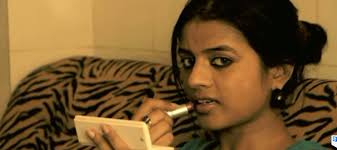
The story, often attached to discussions of a 2011 award-winning short film called “THE PRICE,” has a murky history. The film itself, starring Mitali Nag and Gaurav Pandey, tells a story of a young man’s first visit to a prostitute. A simple, poignant tale. But the text that accompanies it online feels… different. It’s labeled “Stolen from a Reporter’s diary.” A tantalizing, almost unbelievable claim. Could this text be the *actual* source material? The real-life event that inspired the art?
We’re going deep on this one. Because if this diary entry is real, it’s not just a story. It’s evidence of a secret history of female reporters who went to unimaginable lengths for the truth.
Here is the text, presented exactly as it was found. Read it. Feel the chilling authenticity in every word.
(Transcription of the recovered document begins)
A thin film of darkness, like a dark velvet sari hanging from the sky, was fluttering in the cool breeze and the moon had started playing hide-and-seek with the passing clouds. The time would be around 9 in the evening and I was standing outside my house with a mixed feeling. I cannot say with certainty I am not nervous. Mother was coming out every three minutes with a suspicious look. I died hundred deaths whenever she enquired about my proposed trip outside at that time of the night. I prayed constantly while trying to steady my throbbing nerves. I have had no prior experiences and none of my colleagues had so far admitted or narrated their experiences in this regard. I stood there shifting my legs constantly in extreme discomfort. At last the auto arrived at about twenty past nine. It was my good fortune that mother did not come out at that time. I almost jumped into the auto gathering strength and urged the driver to go. I could sense my heart beats had become slightly erratic. The broker was sitting in the auto with an unnecessary glee. I cursed my fate as I had to share a seat with a third rated person like him.
The auto driver definitely had the doubts. He cast surprise glances at me on and often through the rear-view mirror. Unfortunately that auto belonged to a stand located at the end of our street. I closed my eyes in shame. I could understand how that driver would have felt about me. After traveling for about twenty minutes we reached a house at the end of a street at a very well known locality at Chennai. I could not hide my surprise. Is this the house? At the outside it did not look like a brothel at all. I looked at the neighbouring houses. All were independent bungalows, I am sure, occupied by respected citizens of the city. After paying off the auto the broker knocked at the door gently and beckoned me to stand by him in the dark. The door was opened by a fat woman, a typical boss. The broker whispered something into her ears and thrust some currency notes into her open palms. Even without counting those notes, she was closely surveying me with suspicious eyes, while continuously chewing betel leaves. She then spoke to the broker in a rough tone sternly advising that I should behave or otherwise unknown consequences would follow. I gulped uneasily, nodded my head and set foot inside the brothel for the first time in my life. I found out I had become dry. My legs had become suddenly heavy. I had perspired completely from the head to the toe. With uncomfortable ease, I cleared my throat, called for a glass of water and sat nervously at the end of a chair casting my glances all around trying to appear unperturbed.
That was a typical brothel which everyone would have seen in films. There were rooms everywhere and some were occupied, apparently by the sounds of giggles and sighs emanating from inside. Others were empty waiting for customers. Three or four scantily clad girls who were casually coming out from their rooms suddenly withdrew on seeing me. I tried my level best to let go a dry smile and stood up as if inviting them. They huddled into a group and stared at me in utter disbelief. I know my decent dress and pious looks would have startled them.
Inviting courage I neared them and extended my hand introducing me. They could not believe in my words. They looked at the direction of the boss and the broker. After getting a doubtful nod from their boss one of the women, an elderly one, took my hand and led me reluctantly into one of those rooms. I dragged my heavy legs with an effort and walked behind her with an uncomfortable smile. I tried desperately to recall all those prayers which had been taught to me from the childhood and to bring to memory a picture of my parents. After covering what appeared to be an eternal distance, I accompanied her to the room. She seated me in the bed and with thousand doubts in her eyes closed the door. I was in a private room with a prostitute for the first time in my life! My hands shivered and pearls of perspiration started running down from my temples liberally. And the clock struck ten!
******************
I had a very disturbed sleep at that night and next day I reached my office around eleven in the morning. All my colleagues smiled mischievously at me and gently clapped their hands as if to welcome me. To my surprise, the editor himself came out of his room to welcome me. I straightway headed for the editorial room and got seated with folded hands. “Sir, this is the first and the last time. Hereafter please do not give these kinds of assignments to me for God’s sake.” He received my article from my extended hand with an uncontrollable laugh and said:
“You may be knowing that our magazine’s circulation has almost doubled only after you have started writing here. Your reports are widely appreciated. Moreover our readers are known for unusual and different things. This idea of sending you, to a prostitute’s house came to my mind only day before yesterday. Our readers will look forward with enormous interest for this article written by you after gaining a first hand experience inside a brothel. Anyhow I thank you, for your boldness in meeting a prostitute right in her den and reporting your observations.”
I stood up, adjusted my sari and left for my table with a sigh of great relief.

(Transcription ends)
Deconstructing the Nightmare: Clues Hidden in Plain Sight
Let’s break this down. This isn’t just a story. It’s a psychological portrait of someone operating under extreme duress. The language is simple, direct, and soaked in terror.
The Psychology of Fear
Notice the physical reactions. “My legs had become suddenly heavy.” “I had perspired completely from the head to the toe.” “My hands shivered and pearls of perspiration started running down from my temples.” This is not the writing of someone imagining a scenario. This is the writing of someone recalling a visceral, traumatic memory. The detail of her mother’s suspicious looks, the shame of being seen by the local auto driver—these are the small, piercing anxieties that ground this tale in a frightening reality.
The Brothel as a Labyrinth
The description of the brothel is key. It’s not a den of sin; it’s a place of business, disturbingly normalized. It’s hidden in a “very well known locality at Chennai,” surrounded by bungalows of “respected citizens.” This isn’t just color. It’s a critical observation. The reporter is noting the hypocrisy, the way the city’s dark underbelly is woven directly into its respectable fabric. She observes the “typical boss,” the power dynamics, the transactional nature of the entry. She’s not there for titillation; she’s there as an anthropologist in hell.

But This Has Happened Before: The Nellie Bly Blueprint
An Indian reporter in a sari going undercover in a brothel sounds insane. Unprecedented. Until you look at the history they don’t teach you. Until you learn about Nellie Bly.
In 1887, more than a century ago, a young American journalist named Elizabeth Cochrane Seaman—writing under the pen name Nellie Bly—pitched an insane idea to Joseph Pulitzer’s *New York World* newspaper. She would feign insanity to get herself committed to the notorious Women’s Lunatic Asylum on Blackwell’s Island.
Think about that. She willingly had herself thrown into a pit of real-life horror, a place from which she had no guaranteed exit. For ten days, she lived the nightmare. She endured spoiled food, ice-cold baths, and brutal treatment from the staff. She documented the abuse, the neglect, and the terrifying fact that many of the women there were not insane at all, but simply poor or inconvenient immigrants who had been discarded by society.
Her exposé, “Ten Days in a Mad-House,” was a sensation. It sparked a grand jury investigation, forced massive reforms in patient care, and made Nellie Bly a legend. She proved that a woman could not only go where no male reporter could, but that her unique perspective was a powerful tool for revealing truth.
Nellie Bly created the blueprint. She showed that the greatest stories were hidden in the most forbidden places, and that a woman’s perceived vulnerability was, in fact, her greatest strength. No one would suspect her. No one would believe she had the nerve. The reporter from the Chennai diary walked a path that Nellie Bly paved with pure, unadulterated guts.
More Than a Story: Was This an Intelligence Operation?
The editor’s explanation in the diary seems straightforward enough. He wanted a sensational, first-hand account to boost circulation. “Our readers will look forward with enormous interest for this article written by you,” he says. But what if that was a cover story? What if the article itself was secondary?
Let’s think like a spy. For centuries, brothels haven’t just been places of pleasure. They have been hubs of information. Whispers. Secrets. Powerful men—politicians, judges, police chiefs, gangsters—let their guards down in places like this. They talk. They boast. They confess. A well-placed set of ears could learn more in one night than a detective could in a year.
Who frequented that “respectable” brothel in Chennai? What secrets were held within its walls? A male reporter, even as a customer, would have been an outsider. But a woman? Posing as one of the girls, or even as a new, strange customer as our reporter did? She becomes part of the scenery. Invisible. Overlooked. She becomes the perfect listening device.
Was the editor’s real assignment not just to “report on observations,” but to listen for something specific? A name? A plan? Information about corruption that was poisoning the city? The line between investigative journalism and espionage is razor-thin. This assignment feels like it was dancing right on that edge.
The risk was astronomical. This wasn’t just about her reputation. In that world, a misstep, a wrong word, could have meant she would never walk out of that house again. The boss’s warning of “unknown consequences” was not an idle threat.
The Final, Earth-Shattering Twist
And then we get to the last line. The line that turns the entire story on its head and reveals the genius of the operation. The line that has haunted researchers and online sleuths for years.
After being debriefed by her editor, after enduring the smirks of her male colleagues, the reporter writes:
“I stood up, adjusted my sari and left for my table with a sigh of great relief.”
A sari.
All along, we are led to believe the protagonist is a young man, a “virgin guy” as the notes accompanying the short film suggest. The entire narrative is built on the assumption of a male perspective—his fear, his nervousness, his shame. The brothel workers themselves are shocked to see someone with “decent dress and pious looks.” They assume he is a customer unlike any other.
But the truth is far more shocking. The reporter wasn’t a man. She was a woman, cloaked in the anonymity of a traditional sari, her gender a secret weapon until the final sentence. This isn’t just a clever literary twist. It’s the key to the entire operation. It explains the workers’ disbelief. It explains the extreme psychological toll. It re-frames the entire event from a story about losing innocence into a story about risking everything.
She didn’t go there as a customer. She went there as an infiltrator. A ghost. She used society’s expectations, the rigid gender roles of her time and place, as the perfect camouflage. No one would ever suspect a woman, especially a woman in a sari, of undertaking such a mission. It was the perfect disguise.
A Legacy Erased?
The Chennai diary, if authentic, is a precious artifact. It’s a window into a secret world of female journalists and investigators who have been written out of the history books. Nellie Bly became famous, but how many others were there? How many women used their unique social positions to go undercover in factories, in cults, in the dark heart of the criminal underworld?
How many of their stories were published under male pen names, or not published at all, their findings delivered verbally in secret to editors or government agents? How many simply disappeared, their luck finally running out in a place from which no one returned?
This single, terrifying account from a brothel in Chennai suggests a vast, hidden history. A history of women who fought for the truth in a world that did everything it could to silence them. They weren’t just reporters. They were warriors. And their battlefield was the dark, forgotten corners of our cities, their only weapon a notebook, and their only shield a courage that defies imagination.
The next time you read a historical account, ask yourself: who really wrote it? And more importantly, who was standing in the shadows, watching, listening, and risking it all to uncover the story that was never meant to be told?
Originally posted 2014-06-08 18:51:11. Republished by Blog Post Promoter