
Home Weird World Archaeology Experts to conduct new scans of the pyramids

Experts to conduct new scans of the pyramids

0
76
experts-to-conduct-new-scans-of-the-pyramids

What secrets still lie undiscovered within the pyramids?

You think you know the Great Pyramid. We all do. It’s the ultimate icon of the ancient world, a triangle of stone that has sat staring at the stars for 4,500 years. It is the only Wonder of the Ancient World still standing. But here is the thing that keeps me up at night: We still have absolutely no idea what is actually inside of it.

For centuries, grave robbers, kings, and archaeologists have scratched at the surface. They found the King’s Chamber. They found the Queen’s Chamber. They found the Grand Gallery. And then? They stopped looking. They assumed the map was complete. They assumed the blueprint was finished.

They were wrong.

A massive international team has launched a renewed effort to hunt down the secrets of Egypt’s archaeological wonders. This isn’t just about dusting off old pottery. This is “Scan Pyramids,” a high-tech mission involving experts from Egypt, France, Canada, and Japan. Their goal? To see through the stone. To find the ghosts in the machine.

The Mission: Seeing the Invisible

This group, known as the “ScanPyramids” project, isn’t using dynamite. They aren’t using pickaxes. Those days are over. Instead, they are bringing the kind of technology you usually see in particle physics labs or high-budget sci-fi movies. They are hunting for hidden tombs and chambers within two of the pyramids at Giza and two of the Dahshur pyramids to the south of Cairo.

The implications here are staggering. If they find a room that has been sealed for four millennia, the air inside that room is from 2500 BC. The dust is ancient. Anything left on the floor—a scroll, a tool, a body—would be perfectly preserved in a time capsule that hasn’t been touched since the Old Kingdom.

Minister of Antiquities Mamduh al-Damati put it simply: “This special group will study these triangle shaped things to see whether there are still any hidden chambers or other secrets. These engineers and architects will conduct the survey using non-destructive technology that will not harm the pyramids.”

Why Now? The Technology Shift

Why didn’t we do this fifty years ago? We couldn’t. We didn’t have the eyes. “The idea is to find the solution to the mystery of the pyramids,” said Mehdi Tayoubi of the Parisian HIP Institute. “A similar attempt was made 30 years ago, but this is the first project at a global level using cutting-edge technology to look inside the pyramids.”
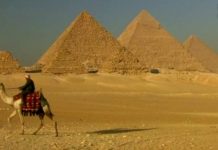

The project employs a combination of infra-red thermography and muon scanning technologies. That sounds complicated. It’s not. It’s actually brilliant.

Let’s break it down.

Muons: The X-Rays from Space

This is where it gets wild. Muons are cosmic particles. They are raining down on you right now. They come from deep space, pass through the atmosphere, and slam into the Earth. They can pass through empty space easily, but thick stone absorbs them.

Think of it like an X-ray at the doctor’s office. Your bones stop the X-rays, creating a shadow. The stone of the pyramid stops the muons. By placing sensitive detectors inside the bottom of the pyramid and looking up, scientists can count the muons coming through. If they see a dark spot? That’s solid stone. But if they see a “bright” spot where too many muons are coming through?

Boom. That means there is no stone there. That means there is a hole. A void. A room.

This is non-invasive archaeology. No drilling holes in priceless monuments. Just pure physics revealing ancient architecture.

The Thermal Anomaly: Stones That Glow

The second piece of the puzzle is heat. The team uses infrared cameras to watch the pyramids as the sun rises and sets. Stone holds heat. When the sun goes down, the blocks should cool at the same rate.

But they don’t.

Some blocks stay hot. Others cool down fast. Why? Because airflow or empty spaces behind the blocks change the temperature. If you see a block that is glowing hot on an infrared camera while the rest of the wall is cold, you know something is behind it. A corridor? A ventilation shaft? Or a door that was plastered over thousands of years ago?

This data is changing everything we thought we knew.

The “Big Void” Discovery

Since this project launched, the internet has been on fire with theories. And the results have justified the hype. The ScanPyramids team didn’t just find small cracks. In 2017, they announced the discovery of a massive “void” above the Grand Gallery in the Great Pyramid of Giza.

We aren’t talking about a small closet. This space is at least 30 meters (98 feet) long. It’s the size of a passenger plane. And it has been sitting there, right above the heads of millions of tourists, completely invisible.

What is it?

  • A Construction Ramp? Some mainstream archaeologists think it was an internal ramp used to haul the massive granite blocks up to the King’s Chamber. Once the job was done, they just left it empty.
  • A Stress Reliever? Is it just a structural gap to keep the weight of the pyramid from crushing the Grand Gallery below? Maybe. But the engineering precision of the Egyptians suggests they didn’t need accidental gaps.
  • The Hall of Records? This is the big one. The theory that keeps the alternative history community buzzing. Could this be the library of the ancients? The place where they stored the knowledge of Atlantis or the secrets of their technology?

Dahshur: The Forgotten Giants

While everyone stares at Giza, the ScanPyramids team is also looking south, at Dahshur. This is home to the Bent Pyramid and the Red Pyramid. These are the older brothers of Giza. The experiments.

The Bent Pyramid is strange. It changes angles halfway up. It looks alien. It looks wrong. And because it was an “experimental” design, it is highly likely that the internal structure is full of mistakes, patches, and hidden zones that were sealed off when the architects realized they messed up.

The same techniques used at Giza are being deployed here. Muons are catching the shadows of chambers we have never seen on a map. Dating back over 4,000 years, the huge stone monuments built by the ancient Egyptians remain some of the most impressive and significant archaeological structures on the planet, and Dahshur is the testing ground where they learned their craft.

The Nefertiti Connection: A Tomb Within a Tomb?

It gets deeper. The same techniques could even be used to seek out evidence of hidden chambers within the tomb of King Tutankhamun.

Archaeologist Nicholas Reeves dropped a bombshell theory a few years ago. He noticed high-resolution scans of the walls in King Tut’s tomb showed “ghosts” of doorways. Faint outlines hidden behind the painted plaster.

His theory? King Tut died young. Unexpectedly. They didn’t have a tomb ready for him. So, they took an existing tomb—the tomb of Queen Nefertiti—opened it up, shoved her stuff to the back, sealed it off with a wall, and buried Tut in the front hallway.

If he is right, the most famous woman in ancient history is sleeping just a few feet away from where millions of people have walked. She is right there. Behind a wall. Waiting.

Initial radar scans suggested organic material and metal behind the wall. Later scans were less conclusive. The debate is a furious war between differing radar technologies. But if ScanPyramids brings the Muon tech to the Valley of the Kings? We might finally get a look without having to drill a hole in a priceless wall art.

The Conspiracy of Silence

You have to ask yourself: If they found a giant void in 2017, why haven’t they sent a camera in yet? Why the delay?

This is where the “official narrative” starts to feel tight. Egyptology is a protective field. They don’t like their history rewritten. If a probe goes into that void and finds something that contradicts the timeline—advanced machining, iron tools, strange hieroglyphs—it breaks the history books.

Some theorists believe the Egyptian authorities are stalling. They want to know what is in there *before* the public does. They want to control the story. Is it just bureaucracy? Or is it fear of what they might find?

The Ancient Power Plant Theory

Let’s get weird for a second. There is a persistent theory, popularized by engineers like Christopher Dunn, that the Great Pyramid was never a tomb. Not a single mummy was ever found in it. No hieroglyphs were carved on the walls (except for some disputed graffiti in the relieving chambers).

The theory goes that the pyramid was a machine. A power plant. The “Queen’s Chamber” wasn’t for a queen; it was a chemical reaction chamber. The shafts weren’t for star gazing; they were for pouring chemicals.

If the ScanPyramids project finds copper wiring, corroded chemical residues, or resonant chambers designed for sound instead of burial, the “Tomb Theory” is dead. The idea that these were just piles of rocks for a dead ego maniac collapses. We would be looking at the remnants of a high-tech civilization that was wiped out.

What If We Are Wrong About Everything?

The beauty of the ScanPyramids project is that it relies on hard data. Particles don’t lie. Heat doesn’t lie.

We are standing on the edge of a new era of archaeology. For two hundred years, we have been digging in the sand with shovels. Now, we are looking through the rock with subatomic particles.

Every time we think we have the ancients figured out, they throw us a curveball. They moved 2.5-ton blocks with a precision we struggle to match today. They aligned their structures to true north with an accuracy that is almost frightening. And now, we know they built massive empty halls that they sealed up and told no one about.

Why?

Was it religious? Was it structural? Or was it something else entirely? A vault for the end of the world?

The Wait Continues

The Muon detectors are still collecting data. The infrared cameras are still watching the sunrise. The scientists are crunching the numbers.

We are waiting for the next press conference. The one where they tell us they have found a way in. The one where they tell us that the “Void” isn’t empty.

Until then, the pyramids sit in the silence of the desert, guarding their secrets just as they have for thousands of years. But the clock is ticking. The technology is catching up. And sooner or later, the stone is going to have to give up its ghosts.

Stay tuned. History is about to get a rewrite.

Originally posted 2015-10-30 05:42:56. Republished by Blog Post Promoter

Originally posted 2015-10-30 05:42:56. Republished by Blog Post Promoter