Ghosts on Film: The Century-Old Negatives That Defy a Frozen Grave
What secrets lie buried at the bottom of the world? I’m not talking about government conspiracies or hidden bases, not yet anyway. I’m talking about something far more haunting. Something real. A story captured not in words, but in silver nitrate and shadows, locked in a block of ice for nearly one hundred years.
It’s a tale of ghosts. Ghosts of the Heroic Age of Exploration.
Imagine the biting, relentless cold of Antarctica. A cold that doesn’t just chill your bones but seems to freeze time itself. Inside a lonely wooden hut at Cape Evans, a team of conservators from the Antarctic Heritage Trust were painstakingly working, trying to save the relics of a bygone era. They were in a place soaked with history, a place that had witnessed unimaginable bravery and heartbreaking tragedy.
And then they found it.
Tucked away in a corner, clumped together in a solid block of ice, was a small, unassuming box. Not a treasure chest. Not a secret diary. Something far more potent. A box containing 22 exposed, but completely undeveloped, photographic negatives.
A message in a bottle from a lost world. A series of images that had been waiting a century in the dark for someone to finally let them see the light.
The Hut of Two Tragedies
To understand the gravity of this find, you have to understand where it was found. This wasn’t just any shack. This hut was ground zero for the legends of the Antarctic.
It was first built by Captain Robert Falcon Scott for his ill-fated Terra Nova Expedition of 1910-1913. It was from this very base that Scott and his four companions made their final, doomed push for the South Pole. They reached it, only to find the Norwegian flag of Roald Amundsen already flapping in the wind. Their hearts, broken. Their bodies, spent.
They all perished on the agonizing journey back.
Their ghosts still linger in that hut. Their tinned food still sits on the shelves. Their bunks still wait for men who will never return. So when another expedition took shelter there just a few years later, they were literally living among the spirits of the dead.
And that second group? They were about to endure their own private hell.
Deep Dive: Shackleton’s Impossible Dream and the Forgotten Men
Enter Sir Ernest Shackleton. “The Boss.” A man whose ambition was as vast and unforgiving as the continent he sought to conquer.
His plan was audacious. Insane, even. The Imperial Trans-Antarctic Expedition. He would take one ship, the *Endurance*, to one side of the continent, and then march with a small team straight across the entire landmass, a journey of 1,800 miles, to the other side. But he couldn’t do it alone. He would need supplies laid for him for the final leg of the trek.
That’s where the second ship, the *Aurora*, came in. Its crew, known as the Ross Sea Party, had what many considered the less glamorous job. The support role. They were to sail to the opposite side of Antarctica—to Ross Island, where Scott’s old hut stood waiting—and lay a series of supply depots inland for Shackleton’s team to find.
A simple, vital mission. What could go wrong?
Everything.
Shackleton’s own story with the *Endurance* is the stuff of legend—the ship trapped and crushed by ice, the impossible open-boat journey, the survival against all odds. But the story of the Ross Sea Party is a darker, more obscure tragedy. After arriving and beginning their work, a ferocious blizzard tore the *Aurora* from its moorings, casting it out to sea. The ten men left on the ice were stranded. Stranded with only the light sledging gear they had with them, and the supplies left behind by Scott’s dead expedition years earlier.
They were marooned. Underequipped. Forgotten. Yet, they resolved to complete their mission. For Shackleton. They embarked on a brutal, death-defying journey to lay the depots anyway, believing The Boss’s life depended on it. It was an act of loyalty and courage that borders on madness.
And it’s one of *these* men, the members of the forgotten, stranded Ross Sea Party, who took these photographs before their world fell apart.
What the Frozen Eyes Saw
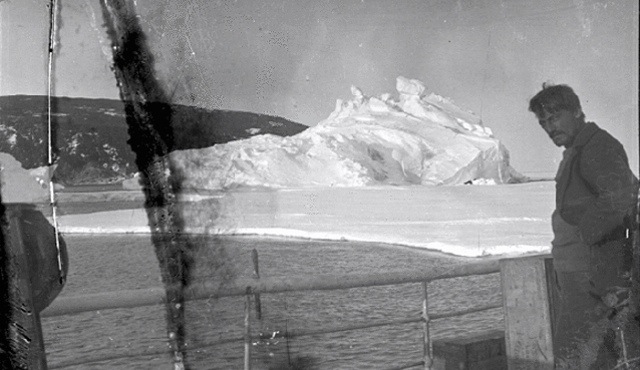
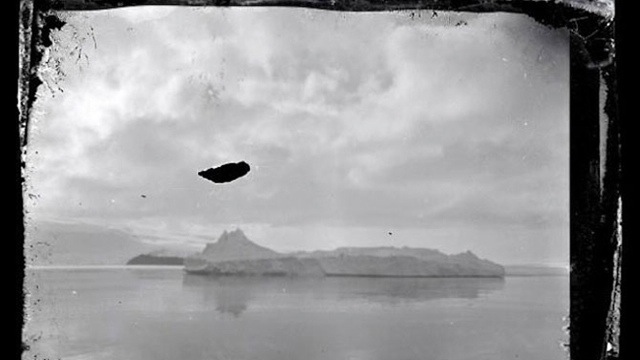
Developing century-old cellulose nitrate negatives that have been encased in ice is a nightmare. The process is delicate, the risk of destroying them immense. But the team in New Zealand succeeded. And the images that emerged are nothing short of haunting.
They are not pictures of grand discovery or heroic triumph. They are quiet. Eerie. They show the calm before the storm.
We see landscapes. The raw, alien beauty of the Antarctic. Jagged ice formations. The endless white horizon. And we see the *Aurora*, their ship, their lifeline, moored peacefully before the storm that would seal their fate. There are portraits of the men, their faces etched with a mixture of determination and, perhaps, a hint of the strain to come. You are looking at men who do not yet know they are doomed.
The Photographer Priest Who Died on the Ice
The photographer is believed to be Arnold Spencer-Smith. He wasn’t just the expedition’s photographer; he was their chaplain. A man of faith in the most godforsaken place on the planet. He was one of the men who would push himself beyond all human limits to lay those supply depots for Shackleton.
It would kill him. Spencer-Smith grew weak from scurvy and exhaustion, but refused to stop. He eventually had to be pulled on the sledge by his comrades, and he died on the ice, a martyr to the mission.
These photos are his final testament. The last things he saw and chose to capture before embarking on the journey that would claim his life. Did he know? Did he have some premonition as he clicked the shutter, that he was chronicling the beginning of his own end?
Conspiracy Corner: What Else Is In The Ice?
This is where the story takes a turn. The official narrative is beautiful and tragic. A historical miracle. But my job is to ask the questions others won’t.
Why were these negatives left behind? And why were they unprocessed?
The simple answer is that the Ross Sea Party was in a fight for survival. When they were finally rescued, they were broken men. They probably just forgot the box in the chaos. It’s logical. It’s boring.
But what if it’s not the whole story?
Online forums and deep-web historians have been buzzing about this since the discovery. The questions keep piling up. Twenty-two negatives were recovered. But how many were in the box originally? Cellulose nitrate is notoriously unstable. Experts confirmed some images were badly damaged, the scenes lost forever. What was on those lost frames?
Theories from the Fringe
Let’s explore the possibilities the mainstream media won’t touch.
Theory #1: Documenting a Breakdown. The official accounts of the Ross Sea Party paint a picture of unwavering British resolve. But these men were pushed to the brink of starvation, frostbite, and madness. Is it possible that Spencer-Smith captured moments of conflict? A breakdown in command? Desperate acts that would tarnish the heroic narrative? Perhaps leaving the film undeveloped was a conscious choice by the survivors, a pact to bury the uglier truths of their ordeal.
Theory #2: Anomalous Phenomena. The Antarctic is a strange place. For decades, it’s been a hotbed for UFO sightings, bizarre magnetic readings, and strange atmospheric events. Early explorers called them mirages, but could they be something more? Could one of Spencer-Smith’s lost negatives have captured something in the sky, or on the horizon, that he couldn’t explain? Something that, even a century ago, was deemed too strange to be revealed?
Theory #3: The Unseen Landscape. This is the big one. The idea that Antarctica is not what it seems. That beneath the ice lie the ruins of a lost civilization, or evidence of something ancient and non-human. This theory has been fueled by strange radar scans and declassified satellite images. The recovered photos show a man, Alexander Stevens, the expedition’s chief scientist. He looks serious. Pensive. What was he really studying out there?

Could one of the damaged negatives have shown a structure in the distance? An unnatural formation in a mountain range? Something that would rewrite not just the history of an expedition, but the history of the world? It’s easy to dismiss. But remember, they left the film in a hut built by Scott’s expedition. An expedition that also met a mysterious and tragic end. Two doomed expeditions, one location. Coincidence? Or is there something about that particular piece of ice that guards its secrets violently?
The Power of a Ghostly Image
Look at the photos again. They are damaged. They are imperfect. That’s what makes them so powerful. They survived. Just like some of the men. They are scarred, but they are here.
They are a direct link to the past, a window into the final peaceful moments of men on the edge of oblivion. The photographer, a priest who would die in service of his commander, had no idea his work would only be seen by a world he could never imagine, more than a century after his death. He had no idea his last artistic acts would become his most enduring legacy.
These 22 images are a miracle of preservation. A stunning historical find. But they are also a tantalizing clue. A breadcrumb leading us into the vast, white mystery of the Antarctic.
We see what was saved. We can only dream about what was lost.
The ice preserves. It keeps secrets. And it makes you wonder… what else is down there, just waiting for the thaw?