Home Weird World Science Philae comet could be home to alien life

Philae comet could be home to alien life

0
58

Is There Life on This Comet? The Bombshell Claim They Don’t Want You to Hear

Forget what you’ve been told. Forget the neat, tidy explanations from space agencies and academics in sterile labs. We’re told comets are just dirty snowballs. Cosmic leftovers. Frozen, dead relics from the birth of our solar system, aimlessly wandering the void.

But what if they’re wrong?

What if one of them isn’t dead at all?

What if it’s an ark? A world. A vessel, teeming with microscopic life, hurtling through the darkness between stars. This isn’t science fiction. This is the radical, mind-altering possibility presented by Comet 67P/Churyumov–Gerasimenko, a strangely-shaped rock that might just rewrite everything we think we know about life in the universe. And our own origins.

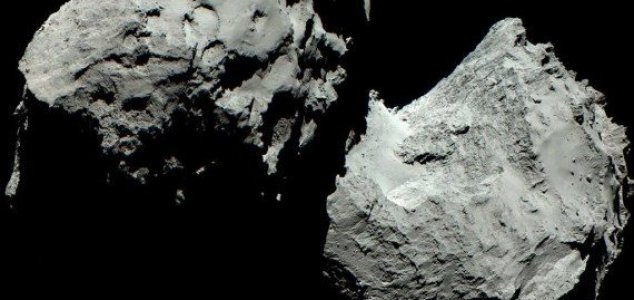
The story begins with a machine. A tenacious little probe named Rosetta. After a journey that lasted over a decade, crossing billions of kilometers of empty space, it finally arrived at its destination in 2014. It was the first time humanity had ever successfully orbited a comet. The first images that came back were stunning. Haunting.

This was no simple sphere of ice and rock. Comet 67P was… weird. Shaped like a bizarre rubber duck, it was a world of sharp cliffs, smooth plains, deep pits, and a surface blacker than charcoal. It was active. It was breathing. Vents on its surface were spewing jets of gas and dust into space, creating a hazy, glowing atmosphere, its coma.

The world watched, captivated. We even managed to land a smaller probe, Philae, on its surface. A monumental achievement. The official story was one of triumph. We found water, different from Earth’s. We found organic molecules—the so-called “building blocks of life.”

Case closed? Not even close. For a handful of bold scientists, the official story was a smokescreen, a sanitized version of a much more shocking reality.

The Cracks in the Official Narrative

As the data from Rosetta and Philae poured in, anomalies started piling up. Things that didn’t quite fit the “dirty snowball” model. Things that made some researchers lean forward, their hearts pounding.

The surface wasn’t just dark. It was covered in a thick, organic-rich black crust. Strange, flat-bottomed craters looked suspiciously like frozen lakes. The sheer amount of organic material being blown off the comet was staggering. Where was it all coming from? Prebiotic chemistry in the cold vacuum of space just didn’t seem to add up.

The official explanations felt… forced. Lacking. It was as if scientists were trying to cram a square peg into a round hole, desperate to make the old theories work.

Could this bizarre, alien landscape actually be an ecosystem? The dark crust, a living shield? Image Credit: ESA

Then, in 2015, two scientists dropped a bombshell at the National Astronomy Meeting in Wales. Their names were Dr. Max Wallis from the University of Cardiff and Professor Chandra Wickramasinghe from the Buckingham Centre for Astrobiology. And they weren’t just suggesting possibilities. They were pointing at the evidence and saying what no one else dared to.

They claimed that Comet 67P wasn’t just carrying the building blocks of life. It was carrying life itself.

A Living, Breathing World?

Wallis and Wickramasinghe looked at the same data everyone else was looking at, but they saw something different. They saw a coherent, living system. A functioning ecosystem perfectly adapted to one of the most hostile environments imaginable.

Their theory wasn’t just a guess. It was a point-by-point analysis of the comet’s strangest features, re-interpreted not as dead geology, but as active biology.

Deep Dive: The Case for a Living Comet

Let’s break down their incredible claims. This is where it gets wild.

The Black Crust is a Bio-Film: The mainstream explanation for the ultra-dark surface is that it’s a mixture of carbon compounds and dusty silicates. Simple. Boring. Wickramasinghe and Wallis proposed a far more exciting idea. They argued this crust is a sprawling colony of extremophilic microorganisms. Think of it like algae that can grow on snow here on Earth. These alien microbes would have dark pigmentation to absorb the faint warmth of the distant sun and to protect themselves from the harsh bath of ultraviolet radiation. This living “skin” would seal in moisture and protect the communities living underneath.

The Icy Lakes and Subsurface Oceans: Those bizarre, flat-floored craters? According to the theory, these aren’t impact scars. They are lakes. Patches of ice and water, or at least a slushy brine, warmed by the sun and potentially by the metabolic heat of the microbes themselves. Sunlight penetrates the thin, dark crust, melting the ice below to create a habitable zone, a tiny, self-contained oasis just beneath the surface. These “lakes” would periodically crack open or burst, releasing the plumes of gas and organic material that Rosetta observed.

The Geysers are Biological Exhaust: Rosetta saw jets of water vapor and dust erupting from the comet. The standard theory is sublimation—ice turning directly into gas when warmed by the sun. But the duo proposed something more. They suggested these were the byproducts of active fermentation by microorganisms. As these microbes digest the carbon compounds in the comet, they release gases like methane, formaldehyde, and carbon dioxide. This gas pressure builds up under the crust until it violently erupts. The comet isn’t just venting gas; it’s exhaling.

As Dr. Wallis himself stated, “Rosetta has already shown that the comet is not to be seen as a deep-frozen inactive body, but supports geological processes and could be more hospitable to micro-life than our Arctic and Antarctic regions.”

Think about that. More hospitable to life than Antarctica.

The Ultimate Conspiracy: Are WE the Aliens?

To understand why Wickramasinghe was so ready to make this leap, you have to understand his history. He was a long-time collaborator of the famous and controversial astronomer Sir Fred Hoyle. Together, they championed a theory so profound it threatens the very foundation of biology and religion.

It’s called Panspermia.

The idea is simple, but its implications are staggering. Life did not begin on Earth. Our planet was sterile, a lifeless rock. Life, in its most basic form—microbes, bacteria, viruses—arrived from space. It was delivered here. The delivery vehicles? Comets and asteroids, crashing into the primordial Earth and seeding it with the first sparks of biology.

For decades, Panspermia was dismissed as fringe science. But the evidence keeps mounting. We find organic molecules in meteorites. We know that some microbes can survive the brutal conditions of space. If Wallis and Wickramasinghe are right about Comet 67P, it’s not just another piece of evidence. It’s the smoking gun. It’s a confirmation of Panspermia in action.

It means comets are the great seed-spreaders of the galaxy. They aren’t just bringing water and carbon; they are bringing fully-formed, living organisms, ready to take root wherever conditions are right. This theory flips our entire perspective upside down. It suggests that life is a cosmic phenomenon, not an earthly one. We are not the center of the universe. We are just one branch of a vast, cosmic family tree whose roots stretch back into the stars.

We are the aliens.

What the Establishment Says (And Why It’s Suspicious)

Of course, the scientific establishment pushed back. Hard.

The counter-arguments came thick and fast. They said there’s no way liquid water could exist on the surface, where temperatures plummet to hundreds of degrees below zero. They argued that all the complex organic molecules could be created by non-biological, abiotic processes over billions of years, zapped into existence by cosmic rays.

Their ultimate trump card? No one has actually *seen* a microbe. There’s no picture. No sample under a microscope. It’s all just interpretation.

But is their dismissal really about the evidence? Or is it about protecting a paradigm? The discovery of extraterrestrial life, even microbial life, would change the world overnight. It would challenge long-held scientific and religious beliefs. It’s disruptive. It’s messy. It’s easier to stick with the “dirty snowball” theory. It’s safer.

Think about the sheer volume of organic material being produced. Professor Wickramasinghe pointed out the problem with the official story: “The dark material is being constantly replenished as it is boiled off by heat from the sun. Something must be doing that at a fairly prolific rate.”

Dead chemistry just doesn’t seem to work fast enough. Life, on the other hand, is a factory. It replicates. It multiplies. It could easily replenish the material being lost to space. The biological explanation just… fits.

The Unanswered Questions and Lingering Weirdness

The debate didn’t end in 2015. The mysteries surrounding Comet 67P only deepened, and the official explanations have only grown thinner. The internet is alive with sleuths and researchers poring over the mission’s public data, and what they’re finding keeps the conspiracy alive.

What about the “Singing”?

Did you know Comet 67P sings? In the months before Rosetta went into orbit, its instruments picked up a strange, rhythmic sound. A low-frequency oscillation coming from the comet itself. Scientists at ESA described it as “song-like.” The official explanation is that it’s caused by oscillations in the magnetic field around the comet as it releases neutral particles into space. A natural process.

But what if it isn’t? The sound is rhythmic, complex. Could it be the collective hum of a massive biological colony? A form of primitive communication? The very sound of life in the void? It’s a chilling thought.

The Philae Lander: A Mission Silenced?

Remember the Philae lander? Its landing was pure drama. It bounced twice before coming to rest in a shadowy crevice, its solar panels unable to get enough light. It performed its experiments for about 60 hours before its primary battery died and it went silent.

Was that the whole story? It was an incredibly complex maneuver, and bad luck is certainly a plausible explanation. But some wonder if there’s more to it. Did Philae land on, or near, one of these active biological colonies? Did its drill hit something unexpected? Did the data it sent back contain something so shocking that it was quietly classified, with the “dead battery” story serving as the perfect cover?

We’re told we got all the key data. But do we ever truly get the full story?

Modern Web Sleuths and the High-Res Photos

Today, the entire archive of Rosetta’s images is online. And people are finding… things. Strange symmetries. Unnatural-looking formations. Patterns that seem to defy random geology. Most are likely tricks of light and shadow, our brains seeing faces in the clouds. This phenomenon is called pareidolia.

But are all of them? Is it possible that hidden within those millions of pixels are the fossilized remains of larger organisms? The structures of a truly alien biology, hiding in plain sight? The search continues in forums and on blogs, far from the halls of mainstream science, driven by a nagging feeling that we haven’t been told the truth.

The Final Question

So we’re left standing at a cosmic crossroads. Down one path is the safe, comfortable story of a dead, dirty snowball. A fascinating but ultimately lifeless piece of cosmic debris.

Down the other path lies a universe far stranger and more wonderful than we ever imagined. A universe where life is not a rare miracle confined to our pale blue dot, but a tenacious, cosmic weed, sprouting in the most unlikely of places. A universe where comets are not omens of doom, but messengers of life itself.

Comet 67P is now heading back out into the cold darkness of the outer solar system, taking its secrets with it. The Rosetta mission is over. We may not get another close look for a very, very long time.

But the questions it raised will haunt us. Was it just a rock? Or was it the first alien world humanity has ever touched?

The next time you look up at the night sky and see a faint streak of light—a shooting star—ask yourself a different question. Is that just a rock burning up in our atmosphere? Or is it a seed? Another ark, just like 67P, carrying the spark of life across the cosmos, perhaps on its way to seed another world, just as one might have seeded ours, so very long ago.

Originally posted 2015-08-27 15:24:59. Republished by Blog Post Promoter