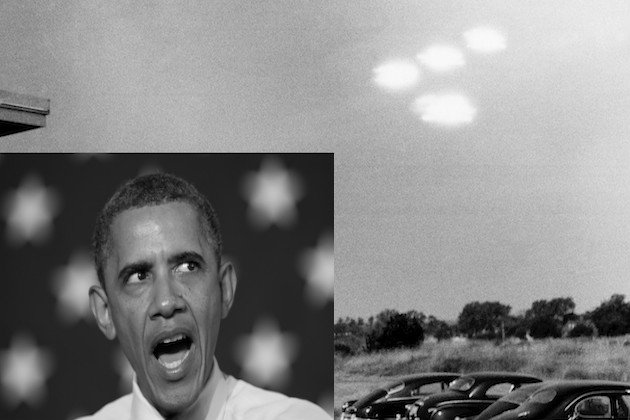
If the Earth ever is attacked by hostile beings from another planet, a strong majority of voters believe Mr. Obama would be superior in dealing with the situation.
Let’s be honest for a second. It sounds like a joke. A setup for a late-night comedy sketch. But when you strip away the giggles and the sci-fi tropes, something fascinating sits right underneath. We are talking about a scenario that feels ripped straight from a summer blockbuster, yet it reveals exactly how the American public views leadership when the stakes are literally astronomical.
Back in the heat of the 2012 election cycle, while pundits were obsessing over tax returns and healthcare debates, the National Geographic Channel decided to ask the question everyone was secretly thinking—or at least, the question we should have been asking. Who do you want holding the nuclear football when the flying saucers appear over the White House lawn?
The answer was a landslide. A blowout. Total domination.
According to the survey, first reported by USA Today, a staggering 65 percent of Americans said Barack Obama would be better suited than Mitt Romney to handle an alien invasion. That is not a margin of error. That is a statement.
The Psychology of the “Alien Candidate”
Why such a massive gap? Politics is usually a game of inches. A few percentage points here, a swing state there. But when it came to defending the human race against extraterrestrial threats, almost two-thirds of the country pointed at Obama and said, “Him. I want that guy.”
To understand this, we have to look at the “Cool Factor.”
Mitt Romney represented the corporate world. Order. Spreadsheets. A boardroom approach to governance. In a normal economic downturn, that might fly. But an alien invasion? That is chaos. That is the unknown. When the sky turns red and lasers start carving up the Washington Monument, you don’t want a CEO. You want a Gunslinger.
And let’s face it: Obama had the swagger. He had the “No Drama Obama” reputation. The public perception was that while Romney might try to negotiate a merger with the Xenomorphs, Obama would be in the situation room, sleeves rolled up, coordinating a global counterstrike.
The Will Smith Effect
Or, to put it another way, it’s kind of like asking voters which candidate has more Will Smith in him? Who’d be more likely to bring down an enemy spacecraft, charge over to the wreckage, and punch the alien in the face?
We have been conditioned by Hollywood. From Independence Day to Men in Black, our cultural image of an “Alien Fighter” is someone with wit, agility, and a calm demeanor under impossible pressure. Obama fit that archetype. He was the guy who could sink a three-pointer on a basketball court in front of the troops. In the collective imagination of the voter, that translates to: “He can probably fly a fighter jet if he really had to.”
More Than Just a Joke: The Belief in the Unknown
Lest you are tempted to dismiss this poll as pure silliness, we need to look at the other numbers buried in that study. This wasn’t just people goofing around.
The study found that 36 percent of Americans think UFOs exist. That is more than one in three people walking down the street right now. Even more telling? Another 48 percent said they aren’t sure. They are on the fence. They are open to the possibility.
Do the math. That leaves a very tiny sliver of the population that completely rules out life on other planets. We are living in a society that is primed for contact. Which means that at least some of the respondents judging the presidential candidates’ alien-fighting abilities may see it as a plausible scenario.
The Trust Deficit
Here is where it gets dark. The poll revealed a massive crack in the foundation of public trust.
According to the data, 79 percent of respondents say the federal government has been hiding information about UFOs from the public. Seventy-nine percent! You can’t get 79 percent of Americans to agree on pizza toppings, but nearly eight out of ten believe their government is lying to them about extraterrestrials.
This speaks volumes about the American psyche. It’s not just about little green men; it’s about secrets. It’s about the “Deep State” before that term was on every Twitter thread. It’s about Roswell, Area 51, and the feeling that we are being kept in the dark.
For most Americans, the answer seems to be Obama.
So why did Obama win the “Alien Vote”? It wasn’t just personality.
Of course, part of Obama’s edge here may come from incumbency. He’s already the president, so voters are automatically more inclined to see him as a wartime leader. Familiarity breeds comfort in a crisis. If the world is ending tomorrow, you generally want the guy who already knows where the bathroom is in the West Wing.
But there is also the “Bin Laden Bounce.”
Obama’s foreign policy ratings in general have been a source of strength for him. This is the guy who took down Osama bin Laden, after all—so why not aliens? The raid on Abbottabad was a high-stakes gamble. It required silence, precision, and nerves of steel. He gave the “Go” order when the intelligence wasn’t 100% certain. In the eyes of the voter, that specific moment proved he could pull the trigger when the fate of the free world (or at least, American security) hung in the balance.
The “Situation Room” Confession?
And then, there are the quotes. The things Obama has actually said. This is where the rabbit hole gets deep.
“OK, I can neither confirm or deny the existence of extraterrestrials,” Obama reportedly said from the White House Situation Room. “But I can tell you if there had been a top secret meeting, and if there would have been a discussion about it, it would have taken place in this room.”
Read that again. Closely.
It sounds like a joke. It’s delivered with that classic Obama smile. But look at the phrasing. He anchors the concept of a “top secret meeting” to a physical reality: The Situation Room. He doesn’t say “Aliens are fake.” He doesn’t say “That’s crazy.” He pivots to protocol. He talks about where the discussion would happen.
This is a classic intelligence maneuver. Distract with procedural details while avoiding the core question.
The Shift: From 2012 to Today
Since this poll was taken in 2012, the conversation has changed drastically. We have gone from “Aliens are a joke” to the New York Times publishing front-page stories about the Pentagon’s AATIP program. We have seen the “Tic Tac” videos. We have heard Navy pilots testify before Congress.
And guess who has been talking more lately?
Barack Obama.
In recent years, long after leaving office, Obama has appeared on talk shows like The Late Late Show with James Corden and dropped bombshells that were much less ambiguous than his 2012 jokes. He has openly admitted that there is footage and records of objects in the skies that “we don’t know exactly what they are.”
He told Corden: “The truth is that when I came into office, I asked, right, is there the lab somewhere where we’re keeping the alien specimens and space ship? And you know, they did a little bit of research and the answer was no. But what is true, and I’m actually being serious here, is that there are, there’s footage and records of objects in the skies that we don’t know exactly what they are.”
“I’m actually being serious here.”
That is a long way from the “Will Smith” jokes of 2012. It suggests that the voters who picked Obama to handle an alien invasion might have been onto something. Maybe they sensed that he was the kind of guy who would actually ask the question on day one. Maybe they knew he was the one who would eventually level with us.
The Crisis Commander vs. The Manager
Let’s dig deeper into the “Romney vs. Obama” dynamic regarding the alien question, because it acts as a perfect case study for Crisis Leadership.
In a catastrophic event—whether it’s a meteor, a plague, or a fleet of saucer-shaped craft descending on New York—the public craves a specific type of energy. They don’t want a manager. Managers look at cost-benefit analyses. Managers form committees. Managers worry about how the shareholders (or in this case, the voters) will react to the quarterly report.
Mitt Romney, for all his strengths, projected the aura of a Manager. The fear was that he would try to downsize the alien invasion. He would try to restructure the planetary defense grid to make it more tax-efficient.
Obama projected the aura of a Commander. A Commander accepts that losses will happen. A Commander acts on imperfect information. A Commander stands on the rubble with a bullhorn.
Even for those who don’t really think aliens might attack Earth, we say it’s an interesting poll question – essentially prodding which candidate voters would prefer at the helm in the case of a sudden, terrifying crisis that threatens the world’s very existence.
The “Dark Forest” Scenario
There is a theory in science fiction and astrobiology called the “Dark Forest.” It suggests that the universe is a dark forest prowled by silent hunters. If you make noise, you get eaten. If we ever face a hostile invasion, it means we made too much noise.
In that scenario, diplomacy fails. Economics fails. All that matters is speed and aggression. The 65% of Americans who voted for Obama in this hypothetical scenario weren’t voting for his policies. They were voting for his speed. They were voting for the guy who authorized the drone strikes (controversial as they were). They were voting for the guy who didn’t blink.
What If It Happened Tomorrow?
Let’s run the simulation. It’s 3:00 AM. The radar at NORAD lights up like a Christmas tree. It’s not missiles. It’s something else. Something fast. Something entering the atmosphere over the Pacific Ocean.
The President is woken up.
If that President is someone the public perceives as weak, panic sets in immediately. The stock market crashes before it even opens. Looting starts. Society fractures.
But if the President is someone with that “Alien Fighter” mystique—someone the public believes can stare down a grey-skinned visitor—you buy yourself time. You buy yourself order. The public holds its breath instead of screaming.
That is what this poll was really measuring. It wasn’t about aliens. It was a “Panic Index.” Who keeps your heart rate down when the world is burning?
The Legacy of the “Space President”
Looking back, it is fascinating to see how accurate the public’s gut instinct was regarding Obama’s interest in the subject. He has become one of the most vocal ex-presidents on the topic of UAPs (Unidentified Aerial Phenomena). While other presidents laugh it off or refuse to comment, Obama keeps poking the bear.
He is producing movies about the Barney and Betty Hill abduction (through his production company). He is giving interviews about the physics of these objects. He is keeping the conversation alive.
Maybe that 65% saw something in his eyes. A curiosity. A willingness to look into the abyss.
So, if the mothership does finally break through the clouds, and the laser beams start charging up, history suggests we might have missed our chance to have the “chosen one” in the chair. But at least we know one thing: for a brief moment in 2012, America knew exactly who they wanted standing between them and the invaders.
And it wasn’t the guy with the binder full of women. It was the guy who looked like he could fly the jet.
Original concept derived from 2012 reporting. Expanded and updated with modern UAP context.