Home Alien Life Obama to announce Alien evidence in 2014?

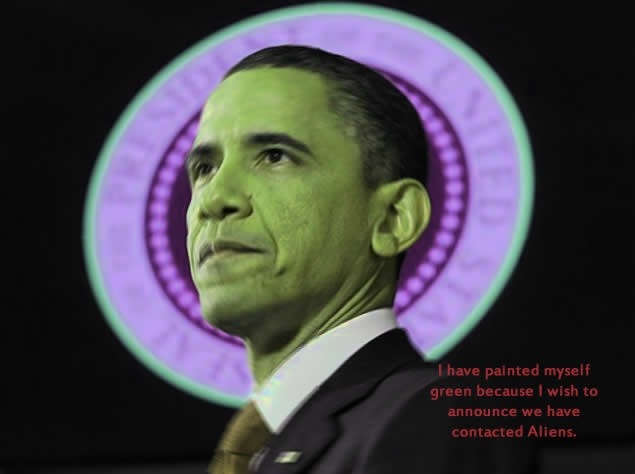
Obama to announce Alien evidence in 2014?

2
47

The Obama Alien Disclosure: The Secret That Almost Changed The World

Let’s go back. Not to 1947. Not to Roswell. Let’s go back to a more recent time. A time when the pieces on the chessboard started moving in a way nobody expected.

A time around 2013 and 2014.

Something was in the air in Washington. A strange energy. Whispers were slithering through the halls of power, hints of a secret so profound, so utterly reality-shattering, that it had been kept under lock and key for over 70 years. The whispers said the dam was about to break. That the 44th President of the United States, Barack Obama, was on the verge of pulling the pin on history’s biggest grenade.

He was going to tell us the truth about UFOs.

It sounds insane, right? The stuff of late-night radio shows and grainy documentaries. But the signals were there. They were undeniable. A convergence of events, a perfect storm of political maneuvers and agency directives, all pointed to one, earth-shaking conclusion: Disclosure was imminent.

But then… silence.

The moment passed. The window closed. The world moved on. But for those who were watching, the questions never went away. What happened? How close did we really come? And were the events of that brief, electric period the secret catalyst for the UAP revelations we’re seeing today?

A Perfect Storm Was Brewing in Washington

You have to understand, this wasn’t just one random rumor. It was a pattern. A series of seemingly disconnected events that, when viewed together, painted an extraordinary picture. It was like watching a master strategist move pawns, knights, and bishops into place for a final, shocking checkmate against seven decades of official denial.

20131214-223820.webp

The first public tremor came from an unlikely place: a congressional committee hearing. In December 2013, the House science committee gathered to discuss the search for extraterrestrial life. This wasn’t some fringe meeting; it was a formal, public discussion. And the conclusion they reached was stunning in its boldness. It was, they said, only a matter of time.

“We stand on a great threshold in the human history of space exploration,” testified Sara Seager, a top physicist from MIT. “We know with certainty that planets orbiting stars other than the sun exist and are common… On the other side of this great threshold lies the robust identification of Earth-like exoplanets with habitable conditions.”

Read that again. “We stand on a great threshold.” This wasn’t just academic talk. It was a message. It was the system priming the public, getting them used to an idea that had long been relegated to science fiction. Congress was openly, seriously, and optimistically discussing the discovery of alien life. That alone was a massive shift. But it was only the beginning.

The Insider: Why John Podesta Was The Key

To understand the real game being played, you have to know about John Podesta. He is, without a doubt, one of the most powerful and connected political operatives of the last 30 years. He was President Bill Clinton’s Chief of Staff. He ran Obama’s transition team. This is a man who has seen the files. He knows where the bodies are buried, both literally and figuratively.

And he has one all-consuming obsession: UFOs.

The Truth-Seeker with Top-Secret Clearance

This isn’t a new hobby for him. For years, Podesta has been a bulldog for transparency on this subject. Back in 2002, long after leaving the Clinton White House, he stood at the National Press Club and laid it all out. “It’s time to find out what the truth really is, that’s out there,” he declared. “We ought to do it, quite frankly, because the American people really can handle the truth.”

Think about that. The former Chief of Staff to the President of the United States. A man with access to the highest levels of classified information. He wasn’t just “interested” in UFOs; he was actively campaigning for the government to come clean. What could he have seen during his time with Clinton that lit this fire in him?

So when it was announced in late 2013 that John Podesta was returning to the White House to serve as a special counselor to President Obama, the research community went into overdrive. This was it. The ultimate insider, the true believer, was back on the inside. He wasn’t just going to poke around. He was being brought in, many believed, for one specific, monumental task: to manage the disclosure process.

His Infamous Last Tweet

Podesta’s time in the Obama White House was a whirlwind. But as he left in 2015, he sent a tweet that became legendary in disclosure circles. It was a stunning admission of defeat, yet also a powerful confirmation of his mission.

He wrote: “Finally, my biggest failure of 2014: Once again not securing the #disclosure of the UFO files. #thetruthisstilloutthere”

This wasn’t a joke. This was a man at the heart of American power admitting he had tried—and failed—to get the files released. He confirmed the entire premise. There *are* files to be disclosed. There *is* a truth being hidden. And he, with all his influence, couldn’t crack the safe. The question is, who stopped him?

The Slow Drip: Peeling Back the Secrets of Area 51

At the very same time Podesta was packing his bags for his return to the West Wing, another piece of the puzzle clicked into place. The CIA did something it had refused to do for more than 60 years.

They admitted Area 51 exists.

Through a Freedom of Information Act (FOIA) request, the agency released declassified documents that, for the first time, officially acknowledged the legendary Nevada base by name. The official story, of course, was mundane. They said it was a testing site for the U-2 and Oxcart surveillance planes back in the Cold War. A dusty old airstrip. Nothing to see here.

But that wasn’t the point. The story wasn’t the bombshell; the *admission* was.

More Than Just Spy Planes

For decades, Area 51 was the focal point of modern UFO mythology. It was the place where the Roswell crash debris was supposedly taken. The place where engineers like the infamous Bob Lazar claimed to have worked on reverse-engineering alien spacecraft at a hidden facility called S-4. It was the very heart of the conspiracy.

And now the government was saying, “Okay, fine. The place is real.”

This was a classic intelligence tactic. A limited hangout. You release a small, palatable piece of the truth to satisfy curiosity and kill further investigation. You admit to the location but scrub its history clean of anything truly exotic. But for researchers, this was a massive concession. They weren’t just admitting a base existed; they were validating the core location of the entire UFO cover-up narrative. It was a calculated drip of information, designed to slowly acclimate a public that had been fed a diet of denial for generations.

Eyes on the Skies: NASA Suddenly Joins the Hunt

The third pillar of this strange alignment came from America’s window to the cosmos: NASA. Just as the political and intelligence worlds were stirring, the space agency made a quiet but profound bureaucratic change.

They restructured their entire planetary research strategy. Out went the old, dry program areas. In came five new “thematic categories.” And two of them were jaw-dropping: “Habitable Worlds” and “Exobiology.”

From “Planetary Science” to “Habitable Worlds”

This wasn’t just shuffling papers. This was a fundamental shift in NASA’s public mission. The search for life was no longer a fringe, “what-if” part of their work. It was now a core, stated objective. This happened right as NASA’s Kepler Space Telescope was hitting its stride, discovering thousands of exoplanets. The data was pouring in, suggesting that planets like Earth weren’t rare—they were everywhere.

The timing was just too perfect. Podesta walks into the White House. The CIA admits Area 51 is real. And NASA officially rebrands its mission to be a hunt for alien life.

It was a coordinated campaign. One that screamed a single message from three different branches of the establishment: Get ready. Something is coming.

The Great Silence: So, What Went Wrong?

All the pieces were in place. The insider was in the White House. The intelligence community was starting to crack open the door. The scientific community was prepping the public. 2014 was supposed to be the year.

And then… nothing happened.

The momentum vanished. The whispers faded. The world was soon distracted by major geopolitical crises, from Russia’s annexation of Crimea to the rise of ISIS in the Middle East. The perfect window of opportunity slammed shut. Podesta left a year later, posting his frustrated tweet. The disclosure never came.

The question that haunts researchers to this day is: why?

Was the Deep State Too Powerful?

One prevailing theory is that the plan was real, but it ran into a brick wall. A wall that not even the President of the United States could break through. For years, insiders have spoken of a “breakaway civilization” or a deeply entrenched group within the military-industrial complex that controls this secret. They see it not as a scientific curiosity, but as the most important national security secret in the world—a secret related to advanced technology, exotic energy sources, and potentially, weapons of unimaginable power.

Did this group simply tell the President and his advisor, Podesta, “No”? It’s a terrifying thought: that the elected government isn’t truly in charge when it comes to the biggest secrets.

Did We Fail the Test?

Another, more chilling possibility is that this coordinated effort in 2013-2014 was a test balloon. The powers that be were gauging public and media reaction to the slow drip of information. And perhaps they didn’t like what they saw. Perhaps the reaction was too dismissive, too sensational, or simply too chaotic. Maybe they decided that we, the public, couldn’t handle the truth after all. Not yet.

The Echoes of 2014: The Foundation for Today’s UAP Revolution

For years after, it felt like a total failure. A missed opportunity. But looking back now, from the vantage point of today’s UAP explosion, the events of the Obama years look very different.

Maybe it wasn’t a failure. Maybe it was Phase One.

The official admission of Area 51, no matter how sanitized, broke a 60-year-old seal. Podesta’s public push, both before and during his White House tenure, put the subject of UFO secrecy on the mainstream political map. NASA’s shift to “habitable worlds” permanently changed the scientific conversation.

These actions created the cracks in the dam. And it was through those cracks that everything else began to flow. In 2017, the New York Times published its bombshell story on the Pentagon’s secret AATIP program, releasing the first of the now-famous Navy UAP videos. The pilots and intelligence officers who had been silenced for years finally started to speak out. This led directly to the official UAP Task Force, the public intelligence reports, and the stunning congressional hearings where whistleblowers like David Grusch testified under oath about covert crash retrieval programs.

None of this new reality would have been possible without the groundwork laid during that strange, hopeful period under Obama. The almost-disclosure of 2014 wasn’t the end of the story. It was the prologue. It set the stage and proved that the truth, no matter how deep it’s buried, always pushes its way to the surface.

We never got the grand presidential announcement. We never got the full, unvarnished truth. But we got something just as important: a beginning. The final secret of the Obama administration may be that it kicked off a disclosure process so slow, so methodical, that most of us didn’t even notice it was happening until it was already unstoppable.

Originally posted 2013-12-14 21:42:09. Republished by Blog Post Promoter