Friday, June 5, 2026
HomeWeird WorldSpaceNext Nasa Mars rover to hunt ancient life

Next Nasa Mars rover to hunt ancient life

They told us to keep our expectations low. They told us it was just a geology trip. But let’s get real for a second.

When you spend billions of dollars to strap a nuclear-powered laboratory to a rocket and shoot it toward a radioactive, dusty red rock millions of miles away, you aren’t just looking for pretty stones. You are hunting for ghosts.

20131209-194200.webp

The 2020 Mission: A Covert Hunt?

Back in 2013, the narrative was carefully controlled. The rover that NASA was building for the 2020 launch window—what we now know and love as Perseverance—was being pitched with a very specific, very safe tagline.

The agency stated the mission would look for signs of past life. Ancient biology. Fossils. Dead things.

Read between the lines. They explicitly said this was not a hunt for living, breathing (or metabolizing) aliens. Why the caution? Why the hesitation? If we have the technology to go there, why not bring the gear to find the slime mold growing under the rocks right now?

The Science Definition Team commissioned by NASA to scope out this rover was incredibly blunt. They claimed looking for “extant” (living) life was just too hard. They said the radiation is too high. The surface is too toxic. The odds of success? Near zero.

Jack Mustard, a heavyweight in geological sciences from Brown University and chair of the team, put it this way: “That’s a darn hard measurement to make and a darn hard measurement to convince the sceptical science community, because scientists are naturally sceptical.”

Skeptical. Or scared?

The “Safe” Bet: Hunting for Ghosts

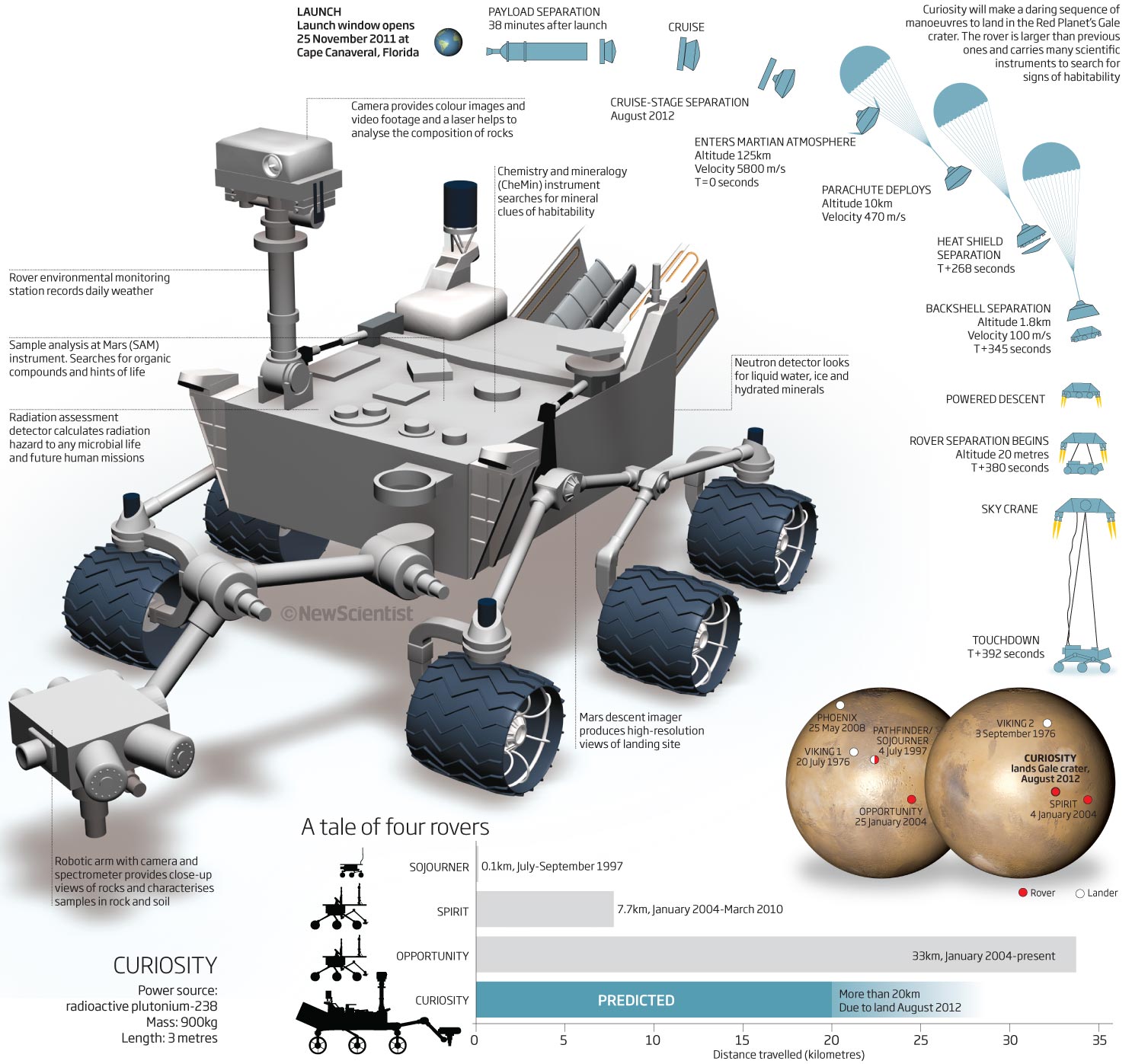
The mission was designed to be a subtle step forward from Curiosity. Curiosity was there to ask, “Could life have lived here?” The 2020 mission was designed to ask, “Did it?”

But the distinction is massive.

By focusing on the ancient rock record, NASA bought itself an insurance policy against failure. If they find nothing, they can say, “Well, it’s been three billion years, the evidence eroded.” If they looked for present life and found zero, it would be a devastating blow to the concept of a living universe.

So, the strategy was set: Go to a place that used to be a paradise.

That meant sending the vehicle to a location that was likely to have been habitable billions of years in the past when the planet was warmer, wetter, and thicker with atmosphere than the frozen desert it is now. They picked Jezero Crater. A dried-up lakebed. If you wanted to find a dinosaur bone on Earth, you’d go to where the mud used to be. The logic holds up.

Deep Dive: The Viking Controversy (1976)

To understand why NASA is so gun-shy about hunting for living aliens, you have to rewind the clock. You have to go back to 1976. The Viking missions.

This is the part of history that doesn’t get printed in the shiny brochures.

The Viking landers were the first true biological hunters we sent to the Red Planet. They carried an experiment called the Labeled Release (LR) experiment. The idea was simple but brilliant: Scoop up some Martian dirt, inject it with a nutrient solution tagged with radioactive carbon, and wait.

If there were bugs in the soil, they would eat the food and “breathe out” radioactive gas. A Geiger counter would click. Boom. Life detected.

Guess what happened?

The Geiger counter went crazy. The data came back positive. Not just once. On both landers. Thousands of miles apart.

According to the pre-established protocols, we found life in 1976.

But then, the other instruments on board—specifically the gas chromatograph mass spectrometer—failed to find organic molecules. It was a contradiction. How can you have life without organic bodies?

NASA panicked. They concluded the soil was just chemically weird. Perchlorates. Oxidizers. They declared the life detection a “false positive.” They killed the hype. And for decades, nobody dared to send a life-detection experiment again.

Was it a cover-up? Or just bad science? Gilbert Levin, the man who designed the experiment, went to his grave insisting he found life. NASA insists he found rust and bleach. Who do you believe?

The “Red Herring” of Geology

This brings us back to the 2020 mission. By framing it as a “geological history tour,” NASA avoided the Viking trap. You can’t get a false positive on a rock. It’s either a rock, or it isn’t.

But let’s look at the hardware. This rover is a beast.

It carries a suite of instruments that make the Batmobile look like a tricycle. We’re talking about lasers that zap rocks to analyze their chemical vapor (SuperCam). We’re talking about SHERLOC (Scanning Habitable Environments with Raman & Luminescence for Organics & Chemicals). Yes, they love their acronyms.

SHERLOC uses ultraviolet lasers to spot organic minerals. If there is a fossilized microbial mat—think of it like ancient pond scum turned to stone—SHERLOC will see it.

This isn’t just “looking for signs.” This is forensic analysis on an alien world.

The Sample Return: The Ultimate Gamble

Here is where things get truly wild. The 2020 mission wasn’t just about looking. It was about stealing.

Perseverance is drilling cores. Chalk-sized tubes of Martian rock. It seals them up in hyper-clean titanium tubes and drops them on the surface. A depot. A treasure chest.

The plan? Send another mission later (NASA and the European Space Agency are working on this now) to land, run a fetch rover to pick up the tubes, load them into a rocket, launch that rocket off the surface of Mars (which has never been done), rendezvous with an orbiter, and fly the samples back to Earth.

This is the “Mars Sample Return” campaign.

Why go to this trouble? Because no robot, no matter how advanced, can match a human lab. If there are fossilized bacteria in those tubes, we need electron microscopes to see them.

The Andromeda Strain Scenario

Of course, this triggers the conspiratorial part of the brain. If we are right, and there is life—or dormant spores—on Mars, are we ready to bring them here?

NASA has “Planetary Protection” officers. Their job is to keep Earth germs off Mars, and Mars germs off Earth. But accidents happen. One cracked seal. One crash landing in the Utah desert.

Is it possible that by seeking the answer to “Are we alone?”, we might invite a biological crisis? The scientists say the radiation on Mars kills everything on the surface. They say it’s safe. But remember, life finds a way.

What If We Find It?

Let’s play the “What If” game. The rover finds a stromatolite. A clear, undeniable fossil structure created by ancient slime.

The news breaks. “Life Found on Mars.”

Everything changes. Overnight.

Religion: How do major faiths react to the news that the Creator had a side project? Some will adapt. Some will deny. It creates a theological earthquake.

The Great Filter: This is the terrifying part. In the Fermi Paradox (why haven’t we seen aliens?), the “Great Filter” is the barrier that stops civilizations from spreading. If life is common (it happened on Mars and Earth), but intelligent space-faring civilizations are rare (we see none), then the “Filter” is likely ahead of us.

Finding simple life on Mars suggests that starting life is easy. Which means the hard part—the part that kills civilizations—is something we haven’t faced yet. Finding fossils on Mars might be the darkest news humanity could ever receive.

The Modern Reality: Perseverance on the Ground

Since the original 2013 announcement, the 2020 rover—Perseverance—did launch. It survived the “Seven Minutes of Terror” descent. It landed in Jezero Crater in February 2021.

And it didn’t come alone.

It brought a friend. Ingenuity. A helicopter. A drone on another planet.

Think about the audacity of that. We are flying a remote-controlled chopper in an atmosphere that is 1% as thick as Earth’s. The blades have to spin at 2,400 RPM just to get lift. It was supposed to fly five times. It flew dozens of times. It scouted ahead.

This changes the game. We aren’t just crawling anymore. We are exploring in 3D.

The Silence of the Sands

As of right now, the rover is churning through the dirt. It has found organic molecules. It has found evidence of rushing rivers. It has found igneous rocks where it expected sedimentary ones, confusing the geologists and rewriting the textbooks.

But the “Big Announcement” hasn’t come yet.

Maybe the data is being analyzed. Maybe they are waiting for the sample return. Or maybe, just maybe, they found something so strange, so unexplainable, that they don’t know how to tell us.

Why We Must Keep Looking

The skeptics say it’s a waste of money. Fix Earth first. Why care about red dust?

Because we are explorers. It is in our DNA to look over the next hill. And Mars is the ultimate hill.

The 2020 mission, despite its cautious “past life only” labeling, is the tip of the spear. We are scratching the surface. Elon Musk wants to put a city there. NASA wants to put boots on the ground by the late 2030s. China is landing rovers too.

The race is on.

If there are fossils in those rocks, they are waiting. Silent. Frozen. A message from billions of years ago saying, “You are not special. You are not the first. And you won’t be the last.”

So, we watch the feeds. We download the raw images. We zoom in on every weird shadow and oddly shaped rock, hoping to see a shell, a bone, a sign.

The rover keeps rolling. The wheels crunch over the history of a dead world. And we wait for the call.

Amit Ghosh
Amit Ghoshhttps://coolinterestingnews.com
Aloha, I'm Amit Ghosh, a web entrepreneur and avid blogger. Bitten by entrepreneurial bug, I got kicked out from college and ended up being millionaire and running a digital media company named Aeron7 headquartered at Lithuania.
RELATED ARTICLES
- Advertisment -

Most Popular

Recent Comments

Warren Pan Abbott on The legend of the Devil Monkey !
chris davies on The McPherson Tape Mystery
Reed Reedly on ET has Internet!
Bea Houseoffashion on Proof Of Time Travellers – Gallery
Marcus2012 on ET has Internet!
Reed Reedly on ET has Internet!
LaughsAtConspiracyNuts on The 9/11 Conspiracy – Myths and Facts
Alex Sliverman on Did the ancients fly?
Doctor Wholigan on Time Traveler in 1938 film
chris davies on The McPherson Tape Mystery
Archie1954 on 10 secret UFO hideouts
chris davies on Ghosts of flight 401
Marcus2012 on ET has Internet!
jason Macdonald on Proof of Time Travel? – China
chris davies on Long-Lost Pyramids Found?
Reed Reedly on ET has Internet!
Milkman on Connected Universe
Tenmiles on Baigong Pipes Mystery
Simon Foster on Sirius – The Documentary
From the 1st April on 2013 – Alien Contact date ?
SkyWatcher on Is ET ignoring us?
I Come From The Future on Obama to make UFO Alien disclouser soon ?
Just another person on 2013 – Alien Contact date ?
Malcolm Windowcleaner on The strange case of Rudolph Fentz
Mason Servio on Strange Things on Mars
Marke Wisdom Seeker on What will we find as arctic melts?
Andrea A Elisabeth Levyne on Aliens Captured in Varginha, Brazil
Mitch Grouyeki on Amazing Space Shuttle pictures