Is This Book Witchcraft? The Mystery of the “Sleep Spell”
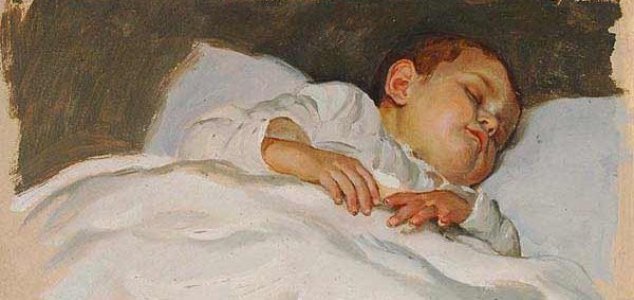
Look at that image above. Peace. Silence. The holy grail of parenting. But ask yourself this: Can a simple stack of paper really possess the power to knock a child unconscious? Not with a pill. Not with a warm glass of milk. But with words.
It sounds like snake oil. It sounds like a late-night infomercial scam. But the internet has been losing its collective mind over a strange, hypnotic manuscript that claims to do exactly that.
We are talking about a book that doesn’t just tell a story. It rewires the brain. It flips a switch. One minute, chaos. The next? Silence.
For years, parents have whispered about “The Rabbit.” It’s become a sort of urban legend in mommy groups and forums. A secret weapon passed from one exhausted soul to another. But this isn’t magic. It isn’t voodoo. It is something far more interesting. It is a masterclass in psychological programming, disguised as a children’s paperback.
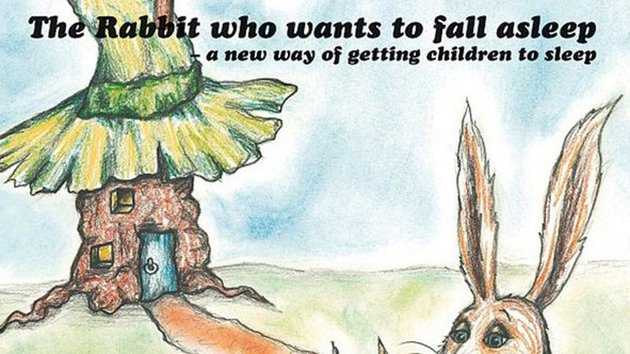
The book is called The Rabbit Who Wants To Fall Asleep. And if the reports are true, it is the most effective sedative ever printed on paper.
The Amazon Anomaly: How a Self-Published PDF Broke the Algorithm
Let’s rewind. The year is 2015. The publishing world is dominated by massive corporations, celebrity memoirs, and thriller novels with million-dollar marketing budgets. Then, out of nowhere, a glitch in the matrix appears.
A self-published, 26-page book with zero marketing budget shoots up the charts. It climbs past the bestsellers. It climbs past the classics. It hits Number One on Amazon.
This had never happened before. A self-published print book taking the top spot? Impossible. Yet, there it was.
Why? Because it worked. Panic-stricken parents were buying it in droves. They weren’t buying literature. They were buying a solution. The reviews started pouring in, and they read less like book reviews and more like eyewitness testimony to a miracle.
“I thought it was a joke,” one user wrote. “Ten minutes. He was out in ten minutes.”
“This is witchcraft,” wrote another. “I don’t care how it works. Just take my money.”
But what is actually inside these pages? Is it a story? Barely. It’s a delivery system.
The Swedish “Wizard” Behind the Curtain
The architect of this sleep-inducing phenomenon is not a children’s author by trade. He isn’t a fantasy writer. He is Carl-Johan Forssen Ehrlin.
Ehrlin is a Swedish behavioral psychologist and linguist. Read that again. Behavioral psychologist. He understands the gears and levers of the human mind. He knows how to hack the system.
Most children’s books are designed to entertain. They have bright colors, loud noises, and exciting climaxes. They stimulate the brain. They wake the child up. Ehrlin realized this was the problem. We were feeding our kids adrenaline right before bed.
So, he went the other way. He weaponized boredom. He weaponized suggestion.
“I had written books before about leadership and personal development using these techniques,” Ehrlin explained in an interview that feels more like a debriefing. “But I got the idea for a children’s book while I was driving on a long journey with my mother.”
Picture the scene. The hum of the engine. The repetitive motion of the road. White lines flashing by. Hypnotic.
“She fell asleep,” Ehrlin said. “And I got the idea of how I could use my methods to help children relax.”
The Napkin Prophecy
History is full of eureka moments scribbled on scrap paper. The theory of relativity? Maybe. The lyrics to “Yesterday”? Definitely. And now, The Rabbit.
“When we stopped, I wrote it all down on a napkin,” Ehrlin claimed.
A napkin. It sounds simple. It sounds like a sudden stroke of luck. But don’t be fooled. The napkin was just the beginning. The real work was the refinement. It took Ehrlin another three and a half years to turn those napkin notes into the final product.
Three years? For a 26-page picture book? Why?
Because he wasn’t writing a story. He was building a machine. He had to ensure that every word, every pause, and every inflection was mathematically perfect. The techniques had to be used in the “correct order” to collapse the child’s resistance.
Deep Dive: The Mechanics of Mind Control (For Kids)
So, how does it actually work? If you open the book, you’ll notice something strange immediately. The text looks… wrong. It looks like a script for a play, or perhaps a hypnosis session.
That’s because it is.
The book utilizes sophisticated psychological techniques known as Neuro-Linguistic Programming (NLP). NLP is a way of changing someone’s thoughts and behaviors to help achieve desired outcomes for them. It’s often used in therapy, sales, and self-help. Ehrlin applied it to bedtime.
The “Double Bind” and Embedded Commands
The text is riddled with bold fonts and italicized instructions. These aren’t stylistic choices. They are commands for the parent.
- Bold Text: Words to be emphasized.
- Italic Text: Instructions to read slowly and softly.
- [Name]: Places to insert the child’s name, anchoring them into the narrative.
The story follows “Roger The Rabbit.” Roger is tired. Roger can’t sleep. Roger meets characters like “Uncle Yawn” and the “Heavy-Eyed Owl.” Subtle? No. Effective? Terrifyingly so.
The sentence structure is designed to be confusing. It loops. It repeats. It uses grammar that feels slightly “off” to an adult reader. This is intentional. It creates a state of mild confusion in the brain, known as a trans-derivational search. The conscious mind gets busy trying to parse the sentence, leaving the subconscious mind wide open to the embedded command: Sleep.
It’s the literary equivalent of a spinning pocket watch.
The Science of the Contagious Yawn
One of the most powerful tools in Ehrlin’s arsenal is the instruction for parents to yawn. Physically yawn. Frequently.
Why? Science.
We have things in our brains called mirror neurons. When we see someone perform an action, or even hear it described vividly, our mirror neurons fire as if we were doing it ourselves. It’s why you wince when you see someone get hit in a movie.
Yawning is high-octane fuel for mirror neurons. It is evolutionarily contagious. By forcing the parent to yawn, the book triggers a biological response in the child. The child must yawn. And once the physical cycle of yawning begins, the heart rate drops. The eyes water. The body prepares for shutdown.
Ehrlin isn’t just telling a story about a tired rabbit. He is chemically signaling the child’s body that it is time to power down.
Eyewitness Reports: The Cult of the Rabbit
The internet loves a mystery, but it loves results even more. The feedback loop on this book has been staggering.
“I am amazed how successful it has been,” said Ehrlin. “My inbox is full of parents who say it has really helped their children to relax and fall asleep.”

But let’s look closer at the language parents use. They describe the book as a “life saver.” They talk about it with a reverence usually reserved for religious texts. Why? because sleep deprivation is torture. Literally. It is used as an interrogation technique.
Parents of young children are essentially living in a state of mild torture. When something—anything—stops the torture, they become devotees. They become evangelists.
However, some parents report a “creepy” vibe. They say the story is boring. They say the repetitive nature makes them feel like zombies. This is the price of admission. The book isn’t designed to be fun. It’s designed to be a sedative.
Modern Theories: Is It Hypnosis?
In recent years, forums like Reddit have lit up with theories about the long-term effects. Is it safe to hypnotize your child every night?
Technically, all storytelling is a form of hypnosis. You are suspending disbelief and guiding the imagination. But The Rabbit Who Wants To Fall Asleep is more direct. It uses “progressive relaxation,” a standard technique in hypnotherapy where you ask the subject to relax their toes, then their ankles, then their legs, moving up the body.
This book does exactly that. It guides the child to shut down their body part by part. It’s a guided meditation for toddlers.
Critics argue that it takes the “connection” out of bedtime reading. Instead of bonding over a fun story, you are performing a medical procedure with words. But ask a parent who hasn’t slept in three days if they care about the philosophy of literature. They don’t. They want silence.
The “Heavy-Eyed” Warning
There is a warning on the book. A disclaimer. It advises parents not to read the book near anyone driving a vehicle.
Think about that. A children’s book with a safety warning for heavy machinery. It sounds like a marketing gimmick, but considering the author fell asleep while driving (which sparked the idea), it’s rooted in reality.
The cadence of the words is rhythmic. Drone-like. If you are a tired parent reading this in a dim room, you might find yourself drifting off before your kid does. It’s a double-edged sword. You are the caster of the spell, but you are also in the blast radius.
The Legacy of the Rabbit
Since the explosion of The Rabbit Who Wants To Fall Asleep, copycats have flooded the market. Elephants who want to nap. Tractors that need to park. The genre of “utilitarian bedtime literature” was born.
But Ehrlin’s book remains the Titan. It was the first to crack the code. It was the first to realize that we don’t need more dragons or princesses. We need biology. We need psychology.
“I wrote it all down on a napkin,” he said. That napkin is now worth millions. It launched a franchise. It saved thousands of marriages from the strain of sleepless nights.
So, is it mind control? Yes. Is it manipulation? Absolutely. But when it’s 9:30 PM, and the lights are out, and the little one is still bouncing off the walls, maybe a little bit of mind control is exactly what the doctor ordered.
Final Verdict: Proceed with Caution
If you choose to bring this book into your home, know what you are doing. You aren’t just reading a bedtime story. You are engaging in a psychological experiment. You are hacking your child’s operating system.
Use the bold text. Use the yawning. Speak in the slow, monotonous voice. And when the eyelids start to flutter, and the breathing slows, remember: You didn’t just read a book. You performed a magic trick.
Just try not to fall asleep yourself before you get to the end.