The Mars Coin Mystery: Did NASA Accidentally Snap a Photo of Alien Currency?
Stop scrolling. Seriously. Take a breath and look at the image we are about to show you. Because if this is what it looks like, everything we know about the Red Planet is wrong.
We are told Mars is a dead world. A rusty, dusty ball of silence where nothing has happened for billions of years. Just rocks, ice, and radiation. That’s the official story. That’s the “safe” version of history they teach in schools.
But what if the rovers we sent up there—our mechanical eyes on a distant world—are seeing things they shouldn’t? What if they are rolling over the scattered debris of a civilization that died while Earth was still in its infancy?
Enter the “Mars Coin.”
This isn’t just a smudge. It isn’t a trick of the light. This is one of the most compelling pieces of visual evidence ever beamed back from the Spirit Rover. And the implications? They are absolutely terrifying.
The Discovery That Shook the Fringe Community
Let’s get right into it. The eagle-eyed hunters at Paranormal Crucible on YouTube were the ones to spot this anomaly. They didn’t have special access. They didn’t have classified clearance. They just had patience. They combed through thousands of raw images publicly released by NASA, looking for the things the space agency might have missed. Or ignored.
And then, they found it.
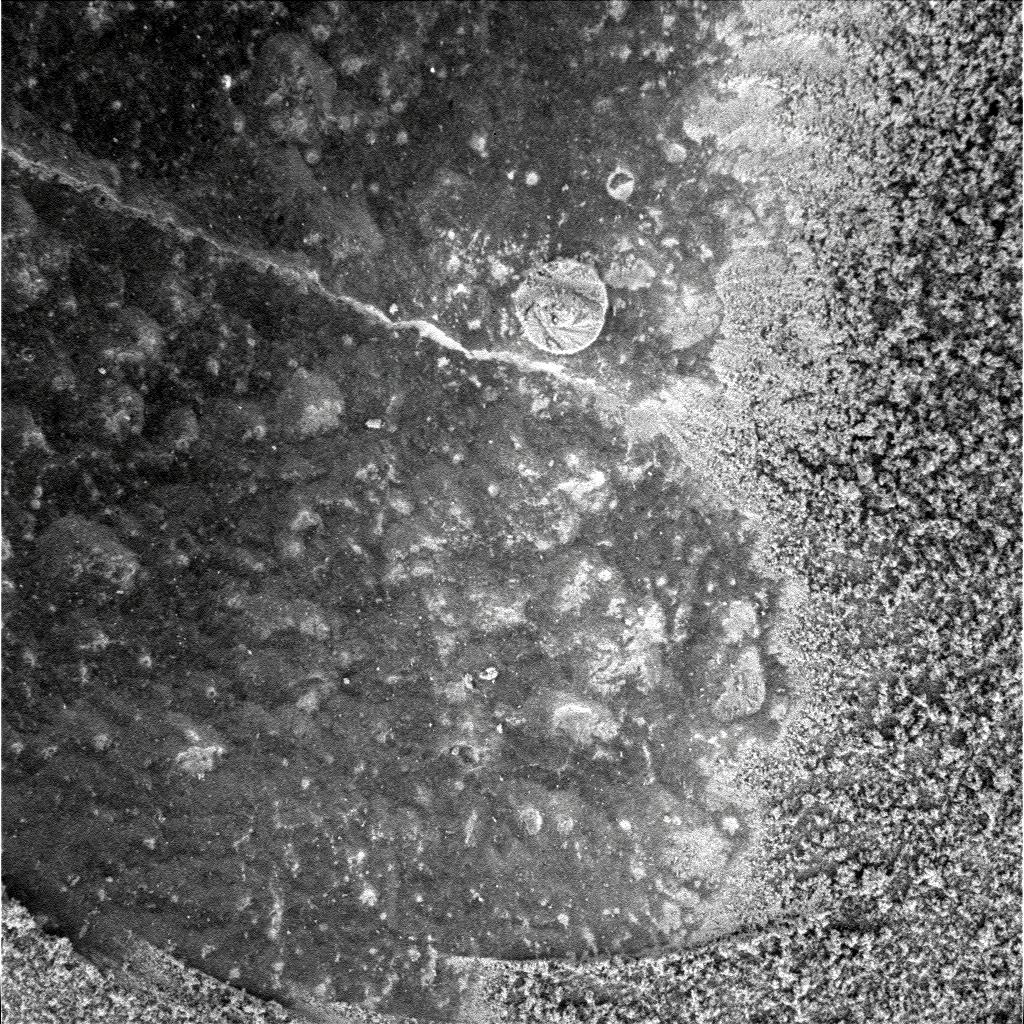
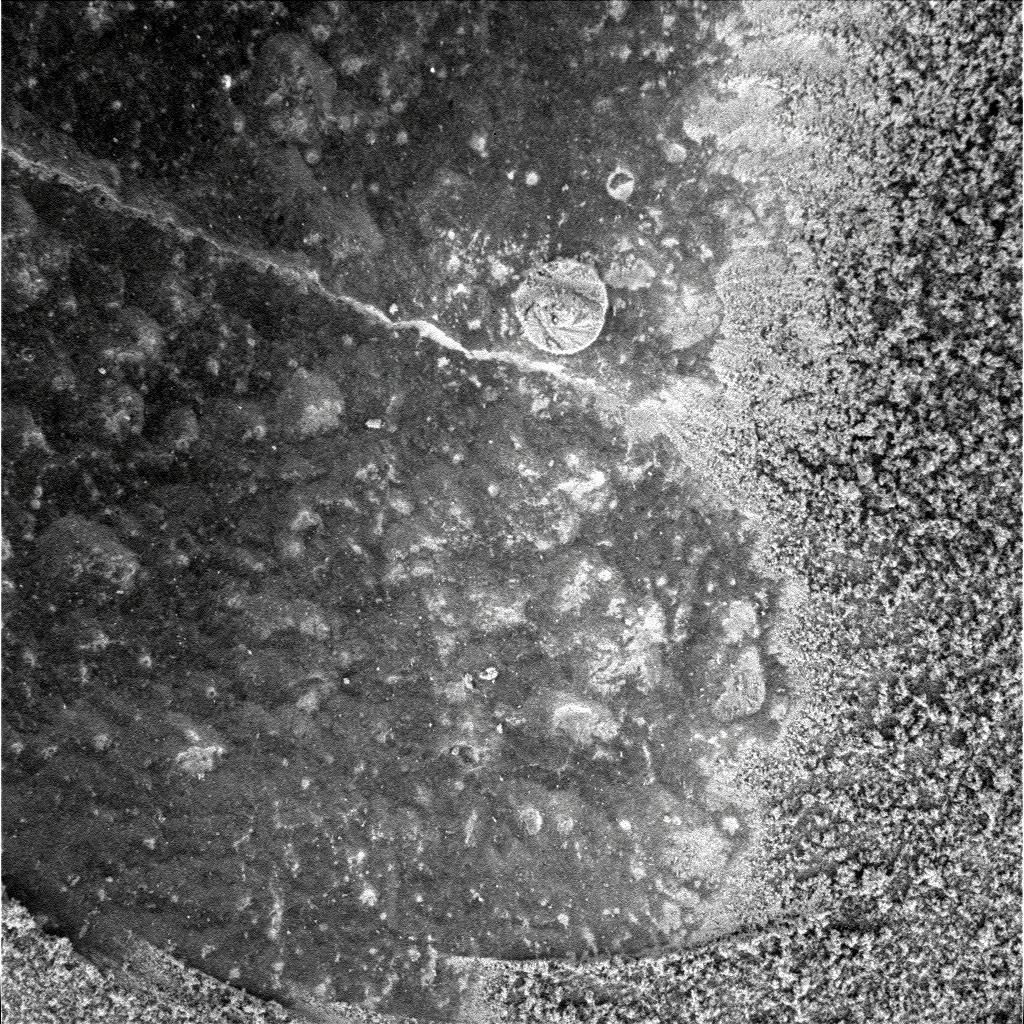
Buried in the Martian regolith, half-hidden by red dust, lies a circular object. It doesn’t fit. It screams “artificial.” In a landscape of jagged, broken basalt and random geological chaos, nature rarely makes perfect circles. Nature doesn’t stamp faces onto metal.
I have to admit, when I first saw this, I was skeptical. I’m always skeptical. But one of these photos is very convincing. It changes the game.
We aren’t looking at a rock. We are looking at what appears to be a coin, a medallion, or perhaps a high-ranking military brooch. But the detail is where the devil hides. The object does have a face on it. Wait. It gets weirder. It is not a single face… it’s a double face.
The Two-Species Theory: A Galactic Alliance?
Look closer. Don’t just glance. Really look.
There are two faces of two distinct species stamped onto the front of this object. This isn’t random erosion. This is design. One species looks semi-human on the right side. It has features we recognize. High forehead. defined nose. It looks like us.
But the left face? The left face looks nothing like a human. But I have seen it before. You’ve seen it in the ancient carvings of Sumeria. You’ve seen it in the folklore of the star people.
The most significant discovery here is the massive historical implication. If this is a coin, it tells a story. Why do we put people on coins? To honor them. To validate the currency with authority. The fact that these two species put their historical figures on this coin together suggests something profound: a symbol of their bond of friendship.

The “Impossible” Artifact: Breaking Down the Evidence
Before you roll your eyes. Before you cry “rubbish” or “it’s just a rock,” you need to understand the provenance of these images. These aren’t Photoshop jobs from a basement in New Jersey.
The pictures below have been certified genuine by NASA. They reside on the official servers at the Jet Propulsion Laboratory. NASA admits the photo is real. They just disagree on what you are seeing.
But here is where it gets spicy. Not only that, NASA has also started to suggest they “may be” unexplained or out-of-place objects. They use soft language. They say “anomaly.” They say “curiosity.” But they never say “impossible.”
The Problem with Pareidolia
Skeptics love one word: Pareidolia. It’s the psychological phenomenon where the human brain tries to make sense of random patterns. It’s why you see a bunny in a cloud or Jesus on a piece of toast. It is a survival mechanism.
But pareidolia breaks down when you apply geometry. A cloud changes shape. A piece of toast is organic. This object on Mars has a rigid, defined structure. It has a rim. It has relief. Shadows behave differently on flat surfaces versus raised reliefs. The way the light hits this object suggests it is stamped metal, not pitted rock.
Let’s look at the raw data.

Deep Dive: Material Science on the Red Planet
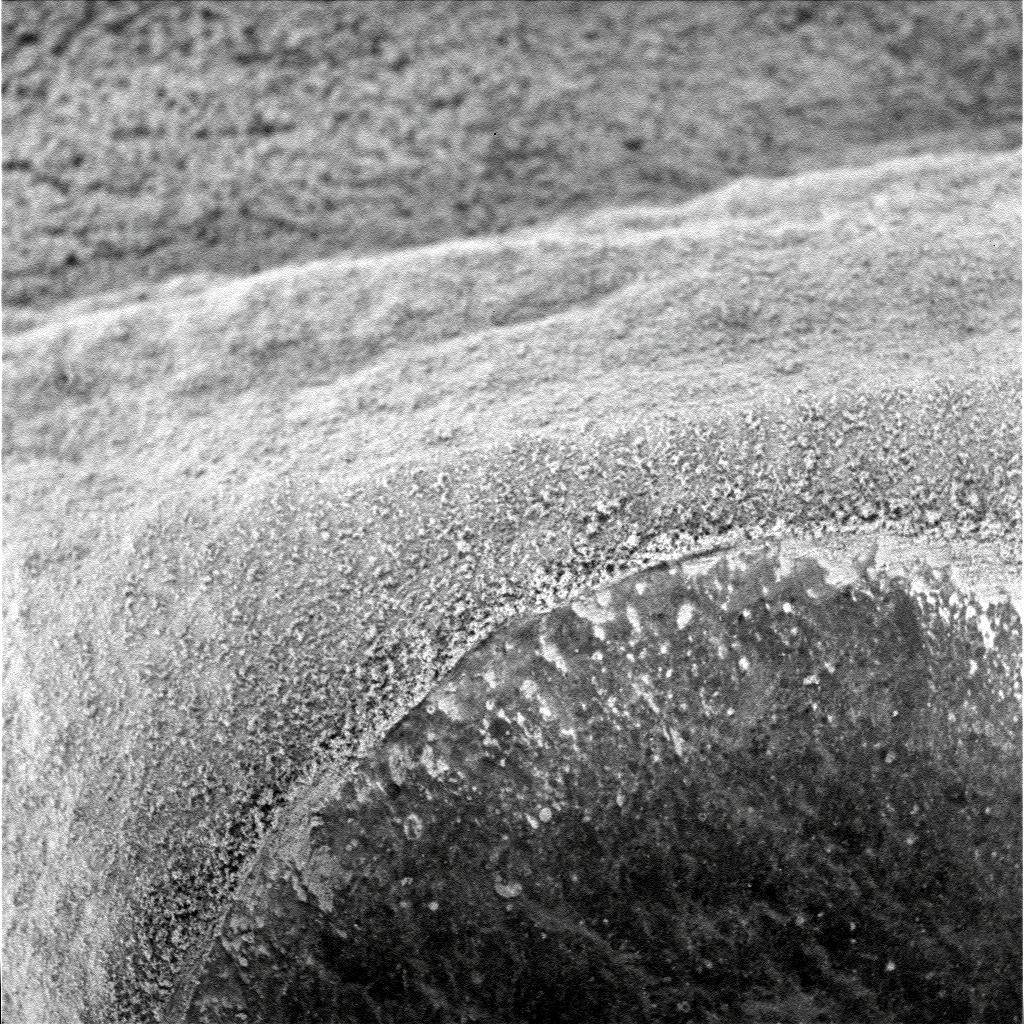
The images demonstrate a small, round, flat disk on the ground, pointed out with the yellow arrow. It is apparently caught in a rock crevasse that is also filled with what looks like soil. Let’s talk about that soil.
If it is soil—and not “dithering smudge” image tampering used to obscure details—the soil covers roughly half the disk, hiding that portion from view. This partial burial is critical. It implies time. This object didn’t just fall there yesterday. It has been there long enough for the Martian winds to bury it.
Note the reflectivity. This is the smoking gun.
The surface of the disk reflects sunlight a little more than the adjacent rock surfaces and more uniformly. Rocks on Mars are basalt, volcanic, dusty. They absorb light or scatter it. This object shines. This suggests that this object may very well be smoothed metal.
Also, note the uniform thickness of the disk as demonstrated by its left exposed portion casting a short shadow against the rock surface it is laying on. Rocks fracture. They break into shards. They don’t break into perfect wafers with consistent millimeter thickness.

The NASA Resolution Conspiracy
Now, this disk obviously looks like a metal coin. It is very suggestive of that, and many of us will see it that way instantly. However, we hit a wall. A digital wall.
Without the fine detail of the disk’s surface, we can’t be conclusive beyond this being just “very suggestive.” Why is the detail missing? This inconclusive situation, to a large extent, is a function of the very high .webp compression on this imaging as released for public consumption.
Think about it. We have spy satellites that can read a license plate from orbit. We sent a rover worth billions of dollars to another planet. It has the most advanced cameras humanity can build.
This object is plenty close enough to the Spirit rover panoramic camera that such details should be available to us. If this imaging is as good as it was supposed to be, we should see the scratches on the metal. We should see the dates. We should see the mint mark.
So, where are the high-resolution files? Why do we always get the blurry, compressed versions? Is it bandwidth? Or is it a filter? Some theorists believe NASA runs a “scrubbing” algorithm before any image hits the public server, blurring out anything that looks too artificial. They call it “sanity checking.” I call it censorship.
What If It Is Real? The Economic Implications
Let’s play “What If.” Let’s assume for a minute this is exactly what it looks like: a coin.
Coins imply an economy. An economy implies a society. You don’t mint money if you are a primitive hunter-gatherer. You mint money when you have trade. When you have cities. When you have a government.
If there are coins on Mars, it means Mars wasn’t just inhabited; it was civilized. It means they had commerce. Did they trade with Earth? There are artifacts found in Egypt and South America that defy explanation—metals that shouldn’t exist, maps that show Antarctica without ice. Was there an interplanetary trade route thousands of years ago?
The Nuclear Mars Theory
Physicist Dr. John Brandenburg has proposed a theory that Mars was wiped out by a massive nuclear event in the distant past. He cites the presence of Xenon-129 in the Martian atmosphere—an isotope produced by nuclear explosions. If a civilization was destroyed instantly, what gets left behind? The stone crumbles. The paper burns. The bones turn to dust.
But gold? Silver? Platinum? They survive. Coins are durable. In the wreckage of Pompeii, we found coins. In the sunken Titanic, we found coins. If Mars was nuked, the coins might be the only things left to tell us who they were.
The Connection to Recent Findings
This isn’t an isolated incident. The internet has been on fire recently with other findings.
- The Doorway: The Curiosity rover snapped an image of what looks like a perfectly carved doorway into a rock face. NASA says it’s a shear fracture. It looks like an entrance.
- The Spoon: A levitating spoon-shaped object was spotted, casting a shadow that proved it was hovering or protruding.
- The Blueberries: Strange, perfect spheres of hematite that litter the surface, looking suspiciously like ball bearings or industrial waste.
The “Coin” fits perfectly into this puzzle. It is small debris. It is the pocket change of a ghost.
Why We Must Keep Looking
The Spirit rover is dead now. It got stuck in the sand in 2009 and eventually stopped calling home. It sits there, a monument to human curiosity, freezing in the Martian winter.
But the data it sent back is still there. Millions of pixels that haven’t been fully analyzed. NASA has a few dozen scientists looking at these pictures. The internet has millions of users. The “crowd-sourced” search for truth is our best weapon.
Paranormal Crucible found this coin because they refused to just glance and move on. They zoomed in. They questioned the official narrative.
So, the next time you see a picture from Mars, don’t just see red rocks. Look for the glint of metal. Look for the geometry of intelligence. Because the evidence is there, lying in the dirt, waiting for someone brave enough to pick it up.
Is this a coin symbolizing a lost alliance between Earth and Mars? Is it a medallion from a fallen soldier of an ancient war? or is it just a rock that really, really wants to be famous?
You decide.
Originally posted 2016-02-14 00:03:56. Republished by Blog Post Promoter