Home Weird World Space NASA captures image of Meteor that hits Russia

NASA captures image of Meteor that hits Russia

0
63

The Day the Sky Exploded: The Unanswered Questions of the Chelyabinsk Meteor

February 15th, 2013. A Friday. People in Chelyabinsk, Russia, were just starting their day. Commuting to work. Taking kids to school. Another freezing, ordinary morning in an industrial city sitting east of the Ural Mountains.

Then the sun rose twice.

At 9:20 AM local time, the sky was torn open by a streak of impossible light. A silent, blinding flash that outshone the actual sun, casting sharp, moving shadows across the frozen landscape. Dashcams, a staple of Russian driving, captured the horrifying spectacle from a hundred different angles. A second sun, burning a furious trail across the pale blue canvas of the morning.

For a few moments, there was just confusion. Awe. What was it? A plane crashing? A missile?

Then, after an agonizing, two-minute delay that no one understood, the sound arrived.

And with it, hell broke loose.

A Shockwave from the Gods

It wasn’t a boom. Not a simple explosion. It was a physical concussion. A punch from the atmosphere itself. Windows in over 7,000 buildings across six cities spontaneously shattered, exploding inwards. The shockwave, traveling at the speed of sound, was the real weapon. It flattened people standing in the open. It ripped the doors off buildings. It collapsed the roof of a zinc factory.

Panic. Absolute chaos.

People who had rushed to their windows to see the strange light were suddenly blasted with razor-sharp shards of glass. This was the source of most of the injuries. Not fire, not impact, but glass. Nearly 1,500 people were injured, including over 200 children. It was the largest number of people ever harmed by a single cosmic event in recorded history.

One witness, Zaglumyonova, described the moment the invisible fist struck her home. The windows of her balcony didn’t just crack, they vanished. Clay pots with her plants simply ceased to exist, vaporized into dust and shrapnel. For the next two hours, the mobile networks were completely dead. A city of over a million people was cut off, each person alone with the terrifying thought that the world might be ending.

The official story was already forming. A meteor. A space rock. But as the dust settled, the questions were just beginning. And they were questions that would lead down a rabbit hole of cosmic coincidences, secret weapons, and videos that some say prove we were not alone that day.

The Official Target: A Cosmic Coincidence?

Now, here’s where it gets weird. In the days leading up to the Chelyabinsk event, the world’s space agencies weren’t looking at Russia. All eyes were on a completely different object: Asteroid 2012 DA14.

This was a known entity. A 150-foot-wide behemoth scheduled to make one of the closest-ever recorded passes of Earth. It was going to scream past our planet at a distance of just 17,200 miles—closer than some of our own satellites. The global astronomical community was buzzing, telescopes pointed, ready for the show.

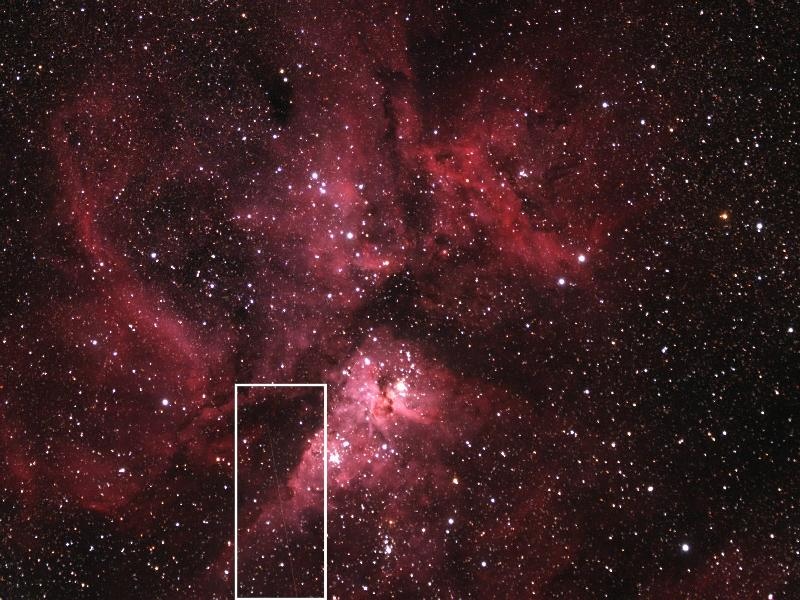
The image below, captured by a telescope at the Siding Spring Observatory in Australia, shows that very asteroid. A tiny speck on its journey through the cosmic dark, passing the beautiful Eta Carinae Nebula.

20130215-232056.webp

2012 DA14 was set to pass by Earth just 16 hours *after* the Chelyabinsk explosion. Do you believe in coincidences? On the very day a known asteroid was making a historically close shave, another, completely unknown rock from a totally different direction hits us without any warning whatsoever? The odds seem… astronomical.

NASA and other official sources were quick to reassure everyone. “Completely unrelated!” they said. The Chelyabinsk meteor came from a different part of the sky, on a different trajectory. It was just a fluke. A one-in-a-million chance. But for those of us who look for patterns, who see the strings behind the puppet show, this explanation feels a little too neat. A little too convenient. Was the world’s attention deliberately focused on 2012 DA14 while something else, something far more immediate, snuck in under the radar?

Deep Dive: The Sheer Power of the Chelyabinsk Bolide

Let’s talk about the rock itself. The initial reports were laughably wrong. The Russian Academy of Sciences first estimated it weighed a mere 10 tons. The reality? Later analysis, based on the energy released, put the object at around 12,000 to 13,000 tons. It was about 20 meters, or 65 feet, across—the size of a house.

It didn’t enter the atmosphere at 54,000 kph. No. It hit the air at a blistering 69,000 kph (that’s 42,900 mph, or 19 kilometers per *second*). At that speed, the air in front of it couldn’t get out of the way. It compressed. It became a superheated plasma hotter than the surface of the sun.

The rock didn’t just “shatter.” It detonated. The incredible stress of hitting our dense atmosphere caused it to violently explode in an airburst 18 miles above the ground. The energy released was staggering. The equivalent of 500 kilotons of TNT. That’s 33 times the power of the atomic bomb dropped on Hiroshima.

Think about that. An explosion 33 times more powerful than Hiroshima happened over a populated city, and it came from space with absolutely no warning. And we’re supposed to just accept it as a random Tuesday?

Conspiracy Corner: What Really Exploded Over Russia?

The official narrative is simple: a rock fell from the sky. But the internet tells a different story. When you have hundreds of cameras all pointed at the same event, people start to see things. Things the officials conveniently ignore. Things that don’t fit.

Theory 1: The UFO Intercept

This is the big one. Almost immediately after the event, slowed-down and zoomed-in versions of the dashcam videos started to appear online. And they seemed to show something incredible. A small, dark, cylindrical object rapidly overtakes the meteor from behind. It appears to strike the main body. A moment later, the meteor explodes in its massive airburst.

The object then appears to continue on, seemingly unaffected.

The analysis videos are compelling. To the naked eye, it looks exactly like an interception. A projectile fired to destroy a threat. Proponents of this theory ask a simple question: did someone, or something, save Chelyabinsk from a direct impact? If that 13,000-ton rock had hit the ground intact, it would have created a crater the size of a football stadium and obliterated a huge chunk of the city. The death toll would have been in the thousands, not zero.

So who fired the shot? Was it an advanced, secret Russian air defense system? A “Sky Shield” the world doesn’t know about? Or was it something else? Something not from this world? A guardian angel in a UFO, protecting a nascent species from a cosmic catastrophe?

The debunkers, of course, have their answers. “Compression artifacts from the video.” “Lens flare.” “A piece of the meteor flaking off.” All plausible. But they lack the explanatory power of what the video actually *shows*. It shows an object on a controlled, faster trajectory striking a slower one. It’s as simple as that.

Theory 2: A Russian Weapons Test Gone Wrong

Chelyabinsk isn’t just any city. The Chelyabinsk Oblast is a hub of Russian military and industrial power. It’s home to nuclear facilities, tank factories, and military bases. It’s exactly the kind of place you might test a new, top-secret weapon.

Could the “meteor” have been a misfired hypersonic missile? A new type of experimental weapon designed to travel at incredible speeds? Perhaps one that malfunctioned and self-destructed, or was intentionally destroyed before it could hit the ground.

This theory would explain the lack of warning. It would explain the Russian military’s incredibly rapid response in cordoning off the area around Lake Chebarkul, where the largest fragment was said to have landed. They weren’t securing a scientific curiosity; they were recovering their own lost tech. Proponents point to the Tunguska Event of 1908, another massive explosion in Siberia that flattened 80 million trees, which many today believe was not a comet or meteor, but something… else. Was Chelyabinsk a modern Tunguska?

It’s a chilling thought. The idea that a government would be so reckless is terrifying. But history shows it’s far from impossible.

Theory 3: The Message in the Fireball

Let’s step back from Earthly explanations. What if the event was exactly what it looked like—a rock from space—but the timing wasn’t random at all? What if the “coincidence” with Asteroid 2012 DA14 wasn’t a coincidence?

Perhaps the Chelyabinsk meteor was a companion object, a smaller chunk traveling with the larger asteroid that we simply didn’t see. Or maybe it was a warning. A cosmic “shot across the bow.”

Humanity is just now developing the first hints of a planetary defense system. We track large asteroids, and we have theoretical ideas about how to deflect them. But Chelyabinsk proved a horrifying truth: we are blind. We can be hit by a city-killer-class weapon from the cosmos at any moment, with zero warning. The rock that hit Chelyabinsk came from the direction of the sun, making it impossible for ground-based telescopes to spot. We never saw it coming.

Was this event a wake-up call? A reminder from the universe that our squabbles and politics are meaningless in the face of the vast, indifferent, and dangerous cosmos? A message to start looking up, together, before the next one doesn’t miss?

The Aftermath: A Black Market for Space Rocks

In the days and weeks that followed, a strange “meteorite rush” descended on the region. The explosion had scattered thousands of small, blackened fragments over the snowy landscape. These tiny pieces of another world became instant collector’s items. Scientists desperately wanted them for analysis. Entrepreneurs wanted them for profit.

Locals scoured the countryside, picking up any dark rock they could find. A black market sprang up overnight. Small fragments were sold online for thousands of dollars. It was a surreal scene: a population traumatized by an explosion from the heavens was now eagerly searching for its remnants.

The grand prize was found months later. In October 2013, a massive, 1,400-pound chunk was painstakingly hauled from the muddy bottom of Lake Chebarkul. It was the largest piece recovered, the smoking gun. Its recovery was a global media event, and it now sits in a museum, a testament to the day the universe punched Russia in the face.

The science from these fragments confirmed it was a common type of stony chondrite meteorite. It had been traveling in space for about 4.5 billion years, since the very birth of our solar system. A fossil from the dawn of time. But even with this physical proof, the nagging questions refuse to go away.

The story of the Chelyabinsk meteor is not over. It is a story of incredible power, of human fragility, and of deep, unsettling mysteries. We got lucky. Incredibly lucky. The object exploded at the right altitude and the right angle to minimize the damage. A slightly different trajectory, a slightly steeper angle of entry, and this would not be a story of broken windows. It would be a eulogy for a city.

So the next time you look up at the night sky, remember February 15th, 2013. Remember that we are floating on a tiny, fragile speck in a cosmic shooting gallery. And remember the videos that show *something* hitting that meteor. The official story is written. But the truth might still be out there, waiting in the dark.

Originally posted 2016-04-26 00:27:57. Republished by Blog Post Promoter