The Pink Tide of Cornwall: Accidental Spill or a Sinister Message from the Deep?
It began as a whisper on the salty wind. Then, a rumor. Finally, a shocking, undeniable reality.
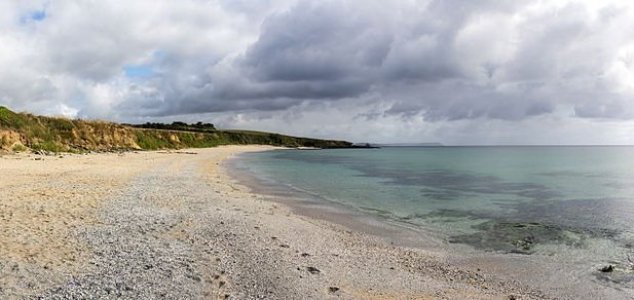
In January 2016, the serene, windswept shores of Poldhu Beach in Cornwall, a coastline known for its ancient legends and pristine beauty, faced an invasion. Not of pirates or sea-raiders from myth. But of something far stranger.
Something bright pink.
Thousands upon thousands of vivid, almost violently neon pink bottles, marching in with the tide. They blanketed the golden sand, clogged the rock pools, and bobbed in the surf like a bizarre, plastic armada. An alien invasion in miniature. The scene was surreal, a glitch in the natural world. A pristine canvas, suddenly vandalized by a single, shocking color.
What was it? Where did it come from? And what did it mean?
The official story came quickly. Almost too quickly. But as we’ll see, the simple answer is rarely the whole story. Sometimes, it’s just the beginning of a much deeper, much stranger mystery.
An Unwelcome Invasion
The first reports trickled in on a bleak Sunday night. A few bottles spotted here and there. By Monday morning, it was a deluge. At least 2,000 of the plastic intruders had made landfall on Britain’s southernmost shores. They all bore the same branding: Vanish laundry detergent.
The community response was immediate. Volunteers, bewildered but determined, descended on the beach. They began the monumental task of clearing the plastic tide, their bags filling faster than they could work. But for every bottle they picked up, the Atlantic seemed to offer two more. It was a losing battle.
Ross Hocking, the owner of the Poldhu Beach cafe, saw the grim reality firsthand. “I think they will be coming in for months,” he told reporters at the time, his voice heavy with resignation. “The way the wind and tide is going, it will be a long time before they stop completely coming in.”

The Cornwall Council issued warnings, advising the public to keep children and dogs away from the bottles. The National Trust, the custodians of the beach, organized the cleanup. The gears of officialdom turned. A simple, if bizarre, environmental problem. Case closed, right?
Wrong. Because the moment you ask *how* thousands of identical bottles ended up in the ocean, you pull on a thread that unravels a story stretching across years and thousands of miles of open ocean.
The Official Story: A Ghost Ship’s Lost Treasure
The explanation offered was logical. Sensible. It had to be a container ship. A massive vessel, piled high with the building blocks of our global economy, must have lost some of its cargo in a storm. These things happen. A container door fails, a colossal wave hits, and a small piece of a corporate supply chain is offered as a sacrifice to the sea.
This explanation points directly to one specific maritime disaster.
Deep Dive: The Wreck of the Svendborg Maersk
Let’s rewind the clock. Not to January 2016, but two years earlier. To February 2014.
The Danish-flagged Svendborg Maersk, a colossal container ship measuring nearly 1,200 feet long, was fighting its way through a vicious storm in the Bay of Biscay. This stretch of water, notorious for its ferocious temper, was in a full-blown rage. Hurricane-force winds whipped the sea into a frenzy, and waves the size of office buildings crashed over the ship’s deck.
The vessel was battered. It rolled violently, heeling over at terrifying angles. And then it happened. A series of sickening lurches, the groaning shriek of tortured metal, and the thunderous crash of containers breaking free.
In the chaos of the storm, the Svendborg Maersk lost a staggering 517 shipping containers. They were simply ripped from its deck and swallowed by the churning, grey waves. Most of the containers, filled with everything from cigarettes to frozen meat, sank immediately to the dark abyss. But some, likely breached in the fall, disgorged their contents into the water.
And what was in some of those containers? You guessed it. Pallets upon pallets of Vanish Oxi Action stain remover. In their distinctive, bright pink bottles.
For two years, this plastic flotilla drifted. Caught in the complex, swirling currents of the North Atlantic Gyre, they embarked on an epic, silent journey. They bobbed past Spain, circled out into the vast open ocean, and were eventually funneled by the currents back towards the English Channel. Their final destination: Poldhu Beach.
A tragic accident. A fascinating lesson in oceanography. A tidy explanation.
But it feels a little too tidy, doesn’t it?
What if the Simple Answer is a Smokescreen?
The human mind craves patterns. It looks for meaning in the chaos. And an army of pink bottles washing ashore feels like more than just an accident. It feels like a statement. A message. And once you start looking at it that way, the comfortable, official story begins to fall apart.
Theory #1: A Calculated Message in a Bottle
Let’s consider the symbolism. It’s almost too perfect. The product’s name is “Vanish.”
Was this a signal? A symbolic dropping of evidence? In the clandestine world, messages are often hidden in plain sight. Could a massive, highly visible “spill” of a product named Vanish be a sign that something, or someone, had been made to disappear? The shocking pink color ensures it wouldn’t be missed. It’s not a quiet hint; it’s a screaming announcement to anyone who knows how to read the signs.
Online forums and mystery blogs have chewed on this for years. Some theorists suggest it was a warning to a rival corporation or government. A display of power. “We can make our problems—or your assets—vanish into the sea, and then make sure the evidence washes up right on your doorstep.”
Theory #2: The Most Bizarre Marketing Stunt in History
Think about the media attention. The story went global. “Pink Bottles Invade English Beach.” You couldn’t buy that kind of publicity. Was it possible that this was an intentional, if wildly irresponsible, guerrilla marketing campaign?
Perhaps not from the parent company, but a rogue marketing firm trying to make a name for itself. Or even corporate sabotage—a rival company engineering a “spill” to create an environmental nightmare for the Vanish brand. It sounds crazy. But in a world of multi-billion dollar corporations fighting for market share, is anything truly off the table?
The idea seems far-fetched, but the result was undeniable: for a week, everyone was talking about bright pink detergent bottles.
A Pattern of Strange Gifts from the Sea
The Pink Tide of Cornwall doesn’t exist in a vacuum. The ocean has always been a place of mystery, and for centuries, it has been spitting strange things back onto our shores. These events are often dismissed as isolated quirks, but when you line them up, a disturbing pattern begins to emerge.
The Friendly Floatees and the Great Sneaker Fleet
In 1992, a container ship heading from Hong Kong to the United States hit a storm in the North Pacific. A container was lost, releasing 29,000 plastic bath toys—yellow ducks, blue turtles, and green frogs—into the ocean. Dubbed the “Friendly Floatees,” these toys became unintentional scientific instruments. Oceanographer Curtis Ebbesmeyer has tracked them for decades, and their journey has revolutionized our understanding of ocean currents. They’ve washed up in Alaska, Japan, and even on the Atlantic coasts of Europe, frozen in Arctic ice along the way.
Before that, in 1990, the container ship *Hansa Carrier* lost 21 containers in a storm, releasing over 61,000 Nike sneakers into the Pacific. For years, beachcombers collected the shoes, which often washed up hundreds of miles apart, creating a treasure hunt for matching pairs.
The Garfield Phones of Brittany
For over 30 years, a stretch of the Brittany coastline in France was plagued by a peculiar form of plastic pollution: novelty landline phones shaped like the cartoon cat, Garfield. The mystery of the orange feline phones became local legend. Where were they coming from? Finally, in 2019, a local farmer remembered a storm in the 1980s and led investigators to a hidden sea cave. Wedged deep inside was the mangled remains of a lost shipping container, still spilling its cargo of Garfield phones into the sea with every high tide.
Accidents? Yes. But they show how the ocean can hold a secret for decades, releasing it piece by piece. The pink bottles of Cornwall are just one chapter in this long, strange story of the sea giving back what we’ve lost. Or what we’ve thrown away.
The More Sinister Scenarios
If you’re not satisfied with accidents or marketing stunts, let’s wade into the deeper, darker waters of conspiracy. What if the bottles were a cover for something else entirely?
An Oceanographic Experiment in Disguise?
We know that scientists used the Friendly Floatees to track currents. Who’s to say a government or military agency didn’t decide to do the same thing, but on a massive, controlled scale?
Imagine this: A clandestine agency wants to map the North Atlantic currents with unparalleled precision. Why? To track submarine routes. To predict the dispersal patterns of a chemical or biological agent in the event of a terror attack. To monitor the flow of pollutants from a rival nation. Releasing thousands of numbered, high-tech drifters would attract way too much attention.
But what if you disguised your drifters as something mundane? Something that has a plausible cover story ready to go? You dump thousands of empty, sealed detergent bottles. If they’re ever found, everyone just assumes it was a commercial shipping accident. The *Svendborg Maersk* incident provides the perfect, pre-packaged alibi. Meanwhile, a handful of those bottles contain sophisticated GPS trackers, beaming back invaluable data while hiding in plain sight amongst their dumb brethren.
The Pink Tide wasn’t an accident. It was the “chaff” in a massive, secret intelligence operation.
What Reddit Thinks: Glitch in the Matrix or Portal Anomaly?
Venture into the wilder corners of the internet, and the theories get even stranger. Some users on forums like Reddit have proposed that events like this are a “glitch in the matrix.” An error in our simulated reality, where an asset—in this case, “pink_bottle.obj”—is accidentally duplicated thousands of times in one location. A cosmic copy-paste error.
Others point to oceanic “portals” or anomalies. Is it possible that the ocean floor hides points where things “cross over”? Maybe the *Svendborg Maersk* lost its cargo, but it fell into one of these zones, only to be spit out years later in a concentrated burst. It’s a sci-fi explanation for a sci-fi scene.
The Unseen Legacy of the Pink Tide
No matter which theory you subscribe to—from the mundane to the mind-bending—one fact is undeniable. The pink bottles left a scar.
While volunteers worked tirelessly to clean the beach, they could never get them all. The violent action of the waves smashed many bottles into smaller and smaller pieces. These fragments, known as microplastics, are now a permanent part of the ecosystem. They are in the sand, in the water, and in the bellies of marine life. The “Vanish” bottles, ironically, will never truly vanish. They have become part of the geological record of our planet, a bright pink stratum layer for future archaeologists to puzzle over.
The Pink Tide was a visual shock, a temporary crisis, and a fantastic mystery. But its real legacy is a quiet, toxic one that will persist for centuries.
So, what washed up on Poldhu Beach in 2016? Was it the ghost of a shipwreck, finally making its presence known? A bizarre corporate message? A secret government test? Or just another sad monument to our plastic-choked world?
The waves keep their secrets close. And sometimes, they wash ashore in the most unexpected, and unsettling, of colors.