Home Weird World Strange Stories Mystery of China’s missing bishop

Mystery of China’s missing bishop

0
84

missing bishop in China

It sounds like the plot of a Cold War spy thriller. A man stands up in front of a thousand people, makes a defiant speech, and then vanishes into the night. But this isn’t fiction. This isn’t a movie script. This is the disturbing, twisting, and unsolved reality of Bishop Thaddeus Ma Daqin.

One minute, he was the rising star of the Shanghai diocese. The next? Gone.

Rumors started flying instantly. Whispers in the back pews. Encrypted messages between nervous priests. The word on the street was that Bishop Ma had been whisked away to the Sheshan Seminary. To the outsider, that sounds peaceful. An old church on the outskirts of Shanghai. A place of prayer. But in the shadow world of diplomatic relations and religious control, “seminary” can be a polite word for a prison.

The moment the script flipped

To understand why a man of God would disappear, you have to look at the day it all went wrong. July 7. The air in St. Ignatius Cathedral was heavy. Over 1,200 people packed the pews. The smell of incense. The weight of history.

Ma Daqin was being ordained. This was supposed to be a rare moment of agreement. A handshake between two worlds that usually don’t get along. Pope Benedict XVI had approved him. The Chinese government had approved him. It was a diplomatic tightrope walk, and Ma was the one balancing on the line.

But then, he grabbed the microphone.

He wasn’t supposed to say what he said. He was supposed to smile, nod, and play the game. Instead, he dropped a bombshell that shattered the fragile peace.

He told the congregation—loudly, clearly—that he was quitting the Chinese Catholic Patriotic Association (CCPA). He was a vice chairman. It was a powerful position. And he threw it away in front of the cameras.

“It is inconvenient for me to serve the CCPA post anymore,” he said.

Pandemonium.

Reports from that day are chilling. Witnesses say the government officials in the front rows didn’t clap. They didn’t smile. They stood up, faces stone-cold, and walked out of the cathedral while the ceremony was still going. That is not just a breach of etiquette. In the world of high-stakes politics, that is a threat.

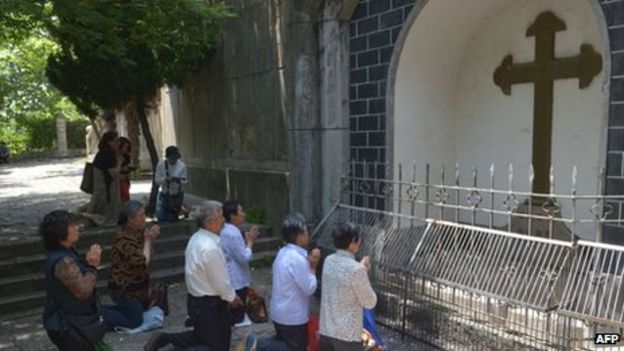
_71935487_018100304-1

Deep Dive: What is the CCPA?

You might be wondering, “Why is quitting a club such a big deal?”

We need to pause and look at the machinery behind the curtain. The CCPA isn’t like the Knights of Columbus or a local parish council. Created by Beijing in the late 1950s, it is the state’s iron grip on the church. Its purpose is specific: to ensure that Catholics in China answer to the Party first, and the Vatican second.

For decades, this has been the battleground. The “Open Church” (sanctioned by the state) versus the “Underground Church” (loyal only to the Pope). Pope Benedict XVI drew a line in the sand in his 2007 letter. He stated, flat out, that the CCPA is incompatible with Catholic doctrine. You cannot serve two masters.

Bishop Ma knew this. When he said he would “devote every effort to Episcopal ministry” and leave the association, he was effectively choosing the Vatican over Beijing. He was choosing the spiritual over the political.

And the system does not like being rejected.

The Sunday that never came

Fast forward to the very next Sunday. Ma, a man in his vigorous 40s, was scheduled to say his first mass as Bishop at St. Ignatius. The schedule was set. The faithful were waiting.

He never showed up.

The altar was empty. The confusion was absolute. Where was he? How do you lose a Bishop in one of the most surveillance-heavy cities on earth?

Sources began to leak information. They claimed that while Ma might technically have “freedom of movement”—meaning he wasn’t in a jail cell with bars—he had been stripped of his ability to act as a bishop. He was ghosted. Authorities had hit the mute button on his life.

This is a tactic known in intelligence circles as “soft detention.” You aren’t in prison, but you aren’t free. You are in a gray zone. A limbo designed to break your will without leaving physical bruises.

The authorities were furious. That speech at the ordination? It wasn’t just an embarrassment; it was a loss of face. And in this political climate, loss of face demands a response.

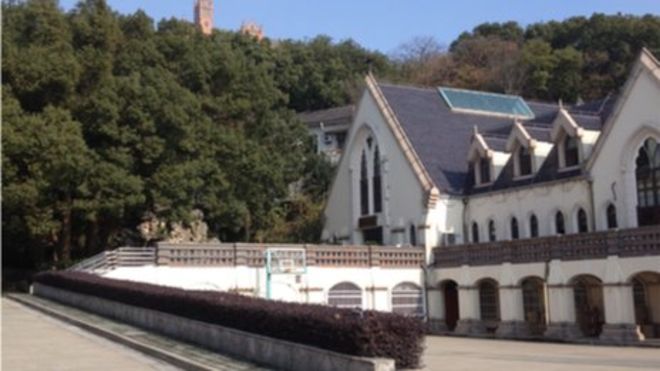
_71935479_seminary2

The mysterious text message

Then, things got weirder.

As panic spread through the Shanghai diocese, phones started buzzing. Priests and nuns received a text message. It was ostensibly from Bishop Ma. But does this sound like a man who just stood up to a superpower?

The message claimed he was “mentally and physically exhausted” from the ordination. It said, “I need a break and have made a personal retreat.”

A personal retreat. Right after the biggest moment of his life. Right when he was supposed to lead his flock.

The message continued: “With the consent of Bishop Jin [Luxian], I am at the side of Our Lady of Sheshan.”

Analyze that for a second. It reads like a proof-of-life note. It’s too clean. Too convenient. It offers a logical reason for his disappearance (exhaustion) and a specific location (Sheshan), while invoking the name of a senior bishop to give it legitimacy.

Skeptics immediately tore it apart. Was he really tired? Or was he being “re-educated”?

Sheshan: Sanctuary or cell?

The location mentioned in the text, Sheshan Seminary, is significant. It sits near the Sheshan Basilica, a major pilgrimage site. It is beautiful. Quiet. Isolated.

If you wanted to stash someone away to “correct their thinking” away from the prying eyes of the international press, this is exactly where you would put them. It allows the narrative to remain ambiguous. “He’s not in prison,” the officials can say. “He is praying. He is resting.”

It is the perfect cover story.

Anthony Lam Sui-ki, a senior researcher at the Holy Spirit Study Centre in Hong Kong, didn’t buy the official line. He went on record condemning the interference. He called it what it was: an assault on civil rights. He pointed out that the government has a history of these “open assaults” on the church.

The psychological warfare of “Re-education”

What happens in these “retreats”? We have to look at historical patterns. When religious leaders in this region are taken aside for “study sessions,” it usually involves immense psychological pressure. Days of interrogation. constant lectures on patriotism. Demands to sign documents.

The goal isn’t to punish the body. It is to reprogram the mind. The goal is to get the Bishop to walk back out, stand in front of that same crowd, and say, “I was wrong. The CCPA is good.”

It is a battle of wills.

Think about the pressure on Ma. He is alone. He is cut off from his support network. He likely has no internet, no phone calls, no contact with the Vatican. Just him and the officials, day after day, grinding him down.

The silence that speaks volumes

The most terrifying part of this story isn’t the noise. It’s the silence. Following that initial text message, the channel went dead. For a long time, there were no photos. No sermons. No public appearances.

The diocese was left headless. The faithful were left wondering if their brave leader was being broken piece by piece.

This incident highlights a massive, invisible war being fought over the soul of the church in the East. It’s a game of chess where the pawns are real people and the board is the geopolitical map of the world. The Vatican wants spiritual purity. The State wants absolute loyalty. When those two forces crash into each other, people like Bishop Ma get caught in the impact zone.

So, was it a retreat? Or was it a kidnapping in plain sight?

We must keep asking these questions. Because when the cameras turn off, and the reporters go home, that is when the real story happens. That is when the walls close in.

Bishop Ma’s empty chair at the cathedral remains a powerful symbol. It is a reminder that in some parts of the world, following your conscience is the most dangerous thing you can do.

Originally posted 2016-03-04 08:27:54. Republished by Blog Post Promoter