Home Weird World Space Mysteries of the universe – images

Mysteries of the universe – images

0
65

The Swirling Secret of Messier 77: What Is The Monster Hiding in This Galaxy?

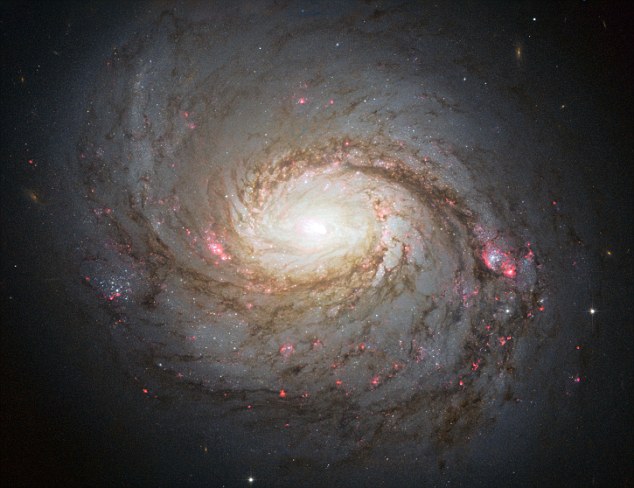
Look at that picture. Go on, really look. It’s beautiful, isn’t it? A swirling cosmic pinwheel of light and dust, hanging in the infinite black. NASA and the official textbooks will tell you this is Messier 77, also known as NGC 1068. They’ll say it’s a spiral galaxy, a tidy 45 million light-years away in the constellation Cetus, the Sea Monster.

They’ll point to the bright pink clouds, calling them stellar nurseries where baby stars are born. Aww. They’ll tell you it’s one of the most studied objects in the entire sky. A favorite for astronomers.

And every single one of those statements is true.

But they are also the most boring parts of a story so strange, so massive, it could rewrite everything we think we know about the universe. Because Messier 77 isn’t just a pretty picture. It’s a crime scene. A cosmic puzzle box. And at its heart, behind a veil of impenetrable dust, lurks something so powerful it defies easy explanation. A monster.

So, forget the dry textbook description. Today, we’re going past the official story. We’re going to pull back the curtain and stare into the abyss. What is really going on inside Messier 77?

EMBARGOED UNTIL MARCH 28, 2013, 14:30 CE

A History of Being Misunderstood

The weirdness started right from the beginning. Before Hubble, before space telescopes, before we even knew what galaxies *were*. Back in 1780, a French astronomer named Pierre Méchain first spotted this smudge in the sky. He wasn’t sure what it was. A nebula, maybe? A cloud of gas? He reported it to his famous colleague, Charles Messier, the rock star of 18th-century astronomy.

Messier took a look. He agreed. He cataloged it as the 77th object on his famous list of “things that aren’t comets.” He described it as a “cluster of small stars, which contains some nebulosity.”

They were both wrong. Spectacularly wrong.

This wasn’t some local gas cloud or a nearby star cluster. This was an “island universe.” An entire galaxy of hundreds of billions of stars, so far away its light had been traveling through the void for 45 million years just to reach their eyepieces. They had no idea. They had mistaken a sprawling, star-eating titan for a puff of smoke. A cosmic shark for a goldfish.

It was the first clue. The first sign that Messier 77 wasn’t what it seemed. It was a victim of mistaken identity from day one, a pattern that, as we’ll see, continues to this very day.

The Beast in the Basement

Fast forward to the modern era. Our telescopes got better. Much better. We could see the galaxy’s beautiful spiral arms. We could measure its distance. We could analyze its light. And that’s when scientists noticed something… odd.

The center of Messier 77 was impossibly bright. Blindingly bright.

This wasn’t the gentle glow of starlight. No. This was something else entirely. Something violent. Something energetic. It was pumping out radiation across the entire spectrum, from radio waves to X-rays, with a fury that dwarfed the output of our own Milky Way’s core.

What could cause such a cosmic inferno? The answer is one of the most terrifying objects in existence.

Deep Dive: The Supermassive Black Hole

At the heart of almost every large galaxy, including our own, sits a supermassive black hole. Not just a black hole, a *supermassive* one. Millions, or even billions, of times the mass of our sun, crushed down into a point of infinite density. A gravitational singularity.

Most of them are quiet. Sleeping giants. Our galaxy’s black hole, Sagittarius A*, is mostly dormant. It snacks on a bit of gas and dust here and there, but for the most part, it’s napping.

The black hole at the center of Messier 77 is not napping.

It is awake. It is angry. And it is feeding.

It’s what astronomers call an Active Galactic Nucleus, or AGN. This is a black hole that is actively, ravenously devouring matter. Stars, gas clouds, entire solar systems—anything that strays too close gets caught in its gravitational grip. As this material spirals into the abyss, it gets torn apart, heated to millions of degrees, and glows with unimaginable intensity. This swirling vortex of death is called an accretion disk, and it’s the source of the blinding light coming from Messier 77’s core.

It is, for all intents and purposes, a monster. A cosmic engine of destruction, 15 million times the mass of our sun, running at full throttle.

space image

The Great Cosmic Cover-Up

Here’s where the real mystery begins. We know this raging monster is in there. We can detect its fury. We can see the radiation it spews out. But we can’t see it directly. Not in visible light, anyway.

Why not?

Because something is in the way. Something is hiding it.

Surrounding the black hole and its violent accretion disk is a colossal, donut-shaped cloud of super-heated dust and gas. Astronomers call it an “obscuring torus.” It’s so thick, so dense, that it completely blocks our view of the central engine. It’s a natural cosmic curtain. A veil. A galactic-scale cover-up.

We can only “see” the black hole by its effects. We see the light that escapes from the poles of the donut, shooting out like twin lighthouses. We use infrared and X-ray telescopes to peer *through* the dust, catching glimpses of the high-energy chaos within. But we can’t get a clear, direct look at the beast itself.

Now, the official explanation is that this is just physics. Gravity pulls gas and dust in, it flattens into a disk, some of it gets puffed up into a torus. Simple, right?

Maybe. Or maybe it’s too convenient.

What if the Shield Isn’t Natural?

Let’s step into the world of speculation. The world of “what if?” This is where the internet forums and late-night chat threads light up. What if that obscuring torus isn’t just a random cloud of dust? What if it’s there for a reason?

Think about it. You have a power source at the center of your galaxy that is almost unimaginably powerful. An engine that runs on shredding stars. If you were an advanced, galaxy-spanning civilization—a Type III civilization on the Kardashev scale—what would you do with that power source?

You’d harness it. You would build something around it. A megastructure.

Could the torus be artificial? A massive shield or a Dyson-style swarm designed to contain and channel the energy of the black hole? Is it hiding not just a black hole, but a piece of cosmic engineering so advanced we can’t even comprehend it?

Recent findings from the James Webb Space Telescope have only deepened the mystery. JWST peered into the heart of Messier 77 with its powerful infrared eyes, mapping the dust cloud in more detail than ever before. What did it find? Strange chemical signatures. Complex organic molecules in places they shouldn’t be. The dust isn’t just simple dust; it’s clumpy, structured, and far more complex than our models predicted.

The official line is “we need more data.” The whisper on the web? The data is showing us the building blocks of something deliberately constructed.

A Warning Shot Across the Void?

It gets even stranger. The black hole isn’t just glowing; it’s shooting things. Twin jets of super-heated plasma are being blasted out from the poles of the black hole, away from the accretion disk. These jets travel at nearly the speed of light, punching through the galaxy’s gas and stretching for thousands of light-years into intergalactic space.

Again, the textbook explanation is magnetic fields. Twisted, powerful magnetic fields generated by the spinning disk supposedly grab material and fling it outwards.

But let’s put on our conspiracy hat again. What do focused beams of energy look like to you? Do they look like a random natural process? Or do they look like a signal? A weapon? A warning?

Imagine you’re a civilization living around this cosmic engine. You might be worried about visitors. You might want to put up a “Keep Out” sign. What better way than to fire colossal particle beams into the void? It’s the ultimate cosmic scarecrow. A message that says, “We are here. We are powerful. And you should stay away.”

Could this be the real reason Messier 77 is so well-studied? Are some astronomers looking not just at a galaxy, but for a message? Are they secretly trying to decode the blasts of energy coming from its core, hoping to find a pattern? A sign of intelligence?

The Final Question Mark

So, what is Messier 77? Is it just a beautiful spiral galaxy with a very active, but perfectly natural, black hole at its center? A fascinating subject for academic papers and pretty Hubble pictures?

Or is it something more?

Is it a monument to a long-dead civilization that mastered the power of a black hole? Is it a living, breathing galactic empire, hiding its capital city behind a manufactured wall of dust? Is the energy it spews into the cosmos a beacon, a weapon, or just the chaotic exhaust of a natural engine?

The evidence is circumstantial. The theories are wild. But the questions are real.

From the moment we first saw it—a case of mistaken identity—Messier 77 has defied simple explanation. It wears a beautiful, calm face, but conceals a heart of unbelievable violence. It shows us one thing, while hiding something else entirely behind a curtain we are only now learning to peer through.

The next time you see a stunning picture of a distant galaxy, remember this one. Remember the swirling enigma in the constellation of the Sea Monster. Remember the questions. And ask yourself: what other monsters, and what other secrets, are hiding out there in the dark?

Originally posted 2013-03-30 21:06:30. Republished by Blog Post Promoter