The Car Graveyard Beneath Wales: A Mountain of Rust and Unanswered Questions
Deep beneath the rolling green hills of Wales, something is wrong. Something is waiting in the cold, oppressive dark. It’s not a legend. It’s not a myth. It’s a mountain. A mountain made of steel, rust, and forgotten stories.
It’s a car graveyard.
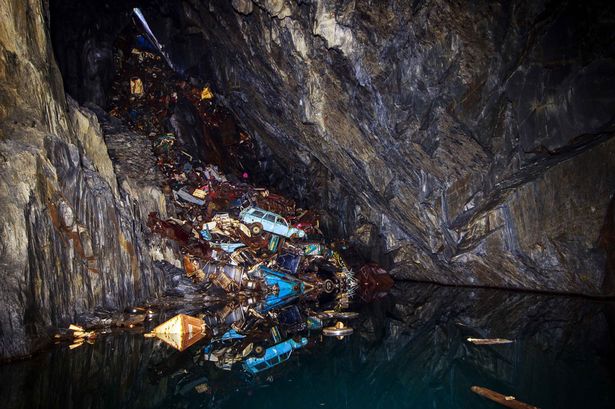
Buried hundreds of feet underground, in the black heart of a defunct slate mine, lies a pile of vehicles so vast it defies easy explanation. They are a tangled, skeletal mass of decaying metal, one on top of the other, crushed and contorted into a monument of silent chaos. How did they get here? Why? The questions hang in the damp air like ghosts, and the answers are far more disturbing than you can imagine.
The official story is simple. Too simple. They say the cars were just dumped here, probably in the 1970s, after the mine shut its doors for good. A convenient, out-of-the-way trash heap.
But look closer. Think harder. That explanation falls apart the second you apply an ounce of logic. This isn’t a gentle slope into a quarry. This is a deep, treacherous, near-vertical mine shaft. Getting a single car down here would be a nightmare. Getting a hundred? That wasn’t dumping. That was a mission.
So, what really happened in the darkness of this Welsh mountain?
The Descent into a Forgotten World
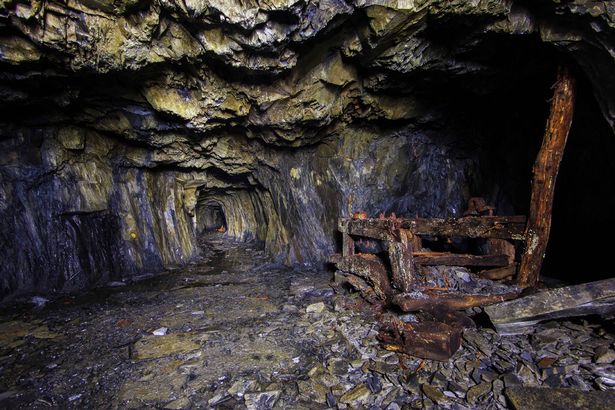
The world only knows about this automotive tomb thanks to a handful of daring urban explorers. These aren’t casual hikers. They are modern-day archaeologists, armed with ropes, headlamps, and an insatiable curiosity for the world’s hidden places. In 2016, a group led by IT engineer Gregory Rivolet decided to brave the abandoned Gaewern slate mine near Corris, a place that once echoed with the clang of hammers and the shouts of men, but has been silent since the 1960s.

Their journey wasn’t a walk in the park. It was a life-or-death gamble. “It was very dangerous as the mine is really unstable,” Rivolet later recalled. “Pieces of slate were falling from above our heads.”
Imagine it. You’re suspended on a rope, rappelling into a pit of absolute blackness. The air grows cold and tastes of wet stone. Your headlamp beam cuts a tiny, lonely circle in the immense void. Above you, the world of sun and sky vanishes. Below you… nothing. Just more darkness. And then, as your feet touch the cavern floor, your light sweeps across the scene. And you freeze.
It’s a junkyard at the center of the Earth. A pile of cars so high it forms its own hill within the cavern. The sheer scale is staggering. The silence is profound, broken only by the steady drip, drip, drip of water seeping through ancient rock, a sound like a ticking clock counting the decades of decay.
Deep Dive: The Welsh Slate Industry’s Ghost
To understand the strangeness of this place, you have to understand the ground it’s buried in. This isn’t just any hole. This is a Welsh slate mine, a relic of an industry that once roofed the world. For over a century, North Wales was the global capital of slate production. Men would descend into these man-made caverns, carving out giant chambers with dynamite and brute force, chasing the veins of grey rock that made industrialists rich.
The work was brutal. Dangerous. Men died. Lungs filled with dust. The mountains were hollowed out, leaving behind a Swiss cheese of tunnels, shafts, and colossal underground cathedrals of darkness. When the industry collapsed in the mid-20th century due to cheaper, modern roofing materials, these mines were simply abandoned. The entrances were fenced off, the machinery left to rust, and the caverns were surrendered back to the silence and the dark.
They became local legends. Forbidden zones. Perfect places to hide a secret. A very, very big secret.
Deconstructing the Pile: What Are We Looking At?
The photographs that emerged from the mine are haunting. They show a cascade of mangled vehicles. The top layers are surprisingly intact, suggesting they were the last to be “deposited.” Their paint, though faded and peeled, still clings on in patches of forlorn color. But as you look deeper into the pile, the cars become more compressed, crushed under the immense weight of those that came after. They are pancakes of rust, their identities almost completely erased by pressure and time.

Internet sleuths have spent years pouring over these images, trying to identify the models. The consensus points to common British cars from the 1960s and 70s. You can almost make out the sad, round headlights of a Ford Cortina, the boxy frame of a Hillman Avenger, or maybe a Vauxhall Viva. These weren’t exotic sports cars. They were everyday family vehicles. The kind of car your dad or grandad drove to work. The kind that disappears without anyone asking too many questions.
And that’s the first clue. These weren’t just any old cars. They were the perfect cars to make vanish.
Theory #1: The Greatest Insurance Scam You’ve Never Heard Of
This is the most popular theory, and it smells of cold, hard cash. Picture the scene: it’s the late 1970s. The economy is tough. A car is a major asset, and it’s insured. What if you needed money, fast? You report your car stolen. The police file a report, but with thousands of similar cases, yours is just a drop in the ocean. The insurance company, after a brief investigation, pays out. You get a check, and everyone moves on.
But what happens to the “stolen” car? It has to disappear. For good. You can’t just leave it in a field. You can’t burn it without attracting attention. You need a place where no one will ever, ever look.
Enter the abandoned Gaewern mine. An organized crew, working under the cover of a moonless Welsh night, could have made a fortune. They’d bring the cars to the mine entrance, perhaps using a heavy-duty winch or a crane borrowed from a “friendly” construction site. Then, one by one… push.
The Sound a Secret Makes
Can you imagine the noise? The shriek of metal scraping against rock as the car tips over the edge. A moment of weightless silence. And then a cataclysmic, echoing CRUNCH as it slams into the growing pile below, a sound that would be swallowed whole by the mountain. The crew works fast. By dawn, they’re gone, and another car has joined the pile in the abyss. They could have done this for years, a quiet, profitable little enterprise, disposing of evidence for a fee.
This theory explains the number of cars and their ordinary nature. It was a business. A very dirty, very secret business.
Theory #2: The Criminal’s Cloakroom
Let’s take it a step darker. What if these weren’t just about insurance fraud? What if these cars were involved in something far more sinister? Getaway cars from robberies. Vehicles used in kidnappings, or worse. Crimes where the single most important piece of evidence is the car itself.
For a criminal organization, a place like this mine would be priceless. Better than the bottom of a river, better than a scrapyard where records are kept. This is a black hole. Evidence pushed into this shaft ceases to exist. No divers can search for it. No police helicopter will spot it. It’s the perfect hiding place.
This theory suggests the cars might not have been dumped all at once, but rather one at a time, over many years. Each car represents a different crime, a different dark secret being buried. The mine became a shared, unspoken secret among a certain element of the underworld. Need to get rid of a hot car? “Take it to the old mine.” The pile grew slowly, a layered history of crime, each layer of rust sealing the sins of the one below it.
Theory #3: The Doomsday Prepper’s Lost Stash
Okay, let’s venture into the truly strange. What if the cars weren’t being thrown away at all? What if they were being… saved?
Think about the era. The 1970s were the height of the Cold War. Nuclear annihilation felt like a real possibility. The “prepper” movement was in its infancy, with people secretly building bunkers and stockpiling supplies for the day the bombs fell. Most people hoarded canned food, water, and medical supplies. But what if one particularly ambitious (and paranoid) individual had a bigger plan?
In a post-apocalyptic world, a working car would be gold. But fuel would be scarce, and spare parts would be impossible to find. The solution? Stockpile an entire mountain of them. This mine could have been a secret, underground parts depot. The idea was to hoard dozens of common models, creating an endless supply of carburetors, alternators, tires, and engine blocks to keep a small fleet of vehicles running after society collapsed.
It’s a wild idea, but it explains the sheer volume and the method. The cars might have been lowered with more care than just being pushed, to preserve their components. The plan’s architect might have died, or the nuclear threat faded, and the incredible, bizarre stash was simply forgotten, left to the slow, steady process of decay. A monument to a future that never happened.
The Lingering Mystery: How? Just… HOW?
No matter which theory you lean towards, you always come back to the same impossible question: the logistics. Getting over 100 cars into the bottom of a deep mine shaft is an industrial operation. You would need:
- Heavy Machinery: A large crane or a powerful industrial winch capable of handling over a ton of weight, repeatedly.
- Access: A way to get that machinery to a remote, abandoned mine entrance without drawing attention.
- Manpower: A dedicated and, more importantly, silent crew who could keep the secret for decades.
- Time: This wasn’t a single weekend’s work. This was a long-term project.
The “just push them in” idea sounds simple, but even that presents problems. You’d need to clear a path, get the car to the very edge of a precipice. It’s a loud, messy, and dangerous process. To do it a hundred times without anyone in the nearby villages noticing or hearing anything seems highly improbable.
This logistical nightmare is the biggest hole in the “simple dumping” story. It proves that whatever happened here was deliberate, organized, and well-planned. It was a conspiracy, whether for money, for hiding crime, or for surviving the apocalypse.
The cars of Gaewern mine remain where they fell. A cold, silent testament to a secret that has been kept for half a century. The water drips. The rust deepens. The cavern keeps its counsel. And we are left to wonder, staring at the grainy photos from the deep, what other incredible stories are buried right under our feet, waiting in the dark to be discovered?
Originally posted 2016-03-14 21:38:16. Republished by Blog Post Promoter