Home Weird World Strange Stories Mona Lisa’s Skeleton Found?

Mona Lisa’s Skeleton Found?

0
61

The Hunt for Mona Lisa’s Bones: Cracking the 500-Year-Old Code Buried in a Forgotten Crypt

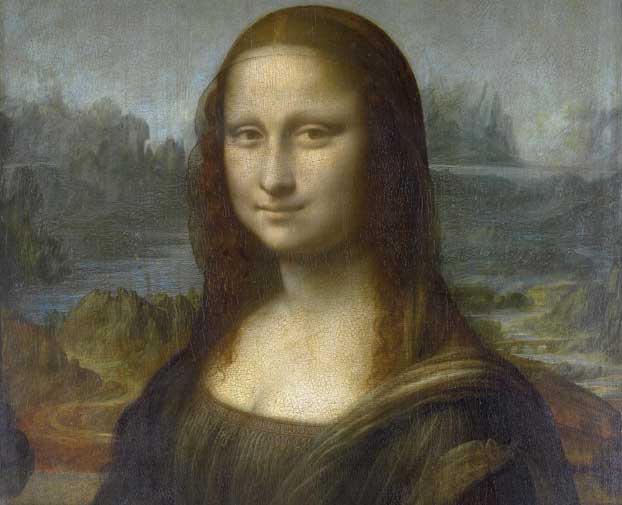
It’s the most famous smile in the world. A smirk. A hint of sadness. A knowing glance that has haunted artists, historians, and treasure hunters for five centuries. It hangs behind bulletproof glass in the Louvre, admired by millions, but understood by no one.

The Mona Lisa.

But who *was* she? For generations, the consensus has pointed to one woman: Lisa Gherardini, the wife of a wealthy Florentine silk merchant. A nice, neat answer for the history books. But what if you could prove it? What if you could reach back across time, not with a paintbrush, but with a shovel?

What if you could find her body?

In a dusty, forgotten corner of Florence, a team of real-life art detectives believed they had done just that. They broke through concrete, dug into the earth, and unearthed a skeleton they believed could finally, definitively, solve the greatest mystery in art history. But what they found would only deepen the enigma.

A Discovery Beneath a Derelict Convent

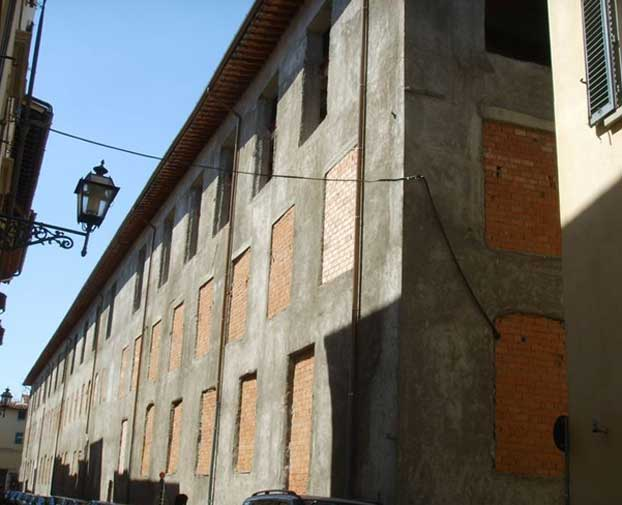
The story begins at the Convent of St. Orsola. It’s not on the main tourist trail in Florence. It’s a place of crumbling walls and forgotten prayers, a building left to decay for decades. But historical records—faded, dusty documents from the 16th century—suggested this was Lisa Gherardini’s final resting place. After her husband died, she went to live with her daughter, a nun at St. Orsola, and was buried there upon her death in 1542.

For most, this was a historical footnote. For Silvano Vinceti, it was a treasure map.

Vinceti, president of Italy’s National Committee for the Promotion of Historic and Cultural Heritage, is a man who hunts for the secrets hidden within masterpieces. He’s part historian, part showman, and he assembled a team to go where no one had dared to look before: directly under the convent’s floor.

Their first obstacle? The 20th century. A thick layer of concrete had been poured over the original church floor, sealing the past away. The team brought in ground-penetrating radar, mapping the earth below like a high-tech X-ray. The scans revealed anomalies. Voids. Something was down there.

With jackhammers and drills, they punched through the modern barrier. The noise and dust gave way to something else entirely. Ancient brick. They had found a crypt. And inside, lying beneath the remnants of an altar from Lisa’s time, were human bones. A complete skeleton.

“That altar was certainly in use at Lisa Gherardini’s time,” announced archaeologist Valeria D’Aquino at the time. The excitement was electric. Had they just found the woman behind the smile?

Who Was Lisa Gherardini, Really? A Deep Dive

To understand the magnitude of this find, you have to understand the woman. Lisa del Giocondo (née Gherardini) wasn’t royalty. She wasn’t a famous figure in her own right. She was a product of the bustling, merchant-class world of Renaissance Florence.

Born in 1479, she belonged to a minor noble family that had seen better days. At fifteen, she married Francesco del Giocondo, a successful silk and cloth merchant who was a widower and much older than her. This marriage was a good social move for her and a good personal one for him—he gained a young wife from a respectable family. They had five children together and appeared to live a comfortable, if unremarkable, life.

So why did Leonardo da Vinci, the era’s superstar artist and inventor, paint her? The most accepted theory is that Francesco commissioned the portrait to celebrate the birth of their second son, Andrea, or the purchase of a new home. It was a status symbol, a way for a wealthy merchant to show off his beautiful wife and his connection to the great master.

But Leonardo never delivered the painting. He kept it. He tinkered with it for years, carrying it with him from Italy to France, working on it until his death. It was an obsession. Why? Why this particular portrait of a merchant’s wife? This is the central question that fuels the Mona Lisa myth. Was it simply his finest work, a piece he couldn’t part with? Or was there something more to their relationship? Something hidden in that face that only he understood?

The Ultimate Goal: Rebuilding Mona Lisa’s Face

Finding a skeleton was just the beginning. The team’s real mission was far more ambitious, something straight out of a science fiction movie: they wanted to reconstruct Lisa Gherardini’s face.

Using the techniques of modern forensic science, they planned to take the skull and digitally map it. By analyzing the bone structure—the width of the cheekbones, the shape of the jaw, the size of the eye sockets—experts can build a virtual scaffold of the face. They can then layer on digital muscles, fat, and skin, guided by established data about human facial tissue depth.

The goal was breathtaking. For the first time, we would see the face of the *real* woman. And then came the ultimate test: they would place the reconstructed face side-by-side with Leonardo’s masterpiece.

What if the Faces Matched?

A match would be the single greatest confirmation in art history. It would silence all the fringe theories and prove that Lisa Gherardini was, in fact, the woman in the painting. It would transform her from a probable identity into a verified human being, her face resurrected by science 500 years after her death.

But What if They *Didn’t* Match?

This is where things get truly wild. If the skeleton could be proven to be Lisa Gherardini through DNA, but the reconstructed face looked nothing like the Mona Lisa… well, that would blow the entire story apart. It would mean Leonardo didn’t paint a faithful portrait. Was the Mona Lisa an idealized version of beauty? A composite of several different faces? Or was she someone else entirely?

The Doubters Emerge and the Plot Thickens

Of course, not everyone was convinced. The moment the news broke, skepticism followed. Art historians and archaeologists raised some serious questions.

First, the Convent of St. Orsola was a burial ground for centuries. Many women were interred there. Finding *a* skeleton is one thing. Finding *the* skeleton is another entirely. How could they be certain they had the right one?

The answer was DNA. Vinceti’s plan was to extract DNA from the ancient bones and compare it to the DNA from Lisa Gherardini’s known children, who were buried elsewhere in Florence. This involved a second macabre hunt: locating the Giocondo family tomb and exhuming the remains of her sons. It was a multi-pronged attack on a centuries-old mystery.

But ancient DNA is notoriously fragile. It degrades over time, contaminated by soil, water, and bacteria. Getting a clean sample would be a monumental challenge.

Vinceti’s Wild World of Da Vinci Codes

To understand the fierce debate around this project, you have to understand its leader. Silvano Vinceti is not your typical academic. He’s a media-savvy investigator who thrives on controversial, headline-grabbing theories.

This wasn’t his first rodeo. Vinceti is the same man who claimed to have found microscopic letters and numbers painted into the pupils of the Mona Lisa’s eyes. Using high-resolution digital scans, he asserted that the letters ‘LV’ (likely for Leonardo da Vinci) were in her right pupil, while the left held other symbols, possibly ‘CE’ or ‘B’.

He didn’t stop there. He has also championed the theory that the Mona Lisa isn’t Lisa Gherardini at all, but is instead a portrait of Gian Giacomo Caprotti, Leonardo’s longtime male apprentice and possible lover, known as Salai. He argues that the face is an androgynous blend of male and female features, a classic Da Vinci puzzle. This theory, of course, directly contradicts the very premise of his search for Lisa Gherardini’s skeleton. Is he hedging his bets, or just exploring every possibility?

This background casts the St. Orsola dig in a different light. Was it a pure, scientific search for truth, or was it a publicity stunt designed to create a media frenzy? Many in the academic world accused Vinceti of grandstanding, but no one could deny the power of his central question: what if he was right?

The Final Verdict: A Mystery Solved or Deepened?

The dig at St. Orsola continued. More graves were found. In total, the remains of over a dozen individuals were unearthed. After years of painstaking analysis, the team zeroed in on the fragments of a skeleton from one of three tombs they excavated. The big news came a few years after the initial discovery.

Carbon-14 dating confirmed that the bones belonged to an individual who died around the same time as Lisa Gherardini. It was a direct hit on the historical timeline. They had found a contemporary.

But then, the trail went cold.

The skull was too fragmented for a conclusive facial reconstruction. The dream of a side-by-side comparison was shattered. Worse, the DNA was too degraded. After multiple attempts, scientists could not extract a usable sequence to compare with her children. The final, definitive link was missing.

In the end, the grand quest concluded with a frustrating, tantalizing “maybe.” The team announced that the evidence was “very likely” to be Lisa, but they couldn’t offer absolute proof. The skeleton in the crypt remained silent, its secrets locked away by time and decay.

The Enduring Enigma

So, did they fail? Not at all. They proved that sometimes, the hunt is more compelling than the discovery. They took us on a journey back to Renaissance Florence, into the life of a real woman, and deep into the earth beneath a forgotten convent.

The mystery of the Mona Lisa’s smile endures, perhaps because we don’t want it solved. We want to wonder. We want to guess. We want to believe that Leonardo da Vinci encoded a secret in that face that we are still trying to figure out, five hundred years later.

Somewhere in Florence, the bones of Lisa Gherardini are almost certainly resting. They might be the ones found at St. Orsola, or they might still be waiting, buried under a different patch of earth. Her identity remains, like the smile in the painting, a beautiful, haunting, and unsolved question. The truth is still out there.

Originally posted 2016-03-20 04:27:56. Republished by Blog Post Promoter