It was supposed to be the American Dream made of steel and chrome. The Paris of the Midwest. The Arsenal of Democracy.
Now? It looks like the set of a post-apocalyptic movie. But the director didn’t yell “cut.” This is real life.

Detroit: The Experiment That Failed?
Walk down the streets of the outer neighborhoods today. Close your eyes. Listen. You don’t hear the roar of engines or the clanging of assembly lines. You hear wind whistling through broken windows. You hear the settling groans of rotting timber. It is the loudest silence in America.
Once the absolute cornerstone of the industrial revolution, Detroit has become something else entirely. A warning? A tragedy? Or maybe a crime scene.
At one point, the unemployment numbers hit nearly 50 percent. Think about that. Flip a coin. Heads, you work. Tails, you starve. The city is suffering from a slow-motion collapse that started sixty years ago. It wasn’t an accident. It wasn’t just “bad luck.” It was a systemic dismantling of a powerhouse.
Automotive production didn’t just leave; it was ripped out. Outsourced. Sent overseas to places where labor was cheap and regulations were invisible. The corporations saved billions. The city lost its soul.
Since the golden age, Detroit has lost virtually half of its population. That is nearly one million human beings. Gone. Vanished. They packed up U-Hauls and fled, leaving behind a shell that is building the momentum to become America’s largest, most terrifying ghost town.
The Great Vanishing Act
Where did they go? The suburbs. The South. Anywhere but here. As a direct result of the industry’s gradual retreat—or betrayal, depending on who you ask—the metropolitan area communities faced a nightmare scenario. This wasn’t just a recession. This was a depression that never ended.
Houses weren’t just sold. They were abandoned. Walk away. Leave the keys on the counter. Leave the family photos on the wall. It became cheaper to walk away from a mortgage than to pay for a house worth less than a used car. Public services didn’t just dip; they collapsed.
The Infrastructure of Apocalypse
When the tax base leaves, the lights go out. Literally. entire city blocks were plunged into darkness as the city couldn’t afford to keep the streetlights on. But it gets darker than that.
Police departments? Closed. Schools? Shuttered and left to rot, textbooks still on the desks, a snapshot of the last day of class frozen in time. Hospitals? Locked tight.
In their wake, strange new ecosystems arose. Ghettos isn’t even the right word anymore. These are “urban prairies.” Nature is reclaiming the land. You can find pheasants and coyotes hunting in neighborhoods where school buses used to run.
But the human element is more dangerous. Vandalism and violence became the currency of the streets. These were the seeds of total social unrest. When you dial 911 and nobody comes—or they come three hours late—you realize you are on your own.
The Rise of the Private Armies
This is where it gets into cyberpunk territory. This is real-life RoboCop stuff. Because the public police force was so decimated, a need was created. A market gap. Private security forces stepped in.
In the more desperate parts of Detroit, you don’t see community policing. You see private mercenaries protecting assets. Small businesses, liquor stores, and yes, even churches are heavily fortified. We are talking bricked-up windows. Steel bars over doors. Razor wire spirals dancing along the rooftops.
Detroit can be seen as the perfect example—the “Case Zero”—of what happens when an industry refuses to take responsibility for its role within a community. They extracted the wealth and left the carcass to rot.
The “ruin porn” Phenomenon
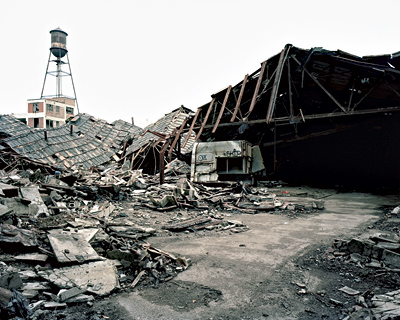
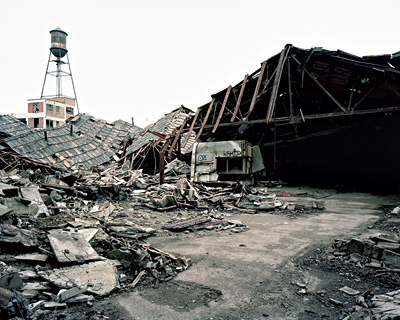
It’s become a tourist attraction. People come from Europe, from Asia, from all over the world. They don’t come for the museums. They come for the ruins. They want to see the Michigan Central Station (before Ford bought it back). They want to see the Packard Plant, a sprawling, crumbling concrete skeleton that stretches for blocks.
Photographers love it. It’s haunting. It’s beautiful in a sick, twisted way. But for the people living in the shadows of these giants, it’s not art. It’s daily life.
Look at those images. That isn’t a war zone in a distant country. That is Michigan. That is the heartland.
The Failed Prophecy: “Gone by 2016”
Years ago, internet theorists and economic forecasters looked at the charts. They looked at the spiraling debt. They looked at the corruption scandals (remember Kwame Kilpatrick?). They made a bold claim.
The abandonment of Detroit is now so bad, that many sources stated that by 2016 Detroit would be gone!
Were they right? Yes and no. The city didn’t disappear off the map. It didn’t sink into the earth. But the Detroit we knew? The Motor City? That city died. It was buried under a mountain of bankruptcy filings and broken promises.
What exists now is something new. A tale of two cities. Downtown is booming. Billionaires like Dan Gilbert are buying up skyscrapers and turning them into shiny tech hubs. Rent is skyrocketing in Midtown. Whole Foods moved in. Hipsters are buying $5 lattes.
But drive ten minutes in any direction. The darkness is still there. The “Ghost Town” didn’t leave; it just got pushed to the margins. The prophecy wasn’t about the buildings disappearing. It was about the people.
The Conspiracy of the Blank Slate
Here is a theory that will keep you up at night. What if the decline was allowed to happen? What if it was encouraged?
Think about it. Land in a major American metropolis is valuable. But not when it’s full of people, unions, and infrastructure you have to maintain. But if you let it rot? If you let the property values hit zero? If you let the population flee?
Suddenly, you have a blank slate. You can buy up huge swaths of land for pennies. You can wipe the map clean and build your own private utopia on top of the ruins. Some say that is exactly what is happening right now. The gentrification isn’t a rescue mission. It’s a takeover.
Urban Exploration: Into the Belly of the Beast
Let’s take a walk through the forbidden zones. The places the tour guides won’t show you. The places where history is rotting on the floor.
The Schools: Enter a closed high school in the blight zone. The smell hits you first. Mold, wet paper, and asbestos. You walk into the library. Books are everywhere. Not on the shelves—on the floor. Soaking wet. Thousands of dollars of knowledge, just trash. Why? Because it cost too much to move them. They just locked the doors and walked away.
The Factories: The silence in the old Fisher Body Plant is heavy. You can feel the ghosts of the workers. This is where they built the cars that drove America. Now, the roof is open to the sky. Trees—literal 30-foot trees—are growing out of the factory floor. It’s a concrete forest.
The Neighborhoods: You drive down a street. One house is occupied. Manicured lawn. Nice car. The house next to it? Burned out shell. The next one? Just a pile of bricks. The next one? A vacant lot with waist-high grass. It’s a jagged smile of a street.
The Arson Epidemic
We can’t talk about Detroit without talking about Devil’s Night. For decades, the night before Halloween was a firestorm. Hundreds of fires burning across the city. Why?
Some of it was vandalism. Some of it was insurance fraud. “Selling it to the insurance company” was the only way out for some folks. But some of it was just pure rage. Burning down the cage you’re trapped in.
The city clamped down. The “Angel’s Night” patrols started. The fires have gone down. But the scars remain. You can see the scorch marks on the city’s soul.
A Warning for the Rest of Us
Why should you care? You don’t live in Detroit. You live in the suburbs, or in a different state, or a different country.
You should care because Detroit is the canary in the coal mine. It is the proof of how fragile our society really is. We think our cities are permanent. We think our economy is invincible. We are wrong.
Detroit was the richest city in America per capita in the 1950s. It had the highest wages. It was the future. And in one lifetime—less than one lifetime—it fell apart.
If it can happen to the Motor City, it can happen anywhere. Automation is coming. AI is coming. The next wave of outsourcing is digital, not physical. What happens to San Francisco or New York or London when the money decides to move on? When the algorithm decides it’s cheaper to operate from a server farm in the middle of nowhere?
Detroit isn’t just a ghost town. It’s a crystal ball.
The Survivalist Spirit
But let’s not end on total doom. There is something incredible happening in the ashes. The people who stayed. The people who refused to leave.
They are tough. They are resilient. They are farming the vacant lots. They are starting community solar projects. They are looking at the government and saying, “We don’t need you. We will do it ourselves.”
There is a gritty, punk-rock energy in Detroit that you don’t find anywhere else. It’s the energy of survival. When the system fails you, you build a new system.
Conclusion: The Ghost is Still Dancing
Is Detroit dead? No. Is it a ghost town? In parts, yes. It is a haunting mix of the dead and the living. It is a graveyard and a nursery.
The prediction that it would be gone by 2016 was wrong in facts, but right in spirit. The old world is gone. The industrial age is over. Detroit is the monument to that death.
So, the next time you see a picture of the ruins, don’t just look away. Stare at it. Study it. Because you might be looking at your own future if we aren’t careful.
The factories are quiet now. But if you listen closely to the wind blowing through the broken glass of the Packard Plant, you can hear a whisper:
“Nothing lasts forever.”
Originally posted 2016-03-08 04:27:50. Republished by Blog Post Promoter
![motor-city-ghost-town-6[1]](https://coolinterestingnews.com/wp-content/uploads/2012/07/motor-city-ghost-town-61.webp)