Home Weird World Strange Stories Mermaids: The Body Found – The Scientific Theory Beneath the Narrative

Mermaids: The Body Found – The Scientific Theory Beneath the Narrative

0
69

The Mermaid Conspiracy: The Suppressed Science and The Body They Don’t Want You To See

The ocean is a monster. A beautiful, terrifying, endless monster. It covers more than 70 percent of our planet, and we, the supposed masters of this world, have explored less than five percent of it. Five. Percent. Let that sink in. We know more about the surface of Mars than we do about the crushing blackness of our own deep seas. So, what’s really down there? What secrets are hiding in the trenches, under pressures that would turn a human to jelly in an instant?

The official story? Fish. Weird-looking fish. Giant squid. Maybe some undiscovered microbes. Boring.

But what if there’s something else? Something… familiar.

In 2012, the world got a glimpse. A terrifying, electrifying, world-changing glimpse. A TV special called Mermaids: The Body Found aired, presented as a documentary featuring government whistleblowers and shocking found footage. It told the story of a secret government cover-up, a mass beaching of whales, and the discovery of a creature that should not exist. A creature that ripped our storybooks open and swam straight into reality.

The government’s response was swift. “It’s fake,” they said. A hoax. A clever piece of “docu-fiction.” They even had the National Oceanic and Atmospheric Administration (NOAA) issue an official statement denying the existence of mermaids. Think about that. A major government scientific agency took the time to officially debunk a “fairytale.” Why? When have they ever issued a press release to confirm that vampires aren’t real, or that werewolves don’t exist? They don’t. Unless… they have something to hide.

That broadcast wasn’t just a TV show. It was a crack in the dam of secrecy. A controlled leak, perhaps? Or a desperate cry for help from scientists who saw something they were never meant to see. Forget everything you think you know. We’re going deeper than any submarine. We’re going to look at the forbidden science, the ancient clues, and the modern cover-up that all point to one, mind-bending conclusion: we are not the only intelligent life on this planet. And the other one has been hiding in plain sight, in the one place we’re too scared to look.

MERMAIDS-jp-superJumbo

The Forbidden Evolution: Are We Part Water-Dweller?

To understand how an aquatic humanoid could even be possible, you have to look at a piece of science so controversial it’s been practically scrubbed from the textbooks. It’s called the Aquatic Ape Hypothesis (AAH). And it’s a theory that doesn’t just suggest mermaids *could* exist; it suggests that our own past is far wetter than we’ve been led to believe.

The mainstream story of human evolution is simple: ape comes down from the trees, stands up on the savanna, and starts walking. Boom. Human. But it’s full of holes. Gaping, canyon-sized holes. Why did we lose our fur? Why do we walk on two legs? Why are we born with a layer of fat under our skin, just like a seal or a whale?

The AAH has an answer. A chillingly logical one.

Deep Dive: The Aquatic Ape Hypothesis

The theory goes like this: Millions of years ago, a group of our primate ancestors didn’t move to the hot, dry savanna. Instead, due to coastal flooding or intense competition for resources, they were forced into a semi-aquatic environment. Swamps, coastlines, river deltas. They spent a huge portion of their time in the water. Wading. Swimming. Diving.

This wasn’t a short-term thing. This was a long, evolutionary pressure cooker. And it forged us. Consider the so-called “evidence” that mainstream science struggles to explain away:

  • Naked Skin and Blubber: Why did we lose our thick primate fur? On the savanna, fur helps protect from the sun. It makes no sense to lose it. But in the water? Fur becomes a drag. It’s heavy. Instead, an aquatic mammal develops a smooth, streamlined body and a layer of subcutaneous fat for insulation. Sound familiar? We are the only “fat” primates.
  • Walking Upright: Bipedalism is weird. It’s inefficient for running and makes our backs hurt. But in the water? It’s a genius adaptation. It allows you to wade deeper while keeping your head above the surface to breathe and spot predators. It’s the most logical first step towards a life in the water.
  • The Diving Reflex: Throw a human baby in a pool, and something incredible happens. They instinctively hold their breath, their heart rate slows, and blood is redirected to their vital organs. It’s called the bradycardic response. Apes don’t have this. Land mammals don’t have this. You know who does? Seals, otters, and dolphins. It’s a built-in feature for a creature designed to spend time underwater.
  • Nostrils and Breath Control: Our nostrils face down, unlike an ape’s, which face forward. This simple change makes it much easier to dive without getting a snootful of water. And our conscious control over our breathing is unique among primates. We can choose to hold our breath. That’s a fundamental requirement for any diving animal.

The list goes on. Our weeping, our sweat, our streamlined bodies. The AAH explains it all. But it was laughed out of academia. Why? Because it opens a door they are terrified to walk through. If a group of apes could be pushed into the water and evolve into… us… then what happened to the *other* group? The one that didn’t stop at the shoreline? The one that just kept going.

That’s the real question. Is it really so crazy to think that while one branch of aquatic ape came back to land, another branch took the plunge and never looked back, evolving over millions of years into something perfectly suited for the deep? A true aquatic humanoid.

Deconstructing the Cover-Up: The Body, The Spear, The Sound

The “docu-fiction” wasn’t just speculation. It presented evidence. Hard, tangible evidence that the whistleblowers claimed was confiscated and buried by the government. Let’s treat it like a real investigation and look at the clues.

mermaid-the-body-found-2

The Creature on the Beach

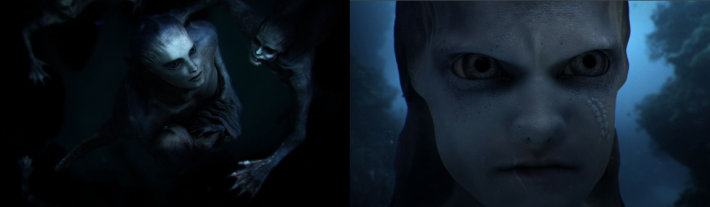
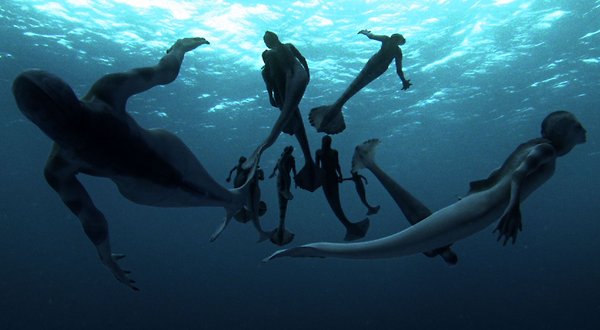
The centerpiece of the program was the body. Found on a South African beach, the footage showed a creature with a disturbingly human-like torso and head, but with a massive, fish-like lower body. The hands were webbed, the skull elongated. The “autopsy” footage revealed a rib cage built to withstand incredible pressure and a pelvic structure that was fused, useless for walking but perfect for powerful propulsion in water.

Skeptics screamed “CGI!” and “Prosthetics!” And maybe it was. But the details were so biologically sound. The anatomy made perfect sense for a creature that evolved from a walking primate into a deep-sea swimmer. They even found something inside a shark’s stomach that confirmed their diet and, most shockingly, a spear. Not a human spear. A sharpened, barbed weapon made from fish bones. This wasn’t just an animal. This was a tool-user. A hunter.

A Voice From the Deep: The Bloop

For years, a mystery sound echoed through the Pacific Ocean. Recorded by deep-sea microphones in 1997, it was nicknamed “The Bloop.” It was loud. Incredibly loud. Louder than any known animal, including the blue whale. And it had the acoustic signature of a living creature, not a submarine or an underwater earthquake. For decades, nobody could explain it.

The documentary proposed a terrifying theory: The Bloop was the sound of these aquatic humanoids. A long-distance call across a vast, dark world. They argued that their vocal structures, combined with the unique sound-conducting properties of the deep ocean, could allow them to communicate over thousands of miles.

The official explanation for The Bloop eventually came out: it was the sound of an “icequake,” a massive iceberg cracking and breaking. Convenient, isn’t it? A neat, tidy explanation dropped years later to put the mystery to bed right when people started connecting it to something else. But listen to the sound yourself. It doesn’t sound like ice. It sounds… alive.

The Dolphin Connection

Dolphins are smart. Maybe smarter than we are. And they have a strange, almost mythical relationship with humans. They protect swimmers from sharks. They guide boats through treacherous waters. Why? Why would a wild animal show such kinship with us?

The original post asked the right question. What if it’s not us they recognize? The docufiction showed a stunning piece of footage: a group of people in a small boat encountering one of the creatures. And what was with it? Dolphins. A whole pod, swimming alongside it, communicating with it.

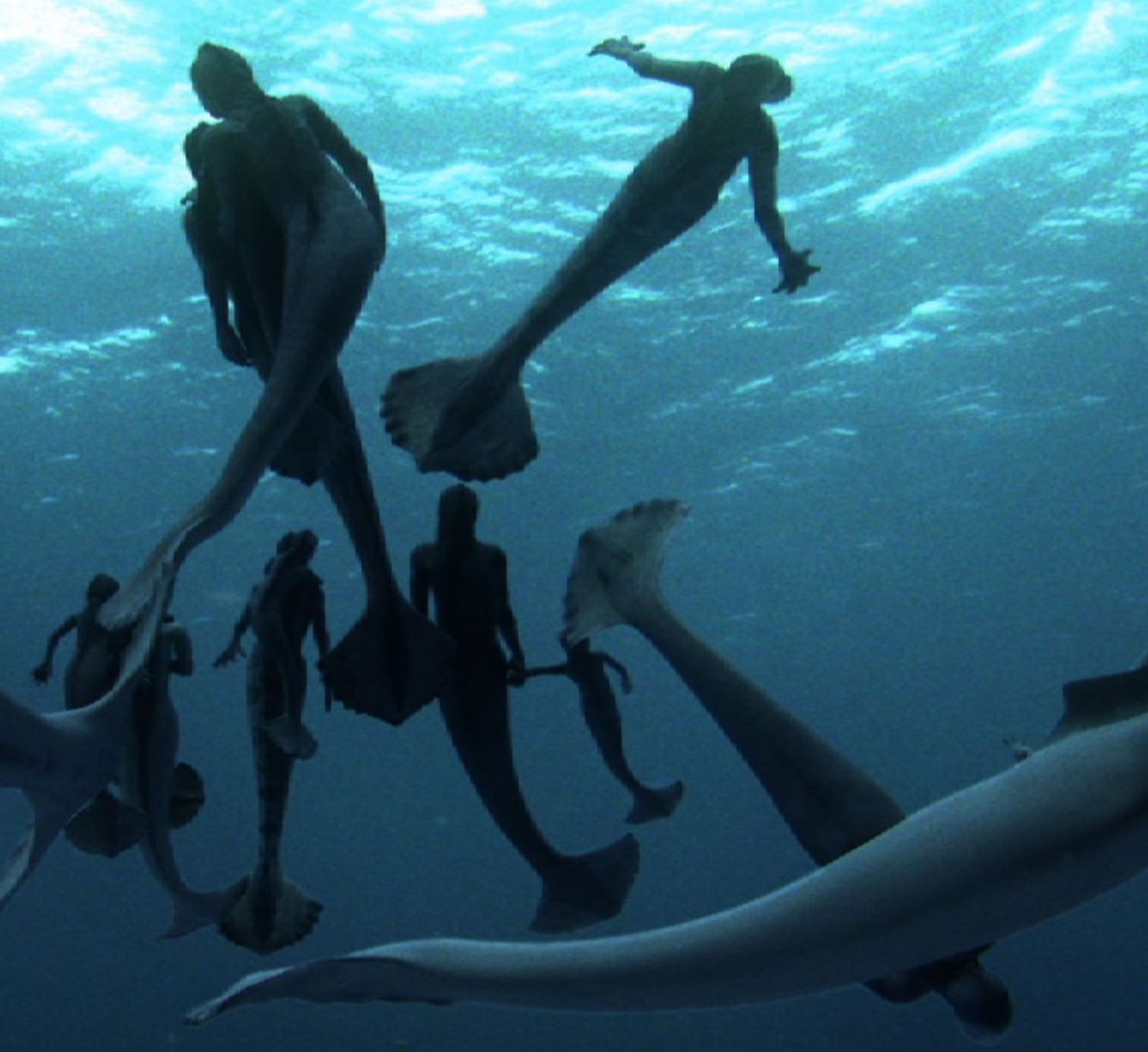
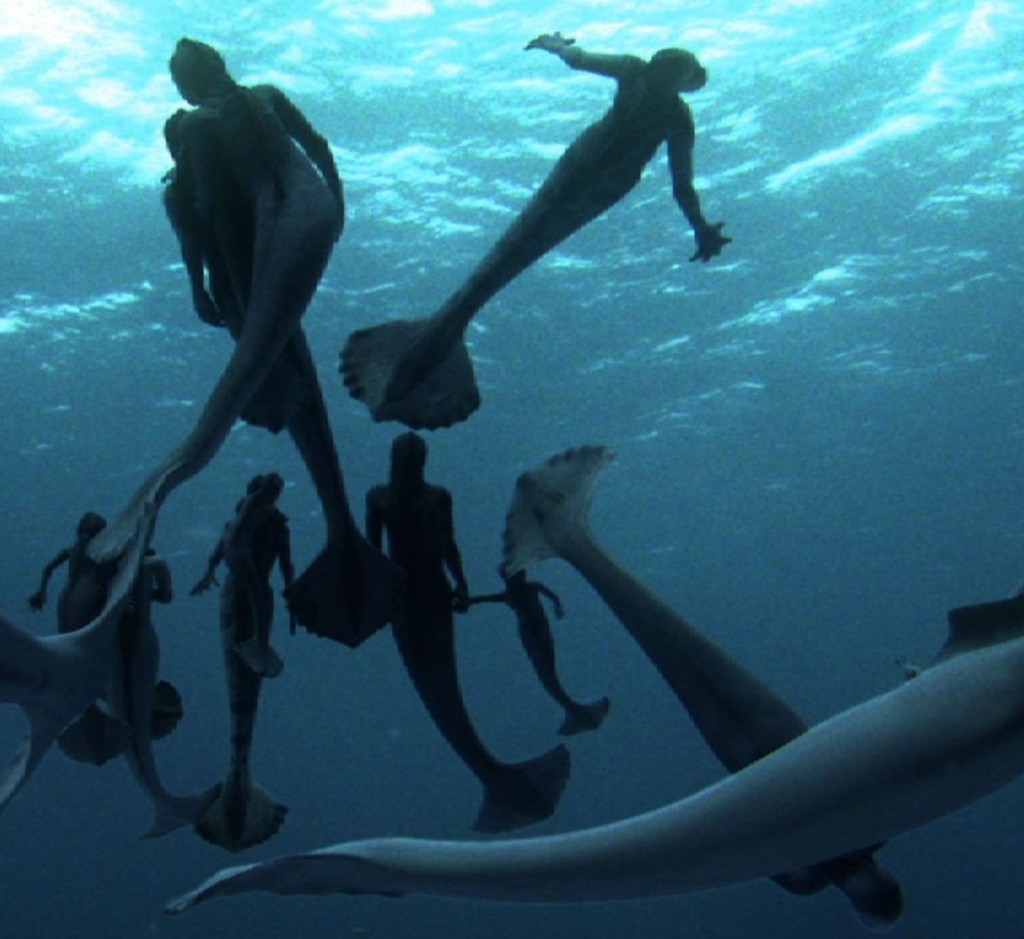
The theory is that dolphins and these aquatic humanoids evolved a partnership millions of years ago. They learned to hunt together. A deep, symbiotic relationship. Dolphins remember. Their “friendship” with us is just a case of mistaken identity. They see us, clumsy land-walkers that we are, and see an echo of their true partners. They’re waiting for us to come back into the water.

MERMAIDS-jp-articleLarge

A Global Genetic Memory: The Echoes Through Time

If these creatures are real, we should have seen them before. Right? Well, we have. We’ve been seeing them for thousands of years. We just didn’t have cameras. We had myths. Legends. Stories carved into stone and painted onto cave walls.

Think about it. How could ancient civilizations, separated by oceans and millennia, all come up with the exact same idea of a half-human, half-fish creature? From the Babylonian fish-god Oannes, who came from the sea to give humanity wisdom and civilization, to the Greek Sirens, the Irish Merrows, the Japanese Ningyo, and the African Mami Wata. The story is everywhere.

Mainstream historians call this “archetype,” a common theme in the human psyche. What a load of nonsense. That’s a fancy way of saying “we don’t know, so we’ll make something up.” A far simpler explanation is that it’s not an archetype. It’s a description. A memory. Our ancestors weren’t inventing monsters; they were recording what they saw at the water’s edge. A fleeting glimpse of our long-lost cousins.

The Real Reason for the Cover-Up: A Silent Genocide

So why hide it? Why would the governments of the world go to such extraordinary lengths to keep this a secret? Is it to prevent panic? To protect the species? No. The truth is much, much darker.

The documentary’s most explosive claim was its final one. In the 1990s, the U.S. Navy began testing a new type of powerful, low-frequency sonar system. A system designed to detect quiet enemy submarines across entire oceans. But this sound weapon had a devastating side effect: it caused mass strandings of whales and dolphins, who suffered from hemorrhaging in their brains and ears. The sound was literally boiling them alive from the inside.

Now, imagine you are a highly intelligent, sonic-based species living in that ocean. A species that communicates, navigates, hunts, and lives through sound. And suddenly, your world is filled with an agonizing, world-shattering blast of noise a million times louder than anything you have ever experienced. It would be an apocalypse.

This is the dirty secret. The reason for the cover-up isn’t just that mermaids exist. It’s that we are killing them. Unintentionally at first, but now… knowingly. The Navy’s sonar program is too important for national security to stop. So, the existence of a sentient, non-human species in the ocean—a species being wiped out by our technology—becomes the biggest, most inconvenient truth on the planet. You can’t commit genocide against a species that doesn’t officially exist.

The “Body Found” special wasn’t a hoax. It was a warning. The mass beaching events it documented were real. But it wasn’t just whales washing ashore. It was them. And the government grabbed the bodies, silenced the witnesses, and cooked up a cover story about a TV show to make anyone who asked questions look like a fool.

The Question That Waits in the Water

So, you can believe the official story. You can believe that a TV network spent millions of dollars on a prank, that top-tier scientists faked their credentials, that the U.S. government felt the need to debunk a children’s story, and that all the ancient myths and modern evidence are just one big coincidence. It’s easier that way. It’s more comfortable.

Or you can open your mind. You can look at the 95% of our planet that remains a pitch-black mystery and ask yourself what could be hiding there. You can accept that our own evolutionary story has missing pages. You can see the pattern of sightings, the logic of the biology, and the chilling motive for a global cover-up.

They tell you it was all a show. A clever fake. But look at the evidence, look at the ocean’s terrifying vastness, and ask yourself a simple question.

What’s more unbelievable? That our aquatic cousins are still out there, hiding in the deep? Or that we’ve been told the entire truth?

Originally posted 2016-03-02 04:27:55. Republished by Blog Post Promoter