Home Weird World Strange Stories Memorial service honors crew that disappeared over Bermuda Triangle

Memorial service honors crew that disappeared over Bermuda Triangle

0
53

The Ocean Doesn’t Blink: Unsolved Mysteries of the Deep Blue

Imagine this. You are thousands of feet in the air. The engine hums—a steady, comforting drone. The sun is shining. The water below you is a sheet of endless, sparkling blue glass. It’s perfect. It’s safe. And then, in the blink of an eye, the instruments go dead.

The compass spins wildly. The horizon erases itself. Static screams through the radio headset.

Then? Silence.

For decades, humanity has looked at the sky and the sea with a mix of wonder and terror. We think we have mapped the world. We think we have conquered the elements with radar, GPS, and satellite tracking. But history tells a darker story. A story of planes that simply cease to exist. Of crews that vanish while their coffee is still warm. From the most famous female pilot in history to military squadrons on routine training runs, the Atlantic Ocean and the infamous Bermuda Triangle have swallowed people whole.

Where did they go? Are they sitting on the ocean floor? Did they slip through a crack in time? Or is the answer something far more sinister?

The First Lady of the Lost: Amelia Earheart

July 2, 1937. The world was watching.

Amelia Earheart wasn’t just a pilot. She was a rockstar. A symbol. She had already conquered the Atlantic solo, but she wanted more. She wanted the world. Along with her navigator, Fred Noonan, she took off in her Lockheed Electra 10E, aiming to circumnavigate the globe.

They were close. So agonizingly close.

They had departed from Lae, New Guinea, heading for Howland Island—a tiny speck of land in the vast Pacific. It was supposed to be a pit stop. It became a tomb. As they approached the area, radio operators on the Coast Guard cutter Itasca picked up Earheart’s voice. She sounded frantic. She was running low on fuel. She couldn’t see the island.

“We are running north and south.”

Those were some of her final words. Then, the radio went dead. A massive search operation launched immediately. The US Navy and Coast Guard scoured the ocean. They looked everywhere. They found nothing. No oil slick. No debris. No raft. Just blue water.

For decades, the official story was a “crash and sink.” Simple. Tragic. But boring. And probably wrong.

Newer theories suggest a fate much worse than a quick drowning. Evidence found on Nikumaroro, a coral atoll far off her course, suggests they might have crash-landed on the reef. Imagine surviving the crash, only to die of thirst on a deserted island while giant coconut crabs waited in the shadows. Search teams have found makeshift tools, a piece of Plexiglas consistent with her plane, and even bones that might—just might—be hers. The ocean didn’t just take her; it may have tortured her first.

The Triangle Wakens: The Nightmare of Flight 19

Fast forward eight years. World War II is over. The mood is celebratory. The fear of enemy fighters is gone. It’s December 5, 1945. A sunny afternoon in Florida.

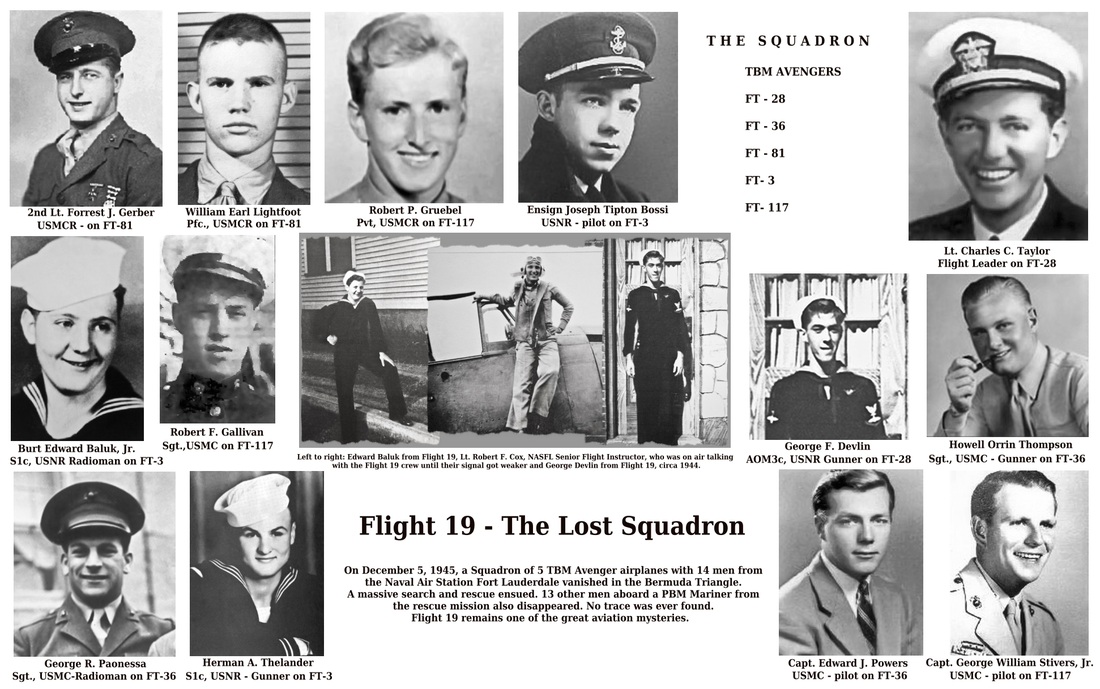
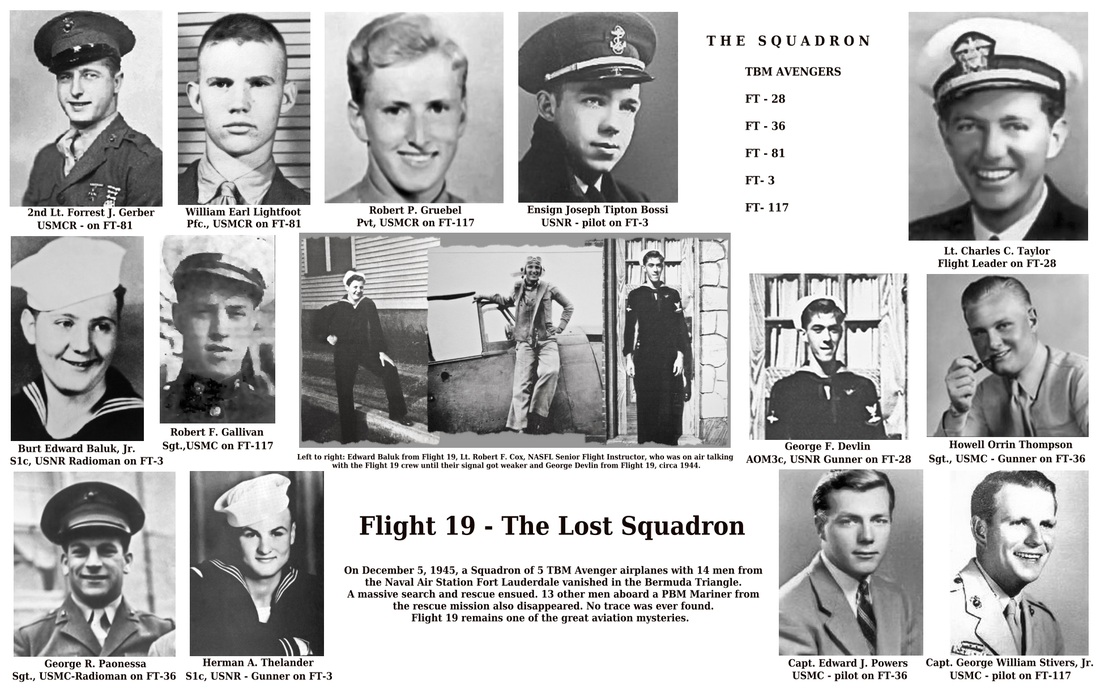
Five TBM Avenger torpedo bombers roar down the runway at Naval Air Station Fort Lauderdale. This was Flight 19. A routine training mission. These weren’t rickety old planes; they were beasts of war, built to take a beating. The leader, Lieutenant Charles Taylor, was an experienced combat veteran. He knew how to fly. He knew the ocean.

So how did 14 men and five heavy bombers vanish into thin air?

The mission started normally. They dropped their practice bombs. They turned to head home. Then, the weirdness started. Taylor got on the radio. He didn’t sound like a commander. He sounded confused.

“Both my compasses are out,” he reported. “I am trying to find Fort Lauderdale… I am over land but it’s broken. I’m sure I’m in the Keys but I don’t know how far down.”

The Green Water Mystery

This makes no sense. If he was in the Keys, the sun would be on his left shoulder. But he was reporting seeing things that didn’t match the map. The weather began to turn. The sea, previously calm, started to churn. Radio discipline broke down. You could hear the fear in the voices of the trainee pilots.

“Dammit, if we could just fly west, we would get home; head west, dammit!” one student pilot was heard yelling over the radio.

Taylor, disoriented and trusting a broken compass, led them further out to sea. Into the teeth of a storm. Into the heart of the Bermuda Triangle. As fuel ran low, Taylor made the call: “We’ll ditch together.”

They hit the water. Presumably. But here is the kicker: a massive search and rescue mission was launched immediately. A PBM Mariner flying boat with a 13-man crew took off to find Flight 19.

The rescue plane also disappeared.

In one single day, 27 men and six planes were wiped off the face of the earth. No wreckage from Flight 19 has ever been definitively identified. They are just… gone.

The Flying Boxcar: The Mystery of the Milwaukee Crew

It didn’t stop in the 40s. The Triangle was hungry. Let’s jump to the swinging sixties. The date: June 5, 1965. Exactly 50 years before a haunting memorial service would be held to mark the tragedy.

This wasn’t a fighter jet. This was a C-119 Flying Boxcar. Think of a semi-truck with wings. Big. Loud. heavy. Hard to miss. The plane, attached to the 440th Troop Carrier Wing out of Milwaukee, was on a mission to Grand Turk Island in the Bahamas.

It was a perfect night for flying. The stars were out. The air was smooth. The 10-man crew checked in with radio traffic controllers. Everything was five-by-five. Position solid. Engines running hot and true.

Then, the silence came.

They never arrived at Grand Turk. They never called Mayday. They simply ceased to be. The C-119 is a massive aircraft. If it crashes, it leaves a mess. It leaves luggage, seats, oil, body parts. When a plane that size hits the water, it breaks up.

Searchers found nothing. Not a bolt. Not a cushion. It was as if a giant hand had reached down from the clouds, plucked the plane out of the sky, and put it in a pocket.

Below, you can see the faces of brave crews who stepped into these machines, never knowing they were flying into a history book of unsolved riddles.

Crew members of a lost flight posing in front of an aircraft

A Fifty-Year Scar

Decades later, the pain hasn’t faded. Organizers held a memorial service at General Mitchell International Airport on the 50th anniversary of the disappearance. Families stood there, looking at the sky, still wondering.

Why them? Why that night?

The “Flying Boxcar” mystery is often overshadowed by Flight 19 or Amelia Earheart, but it is perhaps the most baffling. By 1965, technology was better. Radar was better. Tracking was better. Yet, the result was the same. A void where a plane used to be.

What is Happening in the Triangle?

So, what’s the deal? Why do planes vanish in this specific patch of ocean between Miami, Bermuda, and Puerto Rico? If you dig into the internet rabbit holes, you will find everything from Atlantis to aliens.

Let’s look at the “Electronic Fog” theory. Bruce Gernon, a pilot who claims to have survived the Triangle, says he flew into a strange cloud tunnel. His instruments went haywire. Time distorted. He claims he traveled 100 miles in three minutes—way faster than his plane could fly. He calls it a “wormhole.”

Is it magnetic anomalies? The Bermuda Triangle is one of the few places on Earth where a compass points to true north instead of magnetic north. This variance can throw off even the best pilots if they aren’t accounting for it. Was Commander Taylor confused because his compass was telling him the truth, but his brain couldn’t process it?

The Ocean Fart Theory

Sounds funny, but it’s deadly serious. Scientists have found massive deposits of methane hydrates on the ocean floor in this region. Occasionally, these gas pockets can erupt. If a massive bubble of methane rises to the surface, it reduces the density of the water. A ship floating there would suddenly lose buoyancy and drop like a stone. If the gas rises high enough, it could potentially stall an airplane engine or ignite.

Could a methane burp have swallowed the C-119? Maybe. It explains the lack of debris. The plane would be on the bottom before the crew knew they were falling.

The Uncomfortable Truth

We want answers. We want to find wreckage. We want closure. But the ocean is not a storyteller. It is a vault.

The disappearance of the C-119, the loss of Flight 19, and the vanishing of Amelia Earheart remind us of something we hate to admit: We are not in control. We build mighty machines. We navigate by the stars and by satellites. But when the weather turns, when the magnetic fields shift, or when the pilot gets that creeping feeling of vertigo, we are just soft creatures in metal boxes, floating over a graveyard.

The families of the Milwaukee crew waited 50 years for a funeral without bodies. The world has waited nearly a century for Amelia. The radio silence is the only answer we get.

Next time you fly over the blue Caribbean, look out the window. It looks beautiful, doesn’t it? Peaceful. But remember the C-119. Remember the Avengers. And ask yourself: what is waiting down there, just beneath the waves?

Originally posted 2015-10-02 07:15:26. Republished by Blog Post Promoter