

Home Weird World Mayan 2012 Mayan films makers offer proof of ancient aliens

Mayan films makers offer proof of ancient aliens

0
63

The Mayan Alien Revelation: Was a Suppressed Film Hiding Proof of Extraterrestrial Contact?

History isn’t always written by the victors. Sometimes, it’s not written at all. It’s buried. Hidden in plain sight, waiting for someone to connect the dots. The Maya. A civilization that rose from the jungle, mastered astronomy, built staggering pyramids, and then… vanished. That’s the story they tell you in school. But it’s a story with missing pages. Big ones.

What if the Maya didn’t just vanish? What if they left a message? A warning. A key to a truth so profound, so world-altering, that powerful forces have spent decades making sure you never see it. This isn’t just a theory. It’s a story of a bombshell documentary, a mysterious photograph, a world-famous physicist, and a cover-up that smells of ozone and conspiracy.

It all starts with a film that was supposed to change everything. A film called Revelations of the Mayans 2012 and Beyond.

The premise was explosive. The filmmakers claimed they had been granted unprecedented access by the Mexican government to hidden chambers beneath Mayan pyramids. They promised to reveal state-held secrets that would prove, once and for all, that the ancient Maya were not alone. That they had direct, sustained contact with visitors from another world.

Then, just as the hype was reaching a fever pitch, they dropped the first piece of evidence. And the internet went wild.

The Bombshell in the Jungle: A Face Not of This Earth

It was a photograph. Sepia-toned, grainy, and emanating an aura of forgotten history. The image, released by the film’s producer Raul Julia-Levy, allegedly came from the 1930s. It showed a massive, carved stone head, half-swallowed by the dense jungles of southern Guatemala. But this was no ordinary Mesoamerican sculpture.

Look at it. Really look.

Mayan films

The face is long. The cranium is dramatically elongated. The features are fine, almost delicate, with thin lips and a noble, narrow nose. It stares out from the past with an expression that is neither angry nor serene, but simply… alien. It doesn’t look like any known art from the Maya, the Aztec, the Olmec, or any other civilization we know of. It looks like something else entirely.

This single photograph was a gauntlet thrown down to mainstream archaeology. It was a crack in the foundation of accepted history. And it came with a story that was even more shocking.

An Archaeologist Breaks His Silence

The photo didn’t appear in a vacuum. It was supposedly accompanied by a letter from a Guatemalan archaeologist named Hector E. Mejia. His statement wasn’t just a professional opinion; it was a confession. A declaration that official history is a lie.

Mejia’s letter claimed the head wasn’t just a few hundred years old. It wasn’t even a thousand. He stated it was ancient. Frighteningly ancient. He dated the sculpture to a period between 3500 and 5000 B.C. Let that sink in for a moment. That’s thousands of years *before* the great Mayan cities of Tikal or Chichen Itza were even conceived. It predates the Olmec, the so-called “mother culture” of Mesoamerica.

If that date is correct, it means a civilization with extraordinary artistic and quarrying capabilities existed in the Americas at a time when, according to our textbooks, people were still living in small, scattered agricultural villages. It’s not just a new chapter in history. It’s a whole new book.

Mejia was blunt. He pointed out the obvious: the “elongated cranium” and “fine characteristics” are completely inconsistent with any pre-Hispanic races of the Americas. His conclusion? The statue was a portrait. A portrait of a being “created by an extraordinary and superior civilization with awesome knowledge of which there is no record of existence on this planet.”
He was saying it was an alien. An ancient astronaut, memorialized in stone by a forgotten people.

Deep Dive: Why This Head Was Different

To understand why this was such a bombshell, you have to know what other ancient American art looks like. The most famous giant heads from that part of the world belong to the Olmec civilization (c. 1500–400 B.C.). The Olmec heads are masterpieces. They are colossal, powerful, and iconic. They also look absolutely nothing like the Guatemalan head.

Olmec heads have broad, flattened noses. Thick, powerful lips. They wear helmet-like headdresses. Their features are unmistakably human, believed to be portraits of mighty Olmec rulers. They are powerful, they are of this Earth.

The Guatemalan head, by contrast, is slender, delicate, and otherworldly. The skull shape immediately brings to mind the famous elongated skulls found in places like Paracas, Peru. For decades, researchers have debated whether those skulls were the result of artificial cranial deformation (head-binding) or a genuine genetic anomaly. Could this statue be a depiction of the beings who possessed those skulls naturally?

The Stephen Hawking Connection: A Chilling Warning

The story was already spinning off its axis. An ancient alien statue. A whistleblower archaeologist. A secret government file. But then, Raul Julia-Levy added a name to the mix that no one could ignore: Stephen Hawking.

The producer claimed the world’s most brilliant physicist was participating in his documentary. He even provided a quote, supposedly from Hawking himself, that would appear in the film: “I warn humanity that aliens are out there. Just because the aliens were friends with the Mayans doesn’t mean they are our friends. Humans should avoid contact with aliens at all costs.”

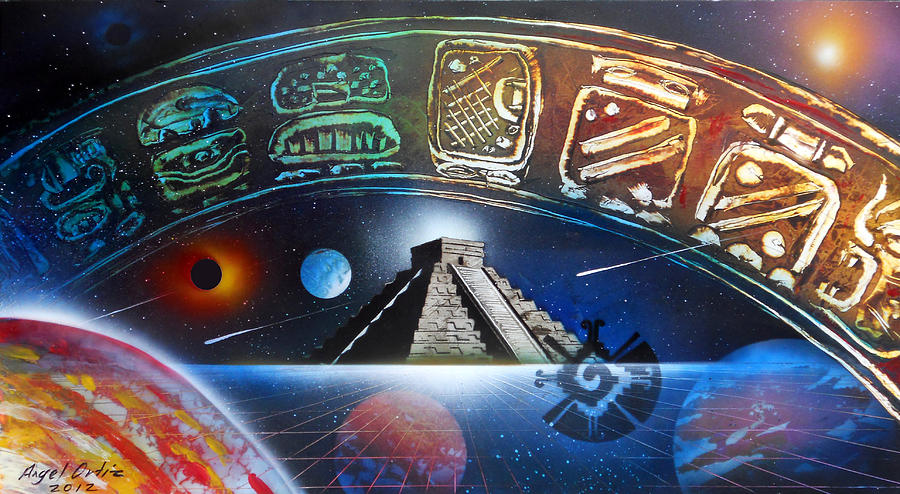
mayans-2012-masters-of-time-angel-ortiz

On the surface, it sounded plausible. Hawking had, in fact, publicly stated his fears about alien contact. He famously warned in 2010 that an advanced alien civilization might be nomadic, looking to conquer and colonize whatever planets they could reach. He compared it to Columbus arriving in the Americas, which “didn’t turn out so well for the Native Americans.” The quote provided for the film fit perfectly with his known, grim perspective.

But was it real? The inclusion of a name like Hawking gave the project a massive shot of credibility. It also raised the stakes. This wasn’t just about the past anymore. It was about our future. A future that might be in terrible danger.

The Great Disappearance: Where Did The Film Go?

So, we have a suppressed film, a bombshell photo, a whistleblower, and a warning from one of history’s greatest minds. The documentary was set to be released in 2012, to coincide with the end of the Mayan long-count calendar. It was destined to be the biggest event in the alternative history world. And then… nothing.

The film never came out.

It vanished. Swallowed by a black hole of legal battles, accusations of fraud, and bitter infighting. The producer, Julia-Levy, became embroiled in lawsuits. The promised revelations never materialized. The website went dark. The project died.

Or was it killed?

This is where the conspiracy goes into overdrive. Is it really believable that a film with such earth-shattering evidence would simply collapse due to petty squabbles? Or is it more likely that the filmmakers got too close to a truth someone—or some agency—wanted to remain buried? Think about it. If the governments of Mexico and Guatemala really did possess artifacts proving alien contact, do you think they’d let some documentary crew just broadcast it to the world? That kind of revelation would destabilize every religion, government, and economic system on the planet. It’s the biggest secret in human history. And secrets like that are protected. Violently.

Suddenly, the story of a failed documentary becomes the story of a successful cover-up. The legal issues weren’t a cause; they were a tool. A way to silence the project and discredit everyone involved.

The Uncomfortable Truth About the Guatemalan Head

What about the head itself? The stone-faced witness at the center of the storm. The official story, the one the debunkers will eagerly tell you, is that the head was a fake. Or, at best, a modern, unremarkable sculpture that got mythologized.

Researchers who later investigated the site reported that the “colossal head” was gone. Destroyed. They claimed that photos from decades later showed the head had been completely defaced, apparently used for target practice by local rebels. They also concluded that based on its rapid deterioration, it couldn’t have been made of durable, ancient stone. The consensus was that it was likely carved from sandstone or even a concrete mixture in the 20th century, a piece of garden art for a plantation owner that took on a life of its own.

Case closed, right? Not so fast.

How convenient. The single most important piece of physical evidence for an alternative history of the world is… destroyed. Used for target practice. Eroded into nothing. Doesn’t that sound just a little too tidy? Like wiping a hard drive clean. If you wanted to erase evidence, could you think of a better way? You don’t just hide it; you obliterate it and then create a plausible, mundane story for its destruction.

The “it was just concrete” explanation falls apart when you look at the original photo. The detail, the craftsmanship, the sheer scale of it—this was no backyard project. And why would anyone in the 1930s create a massive sculpture with features that so perfectly match modern descriptions of “Grey” aliens? The concept wasn’t even part of the popular culture back then.

What If It Was Real? A Chilling Possibility

Let’s play devil’s advocate for a second. Let’s imagine the head was real. That the 5000 B.C. date was accurate. What does that mean? It means our history is wrong. Fundamentally broken. It means a highly advanced, non-human civilization was present in the Americas, interacting with early humans, 7,000 years ago. Who were they? Why were they here? Did they guide our evolution? Did they build the first pyramids, only for later cultures like the Maya to find and copy them? Every question opens a hundred more.

The Pattern of Evidence: More Than Just a Head

The Guatemalan head and its ill-fated documentary aren’t an isolated data point. They are part of a vast, sprawling mosaic of evidence that the Maya were intimately familiar with beings from the sky.

Consider the sarcophagus lid of the great Mayan king, Pakal. Discovered in Palenque, it depicts Pakal at the base of the World Tree, the Mayan axis of the cosmos. But to modern eyes, it looks like something else entirely. Pakal is shown in a seated, reclined position, his hands on a set of controls, his foot on a pedal, and a breathing apparatus near his nose. The “tree” looks astonishingly like a rocket, complete with fire and smoke billowing from its base. Mainstream archaeologists call it symbolic art. But is it? Or is it a literal depiction of a man piloting a technological device?

Across Mayan art, you find other strange figures. Stelae depicting gods descending from the sky. Beings wearing what look for all the world like helmets with antennae. Their astronomical knowledge was terrifyingly precise. They calculated the length of the solar year and the synodic period of Venus more accurately than their European contemporaries, all without telescopes. How? Were they just brilliant observers, or did they have a little help? A cosmic cheat sheet?

The trail of breadcrumbs is there. The Guatemalan Head was simply one of the biggest, most undeniable clues someone ever tried to show the world. And they were silenced for it.

The film is gone. The head is destroyed. Stephen Hawking is no longer with us to confirm or deny his involvement. All that remains is the photograph, the mystery, and the lingering, unsettling question.

What else is still buried under the jungle canopy? And what will happen when it is finally unearthed?

Originally posted 2016-02-19 12:28:00. Republished by Blog Post Promoter









