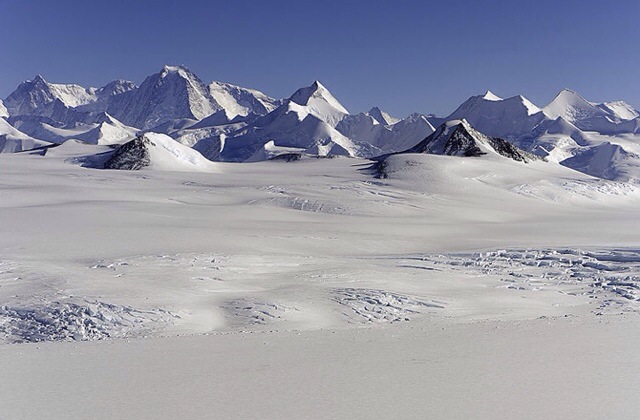
Stop scrolling for a second. Look at that map above. Really look at it.
You are looking at a ghost. A phantom landscape that hasn’t seen the sun in millions of years. We think we know the Earth. We have satellites, we have GPS, we have Google Earth in our pockets. We think the age of discovery is over, dead, buried in the history books alongside Columbus and Magellan. But we are wrong. Dead wrong.
Something massive has been hiding right under our noses. Well, not our noses. Under our feet. specifically, under the most hostile, frozen, forbidden ground on the entire planet.
Geologists have just ripped the mask off West Antarctica. And what they found underneath isn’t just rock. It isn’t just flat, crushed earth. It is a monstrous, sprawling canyon system that rivals the most famous natural wonders of the world. They call it the Ellsworth Trough. But that scientific name sounds too safe. Too sterile.
This is a tear in the Earth’s crust that plunges deeper than you can possibly imagine.
The Grand Canyon’s Frozen, Evil Twin
Let’s put this into perspective. Everyone knows the Grand Canyon. It’s the gold standard for “big holes in the ground.” It’s spectacular. It’s orange, it’s dusty, and millions of tourists stare at it every year while eating ice cream.
Now, imagine a canyon just as dramatic. Maybe even more terrifying.
The Ellsworth Trough cuts a scar across the sub-glacial landscape that is 300 kilometers long. That is 186 miles of sheer cliffs and twisting valley floors. At its widest point, it gapes open 25 kilometers (15.5 miles). But here is where your stomach should drop.
The floor of this valley sits 2,000 meters below sea level. That’s 6,561 feet down.
For comparison, the Grand Canyon hits a depth of about a mile (1,737 meters) and runs for 277 miles. They are titans of the same breed. But while the Grand Canyon is baked by the Arizona sun, the Ellsworth Trough is entombed. It is crushed under 3,000 meters (nearly 10,000 feet) of solid, heavy, grinding ice.
Think about that weight. The pressure. It’s a lost world, sealed in a frozen time capsule, waiting.
Hidden in Plain Sight
How did we miss this? How do you lose a canyon the size of a small country?
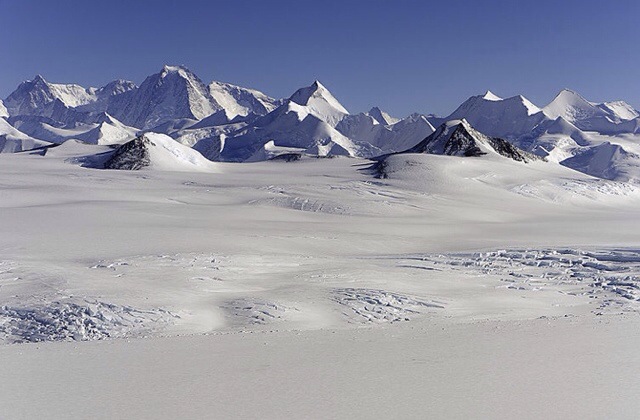
Because Antarctica fights back. It is the most guarded continent on Earth. The ice sheet is a master of disguise. On the surface, the area near the Ellsworth Mountains looks flat, white, and desolate. Maybe a few windswept peaks poke through the snow like jagged teeth. But the surface is a lie.
The ice acts like a thick blanket, smoothing out the wrinkles of the land below. You could walk right over the edge of this subterranean cliff and never know you were floating miles above the valley floor, separated only by a vertical ocean of frozen water.
This discovery changes everything we thought we understood about the geography of the South Pole. It proves that the maps we have hanging in our classrooms are essentially cartoons. They show the white shape, not the true face of the continent.
The Technology That Stripped the Ice
We didn’t find this with shovels. You can’t dig through three kilometers of ice without a budget bigger than the GDP of most nations. The scientists, leading a study published in the Geological Society of America Bulletin, had to get clever.
They used ice-penetrating radar.
Think of it like an X-ray for the planet. They flew over the desolate white wasteland, blasting radio waves down into the depths. The waves travel through the ice, hit the bedrock at the bottom, and bounce back to the sensors. By measuring how long the return trip takes, they can map the topography hidden beneath.
Combined with satellite data, this radar tech painted a 3D picture of a landscape that no human eye has ever seen. Not ever. Even the earliest humans never saw this valley. It was likely buried long before we climbed down from the trees.
A Window into “The Deep Freeze”
Why does this matter? Why should you care about a hole in the ground at the bottom of the world?
Because this canyon is a crime scene. And the victim is the ancient climate of Earth.
The way this trough is shaped gives geologists a smoking gun. It tells us how the ice first attacked Antarctica. Millions of years ago, this wasn’t a frozen hellscape. It was likely a high-altitude valley, perhaps with rivers, maybe even vegetation. Then, the cold came.
The theory is that the frozen coating of West Antarctica started here. It spread from the Ellsworth Mountains and the surrounding highlands. These mountains were the “Ground Zero” for the glaciation.
The ice sheet covering the sea probably formed when massive glaciers grew out of these highlands and marched toward the ocean, similar to how the Antarctic Peninsula looks today. It was a slow-motion takeover. The ice filled the valleys, buried the rivers, and eventually swallowed the mountains whole.
The “Anchor” Theory
There is a modern twist to this story, too. It’s not just ancient history. It’s about our survival right now.
Scientists believe these highlands and the massive sub-glacial valleys act as “anchors.” They physically hold the ice sheet in place. They provide friction. Without these jagged subterranean mountains gripping the bottom of the ice, the glaciers could slide into the ocean much faster.
As the planet warms, these hidden canyons become the battleground. If the ice lifts off these anchors, the slide begins. And when Antarctic ice slides into the sea, water levels rise. Everywhere. New York, Tokyo, London. This hidden canyon is a key piece of the puzzle in predicting our own future.
Alternative History: Was It Once Green?
Now, let’s get into the stuff the textbooks might hesitate to print. Let’s talk about the “What Ifs.”
If there is a canyon this big, implying massive water erosion, that means there was liquid water. Lots of it. Flowing. Rushing. Carving through rock for eons.
We know Antarctica wasn’t always ice. About 34 to 50 million years ago, during the Eocene epoch, Antarctica was lush. We are talking palm trees. Ferns. Marsupials running around. The discovery of the Ellsworth Trough confirms that the topography was dramatic and varied. It wasn’t a flat pancake.
Imagine a version of Earth where you could hike the Ellsworth Canyon. It would have been green, misty, perhaps filled with waterfalls cascading 2,000 meters down into a river system that emptied into a warm Southern Ocean. It would have been a paradise.
Does this lend credence to the wild theories about the Piri Reis map? You know the one. The map from 1513 that allegedly shows the coast of Antarctica without ice. Skeptics say it’s just a bad drawing of South America. Believers say it proves ancient civilizations mapped the world before the ice took over.
While the timing doesn’t match up for the Piri Reis theory (the ice is millions of years old, humans are not), the existence of these valleys proves that the “Ice-Free Antarctica” wasn’t a myth. It was a reality. It just happened a very, very long time ago. Or did it?
The Admiral Byrd Connection
You can’t talk about hidden Antarctic lands without whispering about Operation Highjump. In 1947, Admiral Richard E. Byrd flew missions over Antarctica. Conspiracy theorists have buzzed for decades about his alleged diaries.
Rumors—completely unverified, of course—claim he saw “green lands” and lakes in the middle of the ice. Scientists say it’s nonsense. Just whiteouts and optical illusions.
But now we find a canyon 2,000 meters deep? Protected by high walls? Is it physically impossible that geothermal vents could keep a deep valley warm under the ice? Probably. But discoveries like the Ellsworth Trough remind us that the continent has secrets. Big ones. We are only scratching the surface.
A Humbling Reality
This discovery is a slap in the face to human ego. We think we have conquered the Earth. We think we have mapped every inch. We haven’t.
Neil Ross, the lead author from Newcastle University, put it perfectly when he spoke to Forbes. He didn’t use big jargon. He kept it real.
“To me, this just goes to demonstrate how little we still know about the surface of our own planet.”
Read that again. How little we still know.
We are spending billions sending rovers to Mars. We are looking for life on the moons of Jupiter. Meanwhile, right here, on our own home turf, there are canyons twice the size of the Grand Canyon that we didn’t even know existed until a few years ago.
What Else Is Down There?
That is the question that should keep you up at night. If we missed a 300-kilometer canyon, what else are we missing?
- Are there massive cavern systems?
- Are there sub-glacial lakes—like Lake Vostok—that have been sealed off for 15 million years, evolving strange new bacteria or life forms?
- Are there geological formations that defy explanation?
The Ellsworth Trough ends by plunging into the sea. It’s a gateway. A massive slide leading into the black depths of the ocean under the ice shelves. It is a terrifying, beautiful, majestic feature that no human eye has ever gazed upon directly.
The Final Word
We live on a mystery. That’s the truth. We walk around on the crust of a ball floating in space, and we assume the ground is solid and known. But down south, at the bottom of the world, the ice is guarding its secrets jealous and tight.
The Ellsworth Trough is just one piece of the puzzle. As radar technology gets better, as satellites get sharper, we are going to find more. The map of Antarctica is being redrawn every year.
So the next time you look at a globe, spin it to the bottom. Look at that white patch. Don’t see it as empty space. See it for what it is: The final frontier. A place where valleys deep enough to swallow mountains are hiding in the dark, waiting for us to find them.
The ice is thick. The secrets are deep. And we are just getting started.
Originally posted 2014-01-16 22:52:33. Republished by Blog Post Promoter
![20140116-235032[1]](https://coolinterestingnews.com/wp-content/uploads/2014/01/20140116-2350321.webp)