The Shadow in the Woods: Does Bigfoot Actually Exist?
You know the feeling. The hair on the back of your neck stands up. The woods go silent. Too silent. Snap. A twig breaks behind you.
Is it a deer? A bear? Or is it something else?
We’ve all heard the stories. Bigfoot. Sasquatch. The Hairy Man. For decades, this creature has dominated the fringe of American folklore, straddling the line between a campfire story and a biological reality. But here is the thing: stories usually fade. Myths die out when technology advances. But Bigfoot? He isn’t going anywhere. In fact, with everyone carrying a high-definition camera in their pocket, the mystery has only gotten deeper, stranger, and more terrifying.
From the proven hoaxes that make us roll our eyes to the unconfirmed sightings that keep seasoned hunters out of the woods at night, the question hangs in the air like a thick fog. Science can’t disprove his existence. They haven’t found a body, sure. But they haven’t proven he isn’t out there.
So, what is the likelihood that Bigfoot is flesh and blood?
The Global Pattern: It’s Not Just an American Story
If this were just a Pacific Northwest thing, we could write it off. Maybe it’s just a local legend born from the dark, rainy forests of Oregon and Washington. But it’s not. That’s the detail skeptics hate.
Go to the Himalayas. You find the Yeti. Travel to the blistering heat of the Australian outback. The locals warn you about the Yowie. Head into the vast, frozen wilderness of Russia. They talk about the Almas or the Menk. China has the Yeren.
How does that happen?
How do ancient cultures, separated by thousands of miles of ocean and thousands of years of history, all come up with the exact same boogeyman? A giant, hairy, bipedal ape-man who screams in the night and throws rocks at intruders. It’s a global pattern. And in the world of detective work, there is no such thing as a coincidence this big.
The Indigenous Connection
Long before the tabloid headlines, Native American tribes had names for these creatures. They weren’t monsters to them. They were just another tribe. The “Boss of the Woods.”
The Lakota call him Chiye-tanka (“Big Elder Brother”). The Hoopa Valley Tribe calls him Oh-Mah. These oral histories date back centuries. They describe family units, languages, and trading with these beings. If Sasquatch is a hoax, it’s the longest-running, most elaborate prank in human history, involving hundreds of distinct cultures who had no way of communicating with each other.
The Holy Grail: The Patterson-Gimlin Film
1967. Bluff Creek, California. Roger Patterson and Bob Gimlin ride their horses around a bend and run straight into history.
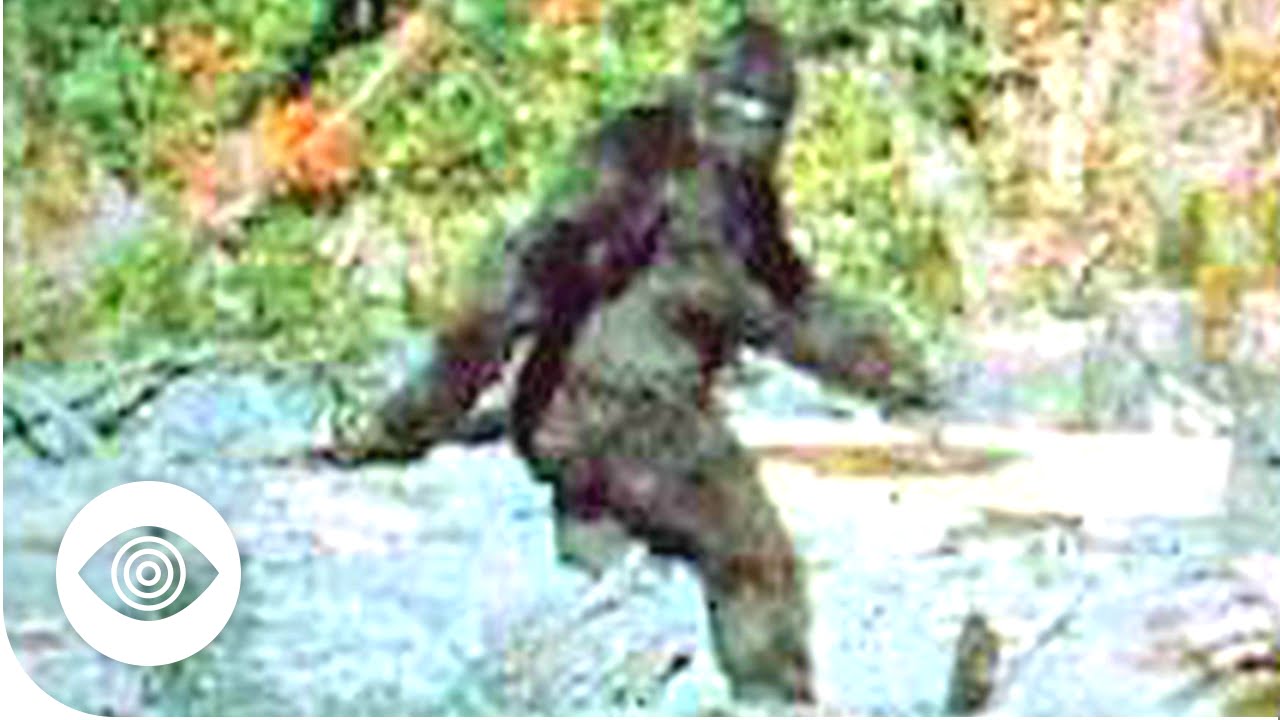
You know the clip. Even if you don’t care about cryptozoology, you’ve seen it. The grainy, shaking footage of a massive, hairy figure striding casually across a sandbar. It turns. It looks right at the camera. That look sends chills down your spine.
Skeptics screamed “Man in a suit!” the second it aired. They are still screaming it. But let’s pause. Let’s look at the facts that Hollywood special effects artists have pointed out for fifty years.
- Muscle Definition: You can see the muscles moving under the fur. In 1967, “Planet of the Apes” won an Oscar for makeup, and their costumes looked like stiff rubber masks. “Patty” (the subject of the film) had quads that flexed with every step.
- The Walk: The gait is compliant. The knees remain bent. A human walking that way looks ridiculous and gets tired in ten seconds. This thing walked with power.
- The Proportions: Analysis shows the arms are too long for a human. The knee joint is in the wrong place for a guy in a suit.
If it was a hoax, Roger Patterson wasn’t just a liar. He was a biological genius and a costume engineering wizard who outpaced Hollywood by three decades. Or, he just filmed a hairy giant walking in the woods.
The Science: Gigantopithecus Blacki
Here is where things get real. We don’t need to invent a monster. Nature already did it.
We know for a fact that a massive ape called Gigantopithecus Blacki existed. Fossils prove it. It stood up to ten feet tall. It weighed over a thousand pounds. It lived in Southeast Asia alongside early humans. Scientists say it went extinct 100,000 years ago.
But did it?
The Coelacanth fish was supposed to be extinct for 66 million years. Gone. Fossilized. Then a fisherman caught one off the coast of South Africa in 1938. Oops.
Animals survive. They migrate. Is it so crazy to think that a population of Gigantopithecus crossed the Bering Land Bridge during the Ice Age? Bears did it. Humans did it. Why not the giant ape? If they made it to the dense, endless forests of North America, they would have found paradise. Unlimited food. Massive trees for cover. And plenty of room to hide from the one thing that kills everything: us.
The “Where are the Bones?” Argument
This is the number one weapon in the skeptic’s arsenal. “If there are thousands of them, why haven’t we found a skull? Why isn’t there roadkill?”
Valid question. But let’s look at the logistics.
1. The Acid Soil: The Pacific Northwest soil is highly acidic. It eats bone. A deer carcass dissolves in a surprisingly short time.
2. Scavengers: Porcupines and rodents gnaw on bones for calcium. Nature cleans up its messes fast.
3. The Intelligence Factor: We aren’t talking about a deer. We are talking about an intelligent primate. If a member of the troop dies, do they leave it there? Or do they bury it? Do they hide it? Elephants mourn their dead. Neanderthals buried their dead. If Bigfoot is half as smart as the legends say, you aren’t going to trip over a skeleton on a hiking trail.
Modern Theories: The “Woo” Factor
Strap in. This is where we leave the biology class and enter the Twilight Zone.
In recent years, a rift has formed in the Bigfoot community. You have the “Flesh and Blood” camp who think it’s just an ape. Then, you have the “Woo” camp. These researchers noticed something weird. Sightings of Sasquatch often coincide with strange lights in the sky. UFOs. Orbs.
Witnesses report tracks that just… stop. As if the creature vanished into thin air. Some hunters claim to have had Sasquatch in their scope, only for the creature to become transparent or blur out, like a Predator from the movies.
Is Bigfoot an interdimensional traveler? Is that why we can’t catch him? Is he a “forest guardian” placed here by something else? It sounds insane. But when you eliminate the impossible, whatever remains, however improbable, must be the truth. And right now, the “ape” theory is struggling to explain why trail cams rarely catch clear photos.
The Sierra Sounds: Language from the Void
If you have never heard the “Sierra Sounds,” stop what you are doing and search for them. Recorded in the 1970s by Ron Morehead in the High Sierras, these tapes are nightmare fuel.
They don’t sound like animal grunts. They sound like language. Samurai chatter. Whoops. Whistles. A university linguist analyzed the tapes and found a vocal range that exceeds human capability. The speed of the articulation was faster than any known human language.
Whatever was making those sounds was communicating complex thoughts. It wasn’t a bear rubbing against a tree.
Why Can’t We Quit Him?
Why do we care? Why does a blurry video of a blob in the woods get millions of views?
Because we need him.
We live in a world that is mapped. GPS sees everything. Satellites zoom in on your driveway. There is no mystery left. We have paved over the wild. But Bigfoot? He represents the last unknown. He is the reminder that we don’t know everything. He is the shadow that proves the world is still big, scary, and wild.
If he exists, it changes everything. It means we aren’t the masters of this planet. It means something else is watching us from the tree line, waiting for us to leave so it can take back the woods.
So, does Bigfoot exist? The evidence is messy. The hoaxes are plenty. But thousands of credible people—police officers, park rangers, experienced hunters—swear on their lives they saw something massive, hairy, and two-legged.
They can’t all be lying. And they can’t all be crazy.
Next time you are in the woods and you hear a branch snap… don’t look back. You might not like what you see.