Home Weird World Space Mars One plans suicide mission to Red Planet for 2023

Mars One plans suicide mission to Red Planet for 2023

2
63

A One-Way Ticket to Glory… Or the Greatest Scam in Space History?

Picture this. The year is 2012. The world is buzzing. Not about politics, not about the economy, but about an offer so insane, so audacious, it could only be real.

A global lottery. A chance to win the ultimate prize.

Not money. Not a house.

A one-way ticket off this planet.

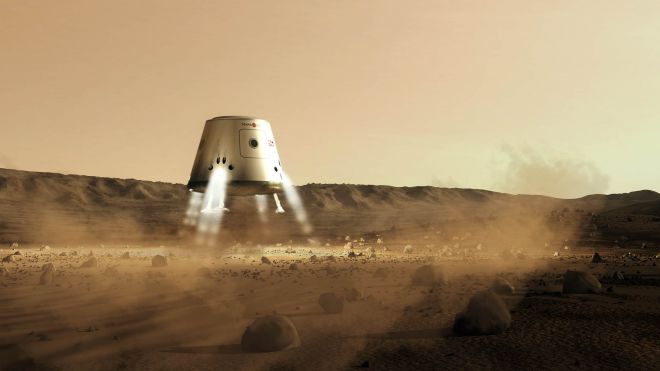
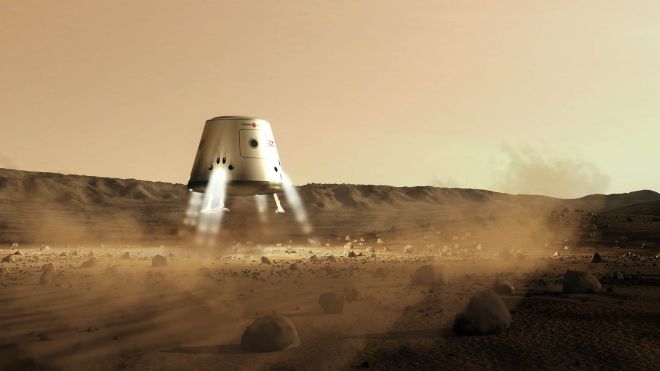
A Dutch company with a bold name, Mars One, stepped onto the world stage with a promise straight out of science fiction. They were going to send ordinary people to the Red Planet. Not highly trained astronauts with decades of experience. You. Me. Anyone with a dream and enough courage—or madness—to sign up. There was just one tiny catch. The return shuttle? It wasn’t part of the plan. This was a forever trip. A commitment to live and die on another world, 140 million miles from home.

The world went wild. Over 200,000 people applied. It was hailed as the next giant leap for mankind. But was it? Or was it the prelude to the most elaborate, high-stakes con ever conceived? Let’s pull on the thread and see just how deep this Martian rabbit hole goes.

The Dazzling Vision of Bas Lansdorp

The frontman for this cosmic dream was Bas Lansdorp, an entrepreneur with a background in wind energy. He spoke with the infectious confidence of a true believer. He wasn’t just talking about a mission; he was talking about a new branch of human civilization.

“We will send humans to Mars in 2023,” he declared to anyone who would listen. “They will live there the rest of their lives.”

The plan he laid out was breathtakingly ambitious. It was a step-by-step roadmap to a Martian future.

  • 2013-2015: The Great Selection. A worldwide search for the first Martian colonists. Not based on piloting skills, but on psychological resilience, adaptability, and teamwork. The entire process would be broadcast, a global reality show to pick humanity’s ambassadors.
  • 2016: The First Cargo. A supply mission would launch, carrying 2,500 kilograms of food, spare parts, and scientific equipment. A proof of concept.
  • 2018: The Rover Arrives. A smart rover would trundle across the Martian surface, scouting the perfect location for the new settlement.
  • 2021: Life Support Lands. Multiple cargo missions would follow, delivering the habitats, the life support units, and everything needed to create a breathable, livable outpost. The rover would set it all up, like a robotic construction crew, before the first human foot ever touched the ground.
  • 2022: The Point of No Return. The first crew of four would launch on their seven-month journey through the void.
  • 2023: Touchdown. History would be made. The first humans would arrive at their pre-built home, ready to begin life as Martians.

And it wouldn’t stop there. Every two years, another crew of four would arrive. A slow, steady trickle of humanity, building a permanent, growing colony. It was a beautiful story. A powerful one. It tapped into a primal human urge for exploration, for a frontier beyond the horizon. But how, exactly, do you pay for a dream that costs billions upon billions of dollars?

Big Brother in Space: The Billion-Dollar TV Show That Never Was

Here’s where the plan shifted from science fiction to reality television. Literally.

Lansdorp’s big idea for funding this multi-billion-dollar enterprise wasn’t government grants or billionaire backers. It was you. The viewer. He planned to sell the broadcasting rights to the entire saga—from the tearful goodbyes of the first applicants to the first footstep on Martian soil—and create the most-watched media event in human history.

To give the idea credibility, he brought in a heavyweight: Paul Römer, the co-creator of the global phenomenon “Big Brother.” If anyone knew how to monetize watching people in an isolated habitat, it was him. The logic seemed almost plausible. The Olympics generate billions in a few weeks. What would the world pay to watch humanity’s first interplanetary colony, 24/7, for the rest of their lives?

This wasn’t just a mission. It was content. Every medical check, every training exercise, every psychological evaluation was a potential TV episode. The launch would be the Super Bowl. The landing, the World Cup Final. And life on Mars? A never-ending reality show with the highest stakes imaginable.

Advisers with impressive credentials, like Nobel Prize-winning physicist Dr. Gerard ‘t Hooft, lent the project an air of legitimacy. Even Buzz Aldrin, the second man on the Moon, had long argued that a one-way trip was the only feasible way to get to Mars in our lifetime. The pieces were all there. The dream. The plan. The funding model. It seemed unstoppable.

But space is hard. And reality… well, reality bites.

DEEP DIVE: The Brutal Truth of a One-Way Trip

Let’s strip away the TV glamor for a second and talk about what it actually means to go to Mars and never come back. The marketing sold an adventure. The reality was a sentence to a beautiful, sterile, and unbelievably hostile prison.

The Mental Abyss: Former NASA researcher Norbert Kraft, who was briefly tied to the project, knew the psychological hurdles were monumental. Think about it. You’re in a box, a tiny habitat, with the same three people. Forever. You can never again feel rain on your skin, smell a forest after a storm, or swim in the ocean. You can look up and see Earth, a tiny blue marble, a constant reminder of everything you’ve lost. The “Earth-out-of-view” phenomenon is a known psychological stressor for astronauts in orbit. For the Mars One crew, Earth would be a permanent, painful reminder of a life they could never return to. What happens after the first major argument? The first death? There’s no escape. No therapy session where you can walk out the door afterward.

The Physical Breakdown: Mars is not Earth’s friendly little brother. Its atmosphere is 100 times thinner, offering almost no protection from cancer-causing cosmic radiation. Living on Mars is a radiation bath. Then there’s the gravity—just 38% of Earth’s. It sounds fun, but over time, your bones would lose density, your muscles would wither, your heart would weaken. Your body is a machine designed for Earth’s gravity, and on Mars, it would slowly, relentlessly fall apart.

The Technological Nightmare: Every single piece of equipment has to work. Perfectly. Forever. The machine that makes oxygen from the Martian atmosphere? If it breaks, you suffocate. The water reclaimer? If it fails, you die of thirst. The habitat’s seals? One catastrophic leak and you’re exposed to a near-vacuum. There is no Amazon Prime for spare parts. There is no repairman. Every single colonist would have to be a master-level engineer, doctor, farmer, and psychologist, all at once. The slightest mistake, the one screw you can’t replace, could mean the end for everyone.

The Cracks Begin to Show

As the initial hype faded, a new wave of questions began to surface. Hard questions. Journalists, scientists, and engineers started looking closer at the grand vision, and they found that it was built on a foundation of sand.

Where were the aerospace contracts? A mission of this scale would require partnerships with giants like SpaceX, Boeing, or Lockheed Martin. Mars One claimed they would simply “work with suppliers,” but no major company ever publicly signed a contract to build their hardware. They pointed to the SpaceX Falcon Heavy as a potential rocket, but SpaceX never confirmed any official involvement.

Where was the technology? Creating a self-sustaining life support system that can work for decades is something NASA, with its massive budget and army of geniuses, still hasn’t perfected. Mars One, a tiny company with a handful of employees, claimed they would have it ready in a few years, but offered no new research or technical papers to back it up.

The money, the big TV deal, never materialized. Broadcasters were interested, sure, but they weren’t signing billion-dollar checks for a mission that existed only on PowerPoint slides.

The whole thing started to feel… flimsy.

The MIT Takedown: 68 Days to Suffocation

Then came the bombshell. In 2014, a group of graduate students at the Massachusetts Institute of Technology (MIT) decided to take the Mars One plan seriously. They ran the numbers. They built an independent technical assessment based on Mars One’s own published data and existing technology. The result was a devastating, systematic dismantling of the entire mission.

Their 35-page report read like a death sentence.

The biggest problem? Plants. The plan to grow crops inside the habitat to produce food was also supposed to help produce oxygen. But the MIT team calculated that the plants would produce a dangerous amount of oxygen, creating a fire-hazard atmosphere. To vent the excess oxygen, you’d also have to vent the nitrogen that makes up the bulk of the breathable air. The system was unsustainable. The colonists would need to constantly import nitrogen from Earth—an impossible task.

Their model predicted that the first fatal event would be depressurization due to this flaw. The first colonist would likely die from suffocation in just 68 days.

It got worse. The MIT study also found that the sheer amount of spare parts needed to keep the colony running would be overwhelming. Their model showed that spare parts would quickly make up over 60% of the cargo mass sent from Earth, leaving little room for food, new habitats, or anything else. The colony would be cannibalizing itself just to survive.

Lansdorp dismissed the study, but the damage was done. The most prestigious technical university in the world had just publicly declared that the Mars One plan was a death trap.

The “Chosen” Speak Out: A Cosmic Pyramid Scheme?

The final nails in the coffin came from the inside. The chosen few, the “Mars 100” finalists who were supposed to be training for their one-way trip, started to go public with disturbing stories.

Dr. Joseph Roche, a finalist with a Ph.D. in physics and astrophysics, blew the whistle in a shocking interview. He revealed the “selection process” was a sham. The so-called interviews were brief Skype calls. There were no in-person psychological or physical tests. He had never even met anyone from Mars One in person.

Worse, he exposed the financial mechanics. Candidates earned “points” in the selection process. How did they get points? By buying Mars One merchandise or “donating” money to the cause. The more you paid, the better your chance of getting through to the next round. It was less of a rigorous astronaut selection program and more of a cosmic pyramid scheme, preying on the hopes of thousands of dreamers.

He revealed that the 200,000 applicants that Mars One constantly bragged about was a wild exaggeration. The real number of paid, completed applications was just 2,761. The entire narrative was starting to crumble.

The Ghost of Mars One: A Warning and an Echo

Mars One’s demise wasn’t a spectacular explosion. It was a slow, quiet fade into obscurity. The promised missions were endlessly delayed. 2023 became 2025, then 2027, then… silence. The TV production company Endemol, which owned the “Big Brother” franchise, cut ties in 2015. The money never came. The dream was dead.

In early 2019, court documents from Basel, Switzerland, revealed the truth. Mars One Ventures, the for-profit arm of the operation, was declared bankrupt, with less than €25,000 to its name. The grand voyage to build a new world ended not with a bang, but with a liquidator’s report.

So what was it all for? Was Bas Lansdorp a charismatic con artist who saw a way to get rich and famous? Or was he a genuine dreamer who was simply, catastrophically, naive about the realities of space travel and business?

The truth is likely somewhere in the murky middle. But the legacy of Mars One is more complex than just a simple failure. In its own strange way, it changed the conversation. It proved that there is a massive, global public appetite for the colonization of space. It forced people to seriously discuss the ethics and logistics of a one-way trip. It served as a stark, public cautionary tale for the new generation of space entrepreneurs like Elon Musk, demonstrating that a grand vision is nothing without sound engineering and a viable business plan to back it up.

Mars One is gone. Its website is a digital ghost. But the question it asked the world still hangs in the air. Would you leave everything behind for a chance to start again on a new world? That dream didn’t die with Mars One. It’s more alive than ever. The only difference now is that the people promising the ride actually have the rockets to do it.

Originally posted 2016-03-14 04:28:33. Republished by Blog Post Promoter