Home Unexplained Mysteries Historical Mysteries Lost Treasure – Nazi gold train found!

Lost Treasure – Nazi gold train found!

0
70

The Ghost Train of Wałbrzych: Uncovering the Truth Behind the Lost Nazi Gold

There are stories that refuse to die. They are whispered in taverns, debated on shadowy internet forums, and passed down through generations like a forbidden secret. They cling to the soil and the stone of old places, waiting for someone to listen.

This is one of those stories.

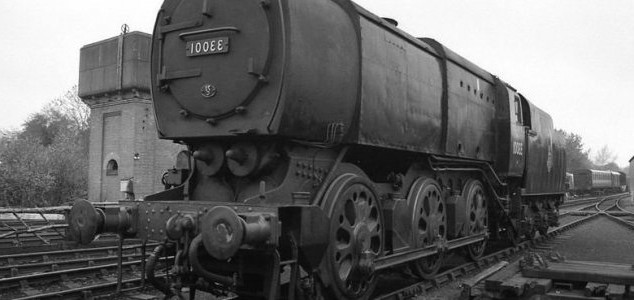
It’s a story of a train. Not just any train. An armored behemoth, groaning under the weight of a nation’s stolen plunder. Gold bars. Priceless paintings. Sacks of jewels ripped from the innocent. The last, desperate treasure of the Third Reich, loaded onto a ghost train and sent steaming into a mountain, never to be seen again.

A fairy tale? A wartime myth? For seventy years, most people thought so. Then, in 2015, two men stepped out of the shadows and made a claim that sent shockwaves across the globe.

They said they found it.

A Legend Forged in the Fires of War

To understand the ghost train, you have to go back. Back to the final, frantic days of World War II. The winter of 1944 bleeds into 1945. On the Eastern Front, the German war machine isn’t just retreating; it’s disintegrating. The Red Army is a terrifying, unstoppable force, a tidal wave of steel and vengeance rolling west, swallowing everything in its path.

The city of Breslau, in Lower Silesia (today’s Wrocław, Poland), is in a state of pure panic. For years, it was a safe haven, a fortress deep within the Reich. Now, the thunder of Soviet artillery is on the horizon. Nazi officials, the Gestapo, and the wealthy elite know the end is near. They have one last thing to do. Hide the loot.

The legend paints a chilling picture. Under orders from the collapsing government, a massive collection effort begins. Gold bullion from the city’s banks is seized. Artworks are ripped from museum walls. But it’s the personal treasures that form the dark heart of this story. Wedding rings, family heirlooms, gold fillings, and precious stones—all stolen from the Jewish population and other victims of the regime—are gathered and packed into crates.

This immense fortune, estimated by some to be worth billions in today’s money, was loaded onto a train. An armored train, guarded by the last fanatical SS troops. Its destination? Somewhere, anywhere, deeper inside Germany, away from the approaching Soviets.

The train chugged out of Breslau station. It headed southwest, towards the treacherous, densely forested Owl Mountains.

And then… nothing.

It vanished. Completely. Swallowed by the earth itself, leaving behind nothing but a mystery that would fester for decades.

Nazi gold

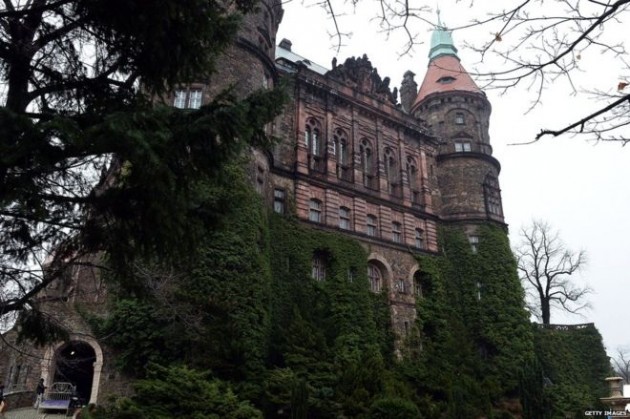
After the war, the borders shifted. Silesia became part of Poland. The Germans who knew the secrets were gone—dead, displaced, or silent. The legend, however, remained. Local Poles whispered stories of a secret tunnel, a hidden siding near the magnificent Książ Castle. Others swore it was buried near Piechowice. Treasure hunters came and went, armed with shovels and hope, but always left with nothing but mud on their boots.

Project Riese: The Underground Labyrinth

How could a 500-foot-long armored train just disappear? It sounds impossible. Until you understand what the Nazis were building in those very mountains.

They called it Projekt Riese. Project Giant.

And it was monstrous.

Starting in 1943, the Nazis began one of the most ambitious and brutal construction projects of the entire war, right under the noses of the Allies. Using tens of thousands of forced laborers from concentration camps like Gross-Rosen—most of whom were worked to death and buried in unmarked graves—they blasted and drilled a colossal network of tunnels and underground chambers into the hard gneiss rock of the Owl Mountains.

Deep Dive: What Was Project Riese?

The official purpose of Project Riese remains one of World War II’s greatest unsolved mysteries. The documentation was almost entirely destroyed before the Soviets arrived. What we know has been pieced together from fragments, rumors, and the chilling, empty concrete caverns that remain.

Seven massive underground complexes were started: Rzeczka, Włodarz, Osówka, Sokolec, Jugowice, Soboń, and the tunnels beneath Książ Castle itself. The scale is staggering. We’re talking about miles of tunnels, some large enough to drive a truck through, and vast halls with reinforced concrete ceilings. This wasn’t some simple bunker system.

So what was it for?

  • A New Führer Headquarters? The most common theory is that Riese was intended to be a new, impregnable command center for Hitler and the entire Nazi high command, safe from Allied bombers. A place to retreat and continue the war from deep within the earth.
  • Secret Weapons Factories? Others believe the huge halls were designed to house underground factories for producing V-1 and V-2 rockets, or perhaps even more advanced “Wunderwaffen” (wonder weapons). Some even whisper about Nazi nuclear research.
  • A Hidden Vault? And then there’s the theory that ties it all together. What if part of this massive, secret complex was designed from the beginning to be the ultimate vault? A place to hide the Reich’s stolen treasures until they could one day reclaim them.

Whatever its purpose, Project Riese was never finished. The Red Army’s rapid advance forced the Nazis to abandon it. They sealed entrances, flooded tunnels, and laid booby traps, leaving behind a deadly, silent maze. A perfect place to hide a train forever.

The 2015 Fever Pitch: “We Found It!”

For 70 years, the gold train was a campfire story. Then, in August 2015, the story exploded onto the world stage.

Two men, Piotr Koper, a Polish builder, and Andreas Richter, a German geologist, stepped forward with an electrifying announcement. Through a lawyer, they informed the local council in Wałbrzych, a mining town nestled in the shadow of the Owl Mountains, that they had located the legendary Nazi train.

This wasn’t just another rumor. They claimed to have concrete proof. And they had a demand: a standard 10% finder’s fee for the value of the contents. The implication was clear. This wasn’t a historical curiosity; it was a treasure claim.

The evidence they presented was tantalizing. They spoke of a deathbed confession from a man who had helped hide the train. They mentioned cryptic maps and family secrets. But their smoking gun was something far more modern.

Ground-penetrating radar scans.

image

What Did the Radar “See”?

The images they released were grainy, abstract, but to the hopeful eye, undeniable. They showed a long, man-made anomaly buried about 30 feet deep inside a railway embankment at the 65th kilometer of the Wrocław to Wałbrzych line. It was the right length. The right shape. It looked, for all the world, like a train buried in an artificial tunnel that had been deliberately collapsed.

And it was located in the one place a train could be: alongside an existing railway line, perfectly positioned to be shunted off the main track and into a prepared hiding spot.

The world went insane.

News crews from CNN, the BBC, and networks across the globe descended on the small Polish town. The Polish government, initially skeptical, started taking it very seriously. The culture minister himself went on record saying he was “99 percent certain” the train existed. The army moved in to secure the area, sweeping for the mines and explosives the Nazis were famous for leaving behind.

A global gold rush began. Amateur treasure hunters with metal detectors swarmed the forests around Wałbrzych, hoping to find their own piece of the story. The legend was no longer a legend. It felt real. It felt like history was about to be rewritten.

The Dig and the Disappointment

The hype was incredible. The expectation was stratospheric. But finding something on a radar screen and holding it in your hands are two very different things.

The official process moved at a crawl. More surveys were conducted by different teams. A team from Krakow’s AGH University of Science and Technology used magnetic and gravitational methods. Their conclusion was a splash of cold water: “Our analysis indicates there may be a collapsed tunnel, but there is no evidence of a train.”

Koper and Richter were undeterred. They insisted the scientists had it wrong. They raised private funds, brought in their own team, and in August 2016, a full year after their bombshell announcement, they finally got permission to dig.

The world watched. Live streams followed the excavators as they clawed away at the embankment at Kilometer 65. The mood was electric. Every scoop of dirt could be the one that revealed a rusted steel roof, the top of an armored carriage.

They dug three massive pits. They went deep. Days turned into a week.

And they found… nothing.

Absolutely nothing. No tunnel entrance. No train tracks. No armored plates. Just layers of soil, clay, and natural rock formations. The anomaly the radar had picked up was likely just a geological fluke, an underground pocket of different density rock that had tricked the equipment into seeing a shape that everyone wanted to see.

The dream was over. The media packed up. The Polish officials announced the search was officially concluded. The ghost train, it seemed, was truly a ghost.

So, Was It All a Hoax?

The easy answer is yes. A grand delusion. A scam to boost tourism in a struggling mining town. And to be fair, the “gold train fever” did bring a lot of money and attention to Wałbrzych.

But the story isn’t that simple.

Piotr Koper and Andreas Richter never backed down. They spent a fortune of their own money on the dig. They faced global ridicule. Yet, they insisted they were right. They claimed they had simply dug in the wrong spot, that their calculations were off by just a few dozen feet. They argued that the official surveys were flawed, maybe even deliberately misleading.

This is where the mystery re-ignites, moving from the muddy embankment into the modern world of online conspiracy.

Modern Internet Theories & The Lingering Questions

On forums like Reddit and in the comment sections of countless YouTube documentaries, the legend of the gold train is more alive than ever. The failure of the 2016 dig didn’t kill the story; it just created new, more paranoid branches.

  • The Secret Midnight Excavation: This is a popular one. The theory goes that the Polish government, using the “inconclusive” surveys as a cover, found the train themselves. They dug it up secretly in the dead of night, moved the contents to a secure military base, and then allowed the public dig to go ahead, knowing it would find nothing. Why? To avoid a massive international legal battle. The World Jewish Congress would have a claim. Russia, as the successor to the Soviet Union, would have a claim. It would be a nightmare. Far easier to say, “Nothing was found.”
  • The Deeper Tunnel: What if the train isn’t in a shallow, collapsed embankment but in a much deeper, purpose-built concrete tunnel connected to the Riese complex? The 2016 dig barely scratched the surface. The real prize could be hundreds of feet down, sealed behind feet of concrete and rock, undetectable by the equipment used.
  • The Red Herring: Was the entire focus on Kilometer 65 a deliberate misdirection? The original legends mentioned multiple locations. What if the “deathbed confession” was designed to send everyone looking in the wrong place, while the real train sits silently in a forgotten tunnel miles away?

And what if the cargo wasn’t just gold? The Nazis stole more than money. They stole secrets. The train could contain compromising documents about European collaborators. It could hold the keys to lost technologies. Or it could contain the ultimate lost treasure: the fabled Amber Room, a priceless chamber of amber, gold, and jewels stolen from a Russian palace and last seen in Königsberg before it vanished. Finding that would be more significant than finding gold.

A Ghost on the Tracks

In the end, no train was found at Kilometer 65. That is a fact. But the absence of evidence is not evidence of absence.

The story of the Wałbrzych Gold Train has become something more than a treasure hunt. It is a modern myth that encapsulates the lingering horrors and secrets of the Second World War. It speaks to our deep-seated belief that fantastic things might still be hidden just beneath the surface of our mundane world, waiting to be discovered.

The Owl Mountains keep their secrets. The dark, unfinished tunnels of Project Riese are still there, a silent, sprawling tomb filled with the ghosts of those who built it. Somewhere in that darkness, in that cold, damp earth, does a train still wait?

Is it a metal phantom, guarding the plundered wealth of a monstrous regime? Or is it just a story, a flicker of light against the darkness of history?

The hunt, you can be sure, is far from over.

Originally posted 2015-08-21 14:49:18. Republished by Blog Post Promoter