
Starship Dictators or Martian Rebels: The Secret Political Battle for Our Future in Space
Let’s talk about Star Trek. We all love it. The gleaming corridors of the Enterprise, the noble quest to seek out new life. It’s a vision of humanity’s best self, right?
Wrong.
Look closer. Past the pristine uniforms and the inspiring speeches of Captain Picard. What do you see? A military vessel. A rigid, top-down hierarchy where one person’s command is absolute law. The United Federation of Planets might talk a good game about democracy, but its flagship is, for all intents and purposes, a benevolent dictatorship hurtling through the void. Gene Roddenberry called it a “wagon train in space,” but it’s a wagon train where the wagon master can throw you in the brig without a trial.

Is this really the model we want to export to the cosmos? A system where freedom takes a backseat to the mission? This isn’t just a nerdy debate for a sci-fi convention anymore. This is real. This is happening now.
Private companies are charting courses to the Moon. Bold plans exist to send the first married couple on a one-way trip to Mars. Space agencies are gearing up to send crews into the deep black to wrestle with asteroids. The theoretical has become terrifyingly practical. Within our lifetime, small pockets of humanity will be living in total isolation, millions of miles from any government on Earth. They will be beyond our help. And beyond our control.
So, what happens next? What happens when the first human settlement on Mars decides Earth’s laws no longer apply? This isn’t a question of ‘if’. It’s a question of ‘when’. And the answers are more shocking than you can imagine.
The 44-Minute Tyranny: Why Earth’s Control is an Illusion
The biggest obstacle to an Earth-based government ruling a Mars colony isn’t philosophy. It’s physics.
Light, the fastest thing in the universe, takes time to travel. Depending on the alignment of the planets, a radio signal from Earth to Mars can take anywhere from three to a staggering twenty-two minutes to arrive. One way. That means a simple conversation, a question and its answer, could have a 44-minute delay baked into it.
Now, let that sink in. Forget managing a crisis. You can’t even have a meeting.
Imagine the scene. A critical life support system is failing in the Martian habitat. Alarms are blaring. The colony commander radios a desperate plea to Mission Control in Houston. Houston receives the message 20 minutes later, when the situation has already changed dramatically. They spend ten minutes scrambling to find a solution, then transmit their instructions back. By the time the message arrives at the colony, it’s been 40 minutes. Forty minutes during which the crew has had to act, to make a life-or-death choice on their own. The advice from Earth is, at best, a historical document. At worst, it’s dangerously wrong.
This isn’t a theory. It’s an operational certainty. Robert Zubrin, the brilliant and fiery founder of the Mars Society, has seen it play out time and time again. His organization runs simulated Mars bases in the Utah desert and the high Arctic, subjecting crews to the brutal realities of off-world living, including that gut-wrenching time delay.
Deep Dive: The Mars Desert Research Station
The Mars Society’s simulations are not summer camp. Crews are locked into compact habitats for weeks or months. They wear full mock-up spacesuits for any “extra-vehicular activity” on the alien-looking terrain. They eat dehydrated food. And every communication with their outside support team is artificially delayed. What have they learned?
“One thing we certainly discovered with our simulated Mars missions is that you can’t command a crew from mission control,” Zubrin states bluntly. The entire power dynamic flips. The team on the ground, with the real-time data and the hands-on feel for the situation, holds all the cards. The “controllers” back on “Earth” are just advisors. In fact, Zubrin’s group has completely changed their terminology.
“We have renamed their mission control ‘mission support’,” he explains, “acknowledging that they are no longer completely in charge.” It’s a small change in words. But it’s a seismic shift in power. “I believe it will not be possible to control a Mars base from the Earth,” Zubrin predicts. “Increasingly the thing will take on a life of its own.”
A life of its own. Those are the words that should send a shiver down the spine of every government on Earth.
Jamestown on the Red Planet: History’s Chilling Warning
If you think a Martian declaration of independence sounds like science fiction, you haven’t been paying attention to history. We have done this before.
Think back to the early 17th century. A group of colonists, funded by the London-based Virginia Company, establishes a tenuous foothold at Jamestown. They are utterly dependent on supply ships from a world away. Their charter, their laws, and their leaders are all appointed from across the ocean. For a time, it works. Barely.
But what happens? Distance and time create a new reality. The colonists face unique challenges the King and his court could never comprehend—starvation, new diseases, conflict with native populations. They develop their own solutions, their own leadership, their own identity. They start to see themselves not as transplanted Englishmen, but as Virginians. A century and a half later, that new identity explodes into a revolution.
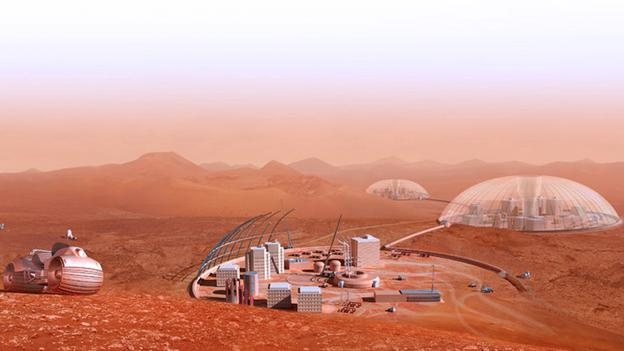
The parallels are inescapable. The first Mars colony will be sponsored by a government or a corporation. Its inhabitants will be employees, astronauts bound by contract and mission parameters. But the moment their boots touch the red dust, they will become something else. Martians. They will be the only humans in history whose sky has two moons. Their children, born under a third of Earth’s gravity, might not even be able to survive a return trip. Earth will be a distant, beautiful, blue star in their night sky. A place of history. Not a place of authority.
How long until the “Boston Tea Party” is a shipment of vital microchips from Earth being “lost” in a manufactured dust storm? How long until a Martian leader writes a new document that begins, “When in the course of human events, it becomes necessary for one people to dissolve the political bands which have connected them with another…”?
The Political Crucible: Who Will Forge the First Martian Government?
If a Mars colony is destined to govern itself, the terrifying question becomes: how? Without the traditions and institutions of Earth, the first Martians will be building a society from scratch in the most hostile environment imaginable. What system will they choose? The possibilities are as fascinating as they are frightening.
Option 1: The Corporate Technocracy
Let’s be honest. The first flag planted on Mars probably won’t be a national one. It’ll be a corporate logo. A SpaceX starship, a Blue Origin feather. The colony will be a company town, and the first governor will be a CEO. This system values efficiency, results, and innovation above all. The colony will be run by the smartest engineers and managers, a true technocracy where problems are solved with data and algorithms.
The upside? It might be the most effective way to survive. No political gridlock, no messy debates. Just pure, relentless problem-solving. But the downside is a dystopia waiting to happen. What happens when a colonist is no longer “productive”? Where do human rights fit into a spreadsheet? Are the colonists pioneers or are they indentured servants, their lives and labor owned by a corporation 300 million miles away?
Option 2: The Scientific Directorate
Perhaps the colony will be run not by managers, but by the scientists themselves. A council of the most brilliant minds—geologists, biologists, physicists—making rational, evidence-based decisions for the good of all. It sounds like a utopia, a new Athens of the mind. Decisions about resource allocation, work schedules, and even procreation could be optimized for maximum scientific return and long-term survival.
But what about art? What about music? What about the unquantifiable, messy, beautiful parts of being human? A society run purely on logic could become a sterile and soulless place. And what happens when the “evidence” suggests that a small group must be sacrificed for the good of the many? It’s a cold, utilitarian calculus that could lead to monstrous outcomes.
Option 3: The Libertarian Experiment
Many in the space community are drawn to the idea of a new frontier, a clean slate free from Earth’s endless regulations and taxes. Mars could be the ultimate libertarian paradise. A society based on radical self-reliance and voluntary association. No central government, just individuals and small groups making their own rules and trading freely. The spirit of the American West, reborn on another world.
This could unleash an unprecedented wave of innovation as individuals are free to pursue their own projects. But it could also lead to chaos. In an environment where a single cracked helmet means death, can you really afford to let everyone “do their own thing”? What happens when one person’s mining operation accidentally contaminates the colony’s only water source? Without a central authority to enforce rules and mediate disputes, frontier justice could quickly become the only law.
Mars is the Test… And We Are Failing
Kelvin Long, the Executive Director of the Institute for Interstellar Studies, sees this challenge in stark, existential terms. For him, the dream of building starships and reaching other solar systems is pure fantasy until we can prove ourselves on our next-door neighbor.
“You can’t do any of that unless you start with the small stuff and demonstrate that humans can live for sustained periods in space,” he explains. It all comes down to character. The little things we take for granted on Earth become matters of life and death in a sealed habitat.
Think about it. On Earth, if your roommate doesn’t do the dishes, it’s annoying. You have an argument. In a tiny Mars base, that same lack of consideration or discipline could be catastrophic. What if they forget to check the seal on an airlock? What if they fail to properly maintain the carbon dioxide scrubbers? Everyone dies. Suddenly, social responsibility isn’t a virtue; it’s a primary survival trait.
“Mars is the test for humanity,” Long says with gravity. “It’s the test of our character… If we can’t crack Mars, then forget everything else that we have ambitions for.”
The first crew will be the “right stuff.” Disciplined. Professional. Trained to follow orders. But what about the second wave? The specialists who are brilliant but maybe a little eccentric? And what about the first generation born there? Children who grow up knowing nothing but the red dust and the enclosed dome. They won’t have the military training or the ingrained loyalty to a distant Earth.
Zubrin sees this evolution as natural and inevitable. “The colony might start out as hierarchical… but the process of nature is going to take it in the direction of freedom.” It will start small. “People will have children… and at some point the Mars base breaks out of becoming a base and becomes an actual village – a real society with real people living real lives, with children in schools and community orchestras. All kinds of things that a base commander might think are completely extraneous.”
Extraneous to the mission, perhaps. But essential to being human.
And in that transition from a military-style base to a living society, a new nation will be born. A nation of people who are physically and culturally distinct from us. A nation of Martians. The only question is whether they will see us as their ancestors, or as their first oppressors.
The rockets are on the launchpads. The money is being spent. The plans are being finalized. But no one is talking about the Martian constitution. No one is debating the Martian bill of rights. We are building the hardware to send humans to another world, but we have given zero thought to the software of their society. The clock is ticking, and the silence from the powers that be is the most terrifying sound in the universe.









