Time is a Liar: The Terrifying Scale of Earth’s History (and Future)
You think you know what “old” means. You don’t. The human brain isn’t wired for it. We panic about a four-year political term. We stress over a 30-year mortgage. We think the Pyramids are ancient history.
But when you look at the true scale of our planet? We are nothing. A blink. A glitch in the system.
If you compressed the entire history of Earth into a single 24-hour day, humans—modern, thinking humans—wouldn’t show up until the last few seconds before midnight. Everything we have ever built, every war we’ve fought, every song we’ve sung, happens in that split second. Before that? Billions of years of silence, violence, and monsters.
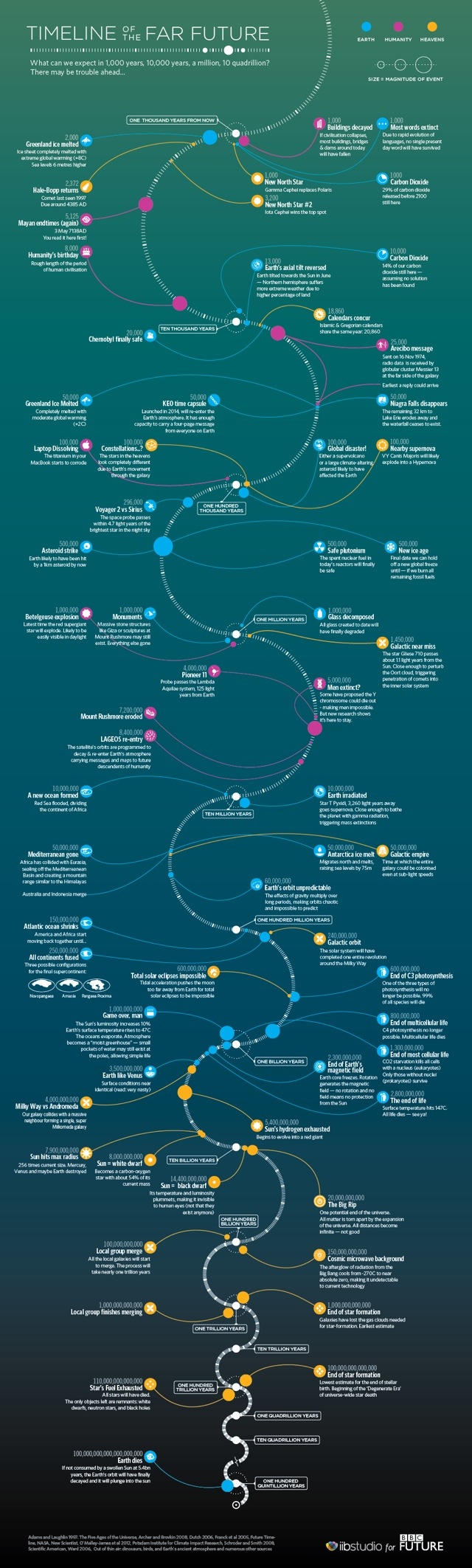
What does that look like? Stop scrolling. Look at this.

That image isn’t just a chart. It’s a crime scene. It’s a map of survivors.
The 99% Club: Why You Shouldn’t Be Alive
Here is the statistic that keeps biologists up at night: 99 percent of all species that have ever lived on Earth are extinct.
Let that sink in. Over five billion species. Gone. Wiped out. Nature doesn’t care about survival of the fittest. Sometimes, it’s just about survival of the luckiest. We are walking on a graveyard that is miles deep. The fossil fuels we burn? The limestone in our buildings? That’s them. That’s the 99%.
Current estimates suggest there are anywhere between 10 million and 14 million species on Earth right now. We’ve only cataloged about 1.2 million of them. That means over 86% of the life sharing this planet with us is a total mystery. We have no idea what they are, what they can do, or if they’re hiding the cure for cancer (or the next super-virus) in their DNA.
The “Lucky Planet” Theory
For decades, we’ve been taught that evolution is a slow, steady climb up a ladder. A smooth transition from simple goo to fish, to lizard, to monkey, to iPhone user. But recent theories suggest that’s total nonsense.
The history of Earth isn’t a ladder. It’s a demolition derby.
We barely made it. Life on Earth has faced “The Big Five”—five massive extinction events where the planet tried its hardest to scrub life off the surface. The Permian-Triassic extinction? It killed 96% of marine life. 96 percent! Life on Earth came down to a coin toss. If a few more bugs had died, you wouldn’t be reading this. The internet wouldn’t exist. Earth would just be a wet, silent rock spinning around a yellow star.
The Cambrian Explosion: The Greatest Mystery in History
Look at the timeline again. You see that spot labeled “Cambrian”? That is the smoking gun.
For billions of years, life was boring. Single-celled organisms. Slime. Bacteria. Nothing happening. Then, suddenly, in a geological heartbeat (about 20-ish million years), everything appeared. Eyes. Legs. Shells. Predators. Prey.
Scientists call it the Cambrian Explosion. But why?
Why did life decide to go turbo-mode right then? Some fringe theorists and alternative history researchers ask the question mainstream science is afraid to touch: Was it natural? Or was Earth “seeded”?
While mainstream science points to rising oxygen levels, the speed is suspicious. It was an arms race. The moment one creature developed a hard shell, another developed jaws to crush it. The moment one developed eyes, another developed camouflage. It was the start of the eternal war we call nature.
Decimation vs. Diversification
There is a massive fight happening in the scientific community right now regarding this era. It’s the “Cone of Diversity” versus the “Decimation” theory.
The Traditional View (Cone of Diversity): Life starts small and gets wider and more varied over time. Like a cone getting bigger.
The Stephen Jay Gould View (Decimation): This theory is terrifying. It suggests that the Cambrian explosion created more biological blueprints than we have today. Weird, alien-looking body plans that don’t exist anymore. And then? Decimation. Nature took a scythe to the variety. We aren’t the result of the “best” designs winning. We are just the descendants of the few survivors that didn’t get crushed.
If we could rewind the tape of life and play it again, humans probably wouldn’t exist. Dinosaurs might not exist. Intelligent squid or hive-mind insects might be running the show.
The Missing Files: The Silurian Hypothesis
Here is a thought experiment that will break your brain. We have only been “industrialized” for about 200 years. In the grand timeline of Earth, 200 years is invisible. It’s microscopic.
If a human civilization existed 100 million years ago, would we know? Probably not. Their cities would be ground to dust. Their plastic would be gone. Their bones would be dissolved.
This is known as the Silurian Hypothesis. Could there have been a civilization before us? Maybe not humans. Maybe a reptile civilization during the dinosaur age? Maybe something else? The timeline has gaps massive enough to hide entire histories. We assume we are the first to build cities because we haven’t found the ruins of others. But after 50 million years, plate tectonics would bury everything deep in the mantle. The evidence would be melted magma.
We might not be the landlords of this planet. We might just be the current tenants.
The Future: What Comes Next? (It Gets Dark)
The original post asks: “What does the far future have in store for Earth?”
Buckle up. Because if you think the past was violent, the future is a horror movie.
Evolution hasn’t stopped. We like to think we are the “final product.” We aren’t. We are just a transitionary species. In 10,000 years, humans (if we are still here) will look nothing like us. We might merge with our technology. We might genetic engineer ourselves into different castes. Or, we might regress.
But the planet itself changes, too. Here is the timeline of our doom.
+50,000 Years: The Next Ice Age
Forget global warming for a second. In the long run, the ice always comes back. Unless we engineer the climate (which we are accidentally doing), the natural cycle demands a freeze. The glaciers return. New York City gets buried under a mile of ice.
+250 Million Years: Pangea Proxima
The continents are moving. You know this. But they are moving towards a collision. In about 250 million years, all the continents will smash back together into a new supercontinent called Pangea Proxima.
Why is this bad? Because supercontinents are death traps. The center of the continent will be thousands of miles from the ocean. It will be a scorching, lifeless desert. Massive hurricanes—hypercanes—will smash the coasts. Evolution will be forced to restart again.
+600 Million Years: The Death of Plants
The sun is getting brighter. As it ages, it burns hotter. In about 600 million years, the sun will be so luminous that it will disrupt the carbonate-silicate cycle on Earth. CO2 levels will drop too low for photosynthesis.
Plants die. All of them. Forests turn to gray dust. And when the plants die, the animals starve. The oxygen runs out. Complex life—mammals, birds, reptiles—will choke to death. The Earth will belong to the microbes again. We end exactly how we started: simple, single-celled, and alone.
+1 Billion Years: The Oceans Boil
It gets worse. The sun continues to heat up. The habitable zone shifts. Earth’s oceans will begin to evaporate. The atmosphere becomes a greenhouse gas chamber. The surface temperature hits hundreds of degrees. Earth becomes a twin of Venus. Hell on a cosmic scale.
Are We The Asteroid?
Let’s pull back to right now. The present day.
Many scientists argue we are currently in the start of the Sixth Mass Extinction. This time, it’s not a rock from space. It’s us. We are the asteroid.
We are moving species around the globe, destroying habitats, and changing the atmosphere faster than at any point in the last 65 million years. But here is the twisted irony: Earth will be fine. Earth has survived magma oceans, ice balls, and asteroid impacts. Earth doesn’t need saving.
We need saving.
When we talk about “saving the planet,” we are arrogant. We are really talking about saving the specific set of conditions that allow us to live. If we crank the heat up too high, Earth will just shake us off like a bad case of fleas and start over with the roaches and the rats. Evolution will take a new path. Maybe the rats develop intelligence. Maybe the squid take over the land.
The Great Filter
Looking at that timeline of evolution, you have to ask one final question: Why is it so quiet out there?
If evolution leads to life, and life leads to intelligence, the galaxy should be loud. We should hear radio signals. We should see Dyson spheres blocking stars. But we see nothing. Just silence.
This is the Fermi Paradox. And the timeline might hold the answer. Maybe getting from “simple cell” to “complex animal” is incredibly hard. Maybe the “Great Filter” is behind us, and we are the lottery winners of the universe.
Or… maybe the Great Filter is ahead of us. Maybe civilizations always destroy themselves right after they discover radio and nuclear power. Maybe the timeline of every intelligent species looks just like ours—a long, slow climb, a sudden explosion of technology, and then… silence.
Conclusion: The Clock is Ticking
The timeline of Earth is a story of resilience, but also a story of luck. We are standing on a fragile bubble of biology, floating in a hostile void.
The future holds crazy things. New continents. New species. The death of the sun. But right now, for this brief, flickering moment, we are the eyes of the universe. We are the only way the universe can look at itself and marvel.
So look at the chart. Respect the time. And maybe, just maybe, let’s try not to join the 99% of species in the fossil record anytime soon.
Originally posted 2014-02-16 16:26:52. Republished by Blog Post Promoter