Russia’s Deepest Secret: The Alien Base Hidden Under Lake Baikal
Forget Roswell. Forget Area 51. The most chilling and persistent UFO mystery on the planet isn’t buried in the Nevada desert. It’s submerged under a mile of freezing, black water in the heart of Siberia.
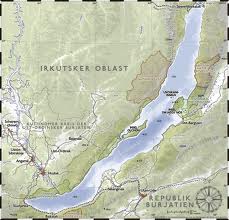
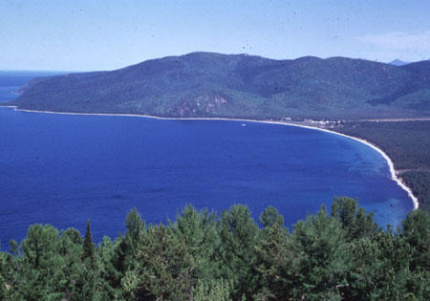
They call it Lake Baikal. A place of staggering beauty and terrifying depths. The oldest, deepest, and most voluminous freshwater lake in the world. But for decades, whispers among locals, terrified fishermen, and even hardened Soviet military personnel have suggested another name for it: The Landing Zone.
Now, declassified Kremlin files and a flood of modern eyewitness accounts are dragging a shocking theory into the light. The idea that we are not alone. And that our visitors have made a home in the abyss.
The Siberian Abyss: A Perfect Hiding Place?
To understand the mystery, you first have to understand the lake itself. This isn’t your average body of water. Baikal is a monster. A behemoth. A true anomaly of nature.
It contains over 20% of the world’s unfrozen fresh water. More than all the Great Lakes of North America combined. It’s over 5,300 feet deep at its lowest point. You could submerge the entire Empire State Building four times over and still have room to spare. It’s also ancient, having formed in a tectonic rift some 25-30 million years ago, making it a living museum of evolution.
This isn’t just a lake; it’s an inland ocean. Isolated. Sparsely populated. For nine months of the year, its surface is a frozen highway of meter-thick ice. Down below? A world of crushing pressure, eternal darkness, and bizarre creatures found nowhere else on Earth. What better place could there be to hide a base from prying human eyes?
The Kremlin’s X-Files: When the Soviets Took Notice
For years, stories of strange lights and impossible craft were dismissed as local folklore. Peasant superstition. Vodka-fueled fantasies. But that all changed during the Cold War. The Soviet Union, locked in a paranoid struggle with the West, couldn’t afford to ignore anything that flew in its airspace—or swam in its strategic waters.
Suddenly, the fishermen’s tales were being backed up by sonar pings from nuclear submarines and radar reports from air defense stations. Something was down there. Something was up there. And it wasn’t American.

This prompted the creation of a shadowy, top-secret group within the Soviet Navy. Its mission: to investigate these “unexplained incidents.” This unit was headed by none other than Deputy Navy Commander Admiral Nikolay Smirnov. We’re talking about a major military figure, not some fringe believer. The documents they compiled, once locked away, paint a picture of repeated, baffling, and sometimes terrifying encounters with Unidentified Submerged Objects, or USOs.
And one location appeared in their reports again and again. Lake Baikal.
A Deadly Encounter: The 1982 Baikal Incident
Of all the stories to leak from the Soviet archives, one stands out as utterly terrifying. It’s the event that turned Baikal from a place of mild curiosity into a nexus of high-stakes conspiracy. It happened in 1982.
The Training Mission
A team of Soviet Navy military divers were conducting a routine training exercise in the frigid depths of Lake Baikal. These were not amateurs. They were Spetsnaz. The best of the best, trained to operate in the most hostile environments on Earth. The mission was simple: practice maneuvers at a depth of 50 meters (about 164 feet). It was a depth they had handled countless times before.
Contact.
What they saw next was not in any training manual. Moving through the dark water nearby was a group of humanoid figures. They were huge, reportedly close to three meters (nearly 10 feet) tall. They were clad in strange, silvery, tight-fitting suits. But the most shocking detail? They wore no helmets or breathing apparatus. Nothing. In water just a few degrees above freezing, at a depth that would crush human lungs, they moved with a strange grace.
The Fatal Order
The commander of the dive team, stunned but mission-focused, made a fateful decision. He ordered his men to capture one of the creatures. The plan was to throw a net over the being and bring it to the surface. It was a catastrophic miscalculation.
The moment the divers moved to intercept, the beings reacted with incredible power and speed. They possessed some kind of technology—a sonar pulse or energy weapon—that propelled the divers. All seven of them. Violently and uncontrollably, straight to the surface.
For a diver, a rapid, uncontrolled ascent from that depth is a death sentence. It’s called explosive decompression. The nitrogen bubbles in their blood would have instantly expanded, causing unimaginable agony and catastrophic internal damage. The bends, but a thousand times worse.
The result was a massacre. Three of the elite frogmen died on the spot. The other four were crippled for life with severe injuries.
The official story? A training accident. But the hushed reports that filtered up to Admiral Smirnov’s desk told a different, more horrifying story. A story of a brief, brutal conflict between humans and something entirely non-human in the abyss of Lake Baikal.
The Baikal Triangle: A Pattern of High Strangeness
The 1982 incident wasn’t an isolated event. It was just the most violent chapter in a long history of weirdness. When you start connecting the dots, a disturbing pattern emerges. Researchers now refer to the area as the “Baikal Triangle,” a zone of persistent, inexplicable phenomena.
USOs: Erupting from the Deep
Long before 1982, local fishermen, the Buryat people who have lived on Baikal’s shores for centuries, told stories. They spoke of powerful searchlights beaming up from the deepest parts of the lake, powerful enough to illuminate the clouds above. They reported seeing massive, disc-shaped objects flying at impossible speeds directly out of the water and into the sky without a splash. They called them “the fire serpents.”
For years, these were just stories. But then came the Soviet military, with their advanced sonar. They, too, began tracking targets moving at hundreds of miles per hour *underwater*. Objects that would make sharp, right-angle turns that would kill any human pilot and tear apart any known vessel. Objects that would race up from the bottom and simply vanish from the sonar screens as they broke the surface and took to the sky.
So who are these underwater visitors?

ET’s live here!
The Ghost Plane of 1958
The strangeness isn’t confined to the water. In 1958, there was the bizarre crash of a Soviet airliner. While the original report mentions a TU-154, that plane didn’t exist yet, a common mix-up in retellings of old stories. It was likely an Ilyushin Il-14 or a similar aircraft of the era.
According to the local legend, which was later investigated by the navy, the passenger plane was in trouble. But it wasn’t alone. Multiple witnesses on the ground reported seeing a metallic, cigar-shaped object pursuing the aircraft. Chasing it. Harassing it. The plane ultimately crashed into the icy waters of Baikal. Rescue crews were dispatched, but no wreckage was ever found. No bodies. No oil slick. Nothing. It was as if the lake had simply swallowed the plane and its pursuer whole.
A bad landing after travelling so far!
The Modern Hunt: Seeking Truth in Siberia
The fall of the Soviet Union didn’t end the mystery. It blew it wide open. With the lid of state secrecy lifted, researchers and enthusiasts from around the world started flocking to Baikal, drawn by the incredible stories.
One of the most notable groups was the ‘Trans-Eurasian UFO-Search Expedition.’ More than 50 dedicated researchers set up camp on the lake’s shores, armed with cameras, radiation detectors, and an unshakeable belief that something was there.
‘Here, in 1958 there was an… airplane crash. There were some reports from the locals that a UFO pursued the air craft till it reached Baikal waters right here,” participant Vladimir Kuznetsov told Reuters news agency. “And there were frequent reports of UFO activity around Baikal. So this is the reason why we decided to meet here. I hope that we will be lucky enough to shoot something interesting.’
They didn’t have to wait long. Two expedition members, Anastasia and Andrey Chernobrov, had a sighting that defied all conventional explanation.
‘At first the object did not move, but it had a peculiar glow, flashing with different colours – blue, red, yellow, green… We started watching it, and a few minutes afterwards the object began to move chaotically, not like a helicopter, or a plane, or any other terrestrial machine which can fly,’ Andrey explained.
They captured photos and videos, evidence that adds to a mountain of similar sightings from tourists, locals, and scientists in the area. The internet is now buzzing with these modern accounts, with people on Russian forums and Telegram channels sharing satellite images showing strange thermal anomalies deep in the lake and analyzing Google Earth for signs of underwater structures.
What If It’s True? Deconstructing the Baikal Base Theory
Let’s ask the question that the authorities don’t want to touch. What if the wildest theories are true? What if there is a non-human intelligence operating a full-scale base in the depths of Lake Baikal? It sounds like science fiction. But when you look at the facts, it starts to make a terrifying kind of sense.
Why Baikal is the Perfect Alien Hideout
- Total Secrecy: At over a mile deep, the pressure is immense. The darkness is absolute. It is one of the least explored places on our own planet. No satellite can see what’s happening on the lakebed. It’s the ultimate stealth location.
- Limitless Fresh Water: What if an advanced technology requires massive amounts of fresh water for cooling, energy production, or even as a component of a propulsion system? Baikal offers a near-infinite supply.
- Geothermal Power: Baikal is not just a lake; it’s a tectonic rift. A massive crack in the Earth’s crust. This means there is tremendous geothermal energy venting from the planet’s core right into the lake. Could an alien base be tapping this clean, powerful, and constant energy source? Is the rift itself some kind of portal?
- Isolation: The area around Baikal is remote, unforgiving Siberian wilderness. The population density is incredibly low. It’s the perfect place to come and go without being noticed by major population centers.
Vladimir Azhazha, a former Soviet naval officer and a famous Russian ufologist, put it best: “I think about underwater bases and say: why not? Nothing should be discarded. Skepticism is the easiest way: believe nothing, do nothing. People rarely visit great depths. So it’s very important to analyze what they encounter there.”
The ice on Lake Baikal freezes more than a meter thick every winter, a vast, white shield locking away the secrets of the deep. But every spring, that ice cracks. It groans. And it melts.
And secrets, just like the strange objects seen by so many, always have a way of coming to the surface.
Originally posted 2016-03-21 12:27:51. Republished by Blog Post Promoter
![18cc0195c9cde0645e1f70bd4b0b3d711[1]](https://coolinterestingnews.com/wp-content/uploads/2012/08/18cc0195c9cde0645e1f70bd4b0b3d7111.webp)