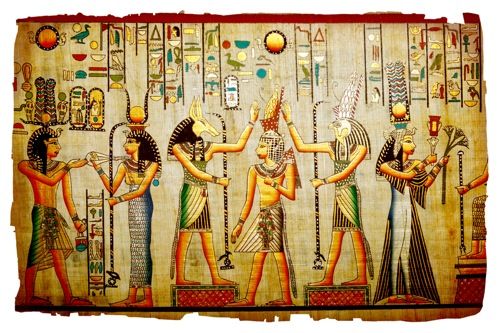
Forbidden Archeology: The Egyptian Secrets Buried in the Grand Canyon and a Sphinx Older Than History
History is a story. It’s a story we’re told in school, a neat, tidy timeline of events. First came the Stone Age, then the Bronze Age. Civilizations rose in Mesopotamia and Egypt, then Greece, then Rome. It all makes sense. It’s clean.
But what if it’s wrong?
What if the official story is just that… a story? A simplified version of a past so strange, so profound, it would shatter our entire understanding of who we are and where we came from. What if there are pieces of the puzzle that have been deliberately hidden, buried not just by the sands of time, but by people who want to keep the story simple?
Two colossal mysteries, separated by an ocean but linked by a thread of impossibility, challenge everything we think we know. One is a tale of a secret Egyptian city, its treasures and mummies moldering in a vast cave system deep within the Grand Canyon. The other is written in stone on the Giza plateau, a message from a time so ancient it predates known civilization by millennia.
Forget the textbooks. Forget what you’ve been told. This is a journey into the shadows of history.
A Headline That Shook the World
The date was April 5, 1909. The world was a different place. Teddy Roosevelt was president, the Model T Ford was just hitting the roads, and the American frontier still felt wild and untamed. On that Monday morning, readers of the Arizona Gazette unfolded their papers to a front-page story so sensational, so utterly bizarre, it must have felt like reading science fiction.
The headline read: “Explorations in Grand Canyon: Remarkable finds indicate ancient people migrated from Orient.”
This wasn’t some small, back-page filler. This was a detailed, multi-page report alleging that an expedition, funded by the prestigious Smithsonian Institution, had made a discovery that would rewrite world history. A discovery that proved a civilization from the Old World—specifically, ancient Egypt—had not only reached the Americas thousands of years before Columbus, but had established a powerful colony deep within the earth.
Inside the Forbidden Citadel
The article centered on the testimony of an explorer named G.E. Kinkaid. He described stumbling upon a mysterious cave, its entrance perched on a sheer cliff face some 2,000 feet above the Colorado River. This was no natural formation. The entrance was clearly man-made, and the cavern inside was, in his words, “hewn in solid rock by human hands.”
What Kinkaid and his partner, a Professor S.A. Jordan of the Smithsonian, supposedly found inside is the stuff of legend.
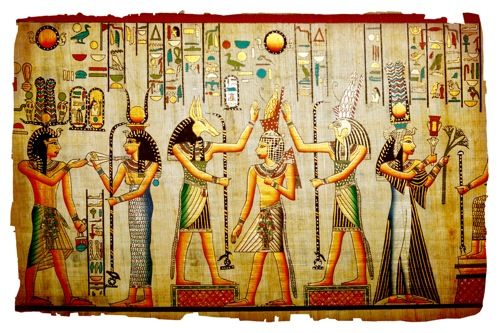
Imagine it. A massive central chamber, like the hub of a wheel, with dozens of smaller passages radiating outwards. The air is thick with the dust of ages. The beam of your lantern falls upon rows of statues. Some are small, others tower over you, their forms eerily familiar. They look exactly like the deities of the Egyptian pantheon. Osiris. Isis. Ra. Here, in the heart of Arizona.
The explorers documented a treasure trove of artifacts:
- Tablets filled with a form of hieroglyphics.
- Copper weapons—spearheads and swords—hardened to a degree modern science would struggle to replicate.
- Urns and vessels of copper and gold, flawlessly crafted.
- Woven fabrics and strange gray seeds stored in sealed containers.
But the most staggering find was in a separate, cross-cut tunnel. A crypt. Inside, dozens of mummies were found, each laid out on a carved shelf. They were not wrapped in the linen of Egyptian pharaohs, but encased in a dark, bark-like material. And they were giants. According to the report, each was over nine feet tall.
An entire Egyptian city, an underground metropolis, hidden from the world for thousands of years. It’s an idea that breaks the brain.
The Smithsonian’s Great Denial
A discovery of this magnitude should be the most famous archaeological find in human history. So why haven’t you heard of it? Why isn’t Kinkaid’s Cave a world-famous tourist attraction?
Because the moment the story broke, a wall of silence went up.
The Smithsonian Institution, the very organization named as the sponsor of the expedition, flatly denied everything. They claimed to have no record of a Professor S.A. Jordan. They denied any knowledge of a G.E. Kinkaid. They insisted the entire story was a fabrication, a newspaper hoax. To this day, their official position is that it never happened.
And just like that, the story vanished. It was swept under the rug.
But the questions linger, and they are deeply unsettling. Was the article truly a hoax? As researcher and author David Hatcher Childress points out, “While it cannot be discounted that the entire story is an elaborate newspaper hoax, the fact that it was on the front page, named the prestigious Smithsonian Institution, and gave a highly detailed story that went on for several pages, lends a great deal to its credibility. It is hard to believe such a story could have come out of thin air.”
Think about it. Why would a respected newspaper risk its reputation on such a wild, easily disproven fabrication? And if it wasn’t a hoax, the alternative is even more disturbing. It would mean the Smithsonian, the supposed guardian of American history, actively suppressed a discovery that would have changed its very foundation. Why? Because it contradicts the accepted narrative of human migration. It opens a door to a past that a few powerful people have decided we are not supposed to see.
The Search for Kinkaid’s Cave
For over a century, adventurers, researchers, and conspiracy theorists have scoured the Grand Canyon, hunting for the lost cave. The 1909 article provides specific clues, mentioning it’s in the Marble Canyon area, “42 miles up the Colorado River from the El Tovar crystal canyon.”
Yet every search has come up empty. Expeditions have failed. The terrain is brutal, unforgiving. And there’s another, more sinister obstacle. Large swaths of the Grand Canyon are completely off-limits to the public. Restricted government airspace. Fenced-off areas with “No Trespassing” signs. The official reason is always preservation or safety. But for those who believe the story, the reason is obvious.
They are protecting something. They are keeping us out.
What if Kinkaid’s Cave is real, tucked away in one of these forbidden zones? A place where the truth of a forgotten chapter of human history sits in the dark, guarded not just by rock and time, but by a modern conspiracy of silence.
The connections don’t stop there. As strange as it sounds, the mystery of the Grand Canyon echoes another, even bigger anomaly half a world away—one that suggests our entire timeline of ancient history is fundamentally broken.
The Riddle of the Rain-Worn Sphinx
Fly across the Atlantic. Leave the canyons of Arizona for the desert sands of Egypt. There, on the Giza plateau, crouches the Great Sphinx. For centuries, we’ve been told a simple story about this magnificent monument. Egyptologists claim it was carved around 2,500 BC by the Pharaoh Khafre, whose pyramid looms behind it. They say its face is his face. They tell us it is 4,500 years old.
That number is not a fact. It’s a theory. A belief.
As author Robert Bauval noted, “there was no inscriptions — not a single one — either carved on a wall or a stela or written on the throngs of papyri” that connects the Sphinx to Khafre or his time period. The history is an assumption, an educated guess that has hardened into dogma.
But the stone tells a different story. In the late 1980s, an independent researcher named John Anthony West noticed something that the experts had either ignored or failed to understand. Look closely at the body of the Sphinx and the walls of the enclosure it sits in. The erosion patterns are distinct. They are not the horizontal, sand-blasted lines you’d expect from wind erosion in a desert.
They are vertical. Deep, undulating fissures running from top to bottom.
There is only one force in nature that creates weathering like that. Water. Specifically, massive amounts of rainfall, pouring down for centuries, even millennia.
Rain? In the middle of the Sahara Desert?
It sounds impossible. But it wasn’t always a desert. Climatologists know that the Sahara was once a lush, green savanna with abundant rainfall. The question is, when?
Following the Water to a Lost Civilization
John Anthony West took his observations to a respected geologist, Dr. Robert Schoch of Boston University. Schoch, a man with no interest in alternative history, went to Egypt to prove West wrong. Instead, after analyzing the rock, he came back and confirmed West’s shocking hypothesis.
The erosion on the Sphinx was undeniably caused by water. And the last time it rained heavily enough in that part of the world to cause such weathering was not during the time of the pharaohs. Not even close.
It was at the end of the last Ice Age. Around 10,500 BC.
Let that sink in. This would make the Sphinx more than twice its accepted age. It would mean this incredible monument was carved not 4,500 years ago, but a staggering 12,500 years ago. This predates the known Egyptian civilization by more than 7,000 years. It predates everything we call civilization.
This raises the ultimate question: If the ancient Egyptians didn’t build it, who did?
The Stars Don’t Lie: The Orion Correlation
The evidence doesn’t stop with water erosion. The sky itself provides another colossal clue. Researcher Robert Bauval made a stunning connection that adds another layer to this ancient mystery. He noticed that the three Great Pyramids on the Giza plateau are not perfectly aligned.
Two of them are in a perfect diagonal line, but the third, smaller pyramid is slightly offset. For years, this was seen as a mistake. But Bauval looked up at the night sky and saw the same pattern. In the constellation of Orion, the three stars that form the hunter’s belt—Alnitak, Alnilam, and Mintaka—have the exact same layout. Two are aligned, and the third is slightly offset.
The pyramids are a map of the stars of Orion’s Belt on the ground.
But the alignment isn’t perfect for our time. Due to a wobble in the Earth’s axis called precession, the stars slowly drift across the sky over a 26,000-year cycle. Bauval used modern computer software to wind back the celestial clock. As he went further and further into the past, the alignment between the pyramids and the stars got better and better. And when did it reach a perfect, mirror-image match, with the pyramids on the ground exactly reflecting the belt of Orion in the sky?
You guessed it. 10,500 BC.
And there’s one more mind-bending piece to the puzzle. The Sphinx, with the body of a lion, gazes due east at the horizon. On the spring equinox in 10,500 BC, what constellation would have been rising directly in its line of sight at dawn?
The constellation of Leo. The lion.
The Sphinx was staring at its own celestial counterpart in the sky, at the precise moment in time when the pyramids on the ground mirrored the stars of Orion’s Belt. This is an astronomical alignment of such breathtaking precision that it cannot possibly be a coincidence.
If Not the Egyptians, Then Who?
This is the forbidden question. If a highly advanced culture existed in 10,500 BC, who were they? The history books tell us that humans at this time were primitive hunter-gatherers, living in caves and just beginning to figure out agriculture. They certainly weren’t quarrying multi-ton blocks of stone and building monuments aligned to the stars with mathematical precision.
The evidence on the ground and in the sky points to a single, explosive conclusion: There was a lost civilization. A highly sophisticated global culture that existed deep in our prehistory. A “mother culture,” perhaps the very one Plato wrote about: Atlantis.
This wasn’t a civilization of primitive people. They were masters of astronomy, engineering, and geology. They built monuments that have lasted for over 12,000 years. And something happened to them. A great cataclysm, likely the rapid end of the Ice Age and the catastrophic global flooding that followed, wiped them from the face of the Earth, leaving behind only these enigmatic clues.
The Giza monuments were not tombs for pharaohs. They were a message. A time capsule. A warning. A way of preserving their knowledge, written in the universal language of stone and stars, designed to survive the ages so that a future civilization—ours—might one day be smart enough to read it.
A Puzzle Across Worlds
Suddenly, the wild story from a 1909 newspaper doesn’t seem so crazy anymore. An ancient culture with the sophistication to build Giza would certainly have had the seafaring ability to cross the Atlantic. A colony in the Grand Canyon? Statues of Egyptian gods? It all starts to look less like a random fantasy and more like another piece of the same, globe-spanning puzzle.
We are standing at a crossroads. We can continue to accept the safe, simple story we’ve been told. Or we can open our eyes to the possibility that our past is far grander, far stranger, and far more mysterious than we ever imagined.
The rocks of the Grand Canyon and the stones of the Giza plateau are speaking to us. They are telling us that we are a species with amnesia. They are urging us to remember a forgotten chapter of the human story.
The official narrative is just that. A story. And it might be time to write a new one.