Home Films & Documentaries How Dangerous Are GM Foods?

How Dangerous Are GM Foods?

20
95

The Invisible Experiment: Are We All Lab Rats?

Walk down the aisle of your local supermarket. It looks peaceful, doesn’t it? Bright lights. Colorful packaging. Fresh produce stacked in perfect pyramids. But strip away the cardboard and the plastic, and you find yourself staring into a void. A mystery.

Genetically Modified Organisms. GMOs.

They are disturbingly commonplace. They are everywhere. In the cereal you feed your kids. In the soda you drink on the drive home. In the feed given to the cattle that becomes your burger. We are eating them, day in and day out. And the terrifying part? We don’t always know when we’re doing it.

The official narrative is clean. It’s polished. They tell us this is “science.” They say it’s about “feeding the world.” But when you peel back the layers of corporate PR and government silence, a different picture starts to form. A darker one.

With so many dangerous side effects observed in GM foods—weird allergies, stomach issues, rising cancer rates—and with laughably insufficient testing of the long-term impact of these artificial creations, can we really be sure that GM foods are safe? Or are we living through the largest biological experiment in human history, with no control group and no way to opt out?

What Is Actually on Your Plate?

Let’s get one thing straight. This isn’t “farming.” This isn’t your grandfather cross-breeding the biggest pumpkin with the sweetest pumpkin to get a better pie. That is nature. That takes time.

GMOs are something else entirely.

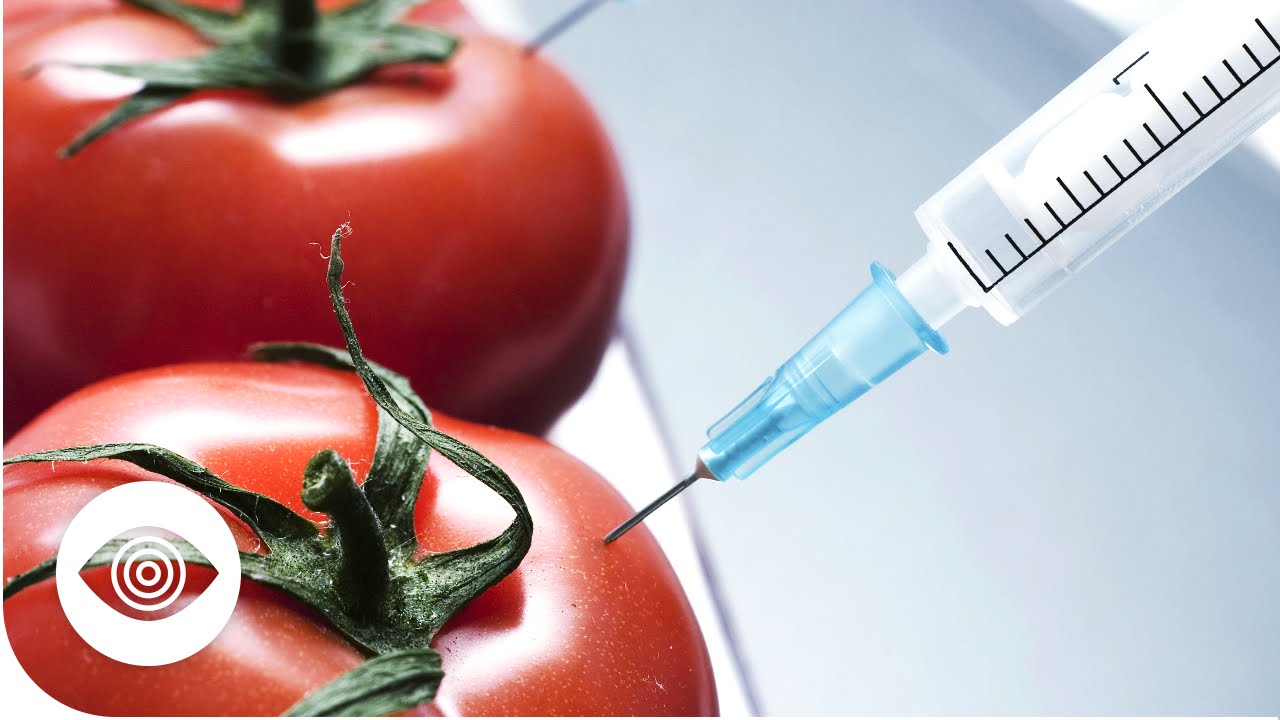
This is splicing. This is taking the DNA of a bacteria, or a virus, or a fish, and shooting it into the genome of a tomato or a corn stalk using a “gene gun.” It is violent. It is immediate. And it creates combinations of life that could never, ever exist in the natural world.

Remember the “Fish Tomato”? It sounds like an urban legend, but it was real. Scientists inserted an anti-freeze gene from a flounder—yes, a fish—into a tomato to keep it from freezing in cold weather. While that specific product didn’t hit the market, it opened the door. It shattered the barrier between species.

Now, we have corn that produces its own pesticide. Think about that. The corn is the bug spray. When a worm eats the corn, its stomach explodes. That is the mechanism. So, when you eat that corn, what happens to your stomach? The industry says, “Nothing. Humans are different.”

Are we?

The “Substantial Equivalence” Trap

How did this happen? How did these franken-foods bypass the rigorous safety testing required for new drugs? Two words: Substantial Equivalence.

This is the legal loophole. The smoking gun. In the early 90s, the powers that be decided that if a GM corn looks like corn and has roughly the same nutritional breakdown as corn, then it is corn. No long-term safety studies required. No toxicity tests on humans required.

They assumed safety. They didn’t prove it.

It’s a massive gamble. Just because a car looks like a car doesn’t mean it won’t explode when you turn the key. But in the food industry, looking the same is good enough for the rubber stamp.

The Glyphosate Bomb

You cannot talk about GMOs without talking about the chemical that goes with them. They are a package deal. A marriage made in a laboratory.

The vast majority of GM crops—soy, corn, canola, sugar beets—are engineered for one specific purpose: to survive being drenched in weedkiller. Specifically, glyphosate. You know it as Roundup.

Farmers can spray entire fields with this chemical. Everything dies—the weeds, the wildflowers, the milkweed needed for butterflies. Everything except the GM crop. It stands tall, soaking up the poison.

And then you eat it.

Independent researchers have found glyphosate residues in alarming places. In rainwater. In feminine hygiene products. In breast milk. In Ben & Jerry’s ice cream. It is ubiquitous.

The Cancer Connection

For years, we were told it was safe as table salt. “Drink a glass of it!” they mocked. But the cracks in the dam are breaking wide open. The World Health Organization’s cancer agency (IARC) classified glyphosate as a “probable human carcinogen.”

Then came the lawsuits. Juries started awarding millions—billions—of dollars to groundskeepers and farmers who developed Non-Hodgkin’s lymphoma after years of using the chemical. The courts saw the internal documents. They saw the “ghostwriting.” They saw how the narrative was manipulated.

If the chemical used on the food is causing cancer lawsuits, why are we still eating the food designed to absorb it?

The Séralini Mystery: Science or Suppression?

Here is where things get truly strange. In 2012, a French scientist named Gilles-Éric Séralini conducted a study. Most corporate studies on GMOs last 90 days. That’s it. Three months. If the rat doesn’t die in three months, the food is declared safe for a human to eat for 80 years.

Séralini did something different. He let the study run for two years—the lifetime of the rat.

The results were the stuff of nightmares. The rats fed GM corn and low levels of glyphosate developed massive, grotesque tumors. They suffered organ damage. They died prematurely.

The photos of the tumor-riddled rats hit the internet and caused a firestorm. But then, the Empire struck back. The study was viciously attacked. Not just critiqued—savaged. A year later, the journal retracted the paper. Why? Was the data faked? No. They said the findings were “inconclusive.”

Since when is “inconclusive” a reason to erase scientific history? Usually, you publish a counter-study. You debate. You don’t delete.

Later, it was revealed that a former employee of the chemical giant involved had joined the editorial board of the journal just months before the retraction. Coincidence? Maybe. Or maybe it was damage control. The study has since been republished in another peer-reviewed journal, but the media blackout remains effective. Most people still think it was “debunked.”

The Revolving Door

Why doesn’t the government stop this? Why does the FDA seem to rubber-stamp every new gene-edited creation that comes down the pipe?

Look at the personnel roster. It’s a revolving door. A game of musical chairs.

High-ranking officials at the FDA step down and take lucrative jobs at the very biotech companies they were regulating. Vice versa, executives from the biotech giants step into powerful roles at the FDA and the EPA. The fox isn’t just guarding the henhouse; the fox designed the security system.

When the people writing the laws are friends with the people profiting from the laws, public safety takes a backseat to quarterly profits. It’s not a conspiracy theory; it’s a business model.

The “Terminator” Seeds and Farmer Suicides

The danger isn’t just biological. It’s economic. It’s about control. Total, absolute control over the food supply.

For thousands of years, farming was simple. You grow wheat. You keep some seeds. You plant them next year. It is a cycle of independence.

GMOs broke that cycle. These seeds are patented. Intellectual property. If a farmer saves them to replant, they are stealing. They can be sued. And they are sued. Ruthlessly.

Private investigators roam farm country, testing crops at the edge of fields, looking for “contraband” DNA. Innocent farmers, like Percy Schmeiser in Canada, found their lives ruined because GM pollen blew onto their land from a neighbor’s farm. The courts ruled that it didn’t matter how it got there—the corporation owned the crop.

In India, the situation turned tragic. The promise of “magic seeds” led thousands of farmers into debt. When the crops failed or the pests developed resistance (which they always do), the farmers were left with nothing but insurmountable debt to the seed giants. The wave of suicides that followed is a scar on the conscience of the industry. A testament to what happens when you turn the source of life into a commodity.

2.0: The New Wave (CRISPR and Synthetic Meat)

You might think, “Well, the old GMOs are bad, but technology improves, right?”

Welcome to GMO 2.0. Gene Editing. CRISPR. TALENs.

The industry learned its lesson. “Transgenic” (mixing species) sounds scary. So now they use “Gene Editing.” They say they are just speeding up evolution. Snipping a bit of code here, deleting a gene there. Like editing a Word document.

They claim it’s precise. But studies show “off-target effects.” You cut the DNA in one spot, and oops—you accidentally scrambled code somewhere else. What does that scrambling do? Nobody knows. And because of new regulations, many of these gene-edited foods don’t even need to be labeled as GMOs. They are sliding onto your plate completely incognito.

And let’s not ignore the push for “Synthetic Food.” Lab-grown meat. Impossible burgers. The heavy investment from tech billionaires into farmland and fake meat. Why is a computer software mogul suddenly the largest owner of farmland in America?

Is the goal to save the planet? or is the goal to centralize food production into labs owned by a handful of corporations, rendering traditional farming obsolete? If you control the food, you control the people. It’s the oldest rule in the book.

The Environmental Blowback

Nature fights back. It always does.

We were promised that GMOs would reduce pesticide use. The opposite happened. We are drowning in chemicals. We now have “Superweeds”—monster plants that can drink glyphosate for breakfast and keep growing. They are choking out tractors.

So, what is the industry’s solution? Stronger poisons. They are rolling out crops resistant to 2,4-D (a component of Agent Orange) and Dicamba. It is a chemical arms race, and our soil is the battlefield.

Meanwhile, the Monarch butterfly population has crashed by 90% in the last two decades. Why? Because the milkweed is gone, wiped out by the scorched-earth spraying mandated by GM cropping systems. We are trading the beauty and biodiversity of our planet for the convenience of industrial monoculture.

Conclusion: The Awakening

The question “Are GM Foods Killing Us?” isn’t simple. It’s not about dropping dead the moment you eat a chip.

It’s about the slow accumulation of damage. The inflammation. The unknown proteins. The chemical residues. It’s about the loss of food sovereignty. It’s about a system that prioritizes patent rights over human rights.

The science is not “settled.” Science is never settled when dissenting voices are silenced and funding comes with strings attached.

So, what do we do? We wake up. We read labels. We support local farmers who refuse to play the game. We grow our own food where we can. We vote with our wallets. The experiment is ongoing, but you don’t have to volunteer to be a subject.

Stay curious. Stay skeptical. And watch what you eat.

Watch more Alltime Conspiracies:

  • Does Diet Coke Give You Cancer?
  • Prohibition: The FBI Poisoned Innocent People!
  • Does Monsanto Control The World’s Food Supply?

Originally posted 2015-01-20 17:24:52. Republished by Blog Post Promoter