Home Unexplained Mysteries Crime Mysteries Historical Heists – Butch Cassidy, 1889, $20,000 stolen

Historical Heists – Butch Cassidy, 1889, $20,000 stolen

0
81

The Legend Who Never Died: Did Butch Cassidy Fake His Own Death?

Forget what the history books told you. Forget that grainy, black-and-white photo finish in a dusty Bolivian town. The story of Butch Cassidy doesn’t end with a blaze of glory. It ends with a question mark. A ghost. A whisper that has haunted the American West for over a century.

They say he died in a hail of bullets in 1908. A desperate, cornered animal, thousands of miles from home.

But what if that’s the greatest heist he ever pulled?

What if America’s most charming, most brilliant, and most wanted outlaw… simply vanished? What if he walked away, leaving a legend behind to take the fall? Let’s peel back the layers of the official story, a story that’s as full of holes as a saloon door after a bar fight. Because the truth about what happened to Robert LeRoy Parker, the man they called Butch Cassidy, is far stranger and more compelling than you can possibly imagine.

From Mormon Farm Boy to Outlaw Kingpin

Before the legend, there was just a boy. Robert LeRoy Parker, born in Beaver, Utah, in 1866. The oldest of 13 children in a devout Mormon family. Nothing about his early life suggested he would become the leader of the most successful gang of train robbers in American history. He was polite. He was smart. He was good with horses.

But something was stirring under the surface. A hunger for something more than a life of quiet desperation on a failing ranch. He fell in with a small-time cattle rustler named Mike Cassidy, a man who taught him the ropes of living outside the law. When young Parker took his first steps into a life of crime, he adopted his mentor’s last name to spare his family the shame. The “Butch” part? That came from a brief, honest stint working in a butcher’s shop in Rock Springs, Wyoming.

And just like that, Robert Parker was gone. Butch Cassidy was born.

butch cassidy

He wasn’t your typical outlaw. He wasn’t a bloodthirsty killer. In fact, by all accounts, Cassidy was famous for his easy grin and his aversion to violence. He believed in using his wits, not his guns, to get what he wanted. He saw robbing banks and trains controlled by wealthy barons as a form of rebellion, not just theft. A Robin Hood for the dying days of the Wild West.

The Telluride Job: A Star is Born

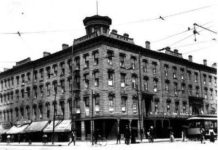
Every legend needs a defining moment. For Cassidy, it was the San Miguel Valley Bank in Telluride, Colorado, on June 24, 1889. This wasn’t just another robbery. It was a statement. A performance.

Rolling into town with his small crew, Cassidy played the part of a casual visitor. He learned the bank’s layout, the staff’s routines, everything. When the moment came, it was pure precision. They walked in, cool as you please, and walked out with over $20,000—a staggering sum worth well over half a million dollars today. There was no wild shootout. No chaos. It was a smooth, professional operation that left the lawmen in Telluride scratching their heads in the dust.

The Telluride heist put Cassidy on the map. It was the money he used to build his empire. And it was the beginning of a decade-long cat-and-mouse game that would make him a household name.

The Wild Bunch and The Outlaw Superhighway

Cassidy knew he couldn’t do it alone. He began to assemble a rotating cast of expert criminals who became known as the “Wild Bunch.” This wasn’t just a gang; it was a syndicate. It included the deadly fast Harry “The Sundance Kid” Longabaugh, the stoic Harvey “Kid Curry” Logan, and a dozen other specialists in safecracking, explosives, and escape artistry.

Their success wasn’t just about talent. It was about logistics. Cassidy masterminded one of the most brilliant criminal networks ever conceived: The Outlaw Trail.

Think of it as an outlaw interstate system. It was a sprawling, 2,000-mile network of secret cabins, hidden caves, and friendly ranches that stretched from Canada down to Mexico. It allowed the Wild Bunch to strike a train in Wyoming and disappear into the labyrinthine canyons of Utah before a posse could even saddle their horses.

Deep Dive: The Hole-in-the-Wall

The crown jewel of the Outlaw Trail was the Hole-in-the-Wall in Wyoming. It wasn’t just a single cabin; it was a natural fortress. A remote valley accessible only by a steep, narrow, and easily defended pass. Inside this sanctuary, the gang had a small town of their own. Corrals for their stolen horses, a blacksmith, a bunkhouse, and even a steady supply of food and women. For months at a time, the Hole-in-the-Wall was a place where the most wanted men in America could live freely, planning their next big score, completely untouchable by the law.

This network made them ghosts. They could rob a Union Pacific train carrying a massive payroll, split up, and rendezvous hundreds of miles away a week later, with the Pinkerton detectives still chasing shadows.

The South American Gamble

But by the turn of the century, the world was changing. The Wild West was being tamed. Technology was catching up. The telegraph meant news of a robbery could travel faster than a horse. The Pinkerton National Detective Agency, hired by the railroad barons, was relentless. They flooded the West with agents, informants, and wanted posters bearing Cassidy’s smiling face.

The pressure was immense. The Outlaw Trail was no longer safe. So, Cassidy, along with Sundance and his partner Etta Place, made a bold decision. They would run.

In 1901, they boarded a ship to Argentina. They bought a ranch in Cholila and, for a few years, they actually tried to go straight. They were respected cattle ranchers, known as James “Santiago” Ryan and Mr. and Mrs. Harry “Enrique” Place. But their past had a long shadow. The Pinkertons didn’t give up. When their identities were finally discovered, the trio was forced back into their old life, robbing banks across Argentina and Chile.

Their luck, it seemed, was beginning to run out.

The Bolivian “End”: Fact or Convenient Fiction?

This brings us to San Vicente, Bolivia. November 1908. The official story is neat and tidy. Too tidy.

According to the record, two American bandits—presumed to be Butch and Sundance—robbed a payroll courier. They were tracked to a small boarding house in San Vicente. A firefight erupted. The house was surrounded by soldiers. After a brief but intense battle, all went quiet. The next morning, the soldiers entered to find both outlaws dead. One had clearly been shot multiple times. The other had a single bullet hole in his forehead, suggesting a mercy killing by his partner, who then turned the gun on himself.

Case closed. Right?

Wrong. So wrong.

Let’s pull the thread on this story and watch it unravel.

  • No Positive ID: The bodies were buried in an unmarked grave in the local cemetery. No one—not a single Pinkerton agent, not a single person who actually knew them—ever formally identified the bodies as Butch Cassidy and the Sundance Kid. The identification was based on the word of local soldiers who had never seen them before.
  • Conflicting Reports: The details of the shootout change drastically depending on who you ask. Some accounts say it was a long, drawn-out battle. Others say it was over in minutes. The official report is surprisingly thin on details.
  • The Pinkertons Kept Searching: Here’s the kicker. The Pinkerton Agency, the massive corporation that had spent a fortune hunting these men, never officially closed the case. Their internal files remained active for years, filled with reports of potential sightings. If they were so sure Butch and Sundance were dead in Bolivia, why keep hunting them?

A Ghost in America: The Sightings Begin

Almost immediately after the news from Bolivia, the whispers started. A friend saw Butch at a train station. A cousin got a mysterious letter. The stories were dismissed as wishful thinking. But they didn’t stop. For the next 30 years, Butch Cassidy was spotted all over the American West.

His own sister, Lula Parker Betenson, maintained until her death at age 96 that Butch had returned to visit the family in Utah in 1925. She described a secret, emotional reunion. He told them stories of his time in South America, of his escape, and of his new life under a new name. He was older, weathered, but it was him. Her story never changed.

Dozens of old friends and acquaintances from his outlaw days came forward with similar stories. They claimed he’d lived out his days as a machinist, a trapper, a prospector. A quiet man who just wanted to be left alone.

Deep Dive: The William T. Phillips Enigma

The most tantalizing and controversial piece of this puzzle is a man named William T. Phillips. Phillips was a machinist who died in Spokane, Washington, in 1937. On the surface, nothing special. But Phillips bore a striking resemblance to Butch Cassidy. He knew details about the Wild Bunch that only an insider could know. And he wrote a manuscript, “The Bandit Invincible,” which was essentially an unpublished biography of Cassidy. A biography told with an uncanny, first-person familiarity.

His adopted son was convinced Phillips was the legendary outlaw. Friends noted that Phillips was missing a toe, just like a famous outlaw acquaintance of Cassidy. He had old bullet wound scars that matched injuries Cassidy was known to have sustained.

For decades, the Phillips story has been the cornerstone of the “Cassidy survived” theory. It’s a breadcrumb trail that points toward a quiet life in the Pacific Northwest, a final, successful escape from his own legend.

Modern Science Chases an Old West Ghost

This isn’t just a story for campfires anymore. In recent years, science and modern internet sleuths have tried to settle the debate once and for all.

In 1991, forensic anthropologist Clyde Snow—famous for his work identifying the remains of Nazi doctor Josef Mengele—led a team to San Vicente to exhume the grave where Butch and Sundance were supposedly buried. The world held its breath. They found remains, but DNA testing proved they belonged to a German miner named Gustav Zimmer. Not Butch. Not Sundance. The grave was a dead end.

What about William T. Phillips? In 2008, attempts were made to compare DNA from Phillips’s remains to DNA from Cassidy’s living relatives. The results? Frustratingly inconclusive. The samples were too degraded to provide a definitive match either way. The mystery endured.

Today, online forums are buzzing with new attempts to solve the case. Armchair detectives use facial recognition software to compare the known photos of Cassidy with the few existing photos of Phillips. They argue about the shape of an earlobe, the distance between the eyes. Some analyses claim it’s a near-perfect match. Others claim it’s a case of wishful thinking.

The Legend We Choose to Believe

So, where does that leave us? Trapped between a flimsy official story and a mountain of tantalizing but unprovable tales.

Did Butch Cassidy die in Bolivia? Maybe. It’s the simplest answer.

Or did the master escape artist, the man who outsmarted the best lawmen and detectives of his time, pull off one last, brilliant trick? Did he fake his own death, letting his partner take the fall, and slip back into the country he loved? Did he die an old man, under a different name, with a secret smile, knowing he had won the game?

Perhaps the real answer doesn’t matter. We *want* to believe he got away. The story of Butch Cassidy isn’t just about a bank robber. It’s about the fantasy of beating the system. It’s a story about a man who lived by his own rules and, just maybe, got to write his own ending. The legend of the outlaw who vanished is far more powerful than the story of the one who got caught. And that’s a legend that will never die.

Originally posted 2016-04-28 08:27:57. Republished by Blog Post Promoter