Home Unexplained Mysteries UFO Mysteries Historic UFO audio archive dating back to the 40s recovered

Historic UFO audio archive dating back to the 40s recovered

0
59

The Faded Discs: They Thought These Tapes Were Lost Forever. They Were Wrong.

History isn’t always written. Sometimes, it’s spoken. Whispered into microphones in smoky backrooms. Shouted over the crackle of a cockpit radio. Confessed in quiet, late-night interviews by men who saw too much.

What if the greatest secrets of the UFO phenomenon weren’t buried in dusty government files, but were captured on magnetic tape? Audio recordings of the key players, the first witnesses, the terrified pilots, and the baffled generals. Voices from the very dawn of the modern UFO age.

Most people assume those moments are gone forever. Lost to time. Degraded into hiss and silence.

They are dead wrong.

A ghost archive has surfaced. A collection of meticulously restored audio that pulls you right back to the beginning. It’s called “Faded Discs,” and it’s a sonic time machine. A library of voices that the powerful probably hoped you would never, ever hear. And thanks to a new generation of digital detectives, these recordings have been dragged from the darkness and blasted onto the internet. Prepare to hear history as it actually happened.

20131127-224124.webp

The Sonic Archaeologist: Who Was Wendy Connors?

To understand the Faded Discs, you have to understand the woman who saw the future. Her name was Wendy Connors, and she was no ordinary UFO enthusiast. She was an insider. Connors spent years working in communications for the United States Air Force. She knew how the system worked. She knew the language. She knew the protocols.

After her service, she settled in Albuquerque, New Mexico, a stone’s throw from some of the most sensitive military and research installations in the country. But she never really left the Air Force behind. Her interest zeroed in on the military’s strange, stop-and-start, official investigations into Unidentified Flying Objects. She became a founding member of the Project Sign Historical Group, a collection of people who were connected to the Air Force’s very first UFO program. These weren’t just fans; they were the people who were *there*.

Connors realized something profound. While researchers were fighting over blurry photos and redacted documents, a whole dimension of evidence was literally vanishing into thin air: the spoken word. The interviews, the radio broadcasts, the press conferences. All recorded on aging, fragile formats. Tapes that were flaking away in attics. Records that were getting scratched in forgotten archives.

She began a quest. A rescue mission. She called it “Faded Discs.” Connors wasn’t just collecting audio; she was a sonic restoration artist. She hunted down these rare recordings and painstakingly re-mastered them, cleaning up the noise, stabilizing the sound, and preserving the voices for posterity. She was saving ghosts.

Voices from the Void: Inside the Ghost Archive

So what, exactly, is on these tapes? It’s a who’s who of the UFO mystery. Listening to the Faded Discs isn’t like reading a history book. It’s like eavesdropping on history as it unfolds. You can hear the doubt, the fear, the professional calm, and the sheer, breathtaking wonder in their voices. This is raw data. Emotional data.

H3: Kenneth Arnold: The Man Who Coined “Flying Saucer”

Imagine this. It’s June 24, 1947. You are Kenneth Arnold, a private pilot and respected businessman. You are flying your CallAir A-2 near Mount Rainier, Washington. The sky is crystal clear. Suddenly, you see it. A brilliant flash of light.

Then another. And another.

Nine of them. Nine strange, crescent-shaped objects flying in a tight formation. They move in a way you’ve never seen. Bouncing. Skipping. Erratic. Arnold later estimated their speed at a mind-shattering 1,700 miles per hour, a speed that was simply impossible for any known aircraft in 1947. When he landed, he told reporters they “flew like a saucer would if you skipped it across the water.”

The press latched onto the term. “Flying Saucer.” And with those two words, the modern UFO era was born.

The Faded Discs archive contains interviews with Arnold himself. You can hear the man, in his own words, describe what he saw. There’s no filter. There’s no editor twisting his story. It’s just a man, a pilot, trying to make sense of the impossible. Hearing him recount the sighting is electric. It transports you back to that moment, to the very beginning, when the world was about to change forever.

H3: J. Allen Hynek: The Skeptic Who Became a Prophet

If Kenneth Arnold was Patient Zero, Dr. J. Allen Hynek was the government’s first doctor, sent in to diagnose the “fever.” Hynek was a brilliant astronomer hired by the Air Force for Project Sign, and later Project Blue Book, to be their scientific consultant. His job was simple: debunk. Explain away the sightings. Find conventional explanations for what pilots and police officers and ordinary citizens were seeing.

And for a long time, he did his job well. He was the king of cold water, the man who famously dismissed a major Michigan sighting as “swamp gas.”

But something happened to Hynek over the years. The more cases he investigated, the more he talked to credible witnesses, the more he was forced to confront a small, persistent, and deeply unsettling pile of cases that he simply *could not* explain. They defied physics. They defied logic. The data was too good.

The Faded Discs collection reportedly captures this evolution. You can hear the shift in his tone over the years. From the confident, dismissive academic to the cautious, curious scientist, and finally, to the man who would create the “Close Encounters” scale (First, Second, and Third Kind) and publicly state that the UFO phenomenon demanded serious scientific study. Hearing his journey from debunker to believer is one of the most compelling stories in UFO history, and this archive lets you listen to it happen.

H3: The Men in Uniform: Generals, Pilots, and Project Blue Book

This is where it gets heavy.

The archive isn’t just civilians. It is loaded with military witnesses. Air Force pilots who chased these things. Radar operators who tracked them moving at impossible speeds. High-ranking officials who were tasked with figuring out what the hell was invading their airspace.

You can hear voices connected to some of the most vital early cases. Discussions about the official investigations that the public only got a sanitized version of. Remember, when this phenomenon first erupted, it was treated as a potential national security threat. The conversations weren’t about “little green men.” They were about unidentified technology violating restricted airspace with impunity. The tone was serious. Deadly serious.

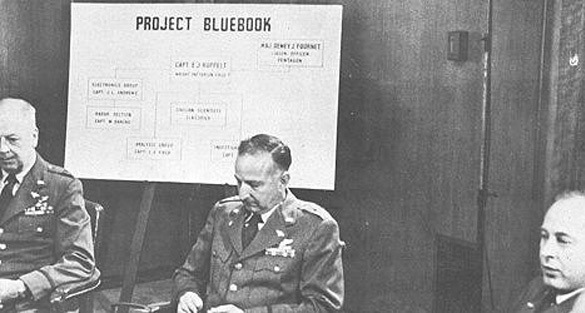
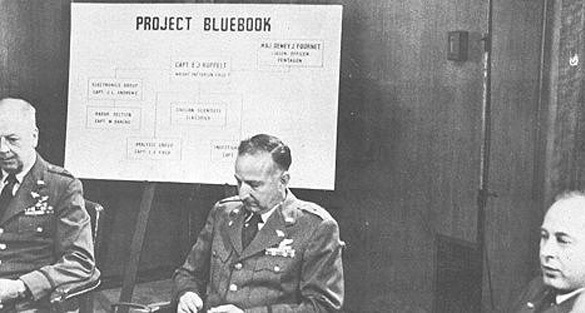
You can hear the debates. The disagreements. Some officials pushing for dismissal, others arguing for a more intense, classified investigation. These recordings tear down the wall between the public story and the private panic. You hear the actual people from Project Blue Book, not just the watered-down reports they released to the press. It’s an unprecedented look behind the curtain.

The Digital Rescue Mission

For years, Wendy Connors’ “Faded Discs” compilations were the stuff of legend. They were incredibly hard to find, traded among a small circle of dedicated researchers. They were, in effect, becoming faded themselves.

Enter the modern age. Enter the internet sleuths.

Two researchers, Giuliano Marinkovic and Isaac Koi, embarked on their own digital quest. They understood the astronomical importance of these audio files. They knew that preserving this archive was as important as preserving the Roswell debris (if you believe that story). It took Marinkovic years to track down all the compilations. It was a painstaking hunt through forums, old contacts, and digital archives.

Their work represents a new kind of historical preservation. They weren’t digging in the dirt; they were digging through forgotten corners of the web. By finding, compiling, and making these audio files available online, they performed an incredible service. They ensured that these voices—these essential pieces of the puzzle—would not be lost to bit rot and neglect. They took the Faded Discs and made them permanent.

Why This Archive Changes Almost Everything

So it’s a bunch of old audio clips. Why is that such a big deal? Because of what it represents. It’s a direct challenge to the modern, often cynical view of the UFO story.

H3: A Time of Serious Debate

Today, the UFO conversation is often dominated by memes, CGI fakes, and reality TV shows. It’s easy to forget that this wasn’t always the case. In the late 40s and 50s, this was a subject of intense, serious debate among some of the most credible people on the planet. Scientists. Senators. Military leaders. Astronauts. Even presidents.

These recordings are the proof. This isn’t a modern invention. The concern was real, and it was at the highest levels. This archive allows us to bypass the 70 years of ridicule and cultural baggage and listen to the primary sources grapple with the phenomenon in real time. And they were *not* laughing.

H3: The Power of the Human Voice

A written transcript is sterile. It can’t convey emotion. It can’t capture the slight hesitation before a shocking admission. It can’t deliver the tremor in a pilot’s voice as he describes an object turning on a dime at Mach 3.

Audio is different. Audio is intimate. It’s human.

When you hear these witnesses, you are connected to their experience in a way that text can never replicate. You become a participant, not just a reader. You can judge their credibility for yourself. Do they sound like they’re lying? Do they sound confused? Do they sound like they are telling the absolute, terrifying truth?

This is the real power of the Faded Discs. It’s an evidence locker filled not with objects, but with human experience.

What Were They So Afraid Of?

Listening to these clips, a chilling question begins to form in your mind. If all of these intelligent, decorated, and powerful people were taking this so seriously, what did they know that we don’t?

What was in the classified reports that were never released? What were the radar data and gun camera films really showing? The Faded Discs archive offers a tantalizing clue. The concern in their voices wasn’t just about a scientific curiosity. There was an undercurrent of something else.

Awe? Yes.

Confusion? Absolutely.

But also, a deep and abiding sense of concern. A feeling that we were no longer the top of the food chain. A realization that something was flying in our skies that was not ours, and we were powerless to do anything about it.

The voices are no longer faded. They are clear as a bell, ringing out from across the decades. They are a warning. A testimony. A puzzle.

And now, you can listen.

The only question is: Are you prepared for what you might hear?