Home Weird World Science Google patents injectable eyeball computer

Google patents injectable eyeball computer

0
60

Google Wants to Inject a Computer Into Your Eyeball. This Is Not a Drill.

Forget everything you thought you knew about wearable tech. Smartwatches? Clumsy. Augmented reality glasses? A public joke. The next frontier isn’t on your wrist or on your face. It’s inside your body. It’s inside your head. Specifically, it’s about to be injected directly into your eyeball.

Yes. Your eyeball.

This isn’t a discarded script from a Philip K. Dick movie. This isn’t a late-night talk radio conspiracy. This is a patent. A real patent, filed by one of the most powerful and data-hungry corporations on planet Earth: Google.

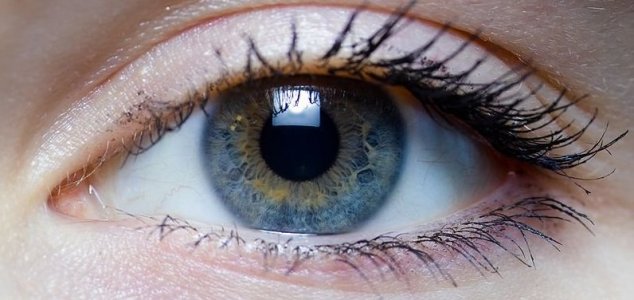
They are laying the legal groundwork for a technology that would merge man and machine at the most intimate level imaginable. They want to put a computer, complete with storage, a lens, and an antenna, directly into the soft, wet tissue of your eye. Let that sink in. An antenna. In your eye. Broadcasting and receiving. What, exactly? That’s the billion-dollar question, isn’t it?

eyeball

The official story, the one they sell to the patent office, sounds almost noble. The patent describes an “intra-ocular device” that could correct poor vision. A permanent, perfect solution to near-sightedness, far-sightedness, astigmatism. No more glasses. No more contacts. Just a simple, little injection. A quick procedure, and BAM. Crystal clear vision for life.

But you and I know it’s never that simple. Not with a company whose entire business model is built on knowing what you’re looking at.

The Nightmare Mechanics: How Do You Install an Eyeball PC?

Before we spiral down the rabbit hole of what this all *means*, let’s look at the chillingly casual way the technology is described. This isn’t a clunky cybernetic implant bolted to the skull. It’s far more subtle. Far more invasive.

The patent outlines a procedure where a fluid is injected into the lens capsule of the eye. Within this fluid is the microscopic device. Once inside, the fluid would solidify, acting as a sort of bio-friendly superglue, coupling the computer device to the eye’s natural lens. It becomes a part of you. Indistinguishable. Irreversible.

The Components of Your New Eye

So what’s actually in this tiny package? The patent filings give us a terrifying shopping list:

  • An Electronic Lens: This is the “vision correction” part. But an electronic lens can do more than just fix your focus. It could offer dynamic zoom. Instant night vision. The ability to apply filters to reality itself. Don’t like the color of the sky? Change it.
  • Data Storage: Onboard memory. Why does your eyeball need a hard drive? To store what, exactly? Photos? Videos? A constant, running log of everything you’ve ever seen? Your entire life, recorded from a first-person perspective, stored on a server farm in Utah.
  • An Energy Harvester: How do you power a computer inside a human eyeball? The patent suggests a piezoelectric system. That’s a fancy way of saying it would be powered by the movement of your own eye. Every blink, every glance, every REM cycle while you sleep would generate just enough juice to keep the machine running. Your own biology, turned into a battery for their machine.
  • The Antenna: This is the real kicker. A radio component designed to connect your eye to an external device. Your phone, maybe. Or maybe… directly to the cloud. A direct, wireless data link from your optic nerve to Google’s servers.

This Isn’t Google’s First Rodeo: The Ghost of Wearables Past

To understand where this is going, you have to understand where it came from. This eyeball injection fantasy didn’t just appear out of thin air. It’s the logical, terrifying endpoint of a journey Google started over a decade ago.

A Quick Trip Down Memory Lane: The Google Glass Fiasco

Remember Google Glass? Back in 2013, it was hailed as the future. A sleek headset that would overlay digital information onto your field of view. Maps in the corner of your eye. Notifications without looking at your phone. It was supposed to be revolutionary.

It was a disaster.

The public immediately and instinctively rejected it. People wearing the device were labeled “Glassholes.” Concerns about privacy exploded. Was that person talking to you, or were they secretly recording you? The constant, visible presence of a camera on someone’s face was a social line that people were not willing to cross. Google, humbled, pulled the product from the consumer market.

But what lesson did they learn? Did they learn that people value their privacy and don’t want to be recorded 24/7? Or did they learn that the problem wasn’t the surveillance… it was that the surveillance was *visible*? If you can’t see the camera, you can’t object to it. A computer injected into an eyeball is the ultimate stealth device.

The Forgotten Stepping Stone: The ‘Smart’ Contact Lens

Before the eyeball injection patent, there was another, quieter one filed back in 2014. It was for a “smart contact lens.” On the surface, it was a medical breakthrough. The lens would contain a tiny sensor capable of monitoring the glucose levels in a diabetic’s tears, providing a constant, non-invasive way to manage their health.

Brilliant. Lifesaving, even. And the perfect public relations cover story.

Buried in the technical documents, however, were other potential functions. The lens also contained the circuitry to “display information” in front of the wearer’s eyes. It was Google Glass, but invisible. They were testing the same waters, just more cautiously this time. The project, a partnership with Novartis, eventually faded into obscurity, but the ambition never went away. It just went deeper. From on the eye, to *in* the eye.

The Conspiracy Corner: What Aren’t They Telling Us?

A patent is a statement of intent. It’s a flag planted on a technological territory a company wants to own in the future. So, let’s stop taking the “vision correction” excuse at face value and ask the real questions. Why would the world’s biggest advertising company want to put a computer with a network connection inside your head?

The Ultimate Ad-Delivery System

Imagine a world where you can’t escape the ads. Not just on billboards or on your phone, but projected directly onto your retina. You look at a generic can of soda, and your eye implant overlays it with the Coca-Cola logo. You walk past a restaurant, and a pop-up with today’s specials appears in your vision, an ad you literally cannot close your eyes to. This is an advertiser’s wet dream and a consumer’s worst nightmare. Your very perception of reality becomes a monetizable space.

A Live Feed for the Global Brain

With an antenna in every eye, Google could have access to billions of first-person viewpoints, all in real-time. A live, searchable, indexable database of the human experience. They would know not just what you search for, but what you look at. What holds your attention? What makes you look away? They could measure your pupil dilation to see what excites you. They could track your eye movements to build a psychological profile so accurate it would feel like they’re reading your mind.

Because, in a way, they would be.

“Pre-Crime” and The End of Dissent

This goes beyond advertising. What about governments? What would they do for a live feed from the eyes of every citizen? Imagine law enforcement being able to see what a suspect sees. Or better yet, using AI to scan the data from millions of people to look for “patterns of interest.” Look at a government building for too long? Flagged. Meet with a known activist? Flagged. Your own eyes become a witness against you. The very concept of a private thought, a private moment, would cease to exist.

What If? The Transhumanist Dream vs. The Dystopian Reality

It’s easy to paint this as pure evil. But like any powerful technology, it cuts both ways. The line between utopia and dystopia is terrifyingly thin.

The Promise of a Superhuman Future

Let’s be fair for a moment. The potential good is staggering. Imagine curing most forms of blindness with a single injection. Giving a surgeon augmented reality overlays that highlight nerves and blood vessels during a delicate operation. Allowing a pilot to see perfectly through fog and darkness. Or simply giving an elderly person with failing memory the ability to instantly recall the name of a loved one just by looking at them.

This technology could elevate humanity, erase disabilities, and push our capabilities into the realm of science fiction. It’s the first real step towards a transhumanist future, where the limitations of our natural-born bodies are a thing of the past.

The Road to Black Mirror

But for every dream, there’s a corresponding nightmare. What happens when your eye gets hacked? Could a malicious actor show you things that aren’t there, causing you to walk into traffic? Could they trigger a “blue screen of death” for your vision, rendering you instantly blind? What about a ransomware attack where you have to pay a bitcoin ransom to get your sight back?

And what about the social divide? Will perfect, computer-enhanced vision become a luxury for the rich, creating a literal new class of human who can see and process the world better than everyone else? The “naturals” would be left behind, unable to compete in a world designed for the enhanced.

The patent is real. The ambition is clear. For now, it’s just a document gathering dust in an office. A theoretical idea. But technology has a funny way of catching up to imagination. Ideas like this don’t just go away. They hibernate. They evolve. They wait for the components to get smaller, the batteries to get better, and for the public to become just a little more accepting of the next invasive thing.

So the next time you use a Google product, the next time you let its AI organize your photos or finish your sentences, just remember where this is all heading. Remember their long-term vision. They don’t just want to be in your phone or in your home.

They want to be in your head.

Originally posted 2016-05-04 21:27:20. Republished by Blog Post Promoter