Home Weird World Strange Stories Ghostship – Queen Mary

Ghostship – Queen Mary

0
55

The Grey Ghost: Is the Queen Mary the Most Haunted Ship on Earth?

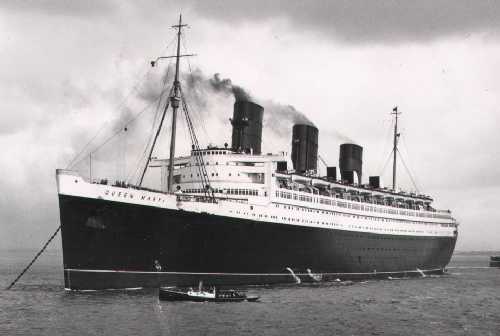
There are places in this world where the past isn’t past. It breathes. It waits. It watches. And on the calm, sun-drenched waters of Long Beach, California, one such place looms large against the skyline—a black-and-red behemoth of steel and secrets. They call her the Queen Mary. But that’s just her day name. To those who know her history, to those who have walked her decks in the dead of night, she has another name. A darker name.

The Grey Ghost.

Is she just a retired ocean liner? A floating hotel and museum? Or is she something else entirely? A metal tomb holding the echoes of a thousand voyages, a world war, and countless souls who never checked out. Buckle up. We’re going deep into the heart of one of the most chilling and fascinating stories ever forged in a shipyard.

Birth of a Behemoth: When Titans Ruled the Waves

To understand the ghost, you have to understand the machine. And what a machine she was. Our story begins not in the paranormal haze of Southern California, but in the grit and fire of Clydebank, Scotland, in the 1930s. This was the golden age of ocean travel, a brutal contest of national pride fought with rivets and steam. The goal? The Blue Riband, the coveted award for the fastest passenger liner to cross the Atlantic.

Commissioned by the legendary Cunard Steamship Company, the ship known only as “Hull Number 534” was a statement. A challenge. She was Britain’s answer to the new super-liners of Germany and France. Construction began in 1930, a colossal undertaking employing thousands. But then, the world stopped. The Great Depression hit, a financial plague that silenced the shipyards. For over two years, Hull 534 sat silent and rusting on the slipway—a giant, stillborn dream.

But destiny wouldn’t be denied. The British government, in a bold move, agreed to loan Cunard the money to finish the ship, on one condition: they had to merge with their ailing rival, the White Star Line—the company that built the Titanic. Out of this forced marriage, a legend was born. On September 26, 1934, Her Majesty Queen Mary christened the ship in her own name, and the largest vessel the world had ever seen slid into the River Clyde.

Her maiden voyage on May 27, 1936, was a global event. She was a floating palace of Art Deco splendor. Rare woods from every corner of the British Empire lined her walls. Sweeping ballrooms, five swimming pools, and grand dining halls catered to the world’s elite. For a first-class passenger, a trip on the Queen Mary wasn’t just travel; it was an experience. But deep below, in the cramped third-class quarters, the experience was very different. And even deeper, in the deafening roar of the engine rooms, men toiled in hellish heat to power this magnificent beast. The ship was a city, with all the class division, life, and death that implies.

And she was fast. Unbelievably fast. After just a few crossings, she snatched the Blue Riband, cementing her status as the undisputed Queen of the Atlantic. For a few short years, she was the pinnacle of human achievement, a symbol of luxury and progress. But a storm was gathering in Europe. A storm that would change her forever.

From Palace to Predator: The Queen’s Secret War

When World War II exploded across the globe, the age of opulence died overnight. The Queen Mary’s glittering career was over. A new, far more dangerous one was about to begin.

The Transformation: Painting the Queen Grey

In 1940, the grand liner was conscripted into service. Her lavish fittings were stripped out or boarded up. Her beautiful wooden decks were covered. Her grand pianos, crystal chandeliers, and priceless artworks were all put into storage. And then came the paint. Gallon after gallon of drab, naval grey covered her hull, erasing her identity. The portholes were blacked out. Powerful guns were mounted on her decks. The glamorous Queen was gone. In her place stood a menacing, formidable weapon of war.

The Allies had a new name for her: The Grey Ghost.

A Deadly Game of Speed

Why the name? Because of her incredible speed. The Queen Mary, with her four massive 40,000 horsepower steam turbine engines, was faster than any German U-boat. She could outrun their torpedoes. She was so fast, in fact, that she rarely needed a military escort. She would travel alone, a solitary phantom cutting through the treacherous, wolfpack-infested waters of the Atlantic.

Her strategy was simple: full speed and a constant zig-zag pattern to make her impossible to target. It’s rumored that Adolf Hitler himself offered a massive reward and the Iron Cross to any U-boat captain who could sink her. None ever came close. She became the most vital troop transport of the war, capable of carrying up to 16,000 soldiers on a single voyage—a whole division. Her precious cargo earned her another nickname: “The Million-Dollar Troopship.” Over the course of the war, she carried over 800,000 troops and traveled more than 600,000 miles. She even carried British Prime Minister Winston Churchill to strategic meetings, sometimes with thousands of German prisoners of war locked deep in her hold.

The Curacoa Tragedy: A Gash in the Ghost’s Armor

But her service was not without tragedy. A terrible, soul-searing tragedy that many believe is the primary source of the ship’s dark energy. On October 2, 1942, while carrying over 10,000 American troops, the Queen Mary was approaching the coast of Ireland. Her escort was the obsolete British anti-aircraft cruiser, HMS Curacoa.

The Queen was under strict orders. Never stop. Never slow down. The U-boat threat was too great. As the two ships performed their zig-zag maneuvers, a horrifying miscalculation occurred. The massive, 81,000-ton Queen Mary sliced directly through the much smaller Curacoa, cutting the cruiser in half like a tin can. The stern sank almost immediately. The bow followed minutes later.

On the bridge of the Queen Mary, the captain faced an unthinkable choice. Stop and rescue the survivors of the Curacoa, making his own ship a sitting duck for enemy torpedoes? Or obey his orders and save the 10,000 souls aboard his own vessel? He obeyed his orders. The Grey Ghost steamed on, leaving over 300 British sailors to die in the freezing, oil-choked water behind her. The sounds of their screams and the grinding of metal are said to still echo in the ship’s bow on dark nights.

The Long Beach Enigma: A Final, Haunting Port of Call

After the war, the Queen was restored to her former glory and continued to serve the transatlantic route. But the world had changed. A new kind of titan ruled the skies: the jet airliner. The grand old liners couldn’t compete. By the 1960s, the Queen Mary was losing money. Her time was over.

In 1967, she was purchased for $3.45 million by the city of Long Beach, California. She embarked on her final voyage, a long journey around Cape Horn to her new home. There, she was permanently docked and began a massive, three-year conversion into the hotel and tourist attraction she is today. Her massive engines were removed. Much of her lower decks were gutted to make way for museum space. She had become a relic.

But something came with her. The memories. The echoes. The residents who never left.

The Ship of Lost Souls: A Deep Dive into the Hauntings

This is where the story turns from history to legend. The sheer volume of paranormal claims aboard the Queen Mary is staggering. It’s not one ghost story; it’s hundreds. Staff, guests, and paranormal investigators have all reported chilling, unexplainable events. Are they real? Let’s explore the ship’s most active haunts.

Stateroom B340: The Epicenter

There is one room so active, so notoriously haunted, that for many years it wasn’t even rented out to the public. Stateroom B340. The reports are relentless. The lights turn on and off by themselves. The faucet in the bathroom activates on its own. Guests report the terrifying sensation of their bedsheets being violently ripped off them in the middle of the night. Others have woken to see a dark figure standing at the foot of their bed. The activity became so frequent and distressing that the hotel simply sealed the room. Recently, they’ve reopened it as a “haunted attraction,” but the stories persist. What, or who, resides in B340 remains the ship’s most profound mystery.

The Crushing Door and the Engine Room Ghost

Deep in the ship’s metallic guts lies the engine room, a place of immense power and, it seems, immense sorrow. During a routine drill, a young 18-year-old crewman named John Pedder was tragically crushed to death by a watertight door, now ominously known as “Door 13.” Today, visitors on ghost tours often report seeing a young man in overalls walking through the maze-like corridors of the engine room before vanishing into thin air. He is often seen near the very door that took his life.

The Lady in White and the Children of the Pool

Not all the spirits are malevolent. In the ship’s elegant Queen’s Salon, once the first-class lounge, people have frequently reported seeing the apparition of a beautiful woman in a white evening gown, dancing alone in the shadows. But the swimming pools hold a more tragic tale. The first-class pool area is said to be haunted by the spirits of two children who tragically drowned there during one of the crossings. Visitors often hear the distinct sounds of splashing, laughing, and wet footprints appearing on the deck when no one is there. One spirit, a little girl named Jackie, is said to be quite interactive, sometimes even responding to questions from ghost hunters.

A Growl From the Cargo Hold

Remember the German prisoners of war? They were held deep in the ship’s cargo hold during their transport. It was a dark, cramped, and terrifying place. Modern visitors and staff have reported hearing angry growls, metallic banging, and guttural German commands emanating from the empty, shadowy hold. Is it the residual energy of desperate men? Or are their spirits still trapped far from home?

So, What Is the Queen Mary?

Over the years, the Queen Mary has hosted many other attractions at her side. Howard Hughes’s infamous Spruce Goose flying boat sat in a massive dome next to her for years. A top-secret Soviet Scorpion submarine was docked at her bow, a Cold War relic beside a World War II hero. She’s been a movie set, a concert venue, and a floating piece of history.

But her true identity seems to be so much more. She is a time capsule, a steel monument to a bygone era. She is a war hero with a dark and bloody secret staining her past. And for many, she is a portal. A place where the veil between our world and the next is impossibly thin.

Is it all just the creaking of an old ship? The play of shadows in long, empty hallways? Or did the Queen Mary, in her long and dramatic life, absorb the powerful emotions of the millions of souls she carried—the joy, the fear, the hope, and the tragic, violent deaths? Does a ship have a memory? When you walk her decks, you can’t help but feel that this one does. And she isn’t ready to give up her ghosts just yet.

Originally posted 2016-03-24 08:28:05. Republished by Blog Post Promoter