Tuesday, May 12, 2026
HomeFilms & DocumentariesGhost Town - Ordos, and the skaters

Ghost Town – Ordos, and the skaters

China’s Silent Metropolis: The Shocking Truth Behind the Ordos Ghost City

Look at that picture. Really look at it.

It looks like a screenshot from a post-apocalyptic video game. A Hollywood set for a world where humanity has vanished. Grand, sweeping architecture. Manicured lawns. Clean streets. Everything is perfect. Everything is ready.

Except for one thing.

The people.

This isn’t science fiction. This is Ordos, a city in the Kangbashi New Area of Inner Mongolia, China. A sprawling, futuristic metropolis built from the ground up to house over a million souls. A glittering jewel of urban planning with stadiums, museums, theaters, and endless blocks of high-rise apartments.

But for years, it stood almost completely empty. A ghost city. A silent, billion-dollar monument to… what, exactly? A mistake? Ambition? Or something else entirely?

They called it the Dubai of northern China. And then, one day, a few outsiders arrived. They didn’t come to live. They didn’t come to work. They came with skateboards. And what they found will change how you see this place forever.

A wide, empty plaza in the Ordos ghost town

The Billion-Dollar Bet in the Middle of Nowhere

So, how does a city for a million people get built with nobody to live in it? The story starts not with concrete, but with coal. Black gold.

In the early 2000s, Inner Mongolia was ground zero for one of the biggest resource booms in modern history. The region was sitting on a staggering one-sixth of China’s entire coal reserves, not to mention enormous deposits of natural gas. As China’s economic engine roared to life, it demanded fuel, and Ordos was right on top of the gas station.

Money flooded in. An unbelievable tsunami of cash. Local farmers became millionaires overnight, selling their land to mining corporations. The region’s GDP skyrocketed. For a moment, Ordos was one of the wealthiest places in all of China, with a per-capita income higher than Beijing’s.

What do you do with that kind of money?

You dream. You build.

The government of Ordos made a colossal bet. They decided to build a brand-new city center from scratch, a few miles south of the old, crowded one. This wouldn’t be just an expansion; it would be a futuristic paradise. A statement to the world. They called it the Kangbashi New Area.

A Utopia on Paper

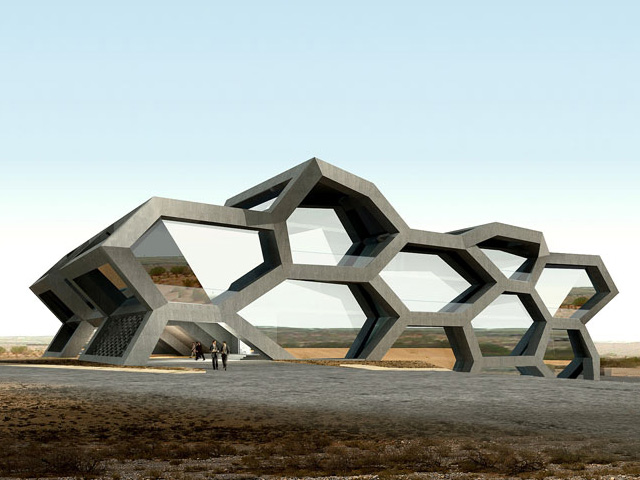
The plans were breathtaking. Architects were given a blank check to create a masterpiece. They designed a stunning, dome-like museum that looks like a metallic bubble dropped from space. A library shaped like a giant row of leaning books. A state-of-the-art theater. Massive public squares with epic, Genghis Khan-themed sculptures.

And the housing. Oh, the housing. Endless towers of modern apartments, equipped with every amenity, fanned out in perfect, symmetrical blocks. They built schools, hospitals, and a sports stadium fit for the Olympics. The infrastructure was flawless. Wide, multi-lane highways connected everything, with traffic lights that patiently changed from red to green for phantom cars.

The government poured over $160 billion into this grand vision. The logic was simple, a mantra that had defined China’s rapid growth: “Build it, and they will come.”

But they didn’t.

An Echo in the Concrete Canyons

The year is 2010. The city is finished. The ribbon has been cut. And… silence.

The broad avenues remained empty. The parks were pristine but desolate. At night, entire skyscraper districts were dark, with only a handful of scattered lights betraying any human presence. The official population hovered around 2% of its capacity. It was a functioning city with no function. A body without a soul.

What went wrong? The story the media sold was one of a spectacular miscalculation. Property prices, inflated by speculation during the boom years, were far too high for ordinary people. The very farmers and miners whose labor had funded the city couldn’t afford to live in its gleaming towers.

The world pointed and laughed. Journalists and photographers flocked to Ordos to document the world’s most spectacular ghost town. It became the poster child for China’s supposed real estate bubble, a cautionary tale of hubris and central planning gone mad.

But as you walk these empty streets, a different feeling takes over. It’s not just a failed project. It’s surreal. The sheer scale of the emptiness is hard to comprehend. You can stand in the middle of a six-lane highway and hear nothing but the wind. It feels like you’re the last person on Earth.

And in this vast, silent world, a new kind of pioneer arrived.

A Skateboarder’s Post-Apocalyptic Paradise

Imagine you’re a skateboarder. Your world is a collection of surfaces, angles, and obstacles. You see cities not as places to live, but as playgrounds to conquer. Ledges, stairs, rails, plazas. But there’s always a problem. Security guards. Traffic. Pedestrians. Rules.

Now imagine a city with none of that.

A city made of perfect, unused marble. A city of endless, empty plazas and geometrically perfect structures. A city with no security, no cars, and no people to get in your way. It’s not a dream. It’s Ordos.

Filmmaker Charles Lanceplaine saw the potential. He gathered a crew of skaters and journeyed into the heart of the ghost metropolis. They expected something eerie and desolate. What they found was the greatest skate park ever built by accident.

The entire city was their playground. They grinded on the pristine ledges of government buildings. They ollied down the grand staircases of empty shopping malls. They turned the monumental public squares into their personal arenas. The sounds of their wheels and boards clattering against the concrete were the only sounds for miles, a defiant burst of human energy in a place defined by its absence.

Watching their footage is a mind-bending experience. It’s a collision of two worlds. The cold, sterile ambition of the city’s design versus the chaotic, creative freedom of the skaters. It’s beautiful. It’s weird. It’s a powerful statement about how humans will always find a way to play and create, even in the most unnatural of environments.

Check out the video of their journey. It’s a discovery unlike any other.

Whispers in the Empty Plazas: Is Ordos Part of a Deeper Plan?

This is where the story gets strange. The official explanation of a “failed real estate project” seems too simple, almost convenient. When you look at the sheer number of these underpopulated “ghost cities” across China, a pattern begins to emerge. And with patterns come questions. And with questions, come theories.

Is there another reason to build a massive, fully-equipped city and leave it empty?

Conspiracy Deep Dive 1: The Doomsday Bunkers

One of the most persistent theories whispered on internet forums is that these cities aren’t for today’s population. They’re for tomorrow’s survivors.

Think about it. You’re a global superpower. You worry about everything: nuclear war, catastrophic pandemics, solar flares, social collapse. Where would your essential population go? Where would you relocate your government and military elite in a world-ending scenario?

You’d need pre-built, modern, high-capacity cities far from existing population centers and primary military targets. Cities with robust infrastructure, housing, and hospitals, ready to be occupied at a moment’s notice. Cities just like Ordos. Widespread, strategically placed, and sitting quietly empty, waiting for a signal.

Is it a coincidence that many of these new districts have massive underground facilities? The official line is that they are for parking and shopping. But the scale often seems… excessive. Could these be vast strategic bunkers, hidden in plain sight? It’s a terrifying thought: cities built not for life, but for the aftermath of death.

Conspiracy Deep Dive 2: A House of Economic Cards

Another theory points not to doomsday, but to economics. China’s economy is heavily reliant on construction and investment to fuel its GDP numbers. What happens when you run out of things to build in your existing, crowded cities?

You start building new ones. From scratch.

According to this theory, the primary purpose of Ordos was never to be a home for a million people. Its purpose was to exist on paper. Building the city generated jobs, consumed steel and concrete, and allowed local governments and banks to create astronomical sums of debt and assets out of thin air. It was a way to keep the economic machine churning and the GDP numbers climbing, even if the end product was a hollow shell.

The city itself is the product. The empty apartments are just financial instruments, traded between investors, used as collateral for loans, and propping up a system that values the appearance of growth over actual, sustainable communities. If this is true, Ordos isn’t a failure. It’s a frighteningly successful component of a gargantuan economic illusion.

An Update from the Ghost: The Slow Return of Life

The story of Ordos, however, didn’t end with skaters and conspiracy theories. The world moved on, but the city remained. And a funny thing happened over the next decade.

People started to come.

Slowly. Painfully slowly. The government, desperate to save face and its massive investment, began introducing aggressive incentives. They relocated top-tier schools to Kangbashi, forcing families with children to move if they wanted the best education. Government offices were transferred wholesale from the old city, bringing thousands of civil servants with them. They offered generous housing subsidies and tax breaks to anyone willing to make the move.

It was a form of social engineering on a civic scale. And, to a degree, it has worked. The population of Kangbashi, once a few tens of thousands, has climbed to over 150,000. It’s no longer a true ghost town. It’s more of a… severely under-occupied town. The streets have some cars now. The shopping malls have some open stores. There are flickers of life.

But it’s still nowhere near the one-million-person utopia it was designed to be. It’s a city built for a giant that is currently being worn by a child. The sense of strange, oversized emptiness persists.

A Warning or a Prophecy?

So what is the final verdict on Ordos? Was it a colossal blunder born of greed and bad planning? Or was it a long-term strategy that we in the West, with our short-term thinking, simply failed to understand? Perhaps the “build it and they will come” philosophy wasn’t wrong, it was just impatient. Maybe the timeline wasn’t five years, but fifty.

The story of Ordos is a chilling, fascinating look at ambition on a scale that is almost impossible to imagine. It’s a concrete dream that became a waking nightmare, only to slowly, strangely, begin to dream again.

Whether it stands as a monument to human folly or a prophecy of a new kind of urbanism, one thing is certain. The silent, windswept plazas of Ordos hold more secrets than we will ever know. And for a brief, glorious moment, they were the undisputed kingdom of a handful of kids on skateboards.

Amit Ghosh
Amit Ghoshhttps://coolinterestingnews.com
Aloha, I'm Amit Ghosh, a web entrepreneur and avid blogger. Bitten by entrepreneurial bug, I got kicked out from college and ended up being millionaire and running a digital media company named Aeron7 headquartered at Lithuania.
RELATED ARTICLES

1 COMMENT

- Advertisment -

Most Popular

Recent Comments

Warren Pan Abbott on The legend of the Devil Monkey !
chris davies on The McPherson Tape Mystery
Reed Reedly on ET has Internet!
Bea Houseoffashion on Proof Of Time Travellers – Gallery
Marcus2012 on ET has Internet!
Reed Reedly on ET has Internet!
LaughsAtConspiracyNuts on The 9/11 Conspiracy – Myths and Facts
Alex Sliverman on Did the ancients fly?
Doctor Wholigan on Time Traveler in 1938 film
chris davies on The McPherson Tape Mystery
Archie1954 on 10 secret UFO hideouts
chris davies on Ghosts of flight 401
Marcus2012 on ET has Internet!
jason Macdonald on Proof of Time Travel? – China
chris davies on Long-Lost Pyramids Found?
Reed Reedly on ET has Internet!
Milkman on Connected Universe
Tenmiles on Baigong Pipes Mystery
Simon Foster on Sirius – The Documentary
From the 1st April on 2013 – Alien Contact date ?
SkyWatcher on Is ET ignoring us?
I Come From The Future on Obama to make UFO Alien disclouser soon ?
ÛñK?øWn on 2013 – Alien Contact date ?
Just another person on 2013 – Alien Contact date ?
Malcolm Windowcleaner on The strange case of Rudolph Fentz
Mason Servio on Strange Things on Mars
Marke Wisdom Seeker on What will we find as arctic melts?
Andrea A Elisabeth Levyne on Aliens Captured in Varginha, Brazil
Mitch Grouyeki on Amazing Space Shuttle pictures