Imagine this. You are drifting in the middle of the Indian Ocean. The sun is beating down, relentless and unforgiving. There is nothing but blue water in every direction for hundreds of miles. And then, you see it. A ship. It’s moving, but something feels wrong. It feels… dead.
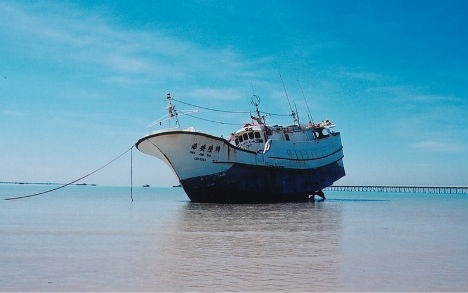
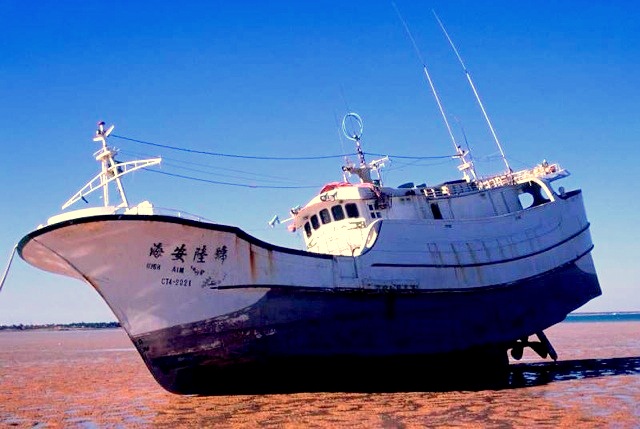
This isn’t the opening scene of a Hollywood horror movie. This is exactly what happened on January 8, 2003. The Australian Royal Navy and Customs were patrolling the vast, empty stretch of water known as the Australian Exclusive Economic Zone when they spotted a silhouette against the horizon. It was the High Aim 6.
No radio response. No movement on deck. Just a ghost ship, cutting through the waves, powered by engines that wouldn’t quit, carrying a crew that had vanished into thin air.
Welcome to one of the most baffling maritime mysteries of the 21st century. Today, we are cracking this cold case wide open. We aren’t just looking at the police reports; we are going to walk the deck of that doomed vessel and ask the hard questions that officials wanted to bury. Where did they go? Why was the food still on the table? And was it really a mutiny, or something much darker lurking in those deep waters?
The Discovery: A Floating Tomb
Let’s set the scene. It’s early 2003. The world is watching the Middle East, but off the coast of Western Australia, a different kind of drama is unfolding. The High Aim 6 (Chinese: Haian liuhao ????) wasn’t a small dinghy. This was a 20-meter long-liner. A serious fishing vessel built for endurance.
It had left the port of Liuchiu in southern Taiwan on Halloween—October 31, 2002. Spooky coincidence? Maybe. The owner, Tsai Huang Shueh-er, sat back in Taiwan, expecting a haul of tuna. The last time she heard a voice from that ship was in December. After that? Static.
Fast forward to January. The ship is found drifting about 80 nautical miles (150 km) east of Rowley Shoals. Now, Rowley Shoals isn’t exactly a tourist hotspot. It’s desolate. It’s wild. When the Australian authorities pulled alongside, they expected to find illegal poachers hiding below deck. They expected resistance.
Instead, they got silence.
The creepiest part? The engine was running. The ship was underway. It was driving itself across the ocean like it had a mind of its own. Five days before they boarded it, they saw it moving. When they finally stepped onto the rusted deck, the engine had choked and died, likely out of fuel. The rudder was locked in position.
They shouted. They banged on bulkheads. Nothing.
The Scene of the Crime (That Wasn’t There)
This is where things get weird. Really weird. In most disaster scenarios, you see chaos. Overturned chairs, smashed glass, bullet holes, scorch marks. You expect a struggle.
On the High Aim 6, everything was… normal.
The forensic teams that were later flown in to Broome, where the ship was towed, were baffled. They went through that ship with a fine-tooth comb. Here is what they found:
- Fuel and Food: The ship was fully stocked. They weren’t starving. They weren’t stranded. They had plenty of diesel to get home.
- Personal Effects: This is the detail that keeps me up at night. The crew’s belongings were still there. Toothbrushes. Clothes. Cigarettes. Family photos. Who leaves their ship without their stuff? You only do that if you are leaving in a panic, or if you aren’t leaving alive.
- The Cargo: The hold was packed. Tons of high-value fish. But because the refrigeration had failed or been turned off, the fish was rotting. The smell was reportedly horrific—a stench of death that hit the boarders before they even saw the boat.
- No Distress Call: The radio worked. The emergency beacons were there. The Captain, Chen Tai-cheng, never sent a Mayday. He never screamed for help. Whatever happened, happened fast.
Initial theories flew wild. Was it people smugglers? The Australian government was paranoid about illegal immigration at the time. They tore apart the hold, expecting to find evidence of human cargo. Nothing. Just rotting fish.
Was it pirates? Pirate attacks usually involve stripping the ship. They take the catch, the electronics, the fuel, and sometimes the ship itself. But nothing was missing. It was the Mary Celeste all over again, but this time with a diesel engine and a hull full of spoiling tuna.
The “Ghost Ship” Phenomenon
Before we get to the official explanation, we have to talk about why this freaks us out so much. The ocean is the last true wilderness. When you are out there, 100 miles from land, the rules of society don’t apply. It is just you, the crew, and the black water.
The High Aim 6 fits a terrifying pattern. We see this with the Kaz II (the “Ghost Yacht” found off Australia in 2007) and the Nina. Ships found perfectly intact, coffee cups still warm, engines humming, but the people are just gone.
It forces us to ask: What can make a dozen hardened sailors abandon a safe ship in the middle of nowhere? Mass hysteria? A rogue wave that washed everyone off at once? Or something human and malicious?
The Timeline of Terror
Let’s reconstruct the timeline based on what we know. The ship leaves Taiwan. It picks up an Indonesian crew. This is standard practice in the industry, but it also creates a dangerous dynamic. You have Taiwanese officers (the Captain and the Engineer) and Indonesian deckhands. Different languages. Different cultures. Massive inequality in pay.
October 31, 2002: Departure. Spirits are high.
December 2002: The check-in call. The Captain speaks to the owner. Everything seems fine. But was it? Was there tension in his voice that the owner missed?
Late December / Early January: The Silence. This is the killing window. Sometime in these few weeks, hell broke loose on the High Aim 6.
January 3, 2003: The ship is sighted on radar, moving. Is anyone alive on board at this point? Or is it already a tomb, piloting itself on autopilot?
January 8, 2003: Discovery.
The Investigation Deepens
The ship was towed to Broome, a remote pearling town in Western Australia. It sat there, rusting, while forensic experts in hazmat suits tried to piece together the puzzle. They searched 7,300 nautical miles (13,500 km) of ocean. That is a massive area. They used planes, ships, and drift modeling. If the crew had abandoned ship in a life raft, they should have been found.
If they jumped into the water? The sharks and the currents would have taken care of the evidence.
But here is the kicker: No life rafts were missing. (Reports vary on this, but most credible sources suggest the safety gear was largely undisturbed). If you don’t take the raft, you aren’t abandoning ship. You are being disposed of.
Mutiny! So they claim!
For months, the world thought this was an unsolvable X-File. Aliens? Sea monsters? A secret government experiment?
Then, a break in the case. A whisper from Indonesia.
Police and private investigators managed to track down one member of the crew. Just one. He had made it back to Indonesia. How did he get there if the ship was found drifting off Australia? That is the million-dollar question.
According to this survivor, it wasn’t a sea monster. It was rage.
He admitted that the Captain, Chen Tai-cheng, and the engineer, Lin Chung-li, had been murdered. Killed by their own crew. The motive? He was vague. He claimed mistreatment. He claimed the Captain was abusive. But is that the whole story?

The “Mutiny” Theory: Holes in the Story
Let’s look at this confession critically. It’s the “official” story, but does it hold water? If the crew mutinied and killed the two Taiwanese officers, why abandon a perfectly good ship?
Think about it. You have just killed the Captain. You have a ship full of valuable fish. You have fuel. Why not sail the ship back to Indonesia, repaint it, and sell the cargo? Or at least scuttle the ship to hide the evidence?
Instead, they allegedly killed the officers and then… what? Jumped into the ocean? Flagged down a passing ship? If they flagged down another ship, that second ship is an accomplice to mass murder. Who picked them up?
Some theories suggest a “mother ship” scenario. Often, fishing fleets operate with a large supply vessel nearby. Did the crew kill the Captain, call a friend on a nearby boat, hop off, and leave the High Aim 6 to drift? It’s plausible. It explains how they vanished without using the life rafts.
The Dark Reality of the Fishing Industry
To understand the High Aim 6, you have to understand the lawless world of deep-sea fishing. It is brutal. We are talking about modern-day slavery in some cases. Crews are often tricked into signing contracts, their passports are confiscated, and they are forced to work 20-hour shifts for pennies.
If Captain Chen was a tyrant, if he beat his crew or refused to feed them, a mutiny isn’t just possible—it’s inevitable. It happens more than you think. Captains get tossed overboard constantly, listed as “accidental drowning.”
But usually, the ship comes back.
Alternative Theories: The Conspiracy Angle
Since we are digging deep, we have to look at the alternatives. What if the “survivor” was lying? What if he was forced to say it was mutiny to cover up something bigger?
1. The Drug Smuggling Connection
Fishing boats are the perfect cover for moving narcotics. They move erratically, they smell bad (keeping curious customs officers away), and they have hidden holds. Was the High Aim 6 carrying something other than tuna? Maybe a deal went wrong at sea. Maybe they met a cartel boat, the exchange went south, and everyone was liquidated.
2. Illegal Intelligence Gathering
The ship was found near the Australian Exclusive Economic Zone. This is a sensitive area. Foreign vessels are often monitored. Could the High Aim 6 have seen something it wasn’t supposed to see? A submarine exercise? A military test? It sounds like fiction, but ships that wander into “black zones” have a habit of going silent.
3. The Triad Link
The vessel was Taiwanese owned. The Triads (Chinese organized crime) have heavy hands in the fishing industry. Was this an insurance scam? Or a hit? Killing the crew and leaving the ship to drift is a very loud message to the owner. “Pay up, or your ships turn into ghosts.”
The Forensic Nightmare
Let’s go back to the forensic evidence, or the lack of it. The Australian authorities found no sign of a struggle. If a violent mutiny took place—stabbings, beatings, bodies being thrown overboard—there should be blood. There should be DNA.
Unless the crew cleaned it up.
But if you are panicking and fleeing a murder scene, do you stop to scrub the decks with bleach? And if they did clean it up, that implies a level of cool, calculated professionalism that doesn’t fit with a spontaneous riot.
This suggests that whatever happened, the crew was in control. They had time. They executed the officers, cleaned the mess, packed their bags (or maybe they didn’t, explaining the personal items), and waited for a pick-up.
The Verdict: A Cold Case That Burns
The High Aim 6 was eventually scuttled or sold for scrap (reports vary), its steel hull melted down, erasing the last physical evidence of the tragedy. The single confession remains our only link to the truth.
But it feels incomplete.
We are left with a haunting image: A ship chugging along the equator, autopilot engaged, carrying ghosts. The fish rotting in the hold. The toothbrushes sitting in cups next to the sink. A frozen moment in time.
Was it a mutiny born of desperation? Likely. But the details—the clean decks, the running engines, the mysterious extraction of the crew—leave a gap wide enough to drive a ghost ship through.
In the end, the High Aim 6 serves as a grim reminder. We have mapped the moon and Mars, but the ocean? The ocean is still the Wild West. You can scream out there, and no one hears you. You can vanish, and the only witness is the radar screen blinking in the dark.
What do you think really happened? Did a “mother ship” pick up the murderers? Or is the survivor hiding a much stranger truth? The ocean keeps its secrets well, but sometimes, ships like the High Aim 6 float back to tell us that something is very, very wrong out there.
Originally posted 2014-02-20 23:05:49. Republished by Blog Post Promoter