The Great Cosmic Ghost Town: Are We Really Alone?
Look up. Go outside tonight, away from the city lights if you can, and just stare. You are looking at a graveyard. You are looking at a history book. But are you looking at a neighborhood? That is the question that keeps astronomers awake at night and drives conspiracy theorists to dig through redacted government files.
Aliens. UFOs. Little green men. The Grays. Whatever label you slap on it, the concept is the same: the terrifying, electrifying idea that Earth is not the only rock floating in this infinite black ocean carrying passengers. To date, we haven’t found a single microbe. Not a signal. Not a warped piece of metal that definitely didn’t come from a Boeing factory. The official stance? We are alone.
But that story is cracking.
A growing number of respected scientists, physicists, and even military intelligence officers are starting to speculate that extraterrestrial life isn’t just possible—it is inevitable. The math is simply too big for us to be the only lucky winners of the biological lottery. Some, like the legendary Frank Drake, spent their lives trying to calculate the odds. They tried to put a number on the civilizations humming with electricity and radio waves right now, just out of earshot.
The Numbers Game: Why the Math Says “Yes”
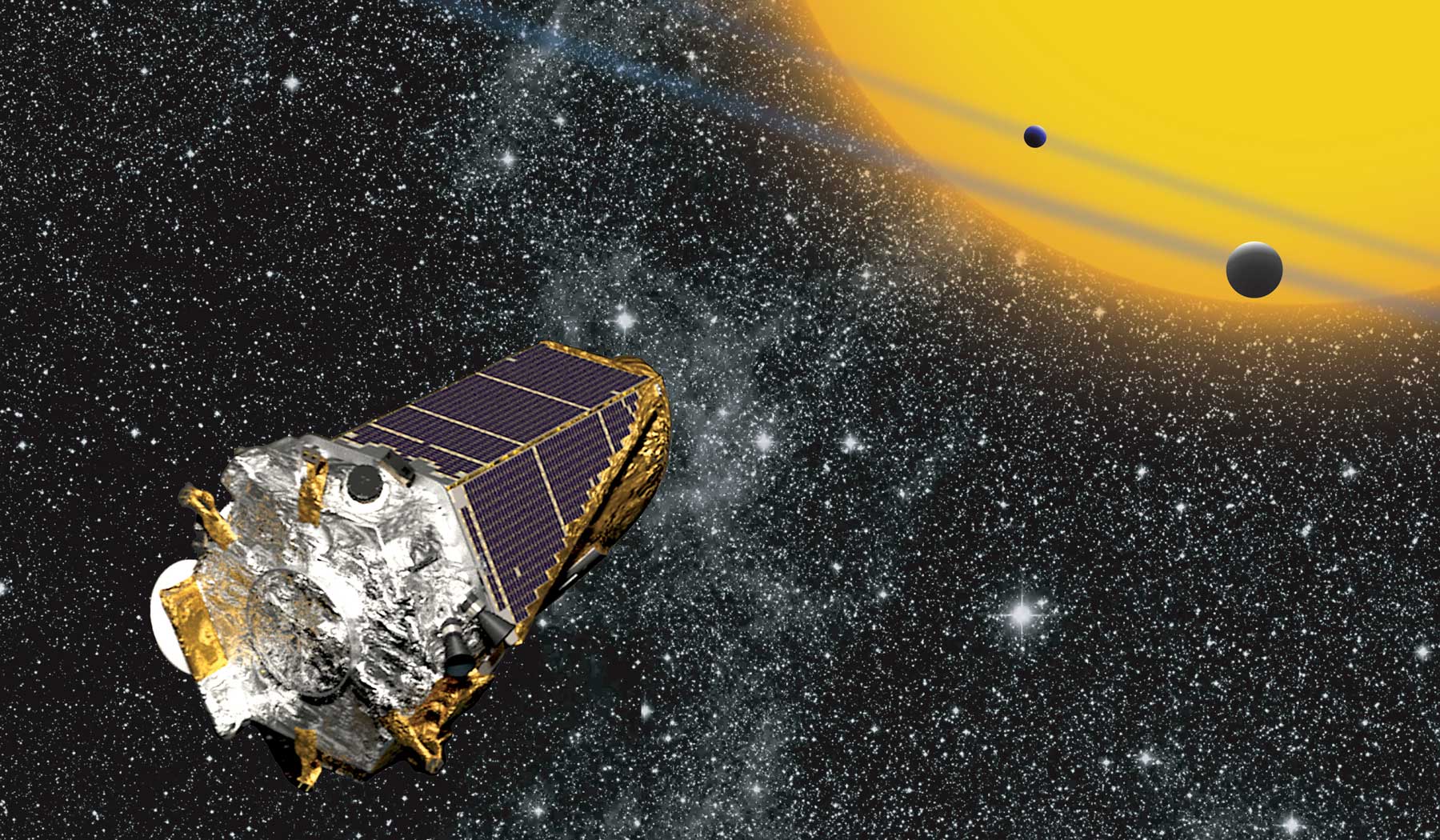
Let’s break it down. Our galaxy, the Milky Way, is just one swirling disc of stars. How many? Roughly 100 to 400 billion. That’s not a typo. Billions. And thanks to the Kepler Space Telescope and the new James Webb Space Telescope (JWST), we now know that planets are as common as dirt. Almost every star has them.
If only 0.1% of those planets are in the “Goldilocks Zone”—not too hot, not too cold, but just right for liquid water—that leaves us with millions of potential Earths. Just in our neighborhood.
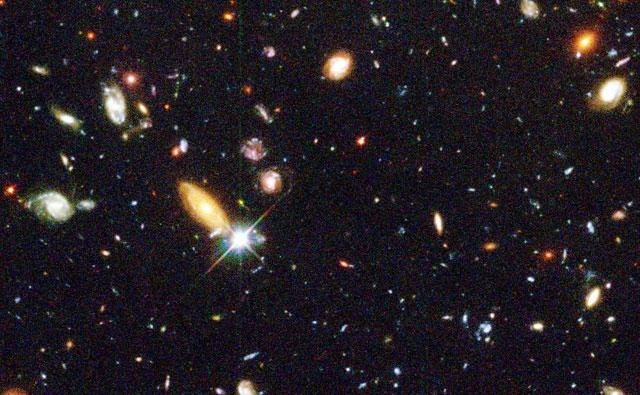
Image: Could an advanced civilisation exist in one of the thousands of galaxies shown in this Hubble image?
So, where is everybody? This is the Fermi Paradox. If the universe is teeming with life, someone should have visited by now. Or at least sent a text. The silence is maddening. It forces us to ask uncomfortable questions. Are we the first? Are we the last?
Or is something else going on? Maybe they are shouting, and we just don’t know how to listen.
Defining the “Other”
We need to get our definitions straight. Extraterrestrial life (from the Latin extra meaning “beyond” or “not of” and terrestris meaning “of Earth”) is strictly defined as biological life that did not start here.
When people hear “aliens,” they think of Hollywood. They think of Independence Day motherships blowing up the White House or E.T. eating Reese’s Pieces. But the reality is likely far stranger. These hypothetical forms range from simple, sludge-like bacteria clinging to a rock in deep space, to hyper-advanced beings that view humans the way we view ants.
The field dedicated to hunting these things down is called exobiology or astrobiology. It’s a mix of astronomy, biology, and geology. It used to be a fringe science. A joke. Now? It is one of the most well-funded frontiers in human history.
The Monster Under the Ice: Europa and Enceladus
We used to think life needed sunlight. We thought you needed trees and warm oceans and beaches. We were wrong. Dead wrong.
Scientists have identified places right here in our own Solar System that defy the rules. Look at Jupiter. It’s a gas giant, a planet of storms and radiation. But orbiting it is a moon called Europa. On the surface, Europa is a frozen wasteland. It looks like a cracked eggshell. But underneath that thick crust of ice?
An ocean.
A massive, global, saltwater ocean. It has twice as much water as all of Earth’s oceans combined. Gravity from Jupiter squeezes and stretches the moon, creating heat deep inside. This means there could be hydrothermal vents on the sea floor. Here on Earth, those vents are swarming with life—crabs, tube worms, shrimp—that don’t need the sun at all. They survive on chemical energy.
Future missions, like the Europa Clipper, are heading there. They aren’t just going to look at rocks. They are going to sniff the plumes of water shooting out into space to see if they taste like biology. Finding a single bacterium on Europa would change everything. It would mean life isn’t a miracle. It would mean life is a standard feature of the universe.
The Timeline Glitch: Is Life Older Than Earth?
Here is where things get really weird.
A while back, scientists at the National Institutes of Health (NIH) dropped a bombshell that went largely unnoticed by the mainstream media. They ran a study looking at genetic complexity. They worked backward, tracing the evolution of DNA like a clock.
Their findings? They reported that life in the universe may have begun “9.7±2.5 billion years ago.”
Read that again.
Earth is only about 4.5 billion years old.
If this study holds water, it implies that the seeds of life—the genetic complexity that eventually became us—existed billions of years before Earth was even formed. This leads to the “Panspermia” theory. The idea is that life didn’t start here. It started out there, in the ancient cosmos, and hitched a ride on comets or asteroids, crashing into a young Earth and seeding it like a garden.
We might be the aliens.
This matches the extrapolation of “major phylogenetic lineages.” If biology follows Moore’s Law (the idea that computers get twice as fast every two years), and you trace biological complexity back to zero, it hits a starting point long before our solar system ignited. Who—or what—was alive 9 billion years ago?
The Great Silence and the Dark Forest
Many scientists consider extraterrestrial life to be plausible. It makes sense. But the lack of direct evidence is a problem. Since the mid-20th century, we have been obsessed with the search.
We built massive ears. The SETI Institute (Search for Extraterrestrial Intelligence) has been pointing radio telescopes at the sky for decades, hoping to catch a stray broadcast. A snippet of alien TV. A navigation signal.
Nothing. Just the static hiss of cosmic background radiation.
Why?
There is a terrifying concept called the “Dark Forest” theory. Imagine the universe is a dark forest at night. It’s quiet. But it’s not quiet because it’s empty. It’s quiet because it’s dangerous. Every civilization is a hunter with a gun, creeping through the trees. If you make a noise, if you light a fire, you announce your location. And in a universe with limited resources, the safest move when you see someone else is to wipe them out before they wipe you out.
Maybe the aliens are quiet because they are smart. Maybe we are the noisy idiots shouting “Here we are!” into a jungle full of predators.
The Modern UFO Renaissance
For decades, this subject was science fiction. If you talked about it, you were wearing a tinfoil hat. But the narrative has flipped.
In 2017, the New York Times broke a story about the Pentagon’s secret UFO program. We saw the videos. The “Tic Tac.” The “Gimbal.” U.S. Navy pilots chasing objects that defied the laws of physics—stopping instantly, accelerating to hypersonic speeds without sonic booms, dropping from space to sea level in seconds.
These aren’t blurry photos of Bigfoot anymore. These are radar locks. Gun camera footage.
We have moved from “do aliens exist?” to congressional hearings where intelligence officials swear under oath about “non-human biologics” recovered from crash sites. The government calls them UAPs (Unidentified Anomalous Phenomena) now. It’s a rebranding effort to shake off the stigma.
Are these probes from one of those civilizations Frank Drake predicted? Are they automated drones sent out 9 billion years ago by the ancient precursors the NIH study hinted at? Or is it something else entirely—something interdimensional, or perhaps a shadow civilization that has been here on Earth with us the whole time, hiding in the oceans?
The Final Verdict?
We stand on a precipice. We are looking for habitable extrasolar planets with telescopes that can sniff atmospheres light-years away. We are sending robots to the moons of Jupiter. We are rewriting the history of DNA.
The evidence is circumstantial, but it is mounting. The universe is too old, too big, and too chemically rich for Earth to be a fluke. Whether we find microbes on Mars, squids on Europa, or a Dyson Sphere megastructure orbiting a distant star, the discovery is coming.
When it happens, it won’t just be a scientific footnote. It will break our philosophy. It will shatter our religions. It will force us to look in the mirror and realize we are not the main characters of this story. We are just one species, on one rock, drifting through a crowded room, finally opening our eyes.
Originally posted 2013-06-13 18:15:08. Updated and Expanded for Modern Context.