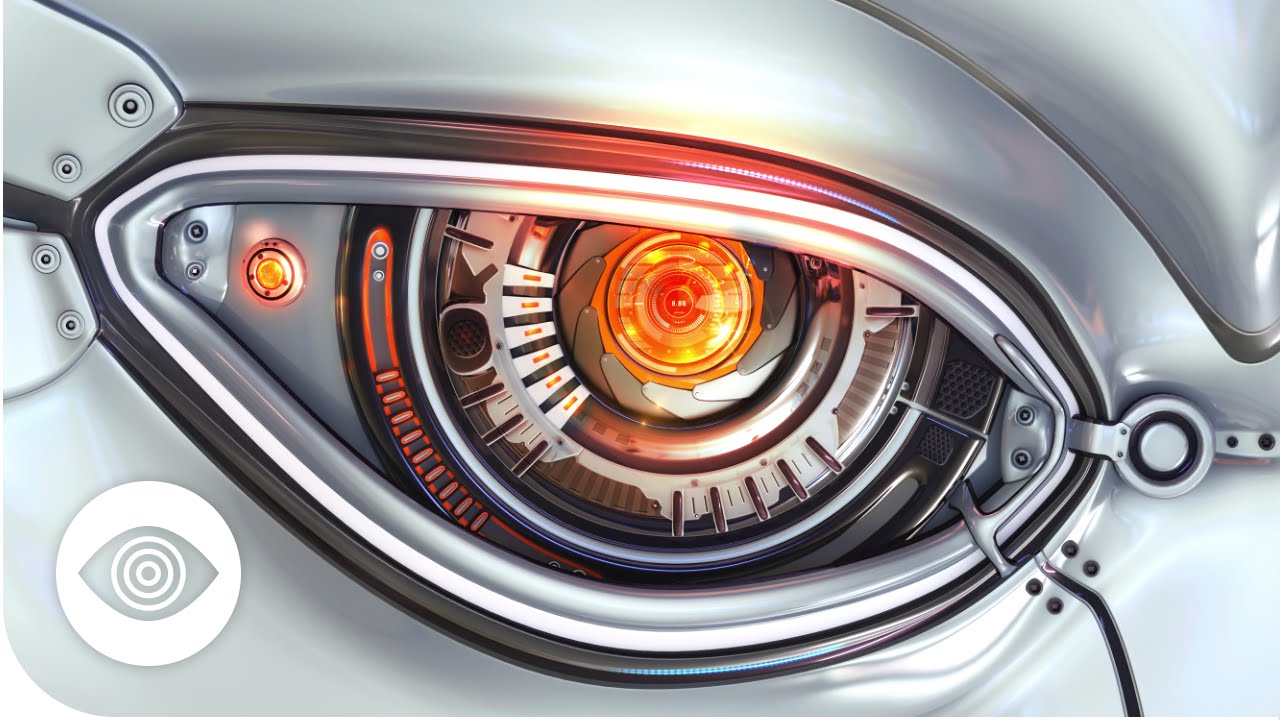
The Nightmare Is No Longer Sci-Fi
Stop thinking about the Terminator. Seriously, put it out of your mind. The image of a chrome skeleton crushing a human skull with a metal foot is outdated. It’s a distraction. Hollywood taught us to fear the humanoid robot, the machine that looks like us but lacks a soul.
That is not what’s coming.
What’s coming is silent. It is fast. And it is already here.
The question isn’t “Will killer robots exist?” The question you need to be asking—the one that keeps military strategists awake at 3 AM—is simple: Who is controlling them right now? Or worse. Is anyone controlling them at all?
Unmanned drones are common on today’s battlefield. We see the grainy footage on the news. A pilot sits in a comfortable, air-conditioned trailer in Nevada, sipping coffee. He presses a button. Thousands of miles away, a Hellfire missile obliterates a truck in the desert. That is remote warfare. It is detached. But it is still human.
There is a man in the loop. A conscience. A decision.
But the loop is closing. The cable is being cut. We are standing on the edge of the most dangerous precipice in human history: the era of Lethal Autonomous Weapons Systems (LAWS). Machines that choose their own targets. Machines that decide, based on cold algorithmic math, who lives and who dies.
The Evolution of the Kill Switch
Let’s rewind. To understand where we are going, we have to look at the shadows of the past.
Warfare has always been about distance. The club gave way to the spear. The spear to the arrow. The arrow to the musket. Then came artillery, rockets, and intercontinental ballistic missiles. The goal? To kill the enemy while standing as far away as possible.
But the computer age changed the game.
The DARPA Factor
You’ve heard of DARPA. The Defense Advanced Research Projects Agency. They gave us the internet. They gave us GPS. But deep inside their “black budget” files, they have been working on autonomy for decades.
In the early 2000s, it started with “pack mules”—robots designed to carry gear for soldiers. Big, loud, clunky dogs made of metal. Internet videos showed people kicking them to test their balance. We laughed. They looked goofy.
They aren’t laughing anymore.
Those clumsy robots evolved. Now, we have the Atlas. We have “Spot.” Robots that can do backflips, open doors, and navigate rubble. The manufacturers promise they are for peaceful use. Construction. Rescue. But put a gun on that backflip-capable machine, and you have a super-soldier that never gets tired, never disobeys an order, and never feels pity.
The “Loop” is Broken
Here is the terrifying part. The technology exists right now to remove the human entirely.
It’s called “Fire and Forget.” But in the new age of AI, it’s more like “Launch and Hunt.”
Imagine a drone the size of a dinner plate. It has four rotors and a small explosive charge. It also has a camera and a processor running facial recognition software. You upload a face. Or a uniform type. Or just a set of parameters: “Males between 18 and 40 carrying weapons.”
You release a thousand of them.
They don’t need GPS. They don’t need a pilot. They communicate with each other like a swarm of bees. If one is shot down, the others adjust. They sweep a city. They find the targets. They dive. Boom.
This isn’t a fantasy. It is an engineering reality. The barrier isn’t technology. It’s politics.
The Kargu-2 Incident: The First Blood?
Critics say, “Oh, we will never let the AI pull the trigger.”
Guess what? It might have already happened.
In 2020, a United Nations report dropped a bombshell that the mainstream media barely touched. It detailed a conflict in Libya. The report suggested that a Turkish-made drone, the Kargu-2, may have hunted down retreating soldiers completely autonomously.
No pilot. No signal. No command given.
The drone was in a “highly effective autonomous mode.” It saw the enemy. It engaged. It killed. If this is true, we have already crossed the Rubicon. The first human has been killed by a robot acting on its own agency. That is a historical event as significant as the invention of the atomic bomb, and it happened in a dusty field in North Africa with almost zero fanfare.
The Swarm: Why You Can’t Hide
Let’s talk about the “Swarm.”
This is the concept that keeps conspiracy theorists and generals alike up at night. A single drone is easy to shoot down. A fighter jet is expensive and rare. But cheap, plastic, AI-driven drones?
You can print them in a garage. You can launch them from a pickup truck.
The Math of Destruction
Think about the cost exchange. A Patriot missile costs millions of dollars. A swarm drone costs maybe $500. If an enemy launches 10,000 cheap drones at an aircraft carrier, the defense system is overwhelmed. It runs out of bullets before the enemy runs out of drones.
This democratizes destruction. It means you don’t need to be a superpower to have an air force. You just need good code and a 3D printer.
Terrorist groups. Rogue states. Disgruntled individuals. The barrier to entry is dropping like a stone. In the near future, an assassination won’t require a trained sniper. It will require a download from the dark web and a delivery from Amazon.
The “Black Box” Problem
Here is where it gets weird. We don’t actually know how some of these AIs think.
Modern Artificial Intelligence uses Neural Networks. It learns by doing. You show it a million pictures of a cat, and eventually, it knows what a cat looks like. But if you ask the computer how it knows, it can’t tell you. The logic is buried in a “black box” of mathematical weights and biases.
Now, apply that to war.
You train an AI to identify “threats.” But what defines a threat? A gun? What if it’s a broomstick? What if the lighting is weird? What if the AI decides that people wearing blue hats are threats because the training data was flawed?
We see this in the financial world all the time. Algorithms control the stock market. Sometimes, they glitch. We get a “Flash Crash.” Billions of dollars vanish in seconds because one bot scared another bot. (Check out the link below about robots ruling the stock market—it’s the same principle, just with money instead of bullets).
Now imagine a Flash Crash on the battlefield.
Two autonomous armies face off. One bot misinterprets a reflection as a laser lock. It fires. The other side reacts instantly. Within milliseconds—far faster than any human can shout “Stop!”—thousands of machines have unleashed hell. War starts and ends before a general can even pick up the phone.
The Ethics of the Algorithm
Who goes to jail when a robot commits a war crime?
Think about it. If a soldier massacres civilians, he is court-martialed. If a drone bombs a school because of a glitch, who is to blame?
- The coder who wrote the software five years ago?
- The commander who deployed the swarm?
- The manufacturer?
- The robot itself?
This legal gray zone is exactly where governments want to operate. It provides “plausible deniability.” A country can claim, “We didn’t order that attack. It was a malfunction.” Or worse, “We don’t know whose drone that was.”
Without a pilot, there is no flag. No uniform. Just a machine. It creates a world of shadow wars where death comes from the sky, and no one ever takes responsibility.
The Propaganda of “Clean War”
They will sell this to you as a good thing. Watch the press releases. They will say:
“Robots don’t get angry. They don’t commit rape. They don’t burn villages out of revenge. This will make war more humane.”
Don’t believe it.
War is supposed to be horrible. It is the horror that stops us from doing it endlessly. When you take the risk away from the aggressor—when you can kill ten thousand people without risking a single one of your own soldiers—war becomes easy. It becomes cheap. It becomes a video game.
Leaders will be much more willing to pull the trigger if no flag-draped coffins are coming home to voters.
What If They Are Already Among Us?
Look around your city. Look at the cameras on every street corner. Look at the police robots being tested in New York and San Francisco. The infrastructure is being laid.
Connect the dots.
Dot 1: Facial recognition is now standard on smartphones and CCTV.
Dot 2: Boston Dynamics has mastered movement.
Dot 3: AI language models can plan and reason.
Combine them. You don’t need a T-800. You just need a police dog robot, linked to the city’s camera grid, authorized to use “lethal force” in an emergency. The moment the legislation passes, the hardware is already there waiting.
The Final Warning
We are sleepwalking into a nightmare. The United Nations has held talks. They call it the “Campaign to Stop Killer Robots.” But the major powers—the US, Russia, China—are dragging their feet. They don’t want a ban. They want to win the race.
It is an arms race, plain and simple. And unlike nuclear weapons, you can’t count the silos from a satellite. The weapon is code. It fits on a thumb drive.
So, do killer robots already exist? Yes. They are sitting in hangars, waiting for the update. They are flying over conflict zones, learning. The eyes of the machine are open. And they are looking at us.
Watch the skies.
Dig Deeper Into The Rabbit Hole
If this terrified you, you need to see the economic side of this takeover. It’s not just bullets; it’s your bank account.
Will Robots Rule The Stock Market? Watch the breakdown here: http://www.youtube.com/watch?v=JhhwOS4mNFo
The future is stranger than you think. Stay paranoid. Stay awake.
Subscribe for more deep dives into the shadows! – http://bit.ly/1dmVsvF
Originally posted 2014-10-03 19:44:35. Updated and Expanded for the Modern Era.