Home Weird World Space Further evidence of Planet Nine discovered

Further evidence of Planet Nine discovered

0
71

Our Solar System Has a Ghost: The Hunt for the Mysterious Planet Nine

There’s something out there. Something massive. Something dark.

Lurking in the frozen abyss beyond Neptune, a ghost haunts our solar system. It’s a phantom world, a gravitational anomaly that shouldn’t exist, yet the evidence for its presence is becoming impossible to ignore. Astronomers haven’t seen it. Not directly. But they’ve seen its footprint. They’ve seen the chaos it leaves in its wake.

They call it Planet Nine.

And if it’s real, it will rewrite everything we thought we knew about our cosmic neighborhood. Forget what you learned in school. The neat, orderly model of our solar system is wrong. It’s incomplete. There’s another major player in the game, a giant pulling strings from the shadows, and we’re only just now waking up to the fact that it’s there.

The Telltale Clues: Whispers from the Kuiper Belt

So where did this crazy idea come from? It all started in the cosmic junkyard at the edge of our solar system: the Kuiper Belt. Imagine a vast, sprawling donut of icy debris, trillions of frozen rocks and dwarf planets left over from the formation of the sun. It’s a chaotic, wild place. But it’s a chaos that should have rules. It should be random.

It isn’t.

In 2016, two brilliant planetary scientists, Mike Brown and Konstantin Batygin at Caltech, noticed something deeply weird. Brown, ironically, is the man famous for “killing” Pluto, getting it demoted from full planet status. Now, it seems, he was on the verge of finding a new one. A much, much bigger one.

They were looking at the orbits of six specific objects way out in the Kuiper Belt. These weren’t your average space rocks. These were Trans-Neptunian Objects (TNOs), worlds so distant they make Pluto look like a close neighbor. And their orbits were… wrong. All wrong.

They were all tilted at the same angle. They all swung out to the same quadrant of the solar system. Imagine throwing six boomerangs at random and having them all fly in perfect formation. The odds of this happening by chance are not just low; they are practically zero. About 1 in 15,000.

Something was shepherding them. Something was corralling these distant worlds into a bizarre, unnatural alignment.

“We saw a strange signal in the data that meant something odd was going on in the outer Solar System,” Brown said at the time. “All of these distant objects were lined up in a weird way and that shouldn’t happen. We worked through the mundane explanations, but none of them worked out.”

Their first instinct wasn’t to announce a new planet. It was to prove themselves wrong. They ran the numbers again and again, trying to find a flaw, a simpler explanation. Maybe it was a statistical fluke? Maybe it was the gravitational pull of all the other Kuiper Belt objects combined? Nothing worked. The only thing that perfectly explained the orbits of these six icy bodies was a single, unseen, gigantic object. A planet.

Deep Dive: What Exactly Are These Weirdos?

These objects that gave the game away are called “extreme” Trans-Neptunian Objects, or ETNOs. The most famous of these is a dwarf planet named Sedna. Discovered in 2003, Sedna has an orbit so ridiculously long and stretched out that it takes over 11,000 years to go around the sun just once. When it was found, astronomers were baffled. What could have thrown it into such a bizarre path? Now, Sedna and its kin are the primary witnesses in the case for Planet Nine. They are the breadcrumbs leading us to the ghost.

Painting a Portrait of a Ghost Planet

So if Planet Nine is real, what is it like? Based on the gravitational havoc it’s causing, Brown and Batygin have been able to sketch a ghostly portrait of this hidden world. And it’s a monster.

They believe Planet Nine is about five to ten times the mass of the Earth. This makes it a “Super-Earth” or a “mini-Neptune”—a class of planet that is incredibly common in other solar systems but, strangely, missing from our own. Or so we thought.

Its orbit is the stuff of nightmares. Where the other planets orbit on a relatively flat plane, like marbles rolling on a dinner plate, Planet Nine’s path is thought to be wildly tilted. And it’s not a circle; it’s a huge, stretched-out ellipse. At its closest point, it might be 200 times farther from the sun than Earth. At its most distant, it could be a staggering 1,200 times farther out.

One year on Planet Nine? That would take between 10,000 and 20,000 Earth years. The last time it was in the part of its orbit where it is now, human beings were just learning agriculture, and mammoths still roamed the Earth.

Further evidence of Planet Nine discovered

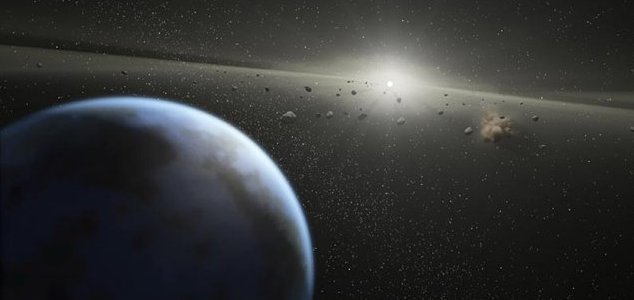
It’s a world of eternal twilight, so far from the sun that our star would look like little more than a very bright pinpoint of light. It would be fantastically cold, a giant of ice and gas, possibly with a rocky core, shrouded in an atmosphere of hydrogen and helium. It is the king of the dark frontier.

The Hunt Is On: How Do You Find a Shadow?

Okay, the math is solid. The theory is compelling. But where’s the picture? Where’s the proof?

This is the problem. Finding Planet Nine is one of the greatest astronomical challenges ever attempted. It is unimaginably far away, which means it is outrageously faint. And because scientists don’t know its exact orbit, they have to scan a huge swath of the night sky. It’s like trying to find a single black cat in a pitch-black warehouse the size of a country. At night.

But the hunt is getting serious. Giant telescopes, like the Subaru Telescope in Hawaii, have been dedicating time to scanning the most likely regions of the sky. The Canada France Hawaii Telescope was used to find a *seventh* object that also fit the model, adding even more weight to the theory. Every new, weirdly-orbiting TNO they find is another piece of the puzzle, another pin in the map that helps narrow the search area.

The real game-changer is coming soon. The Vera C. Rubin Observatory in Chile, currently under construction, will be a survey machine unlike any other. It will photograph the entire visible sky every few nights. If Planet Nine is out there and is as bright as the models predict, the Rubin Observatory *will* find it. It won’t be able to hide. It will show up as a tiny dot of light, moving slowly, glacially, against the fixed background of stars. And when that happens, the internet will break.

The Skeptics Strike Back: Is There Another Explanation?

Of course, not everyone is convinced. A theory this big is bound to have its critics, and they’ve raised some fascinating counter-arguments. This isn’t a settled science; it’s a live, active debate happening right now.

H3: Is It Just a Trick of the Light?

One of the main arguments against Planet Nine is “observational bias.” The idea is simple: maybe the Kuiper Belt objects aren’t *really* clustered. Maybe we’ve only found the ones that are clustered together because that’s where we happen to be looking. The vastness of the outer solar system is hard to comprehend, and our surveys have only covered tiny patches of it. It’s possible, the skeptics say, that there are thousands of other TNOs on totally different orbits that we just haven’t spotted yet. If we could see them all, the “cluster” might just disappear into a random distribution.

H3: The Primordial Black Hole Theory

This one sounds like pure science fiction, but some very serious physicists are considering it. What if the gravitational bully isn’t a planet at all? What if it’s a primordial black hole?

This wouldn’t be a black hole from a collapsed star. It would be a tiny, ancient black hole, possibly formed in the first seconds after the Big Bang. If one of these objects, with the mass of a planet but the size of a grapefruit, was captured by our sun’s gravity long ago, it would produce the *exact same gravitational effects* as Planet Nine. It would be completely invisible, detectable only by the way it warps space-time around it. A planet is a wild idea. A pet black hole is something else entirely.

H3: Death by a Thousand Cuts?

A third theory suggests there isn’t one big object, but that the strange orbits are caused by the combined gravitational pull of a second, more massive Kuiper Belt made of many smaller, undiscovered objects. Instead of one giant shepherd, it could be a whole pack of “sheepdogs” working together. This is a more conservative explanation, but it still requires us to believe there’s a huge amount of undiscovered mass hiding in the dark.

Echoes of the Past: Planet X and the Nemesis Star

The idea of a hidden planet in our solar system isn’t new. It’s an idea that has haunted the fringes of science and conspiracy for over a century. Long before Planet Nine, there was Planet X.

In the late 19th and early 20th centuries, astronomers like Percival Lowell were convinced that wobbles in the orbits of Uranus and Neptune pointed to a ninth planet, which he called Planet X. His search ultimately led to the discovery of Pluto in 1930, but Pluto was far too tiny to be the giant he was looking for. The idea faded from mainstream science, but it never truly went away.

It was co-opted by alternative history writers and conspiracy theorists, most famously in the form of Nibiru, a mythical twelfth planet from the writings of Zecharia Sitchin, which was said to swing through the inner solar system every 3,600 years, causing cataclysms. While the Planet Nine theory is based on rigorous mathematics, not ancient texts, it’s impossible to ignore the strange echo. Humanity has been telling stories about a hidden world for a long time. What if the stories were a distorted folk memory of a scientific reality?

Then there’s the even darker theory: Nemesis. In the 1980s, some scientists proposed that our sun might have a distant, unseen companion star—a brown dwarf or a red dwarf—on a huge orbit. They called it Nemesis, the “Death Star.” The theory was that every 26 million years, Nemesis’s orbit would bring it through the Oort cloud (an even more distant sphere of comets), sending a deadly shower of them hurtling toward the inner solar system, causing a mass extinction event on Earth. The Planet Nine theory offers a chilling new possibility. What if it’s not a companion star? What if a planet on a 20,000-year orbit is what occasionally stirs the pot, flinging comets our way? Could Planet Nine be the real Nemesis?

What If? The Mind-Bending Implications

Let’s just stop and think for a second. What happens the day they announce they’ve found it?

It changes everything. Instantly, our solar system has a new member. Every textbook, every chart, every museum display becomes obsolete overnight.

But it goes deeper. The existence of a planet this big, this far out, throws a wrench into our theories of how solar systems form. Did it form out there in the cold and dark? Or—and this is the wilder idea—was it a “rogue planet” that was born in another solar system, got ejected, and was then captured by our sun’s gravity billions of years ago? If so, we have a literal alien world in our own backyard.

And the biggest question of all… could it support life? Probably not on the planet itself, a frigid gas giant. But large planets have moons. Jupiter has Europa. Saturn has Enceladus. Both are icy moons with suspected liquid water oceans beneath their frozen shells, warmed by the gravitational push-and-pull of their parent planet. Could Planet Nine have its own large, captured moon with a subsurface ocean, kept liquid by tidal forces? It’s a breathtaking possibility. Life not warmed by a sun, but by the gravity of a ghost planet, thriving in absolute darkness.

The case continues to build. The shadows are getting longer. The evidence is piling up like clues at a crime scene. We live in a solar system with a secret, and we are the generation that might finally solve the mystery.

The only question left is… when will we finally see it?

Originally posted 2016-03-30 22:24:03. Republished by Blog Post Promoter