The Disneyland Anomaly: What They Aren’t Telling You About the Flying Elephant
They want you to think it was simple. Routine, even.
A piece of machinery needed a tune-up. A helicopter was called. The job was done. End of story. The official narrative is clean, tidy, and fits neatly into a press release. But we know better, don’t we? When something this bizarre happens in the most meticulously controlled place on Earth, “routine” is the last word you should ever believe.
It happened on a bright Wednesday morning in Southern California. The sky was a perfect, cloudless blue. Families milled about below, clutching churros and Mickey Mouse ears, completely unaware of the spectacle about to unfold above their heads. Then, the sound. A rhythmic chopping, growing louder, closer. People looked up from their maps and their phones. And they saw it.
A real-life Dumbo.
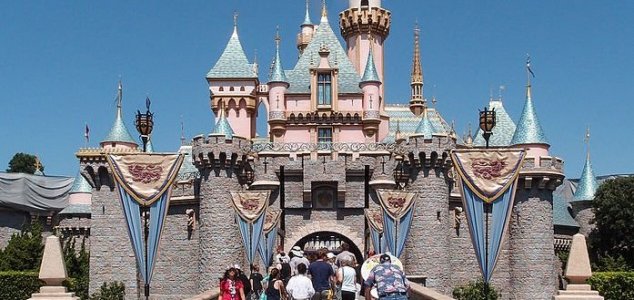
Hanging from a helicopter by a series of straps, a full-sized animatronic elephant drifted serenely over the iconic spires of Sleeping Beauty’s Castle. It was a moment of pure, unadulterated weirdness. A glitch in the matrix of the Magic Kingdom.

Phones came out. Cameras clicked. The image burned itself onto the internet’s collective retina within minutes. A flying elephant. Over Disneyland. What was going on?
The Official Story: A Broken Neck and a Helicopter Ride
The Disney PR machine, ever-efficient, spun up immediately. The story they fed the media was straightforward. Veronica Wyant, a Disneyland planner, told the Orange County Register that one of the beloved animatronic elephants from the world-famous Jungle Cruise attraction had a “neck issue.”
A neck issue. How mundane.
They claimed the mechanical beast, a park fixture since its grand opening in 1955, had been removed back in January for repairs. This helicopter ride, this bizarre aerial parade, was simply the animal’s return journey home. It was being carefully airlifted back into the dense, manufactured foliage of Adventureland. As an odd little footnote, they added that a giant fake python was also getting a lift back to its designated tree. The snake, they said, also needed some fixing.
Case closed, right? Just a bit of theme park maintenance. A quirky photo-op for the tourists. Nothing more to see here, folks. Move along.
But that’s where you’re wrong. That’s where it gets interesting. Because to understand why this event is so much more than a simple repair job, you have to understand the place where it happened. And you have to understand the history of the ride it came from.
Deep Dive: The Secret History of the Jungle Cruise
The Jungle Cruise isn’t just a ride. It’s a foundational piece of the Disney mythos. It was born directly from the mind of Walt Disney himself, an opening-day attraction that has anchored Adventureland since July 17, 1955.
But the version you ride today? It’s a pale, jokey imitation of Walt’s original, far more serious, vision.
From Documentary to Dad Jokes
Originally, the Jungle Cruise was meant to be a serious, educational experience. Think of it as a living documentary. Walt was obsessed with his “True-Life Adventures” nature films, which were hugely popular in the 1950s. He wanted guests to feel like they were genuinely floating down the Mekong Delta or the Amazon River. The animals were to be realistic. The atmosphere, thrilling. The narration was to be delivered straight, like a National Geographic special.
The legendary Imagineer Harper Goff, a man who designed the Nautilus submarine for 20,000 Leagues Under the Sea, was tasked with bringing this vision to life. He based the ride’s aesthetic on the classic 1951 film The African Queen, starring Humphrey Bogart and Katharine Hepburn. The sputtering steam-powered boats? Straight out of that movie.
But there was a problem. In the early days, the animatronics, while revolutionary for their time, were… stiff. They moved, sure. An elephant’s ears would wiggle. A hippo would surface. But they couldn’t replicate the dynamic, unpredictable nature of real animals. The ride felt a little dry. A little… boring.
So, in the early 1960s, Walt brought in a comedy writer, Marc Davis, to inject some humor. This is when the ride transformed. The serious narration was scrapped for an endless stream of puns and groan-worthy dad jokes. The skippers became wannabe comedians. The tone shifted from adventure to camp. This is when we got gags like the “back side of water” (O2H!) and the trapped safari group getting the “point” in the end from a rhino.
The elephant, our flying friend, has been there through it all. It has seen the ride change, evolve. It has watched millions of people float by. It’s one of the old guard. A silent witness to decades of park history. So when one of these original assets is unceremoniously yanked out and then flown back in like a high-value asset, you have to wonder.
A Technological Time Capsule
Think about the technology inside that elephant. In 1955, “animatronics” was a space-age concept. They were complex systems of pneumatic and hydraulic actuators, running off reels of magnetic tape that sequenced their movements. It was cutting-edge stuff. Over the years, these systems have been updated, replaced, and retrofitted. The original hydraulic guts have been swapped for more efficient, computer-controlled systems.
So when they say “neck issue,” what does that actually mean? A faulty valve? A frayed wire? Or something else entirely?
Conspiracy Radio: Analyzing the Anomaly
This is where the official story falls apart under scrutiny. Let’s break down the strange elements that the mainstream reports conveniently ignored.
Theory 1: “Operation Dumbo Drop” was a PR Stunt
Let’s start with the most obvious alternative theory. Was this just a brilliant, calculated marketing move? Disney are masters of publicity. They know a good story when they see one. What better way to get “Disneyland” trending on a random Wednesday than to create an unbelievable, shareable moment?
They could have done this at 3 a.m. with no one around. They could have used a massive crane, hidden from public view. But they didn’t. They chose a helicopter. They chose to fly it directly over the most photogenic landmark in the entire park. It was practically begging to be photographed. Within hours, the story was on every news outlet from CNN to the Daily Mail. Free advertising, and it makes the park look whimsical and magical. It’s a genius move, if that’s all it was.
But it feels… too simple. A bit too clean for the level of weirdness we’re dealing with.
Theory 2: The “Neck Issue” Was a Cover for a Secret Upgrade
This is where things get darker. What if the elephant wasn’t broken at all? What if it was being *upgraded*?
Disneyland has long been rumored to be a testing ground for advanced technologies. We’re talking about surveillance, data collection, and crowd-control systems disguised as entertainment. Think about it. That elephant is in a prime location. It “watches” thousands of guests float by every single day. What if its “neck issue” was cover for installing something new inside its hollow shell?
Perhaps high-resolution cameras. Audio recording devices. Wi-Fi signal trackers to monitor guest movement through the park. Taking it “off-site for repairs” is the perfect excuse to perform a sensitive installation away from prying eyes and internal staff who aren’t on a need-to-know basis. Flying it back in is just the most efficient way to get it done, with the added benefit of creating a “magical moment” to distract everyone from the real purpose.
And what about the python? The official story throws it in as an afterthought. But in intelligence operations, that’s often where the real secret is hiding. The elephant is the loud, flashy distraction. The “look over here!” moment. Maybe the unassuming snake, wrapped around a tree, was getting the *real* tech installed. Something smaller, more discreet. While everyone was snapping pictures of the flying pachyderm, the real payload was being quietly slotted into place.
Theory 3: It Was a Message
This theory steps into the truly strange. In the world of covert operations and powerful, secretive organizations, symbols are everything. Nothing happens by accident. Flying a giant elephant over a fairytale castle is not a subtle image. It’s a statement.
But a statement to whom? And what does it mean?
Some internet forums have lit up with this idea. Perhaps it was a signal to other powerful players, a display of logistical capability. “We can move anything, anywhere, anytime, in plain sight.” Maybe it’s an inside joke for the global elite who frequent the park’s exclusive Club 33. A nod and a wink that only they would understand.
The symbol of Dumbo itself is potent. The story of an outcast with a strange ability who is mocked until he learns to use his gift to fly and become a star. Is there a coded meaning there? A project codenamed “Dumbo” reaching a new phase? It sounds insane, until you remember that truth is often far stranger than fiction.
The Aftermath and the Digital Ghost
The 2016 flying elephant event has become a piece of modern internet folklore. The footage and photos resurface every few years on Reddit, TikTok, and YouTube, detached from their original context. New generations of internet detectives discover it and ask the same question: *What the hell was that?*
The official explanation is always there, but it never seems to satisfy. The image is just too powerful. It short-circuits the logical part of our brain. Elephants don’t fly. Especially not over Disneyland.
It’s become a digital ghost, a story that proves how easily the truly bizarre can be normalized and forgotten, filed away under “quirky news day.” But for those of us who look closer, it remains an unsolved mystery. A loose thread in the carefully woven story of the “Happiest Place on Earth.”
They told us it was a broken neck. They told us it was maintenance. They gave us a simple answer for a surreal spectacle.
But look at the picture again. See the massive animal, a relic from 1955, hanging from a modern flying machine. See it framed against the fantasy of the castle. Nothing about it feels simple. Nothing about it feels routine.
It feels like a secret, hiding in plain sight.
Originally posted 2016-05-04 20:40:12. Republished by Blog Post Promoter