Sunday, June 14, 2026
HomeWeird WorldScienceEarth under attack.

Earth under attack.

The Day the Sky Fell: Uncovering the Late Heavy Bombardment

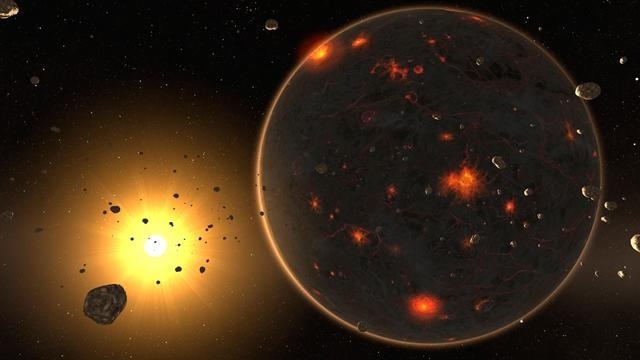
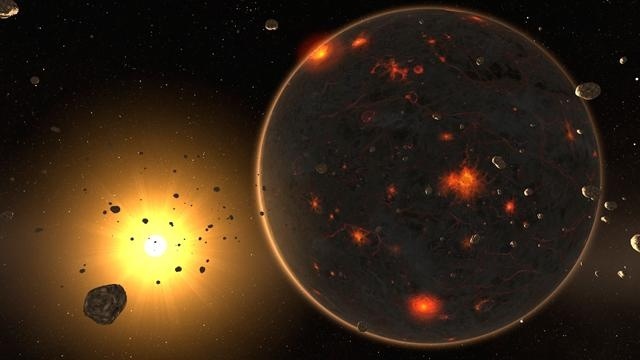
Imagine looking up at the night sky. It’s calm. Quiet. A few shooting stars here and there, right? Now, rewind the clock. Go back 4.1 billion years. The sky isn’t black. It’s burning.

There is no calm. There is only fire. Rocks the size of Manhattan are raining down every single hour. The oceans are boiling away into steam. The crust of the Earth is being pulverized, melted, and remade over and over again. This wasn’t a bad weekend. This was a nightmare that lasted for hundreds of millions of years.

Scientists call it the Late Heavy Bombardment (LHB). Or, if you want the more dramatic title, the Lunar Cataclysm.

It is one of the most mysterious, violent, and controversial chapters in the history of our solar system. It’s the smoking gun that suggests our planetary neighborhood wasn’t always a clockwork machine of order. It was a chaotic billiards game played by gas giants, with Earth caught directly in the crossfire.

The Cosmic Crime Scene

Here is the weird thing. When planets form, it’s messy. Gravity pulls dust into rocks, rocks into asteroids, and asteroids into planets. We call that “accretion.” That happened about 4.6 billion years ago. By all logic, things should have settled down quickly. The debris clears up. The big impacts stop.

But they didn’t.

The LHB is a massive anomaly. It happened “late”—about 600 million years after the solar system formed. That is a huge gap. It’s like building a house, living in it peacefully for ten years, and then suddenly having a dump truck drive through your living room wall.

Why the delay? Why the sudden violence after a period of relative calm? That is the question keeping astronomers awake at night.

Most of the evidence for this apocalypse doesn’t come from Earth. Our planet is a master of disguise. We have weather. We have water. We have plate tectonics that recycle the crust like a giant conveyor belt. Earth hides its scars. If a massive asteroid hit the Pacific Ocean 4 billion years ago, the crater is long gone, erased by erosion or subducted into the mantle.

To see the truth, we have to look at the witness that can’t lie.

The Moon: The Silent Witness

Look at the Moon through a telescope. What do you see? Pockmarks. Millions of them. The Moon is dead geologically. No wind, no rain, no volcanoes (at least not anymore). It preserves history perfectly. It is a museum of violence.

During the Apollo missions, NASA didn’t just send astronauts to play golf. They sent them to be geological detectives. Armstrong, Aldrin, and the rest brought back hundreds of pounds of lunar rocks and soil. When scientists in clean rooms back on Earth started dating these samples, they noticed something that made no sense.

The Clustering Paradox.

If the Moon had been getting hit randomly over 4.5 billion years, the ages of the impact rocks should be spread out evenly. A few old ones, a few young ones, a mix. But that’s not what they found.

Almost all the “impact melt” rocks—the stuff created when a meteor slams into the surface with the force of a nuclear bomb—were dated to the exact same time window: roughly 4.1 to 3.8 billion years ago. Before that? Hardly anything. After that? A steep drop-off.

It looked like the solar system suddenly turned into a shooting gallery.

The “Nice” Model: A Planetary Bowling Alley

So, what triggered this assault? Why did the asteroids suddenly decide to attack the inner planets? The leading theory has a polite name: The Nice Model (named after the city in France, not because it’s pleasant. Trust me, it wasn’t pleasant).

This theory suggests that our solar system used to look very different. The giant planets—Jupiter, Saturn, Uranus, and Neptune—were much closer together. They were packed tight.

Then, gravity started to get weird.

Jupiter and Saturn, the bullies of the solar system, entered into a gravitational dance. They fell into a “resonance.” Every time Jupiter orbited the sun twice, Saturn orbited exactly once. This rhythmic tug-of-war created a gravitational pump. It destabilized the orbits of the other giants.

Chaos ensued.

According to the computer simulations, Neptune and Uranus were thrown outward, violently shoving into the Kuiper Belt (the ring of icy rocks beyond the planets). This was like throwing a bowling ball into a room full of marbles. Comets and asteroids were scattered everywhere. 99% of them were ejected into deep space. But the remaining 1%?

They were hurled inward.

They screamed toward the Sun, smashing into everything in their path. Mercury, Venus, Mars, and Earth were pelted relentlessly. The “Man in the Moon”? The dark patches you see? Those are giant basins filled with lava, scars left by this specific event. The Nice Model paints a picture of a dynamic, terrifyingly active solar system where planets migrate and destroy everything in their wake.

Alternative History: The Lost Planet “V”

The Nice Model is the mainstream explanation. But let’s get a little darker. Let’s look at the theories that don’t get as much airtime.

Some astronomers have proposed the existence of a fifth terrestrial planet. Let’s call it Planet V. It would have existed somewhere between Mars and the Asteroid Belt. In this scenario, the solar system had an extra sibling.

But Planet V was doomed. The gravitational perturbations from Jupiter eventually destabilized its orbit. It didn’t just migrate; it might have crashed. Some theories suggest Planet V was flung into the Sun, or worse, collided with another body. The resulting debris field would have sent a shotgun blast of rocks across the inner solar system, creating the LHB.

Where is Planet V now? Gone. Vaporized. Or maybe, just maybe, some of the meteors that fall to Earth today are the final pieces of its corpse.

Did the Bombardment Bring Us to Life?

Here is where things get truly mind-bending. You would assume that the Late Heavy Bombardment was an extinction event. Nothing could survive that, right? The surface of the Earth was molten. The atmosphere was choking on sulfur and rock vapor.

But look at the timeline.

The earliest evidence of life on Earth appears in the fossil record almost immediately after the bombardment stopped. We are talking about 3.8 billion years ago. The moment the rocks stopped falling, life started.

Coincidence? Or causation?

There are two massive schools of thought here, and both are equally thrilling.

Scenario 1: The Delivery System

The Earth formed hot and dry. It likely lost its original water. So where did our oceans come from? Comets. Asteroids. The very objects that were smashing into the planet during the LHB were loaded with ice. They were also loaded with organics—amino acids, the building blocks of life.

In this version of history, the LHB wasn’t an attack; it was a supply run. It delivered the water you drink and the carbon in your cells. We are the children of the catastrophe.

Scenario 2: The Deep Biosphere

What if life had already started before the bombardment? If it did, the LHB would have wiped out everything on the surface. But microbes living deep underground, or near deep-sea hydrothermal vents, might have survived.

This theory suggests that all life on Earth today is descended from the few “super-survivors” that managed to hide in the deep crust while the surface world burned. We are the descendants of the ones who hid in the bunker.

The Skeptics: Was It All a Mirage?

Not everyone buys the story. In the world of science, if you can’t prove it, it’s suspect. And recently, a growing group of researchers is screaming “Foul!” on the LHB theory.

Their argument? Bias.

Remember those Apollo samples? The ones that all dated to 3.9 billion years ago? Skeptics argue that the astronauts didn’t sample the whole Moon. They landed in a few spots, all relatively close to the giant Imbrium Basin.

The Imbrium impact was huge. It scattered debris all over the nearside of the Moon. Critics argue that the Apollo astronauts just kept picking up ejecta from that one single bad day. They think the “spike” in impacts is an illusion. Maybe the bombardment wasn’t a sudden storm. Maybe it was a slow, steady rain that happened over billions of years, but the Imbrium explosion just covered up the evidence.

If this is true, the Nice Model falls apart. The dramatic planetary migration might never have happened. The solar system might be boring after all. But try telling that to the craters on Mars.

The Earth: The Lost Record

The most frustrating part of this mystery is our own planet. We live on the scene of the crime, but the evidence has been shredded.

However, we are finding tiny clues. In Western Australia, at a place called Jack Hills, scientists found zircons. These are microscopic crystals that form in cooling magma. They are the oldest things on Earth, dating back 4.4 billion years.

These zircons tell a shocking story. They contain chemical signatures suggesting that liquid water and cool temperatures existed before the LHB. This means Earth might have been a tropical paradise, a blue marble, very early on. And then the LHB hit and turned it into a hellscape. It suggests a “Cool Early Earth” that was destroyed and had to reboot.

It forces us to ask: Was there life before the bombardment? Did a whole biosphere exist 4.2 billion years ago, only to be totally sterilized? Are we “Life 2.0”?

Why It Matters Now

You might be thinking, “Who cares? This was 4 billion years ago.”

You should care. Because the solar system isn’t done. The dynamics that caused the LHB—planetary migration, gravitational resonances, chaotic orbits—are physics. They don’t stop.

We look at the asteroid belt today and see it as stable. But it is a graveyard of debris. We track Near Earth Objects (NEOs) because we know that the “big one” isn’t a matter of if, but when.

The Late Heavy Bombardment teaches us that stability is an illusion. We are drifting through a shooting gallery, protected only by the temporary grace of Jupiter’s gravity and blind luck. The craters on the Moon are a warning sign posted in the sky.

The Final Verdict?

We still don’t know for sure. Was it a sudden cataclysm caused by moving planets? A steady rain of terror? Or a misunderstanding of moon rocks?

NASA is planning to go back. The Artemis missions aim to land in different spots, near the lunar South Pole. They will collect new rocks. Hopefully, rocks that aren’t contaminated by the Imbrium basin. Maybe then we will finally know if the sky really did fall, and if that falling sky is the only reason we are here to talk about it today.

Until then, look up at the Moon tonight. It’s not just a pretty light. It’s a shield. And it took a beating so you wouldn’t have to.

Amit Ghosh
Amit Ghoshhttps://coolinterestingnews.com
Aloha, I'm Amit Ghosh, a web entrepreneur and avid blogger. Bitten by entrepreneurial bug, I got kicked out from college and ended up being millionaire and running a digital media company named Aeron7 headquartered at Lithuania.
RELATED ARTICLES
- Advertisment -

Most Popular

Recent Comments

Warren Pan Abbott on The legend of the Devil Monkey !
chris davies on The McPherson Tape Mystery
Reed Reedly on ET has Internet!
Bea Houseoffashion on Proof Of Time Travellers – Gallery
Marcus2012 on ET has Internet!
Reed Reedly on ET has Internet!
LaughsAtConspiracyNuts on The 9/11 Conspiracy – Myths and Facts
Alex Sliverman on Did the ancients fly?
Doctor Wholigan on Time Traveler in 1938 film
chris davies on The McPherson Tape Mystery
Archie1954 on 10 secret UFO hideouts
chris davies on Ghosts of flight 401
Marcus2012 on ET has Internet!
jason Macdonald on Proof of Time Travel? – China
chris davies on Long-Lost Pyramids Found?
Reed Reedly on ET has Internet!
Milkman on Connected Universe
Tenmiles on Baigong Pipes Mystery
Simon Foster on Sirius – The Documentary
From the 1st April on 2013 – Alien Contact date ?
SkyWatcher on Is ET ignoring us?
I Come From The Future on Obama to make UFO Alien disclouser soon ?
ÛñK?øWn on 2013 – Alien Contact date ?
Just another person on 2013 – Alien Contact date ?
Malcolm Windowcleaner on The strange case of Rudolph Fentz
Mason Servio on Strange Things on Mars
Marke Wisdom Seeker on What will we find as arctic melts?
Andrea A Elisabeth Levyne on Aliens Captured in Varginha, Brazil
Mitch Grouyeki on Amazing Space Shuttle pictures