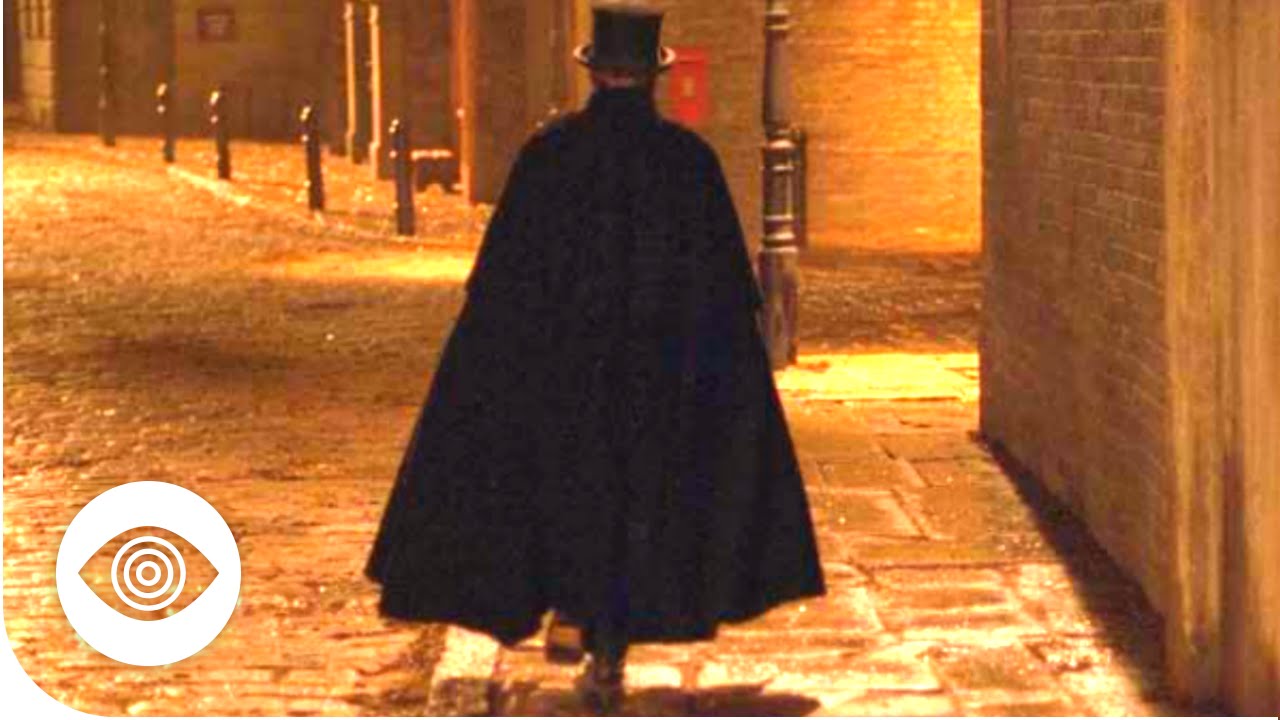
London. 1888. The East End.
Imagine the smell. Coal smoke. Rotting garbage. Fear. It hung thick in the air, heavier than the yellow fog that choked the cobblestone streets of Whitechapel. In the span of just a few months, a shadow turned the world upside down. He didn’t just kill. He butchered. He taunted the police. He vanished into the night like a ghost.
They called him Jack.
For over a century, the identity of Jack the Ripper has been the ultimate cold case. The holy grail of true crime. Was he a doctor? A prince? A madman? Or maybe just a nobody hiding in plain sight? We have spent 126 years guessing. Speculating. Arguing.
But what if the arguing is over?
In 2014, a bombshell dropped. It wasn’t a new theory based on crumbling diaries or whispered rumors. It was science. Cold, hard, biological data. Author Russell Edwards and genetic scientist Dr. Jari Louhelainen stepped forward with a claim that shook the foundations of Ripperology. They said they had him. They said they had the DNA. And they put a name to the monster.
The Shawl That Saw It All
To understand this breakthrough, we have to go back to the scene of the crime. Not metaphorically. Literally.
Catherine Eddowes. The fourth victim. On the night of September 30, 1888, her body was found in Mitre Square. It was a gruesome, horrific scene. But amidst the chaos of the investigation, one item was reportedly picked up by a police officer named Amos Simpson. A silk shawl.
It didn’t belong to Catherine. It was too fancy. Too expensive. It had a pattern of Michaelmas daisies. Officer Simpson apparently took it home to his wife. A strange gift, right? “Here, honey, this was next to a dead body.” Understandably, she never wore it. It went into a box.
And it stayed there. For generations.
This is the crazy part. The shawl was reportedly never washed. Not once. For over a hundred years, it sat in storage, passing from the Simpson family to an auction house in 2007. That is where Russell Edwards, a businessman obsessed with the Ripper mystery, bought it. He didn’t just buy a piece of fabric. He bought a crime scene.
The Stain of Guilt
Edwards teamed up with Dr. Jari Louhelainen, a senior lecturer in molecular biology at Liverpool John Moores University. They weren’t looking for fingerprints. Those were long gone. They were looking for something more resilient.
Under UV light, the shawl lit up.
They found stains consistent with arterial blood splatter. That matches the brutal method of the Ripper’s attacks. But they found something else, too. Something gross, but scientifically gold. Semen.
This was the smoking gun. If they could pull DNA from that fluid, they wouldn’t just identify the victim; they would identify the killer.
The Prime Suspect: Aaron Kosminski
Let’s talk about the man the DNA pointed to. If you’re imagining a top-hatted villain or a member of the Royal Family, you might be disappointed. The evidence pointed straight to the gutter.
Aaron Kosminski.
Who was he? Kosminski was a Polish Jewish immigrant. He worked as a hairdresser in Whitechapel. He was 23 years old when the murders happened. And here is the kicker: He was one of the original police suspects.
Back in 1888, the police had their eyes on him. Sir Melville Macnaghten, a top police official at the time, wrote in his famous memoranda that Kosminski had a “great hatred of women” and strong “homicidal tendencies.” Witnesses had even placed a man resembling him near the crime scenes. But they never had enough proof to charge him. The law was different back then. They couldn’t just swab his cheek. He was eventually committed to an insane asylum, where he died decades later.
He fits the profile perfectly.
- Geography: He lived right in the heart of the “kill zone.” He knew the labyrinth of Whitechapel alleys better than the police did.
- Mental State: Records show he suffered from severe auditory hallucinations and paranoia. He was known to eat food out of the gutter and refused to wash.
- Opportunity: As a hairdresser, he had access to blades. Sharp ones.
The Science: Breaking the Code
So, how did Dr. Louhelainen connect the dots? It wasn’t easy. The DNA was old. Fragmented. Degraded. You can’t just run a standard 2024 PCR test on it and get a printout.
They focused on mitochondrial DNA (mtDNA). Unlike nuclear DNA, which is a unique fingerprint, mtDNA is passed down from the mother. It’s much more abundant in cells and survives longer. It doesn’t identify a specific person uniquely, but it identifies a maternal bloodline.
First, they proved the blood on the shawl belonged to Catherine Eddowes. They tracked down a living female descendant of Eddowes, Karen Miller, and compared her DNA to the blood on the shawl.
It was a match.
This proved the shawl was there. It was authentic. It was at the murder scene. That alone is huge. But then came the semen stain.
They needed a relative of Aaron Kosminski. They found one. A female descendant of Kosminski’s sister gave a sample. The team held their breath. They compared the markers.
Match.
According to Edwards and Louhelainen, the odds of this being a coincidence are astronomical. In their view, this closed the book. Aaron Kosminski dropped his shawl at the scene of the crime (or perhaps Catherine was wearing it, given to her by him?) and left his biological calling card behind.
The “Deep Dive”: Why the Controversy Exploded
If this was a slam dunk, why aren’t we celebrating? Why does the mystery persist?
Because this is the internet age. And the Ripper community—the “Ripperologists”—are a tough crowd to please. Almost immediately after the announcement, the backlash began. It was fierce.
1. The Contamination Theory
Skeptics screamed about contamination. The shawl had been handled by hundreds of people over 126 years. It had been in a police officer’s house. It had been at an auction. Edwards himself admitted to touching it.
Could the DNA have come from someone else? Could the “semen” actually be something else entirely? Critics argued that without a pristine chain of custody (which is impossible for a 19th-century artifact), the evidence is tainted.
2. The “Mutation” Error
This is where it gets nerdy. Other scientists looked at Louhelainen’s data. They claimed he made a fundamental error in calculating the rarity of the DNA mutation. One geneticist pointed out that the specific genetic marker they found wasn’t rare at all—it might be shared by thousands, if not millions, of people of European descent.
If 10% of the population has that marker, then the DNA doesn’t prove Kosminski was the killer. It just proves the killer was… a human. Or that someone with that common marker sneezed on the shawl in 1950.
3. The Shawl Itself
Historians jumped in, too. They questioned why a poor woman like Catherine Eddowes would have an expensive silk shawl. Or why a poor hairdresser like Kosminski would possess it. Some suggested the shawl was manufactured after the murders took place, based on the dye and weave, though Edwards disputes this.
Alternative Theories: If Not Him, Then Who?
Even with the DNA evidence making headlines, the other theories refuse to die. The shadow of Jack is too big for just one man. Let’s look at the other contenders that keep people up at night.
The American Devil: H.H. Holmes
You know him. The guy with the “Murder Castle” in Chicago. A modern theory suggests Holmes and the Ripper were the same person. The timeline technically works. Holmes was a con man and a traveler. Could he have taken a vacation to London to indulge his dark urges? The handwriting samples look eerily similar. It’s a terrifying thought—the world’s first superstar serial killers being the same monster.
The Royal Conspiracy
This is the plot of the movie From Hell. The idea is that Prince Albert Victor, the grandson of Queen Victoria, was the killer (or the reason for the killings). The theory goes that he fathered an illegitimate child with a commoner, and the Royal family sent a hit squad to silence the women who knew. It’s dramatic. It’s sexy. It’s shocking. Most historians say it’s total nonsense, but it sells books.
The Artist: Walter Sickert
Crime novelist Patricia Cornwell spent millions of her own money trying to prove that famous painter Walter Sickert was Jack. She claims he painted clues into his art. She even cut up one of his paintings searching for DNA. Her theory is controversial, to say the least, but it shows how far people will go to solve this puzzle.
Why We Are Still Obsessed
Why do we care? Why does a string of murders from 1888 captivate us more than crimes happening today?
It’s the setting. It’s the top hats and the fog. But mostly, it’s the lack of closure. We hate an unfinished story. We need to know the end. The DNA findings regarding Aaron Kosminski are the closest we have ever come to a period at the end of the sentence. But for many, it’s still a question mark.
Was it Kosminski? The evidence is compelling. A paranoid schizophrenic living in the area, identified by witnesses, with DNA linking him to a victim. It checks every box.
But in the world of conspiracy, truth is slippery. Maybe the shawl was contaminated. Maybe the science was flawed. Or maybe, just maybe, Jack is still laughing at us from the grave, his secret safe in the smog of history.
What do you believe? Is the case closed, or is the file still open?
Want to dig deeper into the madness?
Check out the original sources and dive into the rabbit hole of conspiracies. The truth is out there, somewhere.
Top 5 Facts About Jack The Ripper? Watch Here
More from the Archives:
– How Dangerous Is Opus Dei?: Watch Video
– The Mystery Of The Crystal Skulls: Watch Video
– Who Killed Houdini?: Watch Video
————————-
Stay curious. Question everything. And keep the lights on.
Originally posted 2015-03-03. Updated for the modern truth-seeker.