Monday, June 8, 2026
HomeFilms & DocumentariesDocumentary - Atlantis, the Lost World

Documentary – Atlantis, the Lost World

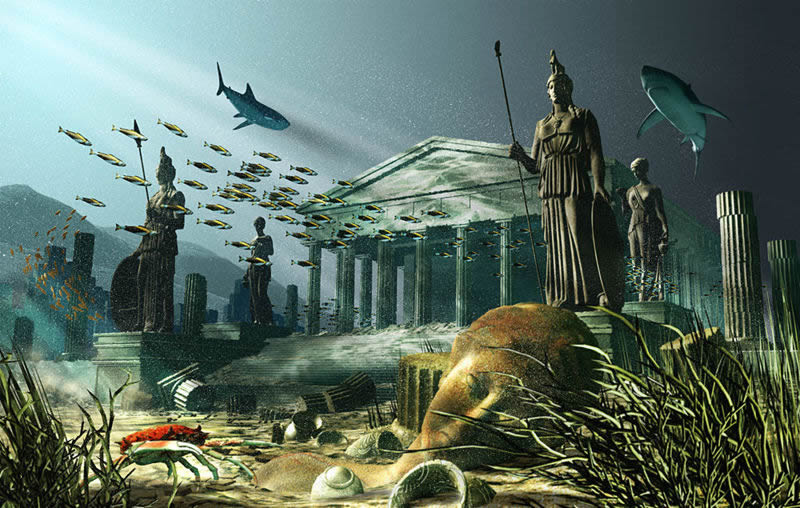
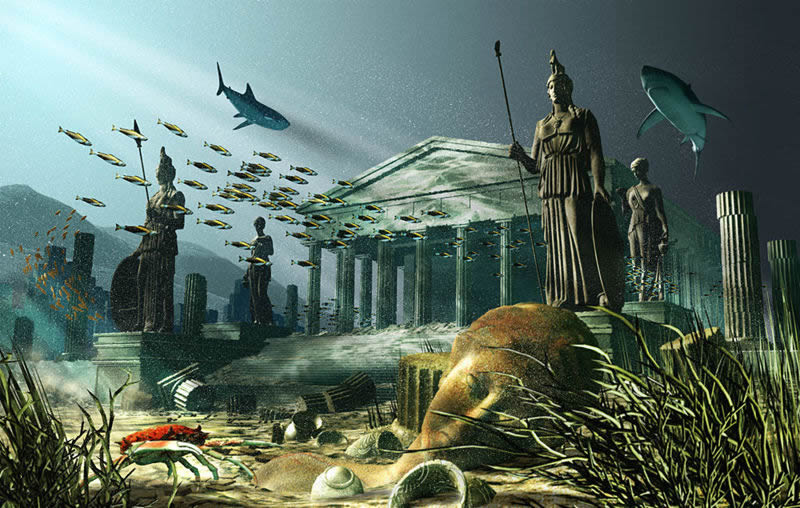
Atlantis: The Greatest Cold Case in Human History

It’s a name you know. A whisper from the deep. Atlantis.

The story echoes in our collective memory. A magnificent island nation. A utopia of impossible architecture and wisdom that defied its age. A civilization so advanced, it possessed technology we can only dream of. And then, in a single, terrifying day and night of fire and earthquakes, it vanished. Swallowed by the sea. Wiped from the face of the Earth.

Official history calls it a myth. A fable. A philosophical bedtime story told by an old Greek man to make a point about hubris.

But what if they’re wrong?

What if the story of Atlantis isn’t a myth at all? What if it’s a memory? A fragmented, distorted account of a real catastrophe that scarred the human psyche. A global warning passed down through the ages, its true meaning lost in the fog of time. We’re told to dismiss it. To file it away with dragons and fairy tales. But the story won’t die. It clings to the edges of our maps and the corners of our minds for one simple reason: the clues just keep piling up.

Forget everything you think you know. We’re not just talking about a fairy tale. We’re opening a cold case file. The oldest one on the books. And we’re going to follow the evidence, wherever it leads—from the volcanic ruins of the Mediterranean to the sands of the Sahara and into the blackness of a cosmic cataclysm that nearly ended us all.

Plato’s Smoking Gun: The Original Blueprint

Every investigation needs a starting point. A primary source. For Atlantis, there is only one.

All roads lead back to Athens, around 360 B.C., and to the mind of one of history’s greatest thinkers: Plato. He wasn’t a storyteller or a fantasy writer. He was a serious philosopher, a student of Socrates, whose work formed the bedrock of Western thought. And in two of his dialogues, the *Timaeus* and the *Critias*, he laid out the entire case file.

This wasn’t some vague legend he’d heard. Plato presented it as genuine history, passed down to him through his family from the great Athenian lawmaker Solon, who in turn heard it from Egyptian priests—the record-keepers of the ancient world. They claimed the story was ancient even to them, written on their sacred pillars.

Deep Dive: The City of Concentric Rings

Plato’s description is shockingly specific. He gives us names, dates, and dimensions. He paints a picture of a continent-sized island located out in the Atlantic Ocean, “beyond the Pillars of Hercules” (what we now call the Strait of Gibraltar).

The capital city, also called Atlantis, was a marvel of engineering. A central island housed the royal palace and temples, surrounded by three concentric rings of water and two of land, like a giant bullseye. These were connected by massive canals wide enough for ships to sail through, leading directly to the sea. The walls were clad in precious metals: the outer wall in bronze, the middle in tin, and the inner acropolis wall in orichalcum—a mysterious, fiery-red metal that glowed in the sun.

The Atlanteans, he wrote, were descended from the sea god Poseidon. They were a noble and powerful people, ruling a vast empire that stretched into Europe and Africa. They had advanced agriculture, strange animals (elephants are mentioned), and a military of staggering size. For generations, they lived in harmony.

But then, something changed. Their divine nature weakened. They were corrupted by greed and ambition. They sought to conquer the entire known world, and it was ancient Athens, Plato proudly states, that stood alone to stop them. Shortly after the war, the end came. “There occurred violent earthquakes and floods,” Plato wrote, “and in a single day and night of misfortune… the island of Atlantis in like manner was swallowed up by the sea and vanished.”

The date he gives for this destruction is the most controversial part: 9,000 years before the time of Solon. That places the cataclysm around 9,600 B.C. An impossible date for mainstream historians, who believe humans were barely out of the Stone Age. Could a civilization that advanced exist that long ago? Or was Plato’s story just an allegory, a warning against imperial ambition?

That’s the easy answer. But it’s not the most interesting one.

Prime Suspect #1: The Volcano That Swallowed a Civilization

If you want to find a real, historical event that looks an awful lot like Plato’s story, you don’t have to look 11,000 years into the past. You just have to rewind to about 1600 B.C. and travel to the Aegean Sea.

Here, on the island of Crete, thrived a truly remarkable Bronze Age civilization: the Minoans. They were not primitive. They were master sailors, brilliant artists, and incredible architects. They built the sprawling, labyrinthine Palace of Knossos, a complex with over 1,300 rooms, advanced plumbing, and stunning frescoes of bull-leapers and graceful dolphins. They dominated trade in the Mediterranean. They were, for all intents and purposes, a maritime superpower.

And about 70 miles north of Crete was the island of Thera, now known as Santorini. It was a circular Minoan outpost, a vibrant trading hub. Today, Santorini is a crescent-shaped shard of an island, famous for its breathtaking sunsets over a flooded volcanic crater, or caldera.

Around 1600 B.C., that volcano erupted. And it wasn’t just any eruption. It was one of the largest explosions in human history, hundreds of times more powerful than the bomb dropped on Hiroshima. It blew the heart out of the island of Thera, sending billions of tons of ash and rock into the stratosphere. The explosion would have been heard thousands of miles away. It triggered gargantuan tsunamis that smashed into the northern coast of Crete, obliterating ports and coastal towns. The sky went dark, crops failed, and the Minoan civilization, already weakened, was sent into a terminal decline.

A round island city, home to an advanced sea-faring culture, destroyed in a cataclysm and swallowed by the waves… sound familiar?

The parallels are undeniable. Many scholars believe this is the real origin of the Atlantis story. The memory of the Minoan collapse, passed down through generations of Egyptians and Greeks, eventually reached Plato. The details got twisted. The timeline got wildly exaggerated—maybe a translation error turned “900 years” into “9,000.” The location was moved from the Aegean to the Atlantic to make it more exotic and remote.

It’s a neat, tidy theory. It makes sense. It’s the official story. But it has one giant, gaping hole. Plato was very, very clear. Beyond the Pillars of Hercules. 9,000 years before his time. What if he meant exactly what he said?

The Internet’s Favorite Candidate: The Eye of the Sahara

For decades, the search was confined to the sea. But in the age of satellite imagery, a new and startling candidate has emerged from, of all places, the desolate sands of West Africa.

It’s called the Richat Structure, or more poetically, the Eye of the Sahara. Located in Mauritania, it’s a colossal geological feature, a deeply eroded dome nearly 25 miles in diameter. And from space, it looks… familiar. It’s a series of stunningly perfect, concentric rings.

When you start comparing the Richat Structure to Plato’s description of Atlantis’s capital city, the hairs on your arm start to stand up.

  • Concentric Rings: Plato describes a central island surrounded by rings of land and water. The Richat Structure has a central high point and a series of concentric circular ridges.
  • Dimensions: The measurements given by Plato for his city match the dimensions of the Richat Structure with an unnerving degree of accuracy. The diameter of the whole city, Plato said, was about 127 stadia. That converts to roughly 23.5 kilometers. The Richat Structure’s outer ring is about 23.5 kilometers.
  • Opening to the Sea: Plato mentions a canal that opened to the sea in the south. The Richat Structure has a distinct southern gap where water would have flowed out. Geological evidence shows that the Sahara was once green and wet, with massive rivers.
  • Mountains to the North: Plato describes mountains to the north of the city that sheltered it from the cold winds. The Richat Structure is situated just south of a significant mountain range.

Coincidence? Mainstream geologists say yes. They insist the structure is a completely natural formation, a geologic dome that has eroded over millions of years. They point out there’s no evidence of human habitation on the scale Plato described.

But the theories are explosive. Could this be the remains of the city, eroded down to its very foundations by a cataclysmic flood that turned the once-fertile land into the world’s largest desert? Could the “missing” evidence be buried under hundreds of feet of sand and sediment? It’s a tantalizing idea, a perfect mystery for the digital age, where anyone with Google Earth can become an armchair archaeologist and see the “ruins” for themselves.

Cosmic Catastrophe: Did a Comet Destroy Atlantis?

The biggest problem with Atlantis has always been the date. 9,600 B.C. That’s 11,600 years ago. This was the end of the last Ice Age. How could a civilization of bronze-working, ship-building architects exist in a world of hunter-gatherers?

Maybe the problem isn’t with Atlantis. Maybe the problem is with our understanding of the Ice Age.

Let’s look at that date again: 9,600 B.C. It’s not random. It lines up perfectly with one of the most violent and mysterious climate shifts in planetary history: the end of the Younger Dryas.

Deep Dive: The Great Deep Freeze and Sudden Meltdown

Around 12,900 years ago, the Earth was warming up, coming out of the Ice Age. Then, suddenly, something went terribly wrong. The planet was plunged back into a deep freeze that lasted for over a thousand years. This period is called the Younger Dryas. Then, just as suddenly as it began, it ended. Around 11,600 years ago (that’s 9,600 B.C.!), the world’s glaciers began melting at a catastrophic rate. Global temperatures shot up. Sea levels rose by hundreds of feet.

What could cause such a violent, global swing? A growing number of scientists are pointing to the sky.

The Younger Dryas Impact Hypothesis suggests that a fragmented comet or asteroid slammed into the North American ice sheet. The impact didn’t leave a single, neat crater. Instead, it caused airbursts and explosions that vaporized a massive part of the ice cap, triggering unimaginable floods—the source of the “great flood” myths found in nearly every culture on Earth. The dust and water vapor thrown into the atmosphere would have blocked out the sun, plunging the world into a new ice age. The megafauna—the mammoths, the saber-toothed cats—were wiped out. Human populations were decimated.

And when the world finally warmed back up, the melting ice caps caused the sea to rise. Rapidly.

Now, imagine a highly advanced, coastal or island-based civilization existing before this event. A global maritime culture. Their cities and ports would have been located right on the coastlines of the Ice Age world. When the Younger Dryas impact happened and the subsequent meltwater pulses came, their entire world would have been drowned. Sunk beneath the waves.

In a single day and night of misfortune. Sound familiar?

This theory doesn’t just explain Atlantis. It potentially explains dozens of ancient mysteries. It suggests that there was a lost, advanced human civilization. A mother culture. And it wasn’t destroyed by its own hubris. It was destroyed by a random act of cosmic violence. The survivors, scattered and traumatized, would have sought refuge among the more “primitive” hunter-gatherer populations. They would have carried with them the memories of their drowned world and fragments of their advanced knowledge—knowledge of agriculture, architecture, and astronomy—kickstarting the civilizations we see in Egypt, Sumeria, and the Americas.

The Quest Is The Destination

So where does that leave us? Is Atlantis a memory of the Minoans, a geological oddity in the Sahara, or the ghost of a lost Ice Age civilization annihilated by a comet?

Maybe it’s all of them. Maybe the “myth” of Atlantis is a composite memory, a story that has absorbed the details of multiple real-world catastrophes over thousands of years, all of them pointing to a single, terrifying truth: our world is fragile, and civilizations can and do fall.

The search for Atlantis is more than a hunt for a sunken city. It’s a search for a lost chapter of the human story. It’s a challenge to the comforting, linear narrative of history we’ve been taught. It suggests that we may not be the pinnacle of creation, but merely the survivors of a great forgetting, haunted by the ghosts of a world we can barely remember.

The evidence is out there, hidden under the waves, buried beneath the sand, and encoded in our oldest myths. The investigation is far from over. What do you think? Start your own research with the documentary below and see where the trail takes you.

Amit Ghosh
Amit Ghoshhttps://coolinterestingnews.com
Aloha, I'm Amit Ghosh, a web entrepreneur and avid blogger. Bitten by entrepreneurial bug, I got kicked out from college and ended up being millionaire and running a digital media company named Aeron7 headquartered at Lithuania.
RELATED ARTICLES
- Advertisment -

Most Popular

Recent Comments

Warren Pan Abbott on The legend of the Devil Monkey !
chris davies on The McPherson Tape Mystery
Reed Reedly on ET has Internet!
Bea Houseoffashion on Proof Of Time Travellers – Gallery
Marcus2012 on ET has Internet!
Reed Reedly on ET has Internet!
LaughsAtConspiracyNuts on The 9/11 Conspiracy – Myths and Facts
Alex Sliverman on Did the ancients fly?
Doctor Wholigan on Time Traveler in 1938 film
chris davies on The McPherson Tape Mystery
Archie1954 on 10 secret UFO hideouts
chris davies on Ghosts of flight 401
Marcus2012 on ET has Internet!
jason Macdonald on Proof of Time Travel? – China
chris davies on Long-Lost Pyramids Found?
Reed Reedly on ET has Internet!
Milkman on Connected Universe
Tenmiles on Baigong Pipes Mystery
Simon Foster on Sirius – The Documentary
From the 1st April on 2013 – Alien Contact date ?
SkyWatcher on Is ET ignoring us?
I Come From The Future on Obama to make UFO Alien disclouser soon ?
ÛñK?øWn on 2013 – Alien Contact date ?
Just another person on 2013 – Alien Contact date ?
Malcolm Windowcleaner on The strange case of Rudolph Fentz
Mason Servio on Strange Things on Mars
Marke Wisdom Seeker on What will we find as arctic melts?
Andrea A Elisabeth Levyne on Aliens Captured in Varginha, Brazil
Mitch Grouyeki on Amazing Space Shuttle pictures