Friday, July 10, 2026
HomeFilms & DocumentariesPaul McCartney Is Dead: The Theory

Paul McCartney Is Dead: The Theory

The Greatest Secret in Rock and Roll History?

Forget everything you think you know about The Beatles.

Forget the catchy tunes. Forget the mop-top haircuts and the screaming fans. Forget the cultural revolution they started. Instead, I want you to consider a much darker story. A story of a tragic death, a government cover-up, and the greatest imposter the world has ever known.

The theory is simple. It’s chilling. And for over fifty years, it has refused to die.

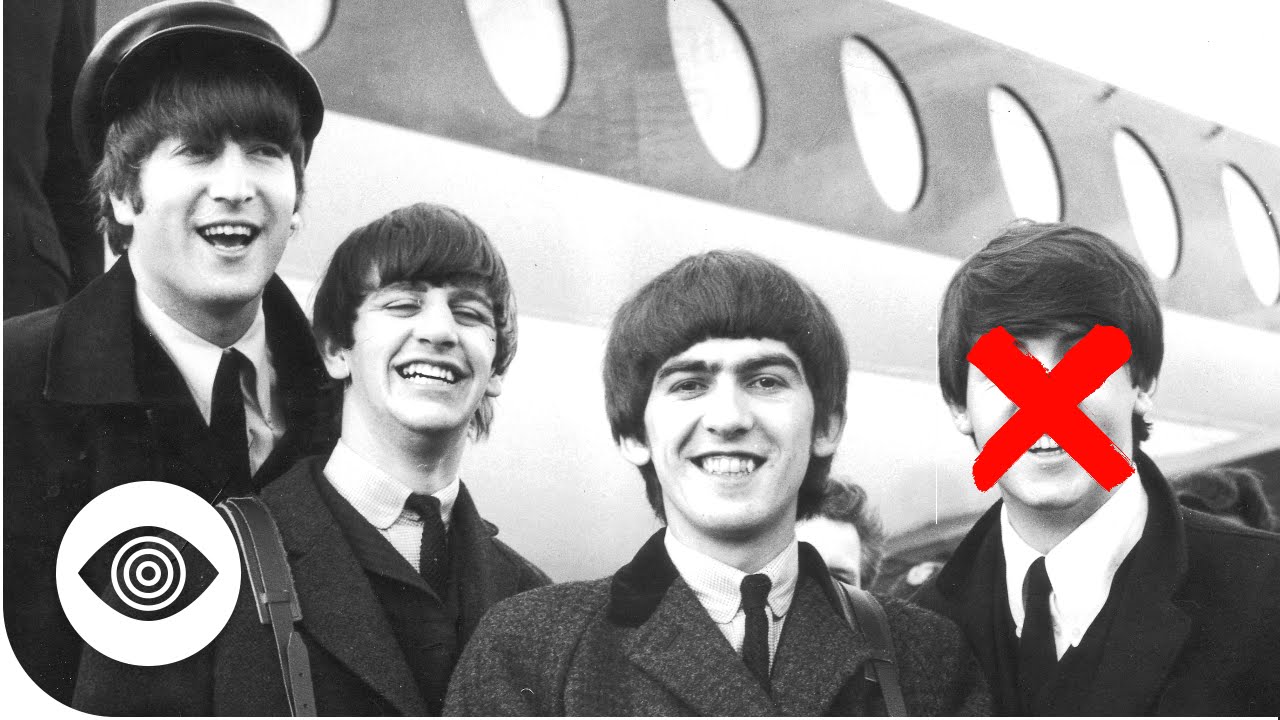
The theory is this: Paul McCartney, the brilliant, baby-faced bassist of The Beatles, died in a horrific car crash in 1966. And the man we’ve known as “Paul” ever since? He’s a fake. A lookalike. A replacement hired to keep the band—and the money—rolling in.

Crazy, right? Absolutely bonkers. It’s the kind of story you’d dismiss out of hand. But then you start looking at the clues. And suddenly, the world doesn’t seem so solid anymore. The Beatles themselves, it seems, left a trail of breadcrumbs for us to follow. A series of cryptic messages hidden in plain sight, scattered across their most famous albums, waiting for someone to connect the dots.

So, are you ready to go down the rabbit hole? Because what you’re about to read might just change the way you listen to music forever.

The Crash Nobody Reported

The official timeline is clean. Tidy. The Beatles stopped touring in August 1966 to become a studio-only band, tired of the deafening screams and the grind of the road. They went on to create their masterpiece, Sgt. Pepper’s Lonely Hearts Club Band.

But the conspiracists point to a different timeline. A secret history.

It all supposedly happened on a Wednesday. November 9th, 1966. At 5 AM. The story goes that Paul, after a furious argument with the other Beatles during a late-night recording session, stormed out of Abbey Road Studios. He got into his Austin-Healey, sped off into the damp London morning, and never made it home.

Distracted, angry, he allegedly picked up a young female hitchhiker named Rita. When she suddenly realized she was in a car with the Paul McCartney, her ecstatic reaction caused him to lose control. He smashed the car into a stone fence. The crash was so violent, the story claims, that he was instantly killed and horrifically decapitated.

Silence.

No news reports. No headlines. Nothing. Why? Why would the death of one of the most famous people on the planet go completely unreported?

Deep Dive: The MI5 Cover-Up

This is where the story takes a sharp turn from tragic accident to state-sponsored conspiracy. The theory claims that the news was suppressed by the highest levels of the British government. MI5, the UK’s domestic intelligence agency, was supposedly called in.

Think about it from their perspective in 1966. The Beatles weren’t just a band. They were a global phenomenon. A massive cultural export. A symbol of “Swinging London” and British pride. The financial and emotional shockwave of McCartney’s death could have been catastrophic. Officials feared mass panic. Even mass suicides among their millions of devoted teenage fans. The Beatles machine had to keep running. For the good of the nation.

So, a plan was hatched. A desperate, unbelievable plan. They would find a replacement.

Enter “Faul”: The Man Who Stole Paul’s Life

Who could possibly replace Paul McCartney? You’d need more than just a passing resemblance. You’d need someone who could sing like him, play bass left-handed like him, and possess the same once-in-a-generation songwriting genius.

Impossible, you say?

The legend names a man. William Shears Campbell. Sometimes called Billy Shears. He was supposedly the winner of a Paul McCartney lookalike contest. An orphan with no family to ask questions, he was the perfect blank slate. Proponents of the theory say he was taken by MI5, given extensive plastic surgery to perfect his facial features, and coached relentlessly to mimic Paul’s mannerisms and musical style.

The remaining Beatles—John, George, and Ringo—were allegedly forced into the conspiracy, threatened into silence. But their guilt, the story goes, ate away at them. They couldn’t speak out directly, but they could communicate. They could leave clues. They could tell the world the truth, if only the world was clever enough to listen.

Decoding the Album Art: A Funeral in Plain Sight

This is where the evidence goes from whispers to a roar. The Beatles’ album covers from 1967 onwards are seen by believers not as art, but as confessions.

Sgt. Pepper’s Lonely Hearts Club Band (1967)

This is Exhibit A. The album that changed everything. On the surface, it’s a colorful, psychedelic collage of famous faces. But look closer. It’s a funeral.

The Beatles, dressed as a new band, stand over a fresh grave. The grave is adorned with yellow flowers, shaped into a left-handed bass guitar—Paul’s instrument. Some even say the flowers spell out “PAUL?”.

Above Paul’s head, a hand is held open. In many Eastern cultures, this is a symbol of death. To his right is a doll wearing a sweater that reads “Welcome The Rolling Stones,” supposedly a nod to the band set to take The Beatles’ place at the top.

But the most chilling clue is on the back cover. John, George, and Ringo are facing forward. Paul has his back to the camera, a stark symbol of separation. A lyric printed directly over his back reads, “without you.” And look at George. He’s pointing directly at a line from the song “She’s Leaving Home”: “Wednesday morning at five o’clock as the day begins.”

The exact time and day of the alleged crash.

Coincidence? Maybe. But we’re just getting started.

Magical Mystery Tour (1967)

The strangeness continues. In the album’s booklet, the band is pictured in animal costumes. John is the walrus. But on the cover, one of the costumes is black, while the others are white. Paul is the one in the black walrus suit.

What’s the big deal? In some Scandinavian cultures, the walrus is a harbinger of death.

On another page, Paul is pictured sitting at a desk with a sign in front of him that reads “I WAS.” And on his other desk, there’s a British flag… but it looks like it’s stained with blood.

Abbey Road (1969)

This is perhaps the most famous piece of “evidence.” The iconic image of the four Beatles crossing the street is interpreted as a funeral procession.

  • John Lennon: Dressed in all white, he represents the priest or angelic figure.
  • Ringo Starr: In a stark black suit, he is the undertaker or pallbearer.
  • Paul McCartney: He is barefoot, out of step with the others, and has his eyes closed. In many cultures, the dead are buried barefoot. He is the corpse.
  • George Harrison: Dressed in rugged denim, he is the gravedigger, come to bury his friend.

And then there’s the Volkswagen Beetle in the background. Its license plate reads “LMW 28IF.” Believers decode this instantly: “LMW” stands for “Linda McCartney Weeps.” And “28IF”? Paul would have been 28 *IF* he had lived.

The fact that he was actually 27 at the time is explained away. In some mystical beliefs, you count your age from conception, not birth. That would make him 28. A stretch? Of course. But in this world of shadows and whispers, every detail matters.

Lyrical Mysteries and Backwards Messages

If the album art is the visual confession, the music itself is the auditory proof. Fans began playing their records backward, searching for hidden messages. And they found them.

It sounds like a joke. But what they discovered is genuinely unsettling.

  • “Strawberry Fields Forever”: At the very end of the song, as the music fades out, a distorted voice can be heard. For years, people thought John was saying “cranberry sauce.” But slow it down, listen carefully. Many, many people hear something else entirely: “I buried Paul.”
  • “I’m So Tired”: Play the final seconds of this track from *The White Album* in reverse. A spooky, mumbled voice seems to say, “Paul is a dead man. Miss him. Miss him. Miss him.”
  • “A Day in the Life”: The opening song of Sgt. Pepper’s contains the line, “He blew his mind out in a car. He didn’t notice that the lights had changed.” A direct reference to the crash?
  • “Glass Onion”: John seems to mock the clue-hunters, singing, “Here’s another clue for you all: The walrus was Paul.” He’s confirming that Paul was, in fact, the one in the death symbol costume.

Are these just drug-fueled studio games? Or a desperate attempt by a guilt-ridden band to tell an awful truth they couldn’t speak aloud?

Modern Theories: The Biometric “Proof”

In the 21st century, the “Paul is Dead” theory has found new life online. Digital detectives have moved beyond lyrical analysis and into the world of science.

In 2009, two Italian forensic scientists, Gabriella Carlesi and Francesco Gavazzeni, conducted a study using biometric analysis. They compared photos of Paul from before 1966 with photos from after 1967. They focused on features that are difficult or impossible to alter with plastic surgery, even today: the shape of the palate, the curvature of the jaw, and the precise structure of the ears.

Their conclusion? The man before the “accident” and the man after were not the same person. The dimensions, they claimed, simply didn’t match up.

Voiceprint analysis has yielded similar results for some amateur sleuths. They claim that the timbre, frequency, and phonetic patterns of “Paul’s” voice changed significantly after 1966. Is this just the natural evolution of a singer’s voice, or proof of a vocal imposter?

Even his height has come into question. Photos of the band from the early days seem to show Paul being slightly shorter than the lanky John Lennon, but about the same height as George Harrison. Later photos often show “Faul” appearing taller, sometimes even towering over George. Different shoes? Camera angles? Or something more?

The Doubters: A Grandiose Hoax?

Of course, for every clue, there’s a counter-argument. A rational explanation.

The “I buried Paul” line? John Lennon himself stated he was saying “cranberry sauce.” The backwards messages? Auditory pareidolia—the human brain’s tendency to find patterns in random noise.

The *Abbey Road* cover? The band just walked across the street for a quick photoshoot. It was a hot day, and Paul kicked off his sandals. The “28IF” license plate was a complete coincidence.

And what about the man himself? Paul McCartney has repeatedly, and with great humor, denied being dead. In a famous 1969 cover story for LIFE Magazine, he posed with his family under the headline “Paul is still with us.”

Perhaps the most compelling argument against the theory is its sheer impossibility. How could you find a doppelgänger who was also a world-class musician, capable of writing masterpieces like “Hey Jude,” “Let It Be,” and “Yesterday” (oh wait, that was pre-’66… but what about “Live and Let Die” or “Band on the Run”?)? How could you keep a secret this big for over 50 years, with all the studio engineers, roadies, managers, friends, and family involved?

It seems… impossible.

But What If?

And yet… the theory endures. It persists because it’s more than just a collection of odd coincidences. It’s a story that taps into our deepest fears about fame, identity, and hidden truths.

It asks us to question what we see with our own eyes. If they could lie about this, what else are they lying about?

The clues are there. They are undeniable. The only question is what they mean. Were they a deliberate, morbid prank played by four of the most creative minds in history, fueled by psychedelics and a desire to mess with their audience? Or was it a genuine, coded confession of a terrible secret?

Maybe the Paul of today is the real deal, a living legend who has had to live with this bizarre rumor for most of his life. Or maybe, just maybe, he is William Shears Campbell, the greatest actor of our time, who stepped into a dead man’s shoes and played the part so perfectly that the world never noticed. He lived a life that wasn’t his, sang songs he didn’t write, and became a global icon, all while hiding the most shocking secret in the history of pop culture.

The music plays on. The records still spin. But the question remains, hanging in the air like the final, fading chord of “A Day in the Life.” Who is the man we call Paul McCartney?

Arindam Mukherjee
Arindam Mukherjee
Arindam loves aliens, mysteries and pursing his interest in the area of hacking as a technical writer at 'Planet wank'. You can catch him at his social profiles anytime.
RELATED ARTICLES

19 COMMENTS

- Advertisment -

Most Popular

Recent Comments

Warren Pan Abbott on The legend of the Devil Monkey !
chris davies on The McPherson Tape Mystery
Reed Reedly on ET has Internet!
Bea Houseoffashion on Proof Of Time Travellers – Gallery
Marcus2012 on ET has Internet!
Reed Reedly on ET has Internet!
LaughsAtConspiracyNuts on The 9/11 Conspiracy – Myths and Facts
Alex Sliverman on Did the ancients fly?
Doctor Wholigan on Time Traveler in 1938 film
chris davies on The McPherson Tape Mystery
Archie1954 on 10 secret UFO hideouts
chris davies on Ghosts of flight 401
Marcus2012 on ET has Internet!
jason Macdonald on Proof of Time Travel? – China
chris davies on Long-Lost Pyramids Found?
Reed Reedly on ET has Internet!
Milkman on Connected Universe
Tenmiles on Baigong Pipes Mystery
Simon Foster on Sirius – The Documentary
From the 1st April on 2013 – Alien Contact date ?
SkyWatcher on Is ET ignoring us?
I Come From The Future on Obama to make UFO Alien disclouser soon ?
ÛñK?øWn on 2013 – Alien Contact date ?
Just another person on 2013 – Alien Contact date ?
Malcolm Windowcleaner on The strange case of Rudolph Fentz
Mason Servio on Strange Things on Mars
Marke Wisdom Seeker on What will we find as arctic melts?
Andrea A Elisabeth Levyne on Aliens Captured in Varginha, Brazil
Mitch Grouyeki on Amazing Space Shuttle pictures