The Data Apocalypse is Coming. The Salvation is Hiding Inside You.
Let’s be honest. Our entire modern world is a ghost. A fragile, flickering hologram of 1s and 0s stored on spinning plates of rust and microscopic silicon traps. Every photo you’ve ever taken. Every email you’ve ever sent. The entire financial system, medical records, the collected knowledge of humanity—it’s all balanced on a knife’s edge.
It’s a terrifying thought, isn’t it?
We call it “the cloud,” but that’s a marketing lie. There is no cloud. There are only massive, power-hungry server farms in cold places, filled with hard drives that have a life expectancy of about five years. Five. Years. Then they die. They corrupt. They suffer from something the engineers call “bit rot,” a slow, creeping decay where the data literally fades away into digital dust.
Every century, we have a “data format apocalypse.” Think of all the information lost on floppy disks. Zip drives. Ancient scrolls. The Library of Alexandria. We are constantly running from a fire, desperately copying our civilization’s memory onto the next, newest, and always temporary format. But what if we’ve been looking in the wrong place for a permanent solution? What if the ultimate storage device wasn’t built in a factory in Silicon Valley, but has existed for billions of years, humming quietly inside every living thing on this planet?
Nature’s Ultimate Hard Drive
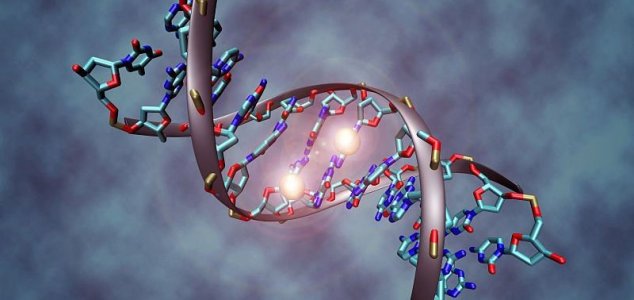
The answer is DNA. Deoxyribonucleic acid. The blueprint of life.
Forget everything you think you know from high school biology. Don’t think of it as just the code that makes your eyes blue or your hair brown. Think of it for what it truly is: the most sophisticated, high-density, and long-lasting information storage system known to exist. Period.
Life itself has been using this system for over three billion years. While our hard drives are failing in air-conditioned rooms, strands of DNA from woolly mammoths are being pulled from the Siberian permafrost, perfectly readable after 10,000 years. It’s a technology that has been tested and perfected by evolution itself. It’s rugged. It’s compact. And its storage capacity is, frankly, insane.

How insane? Today’s biggest consumer hard drives might hold 20 terabytes of data. It’s a big, clunky box. Scientists estimate that a single gram of DNA—a tiny smudge of material that would fit on the tip of your pinky finger—could theoretically store around 215 petabytes of data. That’s 215,000 terabytes. In one gram.
Let’s put that in perspective. All the movies ever created. Every song ever recorded. Every book ever written. All of Wikipedia, Facebook, Google, and Amazon combined. All of it could be stored in a lump of DNA about the size of a sugar cube. And it would last for millennia, not just until your next operating system update.
Deep Dive: How Do You Write an Email Onto a Molecule?
This sounds like science fiction, but it’s happening right now in labs across the world. The process is both brilliantly simple in concept and mind-bogglingly complex in execution. It’s a new kind of literacy, not with letters, but with the very building blocks of life.
Step 1: From Binary to Biology
Your computer stores everything as 0s and 1s. This is binary code. DNA, however, has a four-letter alphabet: the four nucleobases Adenine (A), Cytosine (C), Guanine (G), and Thymine (T). The first step is simple translation. You just need a key. For example, a simple system could be:
- 00 = A
- 01 = C
- 10 = G
- 11 = T
Using this key, the binary code for a simple file—say, a picture of a cat—is converted into a long, long string of A’s, C’s, G’s, and T’s.
Step 2: Printing the Code
Once you have the DNA sequence on a computer, you need to make it real. This is done through a process called DNA synthesis. Think of it like a microscopic 3D printer, but instead of plastic, it lays down individual molecules of A, C, G, and T in the exact order specified by your data file. It builds a custom-made DNA strand from scratch that is, for all intents and purposes, a physical copy of your digital information.
Step 3: Storing the Unstorable
You now have a microscopic amount of white powder, or a drop of liquid, containing trillions of these custom DNA molecules. This is your data. But how do you keep it safe? DNA is tough, but it’s not invincible. This is where modern science has made a breakthrough that feels ripped from a Michael Crichton novel.
Researchers at ETH Zurich, in a project that confirmed the original hopes for this technology, perfected a method of “fossilizing” the data. They encapsulated the DNA molecules into tiny glass (silica) spheres, no bigger than 150 nanometers across. This process mimics how DNA is preserved in ancient fossils. It protects the molecules from water, air, and the ravages of time. They then subjected this “fossilized data” to extreme aging tests, heating it to temperatures of over 160 degrees Fahrenheit for a week. The result? They projected the data would be easily readable for over 2,000 years, and potentially stable for up to a million years if stored in a cool, dark place like a subterranean vault.
Step 4: Reading it Back
To get the data back, you reverse the process. The silica is dissolved, releasing the DNA. Then, you use a standard DNA sequencer—a machine that’s become cheap and common thanks to the genetics revolution—to read the sequence of A’s, C’s, G’s, and T’s. That sequence is fed back into a computer, which uses the same key (00=A, 01=C, etc.) to translate the genetic code back into the original binary file. The cat picture reappears on your screen, perfectly preserved.
The Ancient Code: Are We Rediscovering a Lost Science?
Here’s where the story takes a turn. Where we step away from the peer-reviewed journals and into the shadows of alternative history. Is this technology truly new? Or is it a rediscovery of something ancient, something profound that has been staring us in the face all along?
Think about the concept of “junk DNA.” For decades, geneticists were baffled by the fact that over 98% of the human genome didn’t seem to code for proteins. They called it “junk,” a leftover artifact of our evolutionary past. But what if it isn’t junk at all?
What if it’s a hard drive? What if our DNA contains not just the blueprint for our bodies, but a vast, ancient archive of information? Could ancestral memory, the collective unconscious Carl Jung spoke of, actually be data stored in these non-coding regions? Fringe theorists and internet forums are buzzing with this very idea. They suggest that ancient, hyper-advanced civilizations might have encoded their history, science, and philosophy into the very DNA of life on Earth, creating the ultimate, self-replicating time capsule.
A message in a bottle, cast into the ocean of time. A bottle that is life itself.
Could we one day “read” the history of a species from its genome? Not just its evolutionary path, but actual, recorded data? It’s a wild thought. But when you consider the sheer storage potential, it stops sounding crazy and starts sounding… efficient. What better way to ensure your knowledge survives than to embed it into something that desperately wants to survive and replicate?
The Modern Conspiracy: Who REALLY Wants This Technology?
Let’s bring this back to the present day. The race for DNA data storage isn’t just an academic exercise. The major players are moving their pieces on the board, and you should be asking why.
Microsoft is a huge investor. Their “Project Silica” is a parallel effort using glass, but their research into DNA storage is well-documented. They see the writing on the wall: the world’s data is expanding exponentially, and their cloud infrastructure can’t keep up forever. They need an archival solution. A “cold storage” for the mountains of data that nobody needs instant access to but can’t be deleted.
Then you have government agencies. Organizations like IARPA (Intelligence Advanced Research Projects Activity)—the mad science division for the U.S. intelligence community—are pouring money into this. Why? The official line is for archiving national secrets and preserving government records. But the possibilities are far more chilling.
Imagine a world where every phone call, every email, every surveillance camera feed from every city on Earth for the last 50 years could be stored in a single room. Not just stored, but stored *permanently*. A perfect, eternal record of everyone and everything. It’s the ultimate surveillance tool. A library of secrets that never degrades.
Internet theories go even deeper. Is this technology being developed for a “Black Box Earth” project? A way to back up humanity itself, in case of a cataclysmic event? A final message to whatever comes next? When you can store the entirety of human culture in a shoebox, the question is no longer “can we,” but “what are we storing, and for who?”
The Hurdles on the Horizon
So why aren’t you carrying a DNA drive in your pocket? Well, there are a few very big problems to solve first. This isn’t a replacement for your laptop’s SSD. Not yet.
The Speed Problem
Writing and reading data from DNA is slow. Very slow. Think hours or even days to retrieve a single file. This is why it’s seen as an archival, or “cold,” storage medium. It’s perfect for information you need to keep safe for centuries but don’t need to access in a split second. It’s a vault, not a filing cabinet.
The Cost Problem
Synthesizing (writing) custom DNA is still incredibly expensive. The price is dropping fast, much like computer processing power did, but it’s still far from consumer-friendly. Sequencing (reading) is much cheaper, but the whole process is currently reserved for high-budget corporate and government projects.
The “Finding a Needle in a Haystack” Problem
This was the issue raised by lead researcher Robert Gras back in 2015. When your data is a bunch of free-floating molecules in a drop of liquid, how do you find just one file? You can’t just “seek” a specific track like on a hard drive. Early solutions involved reading the entire drop every time, which is wildly inefficient.
But they are solving this. Newer techniques involve “tagging” the DNA strands with chemical markers, almost like a file name. Using something akin to the PCR technology used in COVID tests, they can then isolate and multiply only the strands with the specific tag they’re looking for. It’s like a biological search function.
The Future is Written in a Double Helix
The challenges are real, but they are engineering problems, not fundamental laws of physics. They will be solved. And when they are, the world will change in ways we can barely imagine.
Think of the possibilities. A “seed bank” for human knowledge, stored in a vault deep underground, capable of surviving societal collapse and rebooting civilization. Space probes sent to distant stars, carrying not a flimsy golden record, but the entire Bodleian Library in a test tube. Your personal medical history and genetic code stored together, leading to a new era of truly personalized medicine.
We are standing at a precipice. Behind us lies a history of fleeting memories stored on crumbling paper and decaying magnets. Ahead of us is the possibility of permanence. The ability to encode our art, our science, our stories, our very essence into the immortal coil of life itself.
Our digital ghosts, finally given a lasting home. Waiting patiently in the dark, silent, and stable for a thousand years, ready to be read by the future.